
- Catherine
Subnet manager of switch, subnet manager of OFED, UFM, is there any difference in the number of management nodes of them? Which one is more suitable for clients to choose when deploying?
Harry Collins
Answered on 3:31 am
The switch subnet manager, the OFED subnet manager, and UFM are software that are used to initialize and manage switches and hosts in the InfiniBand network. Their main difference lies in where they run and the scope of their functions.
The switch subnet manager is software that runs on the switch itself. It can automatically discover and configure devices in the network and provide basic network monitoring and diagnostic functions. It does not require additional management nodes, but it also does not support advanced network optimization and security functions.
The OFED subnet manager is software that runs on the host. It can use the subnet management service provided by OpenSM or Mellanox OFED. It can run on multiple hosts, achieving subnet manager redundancy and load balancing. It supports some advanced network functions, such as adaptive routing and congestion control, but it also does not support network security and preventive maintenance functions.
UFM is software that runs on dedicated management nodes. It is NVIDIA’s unified network management platform. It can monitor and manage the InfiniBand network comprehensively, supporting various advanced network functions, such as adaptive routing, congestion control, network security, preventive maintenance, performance analysis, etc. It requires at least one management node and a UFM license.
Which one is more suitable for customers to choose depends on their needs and budgets. If customers only need basic network functions and do not want to add extra management nodes, they can choose the switch subnet manager. If customers need some advanced network functions and already have host nodes, they can choose the OFED subnet manager. If customers need the most comprehensive and advanced network functions and are willing to invest in dedicated management nodes and UFM licenses, they can choose UFM.
People Also Ask
Related Articles

800G SR8 and 400G SR4 Optical Transceiver Modules Compatibility and Interconnection Test Report
Version Change Log Writer V0 Sample Test Cassie Test Purpose Test Objects:800G OSFP SR8/400G OSFP SR4/400G Q112 SR4. By conducting corresponding tests, the test parameters meet the relevant industry standards,
NVIDIA GB200 NVL72: Defining the New Benchmark for Rack-Scale AI Computing
The explosive growth of Large Language Models (LLM) and Mixture-of-Experts (MoE) architectures is fundamentally reshaping the underlying logic of computing infrastructure. As model parameters cross the trillion mark, traditional cluster

In-Depth Analysis Report on 800G Switches: Architectural Evolution, Market Landscape, and Future Outlook
Introduction: Reconstructing Network Infrastructure in the AI Era Paradigm Shift from Cloud Computing to AI Factories Global data center networks are undergoing the most profound transformation in the past decade.
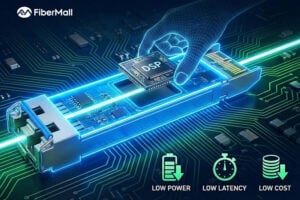
Why Is It Necessary to Remove the DSP Chip in LPO Optical Module Links?
If you follow the optical module industry, you will often hear the phrase “LPO needs to remove the DSP chip.” Why is this? To answer this question, we first need

Global 400G Ethernet Switch Market and Technical Architecture In-depth Research Report: AI-Driven Network Restructuring and Ecosystem Evolution
Executive Summary Driven by the explosive growth of the digital economy and Artificial Intelligence (AI) technologies, global data center network infrastructure is at a critical historical node of migration from
Key Design Constraints for Stack-OSFP Optical Transceiver Cold Plate Liquid Cooling
Foreword The data center industry has already adopted 800G/1.6T optical modules on a large scale, and the demand for cold plate liquid cooling of optical modules has increased significantly. To

NVIDIA DGX Spark Quick Start Guide: Your Personal AI Supercomputer on the Desk
NVIDIA DGX Spark — the world’s smallest AI supercomputer powered by the NVIDIA GB10 Grace Blackwell Superchip — brings data-center-class AI performance to your desktop. With up to 1 PFLOP of FP4 AI
