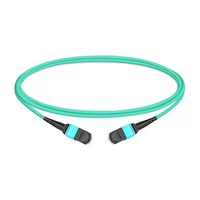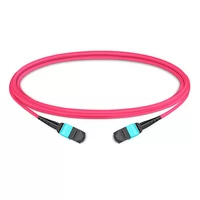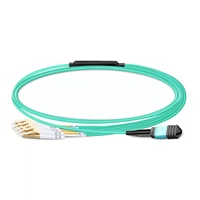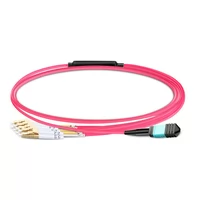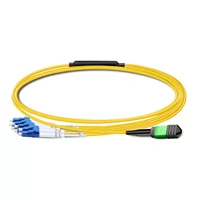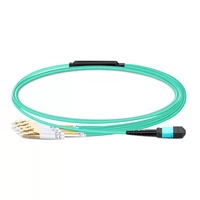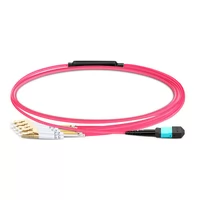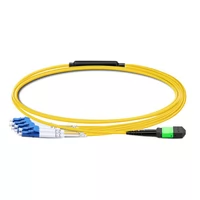

The delivery of cables occurred on Thursday. The shipment contained two hundred MPO trunk assemblies, which would support the upcoming hyperscale deployment. The installation crew, led by Marcus Chen, started their work by opening the first crate, and they recognized the presence of an issue. Every trunk cable had male connectors on both ends. The procurement specification required the use of male-to-female trunks, which would connect their cassettes.
Engineers were needed to locate gender changers because $12,000 worth of fiber remained in boxes. The migration process was delayed by 4 days. The project faced delays which resulted from an elementary connector gender error that proper planning methods could have avoided.
MPO connector gender creates confusion because the terminology is counterintuitive. The term “male” does not refer to the “plug side” of an electrical connector. The term “female” does not denote the receptacle. In fiber optics, gender refers specifically to the presence or absence of alignment pins on the connector ferrule. The incorrect handling of this process results in connector destruction, which causes project delays and financial losses that reach thousands of dollars.
This guide provides a complete framework for understanding, identifying, and planning MPO connector gender in data center environments. You will discover the physical distinctions between male and female connectors and how to develop a gender strategy for your infrastructure, which gender connects to transceivers, and how gender interacts with polarity methods. The outcome will provide you with a structured system that enables you to design gender arrangements which protect your project from expensive errors.
What Is MPO Connector Gender?
The gender of an MPO connector determines whether metallic guide pins exist on its connector ferrule. The pins provide essential mechanical support because they maintain exact alignment between multiple fiber channels during the mating process.
The connector uses an MT (Mechanical Transfer) ferrule, which is a rectangular component that has been molded to create fiber holes that follow one of two row patterns. In a standard MPO-12 connector, the ferrule accommodates twelve fibers, which are arranged in a single row. The two guide pins, which are located on both sides of the fiber array, make their guide pins show from the ferrule face or hide back into the ferrule face depending on the connector’s gender.
A male connector contains two stainless steel guide pins, which have a standard diameter of 0.7mm and extend about 2.5mm from the ferrule face. The pins create an alignment reference for the complete connection because they press-fit into the precision holes of the ferrule.
Female connectors are designed with two matching alignment holes, which function as their connection points instead of using traditional pins. The ferrule face is flat except for these two holes, which receive the male connector’s pins during mating. The hole depth and position match the male pin geometry exactly.
The pin-and-hole system serves three critical functions. The first function of the system maintains lateral alignment of the fiber arrays, which ensures that fiber 1 on one connector mates with fiber 1 on the other, fiber 2 with fiber 2, and so on across all positions. The system stops rotational misalignment, which would lead to fiber mapping errors. The system maintains uniform physical contact pressure between fiber endfaces, which supports low insertion loss requirements.
The manufacturing process of connectors establishes their gender identity, which standard MPO connectors cannot be changed by users in the field. The assembly process requires the permanent installation of pins within male connectors. Female connectors are produced without any pin components. The fixed nature of this system requires organizations to plan their gender requirements before buying products because they need adapters or gender changers to correct purchase mistakes.
For detailed information on different connector types and fiber counts, see our complete guide to MPO connector types.

Male vs Female: Visual Identification
Field identification of MPO connector gender is straightforward once you know what to look for. The visual difference is apparent on the connector endface.
To identify a male connector:
- Look at the connector endface directly
- Two metal pins protrude from the ferrule surface
- Pins are stainless steel, approximately 0.7mm diameter
- Pins sit on either side of the fiber array
- The ferrule face is not flat—pins create raised points
- Connector housing may feel slightly heavier due to metal pins
To identify a female connector:
- Look at the connector endface directly
- The ferrule face is flat with no protrusions
- Two alignment holes are visible on either side of the fiber array
- Holes appear as dark circles (recessed)
- No metal components visible on the ferrule face
- Lighter construction without pin mass
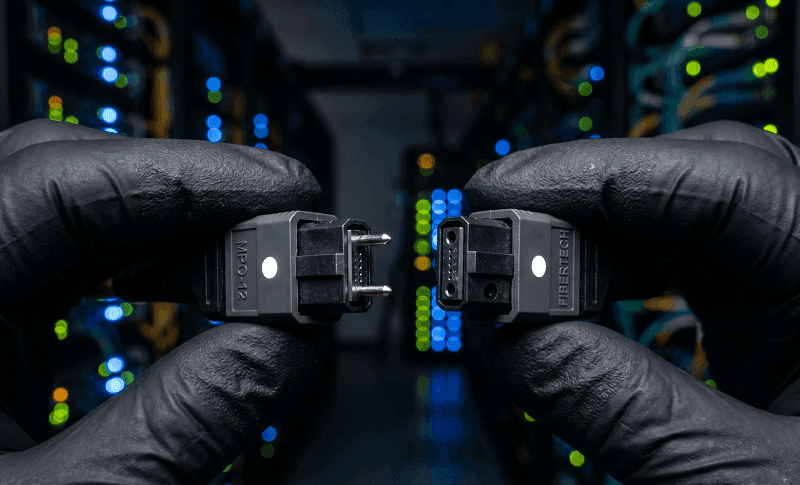
The white dot indicator provides additional orientation guidance. The male and female connectors both show a white dot or triangle on their connector bodies, which indicates the position of fiber 1. The white dot marks the leftmost fiber position when the connector keyway is viewed in its standard orientation, which normally uses key-up.
For gender identification in low-light data center environments:
- Use a flashlight or headlamp to illuminate the connector face
- Look for metallic reflection from male pins
- Female connectors appear uniformly dark except for fiber endfaces
- Consider using a magnifying inspection scope for confirmation
Key orientation note: The keyway position (the raised plastic ridge on the connector body) indicates connector orientation but not gender. The connectors exist in two configurations which allow male and female connectors to be used with key-up and key-down orientations. Key orientation affects polarity but is independent of gender.
Some manufacturers use color-coded connector boots to show which gender their connectors belong to but this practice lacks industry-wide standardization. Always verify gender by visual inspection of the ferrule face rather than relying on boot color.
The Cardinal Rule: Why Gender Pairing Matters
The basic MPO connection rule requires pairing male connectors with female connectors. The system must never establish connections between two male connectors. The system must never establish connections between two female connectors. When this rule gets broken, it results in damage that becomes permanent in most cases.
The system fails because male connectors create pin collisions. The connectors develop problems because their pins touch each other before the two connectors can join. The pins either bend or break or they push back into the ferrule. The factory process cannot restore bent pins to their original condition. The pushed pins create damage to the internal structure of the ferrule. The result is permanent connector damage requiring complete replacement.
The hidden damage occurs between devices during their connection process. Technicians may not realize pins are bent until testing reveals high insertion loss across multiple channels. The connectors require replacement at that point. When pins break in extreme situations, they can drop into the fiber array, which creates scratches on endfaces that need expensive cleaning or replacement.
Female-to-female connection causes alignment failure. Without pins to guide the mating, the two ferrule faces cannot achieve precise lateral alignment. The connectors may appear to mate—the latching mechanism may engage—but the fiber arrays will be misaligned. This causes:
- High insertion loss (often 3-10 dB or more)
- Unstable connections that fail under vibration
- Inconsistent performance across fiber positions
- Potential fiber endface damage from scraping
Jennifer Park, a data center engineer in Singapore, learned this lesson during a 2:00 AM maintenance window. “I had a female-female patch cord in my hand, rushing to restore a link. I connected the component to the female port on the cassette. The link came up briefly, then failed. I spent twenty minutes to discover my error. The connector faces had scraped each other, which required replacement of both parts. The situation resulted in us losing one hour of system downtime.”
Repair costs add up quickly. Each MPO connector replacement requires:
- New connector assembly ($25-75 depending on quality)
- Technician time for retermination (1-2 hours at $75-150/hour)
- Potential fiber cable replacement if damaged
- Testing and verification time
- Project delays and potential SLA penalties
A single gender mistake can easily cost $500-2,000 in direct costs, plus the indirect costs of downtime and schedule impact.

Gender Strategy for Data Center Applications
Effective gender planning requires understanding the standard deployment architecture and mapping gender to each connection point. A systematic approach prevents procurement errors and simplifies installation.
Standard Data Center Architecture:
[Switch/Transceiver] ←→ [Patch Cord] ←→ [Patch Panel/Cassette] ←→ [Trunk Cable] ←→ [Patch Panel] ←→ [Patch Cord] ←→ [Switch/Transceiver]
Gender Assignment by Component:
| Component | Standard Gender | Reasoning |
| Trunk Cables | Male (pinned) | Backbone infrastructure; connects to cassettes/panels |
| Patch Cords | Female (unpinned) | Connect equipment to infrastructure |
| Transceivers (QSFP+/QSFP28/QSFP-DD) | Male (internal) | Industry standard; requires female patch cords |
| Cassettes/Modules | Female (front), Male (back) | Receive trunks, output to patch cords |
| Adapter Panels | Female (both sides) or mixed | Connection points in pathway |
| Breakout Harnesses | Varies by design | Match to specific application |
Planning Checklist:
- Inventory equipment ports: Document gender of all switch ports, transceivers, and active equipment
- Map infrastructure connections: Identify trunk cable endpoints and cassette locations
- Determine gender flow: Plan male-to-female pairings at every connection point
- Account for polarity: Gender and polarity decisions must be coordinated
- Document specifications: Create cable schedule showing gender for each assembly
- Verify before procurement: Double-check all gender assignments against equipment specs
Fiber Count Considerations:
MPO gender applies across all fiber counts:
- MPO-8: Used for 40G SR4, 100G SR4, 400G DR4
- MPO-12: Universal standard for 10G breakout and mixed environments
- MPO-16: Emerging for 400G/800G SR8
- MPO-24: Hyperscale backbone applications
The gender rules remain consistent regardless of fiber count. A male MPO-24 connector has pins. A female MPO-8 connector has holes. Never mix gender within the same connection regardless of fiber count.
For trunk cable deployment strategies, see our MPO trunk cable guide.
Transceiver Gender: What You Need to Know
Optical transceivers—the QSFP+, QSFP28, and QSFP-DD modules that convert electrical signals to optical—follow consistent gender patterns across the industry. Understanding these patterns simplifies patch cord selection.
Industry Standard: The vast majority of optical transceivers equipped with MPO interfaces use male connectors internally. The transceiver’s MPO receptacle contains guide pins. This means:
- Patch cords connecting to transceivers must use female connectors
- The female patch cord receives the male pins from the transceiver
- This applies to SR4, SR8, DR4, and other parallel optic transceivers
Common Vendor Patterns:
| Vendor | Transceiver Type | MPO Gender |
| Cisco | QSFP-40G-SR4, QSFP-100G-SR4-S | Male (internal) |
| Arista | 40G-SR4, 100G-SR4 | Male (internal) |
| Juniper | QSFPP-40GBASE-SR4, JNP-QSFP-100G-SR4 | Male (internal) |
| Intel | E40GQSFPSR, E100GQSFPSR | Male (internal) |
| Finisar | FTL410QD3C, FTLC1157SDPL | Male (internal) |
Why Female Patch Cords for Equipment:
The industry standardized on female patch cords for equipment connections for practical reasons:
- Transceiver pins are protected within the module housing
- Patch cords (which are replaced more frequently) have no pins to damage
- Female connectors on patch cords are more durable in field handling
- Gender changers can adapt female patch cords to male trunk cables if needed
Important Verification Step:
You need to verify your transceiver specifications through its data sheet before you can proceed to buy cables. The industry standard uses male connectors but there are cases where different types of connectors are needed. Some specialized transceivers (particularly certain InfiniBand or proprietary modules) may use female interfaces. The data sheet will specify “MPO male” or “MPO female” in the connector specifications.
MTP Transceiver Note:
US Conec’s MTP transceivers follow the same gender convention as standard MPO. MTP receptacles are male (pinned), requiring female patch cords. MTP and MPO are fully compatible regarding gender—the same pairing rules apply.
For more on transceiver compatibility, explore our optical transceiver guide.

Gender and Polarity: Integrated Planning
Gender and polarity are distinct but interrelated aspects of MPO configuration. You must plan both simultaneously for a working system.
Key Distinction:
- Gender determines whether a connector has pins (male) or holes (female)
- Polarity determines which fiber positions connect to which (1→1, 1→12, or pairwise)
- Key Orientation (key-up vs key-down) affects polarity implementation
How They Interact:
In Method B polarity (the industry standard for parallel optics), both ends of a trunk cable use the same key orientation (key-up to key-up). The gender at each end depends on the connection:
- Male trunk connects to female cassette on both ends
- Female patch cords connect male transceiver to female cassette
The polarity method determines fiber mapping. Gender determines physical connectivity. Both must be correct for proper link operation.
Configuration Matrix:
| Polarity Method | Key Orientation | Gender Pairing | Best For |
| Type A | Key-up to Key-down | Male-to-Female | Cassette-based migration |
| Type B | Key-up to Key-up | Male-to-Female | Parallel optics (40G-800G) |
| Type C | Key-up to Key-down | Male-to-Female | Legacy duplex breakout |
Standardization Benefits:
Standardizing on Type B polarity with female patch cords provides:
- Simplified inventory (same patch cord type throughout facility)
- Reduced installation errors (industry data shows 63% fewer polarity mistakes)
- Direct compatibility with 40G SR4 through 800G SR8 transceivers
- Easier troubleshooting (consistent configuration across all links)
Planning Integration:
When documenting your MPO infrastructure, record both gender and polarity for each cable:
- Example: “Trunk-001: MPO-12, Male-Male, Type B polarity”
- Example: “Patch-045: MPO-12, Female-Female, Type A-to-B”
For complete polarity guidance, see our MPO polarity guide.
Gender Changers and Field Solutions
Despite careful planning, gender mismatches occur in the field. Having the right adapters and knowing when to use them can save hours of downtime.
Gender Changer Types:
MPO Couplers (Barrel Adapters)
- Female-to-Female: Joins two male connectors
- Male-to-Male: Joins two female connectors (rare, not recommended)
- Female-to-Male: Changes gender in the link (maintains one male, one female)
MPO Cassette Adapters
- Some cassettes accept both genders on the rear trunk side
- Check specifications before assuming compatibility
Hybrid Patch Cords
- Male-to-Female patch cords (unusual but available)
- Useful for specific architectural requirements
When to Use Gender Changers:
| Scenario | Solution | Notes |
| Wrong gender trunk delivered | F-F coupler at one end | Adds insertion loss (~0.3 dB) |
| Equipment port gender mismatch | M-F patch cord | Verify polarity impact |
| Emergency field repair | Gender changer in toolkit | Temporary solution |
| Legacy integration | Hybrid cables | Document carefully |
Insertion Loss Considerations:
Each additional mating adds insertion loss:
- Direct MPO mating: 0.3-0.5 dB
- Through coupler: 0.5-0.8 dB per connection
- Budget for additional loss when using gender changers
- High-speed links (400G/800G) have tighter loss budgets
Field Toolkit Recommendations:
Keep these items available for gender emergencies:
- 5-10 Female-to-Female MPO couplers
- 2-3 Male-to-Female hybrid patch cords (various lengths)
- Gender identification card or guide
- MPO inspection scope for verifying connections
Important Warning:
Never attempt to remove pins from a male connector or add pins to a female connector in the field. This causes:
- Permanent connector damage
- Ferrule contamination
- Unreliable connections
- Safety hazards from loose metal components
Always use proper adapters or replace the cable with correct gender.
Common Gender Mistakes and Prevention
Gender errors follow predictable patterns. Understanding these patterns helps prevent them.
Mistake 1: Assuming “Male” Means “Plug Side”
Electrical connector intuition fails with fiber optics. Data center technicians familiar with RJ45 or power connectors may assume male means the active/plug side. In MPO systems, male means “has pins”—and equipment ports often have pins.
Prevention: Train teams that MPO gender refers to pins, not plug orientation. Post identification guides in deployment areas.
Mistake 2: Ordering Trunk Cables Without Checking Cassette Gender
Cassettes may have male or female rear ports depending on manufacturer and design. Ordering all trunks as male-to-male without verification leads to mismatches.
Prevention: Document cassette specifications before procurement. Verify rear port gender in data sheets.
Mistake 3: Ignoring Gender in Polarity Conversions
When converting between polarity methods (Type A to Type B), gender must remain compatible. A polarity change doesn’t automatically handle gender pairing.
Prevention: Use configuration worksheets that track both polarity and gender through conversion points.
Mistake 4: Mixing MPO-12 and MPO-24 Gender Planning
Different fiber counts may have different gender conventions in the same facility. MPO-24 trunks might use different gender logic than MPO-12 patch cords.
Prevention: Create separate specification sheets for each fiber count. Don’t assume consistency across counts.
Pre-Installation Verification Checklist:
Before connecting any MPO cable:
Visually verify connector gender at both ends
Confirm male-to-female pairing at connection point
Check polarity method matches link requirements
Inspect for damaged pins (male) or blocked holes (female)
Clean connectors before mating
Test link immediately after connection
Documentation Best Practices:
Maintain a cable schedule showing:
- Cable ID
- Fiber count (8/12/16/24)
- Gender at each end (M/F)
- Polarity method (A/B/C)
- Key orientation (up/down)
- Connection points (from/to)
Clear documentation prevents confusion during moves, adds, and changes.
FAQ
What gender are QSFP transceivers?
The majority of QSFP transceivers that use MPO interfaces operate with male connectors in their internal design because these connectors include guide pins. The patch cords that connect to QSFP transceivers need to use female connectors for their connection. The data sheet of your specific transceiver needs to be checked because certain modules work as exceptions to the standard rule.
Is it possible to change the MPO connector gender in an outdoor environment?
The gender of an MPO connector cannot be modified because its pins stay fixed in their original configuration. The same gender connectors can be connected through gender changers, which function as adapter couplers. Female-to-female couplers allow two male connectors to connect. The equipment causes additional insertion loss, which ranges between 0.3-0.5 dB and needs to be included in the link budget.
What happens if you connect male-to-male MPO connectors?
The connection of male-to-male MPO connectors should never be established by users. The protruding pins collide before the ferrule faces align, bending or breaking the pins. The connector became permanently damaged, which necessitated its replacement. Testing will show high insertion loss across multiple fiber channels because bent pins remain hidden from outside observation.
Do MTP and MPO connectors have the same gender rules?
The MTP connector system operates through separate gender specifications which differ from those used by MPO connectors. The MTP connector system follows the same gender standards as standard MPO connectors because MTP connectors represent a US Conec extension of MPO technology. MTP male has pins; MTP female has holes. The gender of MTP and MPO connectors enables complete interconnection between both connector types. An MTP male connector properly mates with an MPO female connector and vice versa.
Which gender should patch cords use versus trunk cables?
The standard practice establishes that trunk cables function as backbone infrastructure and use male connectors through their pinned design while patch cords establish equipment connections through their female unpinned connectors. Equipment ports use male transceivers which require female patch cords for connection according to industry standards.
Conclusion
MPO connector gender seems simple—pins or holes—but the consequences of getting it wrong are expensive and disruptive. The key principles are straightforward: male connectors have pins, female connectors have holes, and you must always mate male to female.
Remember these essential practices:
Always verify visually. Look at the connector endface. See pins? It’s male. See holes? It’s female. Never rely on boot colors or assumptions.
Plan before procurement. Document the gender of every equipment port, cassette, and planned cable. Create a cable schedule showing gender at every connection point.
Standardize where possible. Type B polarity with female patch cords for equipment connections provides consistency across 40G through 800G applications.
Keep emergency adapters. Female-to-female couplers in your field toolkit can save hours when gender mismatches occur.
The twelve-thousand-dollar mistake Marcus Chen’s team encountered was preventable. With the systematic approach outlined in this guide, you’ll specify the right MPO connector gender every time.
Ready to plan your MPO infrastructure? Contact FiberMall’s connectivity experts for personalized guidance on gender strategy, or explore our complete MPO connector types reference for additional technical details.
Related Products:
-
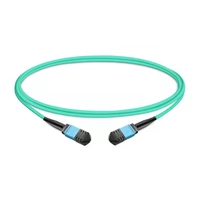
 1m (3ft) 12 Fibers Female to Female MPO Trunk Cable Polarity B LSZH OM3 50/125 Multimode Fiber
$20.00
-
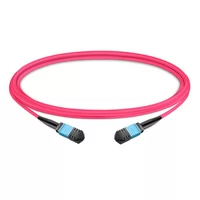
1m (3ft) 12 Fibers Female to Female MPO Trunk Cable Polarity B LSZH Multimode OM4 50/125
$21.00
-
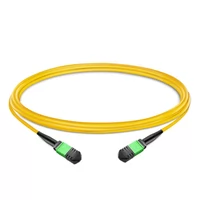
1m (3ft) 12 Fibers Female to Female MPO Trunk Cable Polarity B LSZH OS2 9/125 Single Mode
$26.00
-
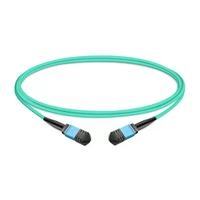
1m (3ft) 12 Fibers Low Insertion Loss Female to Female MPO Trunk Cable Polarity B LSZH OM3 50/125 Multimode Fiber
$32.00
-
1m (3ft) 12 Fibers Female to Female Elite MTP Trunk Cable Polarity B LSZH OM3 50/125 Multimode Fiber
$35.00
-
1m (3ft) 12 Fibers Female to Female Elite MTP Trunk Cable Polarity B LSZH Multimode OM4 50/125
$36.00
-
1m (3ft) MPO UPC Female to 4 LC UPC Duplex OM3 50/125 Multimode Fiber Breakout Cable, 8 Fibers, Type B, LSZH, Aqua
$20.00
-
1m (3ft) MPO UPC Female to 4 LC UPC Duplex OM4 50/125 Multimode Fiber Breakout Cable, 8 Fibers Type B, LSZH, Aqua/Violet
$23.00
-
1m (3ft) MPO APC Female to 4 LC UPC Duplex OS2 9/125 Single Mode Fiber Breakout Cable, 8 Fibers Type B, LSZH, Yellow
$24.00
-
1m (3ft) MTP Female to 4 LC UPC Duplex OM3 50/125 Multimode Fiber Breakout Cable, 8 Fibers, Type B, Elite, Plenum (OFNP), Aqua
$28.00
-
1m (3ft) MTP Female to 4 LC UPC Duplex OM4 50/125 Multimode Fiber Breakout Cable, 8 Fibers, Type B, Elite, Plenum (OFNP), Aqua/Violet
$30.00
-
1m (3ft) MTP APC Female to 4 LC UPC Duplex OS2 9/125 Single Mode Fiber Breakout Cable, 8 Fibers, Type B, Elite, Plenum (OFNP), Yellow
$32.00