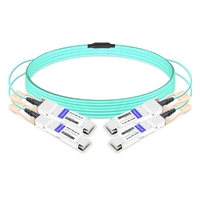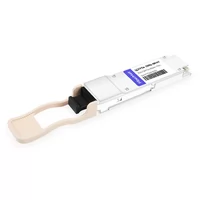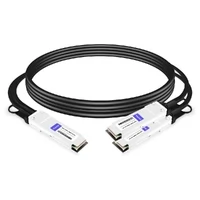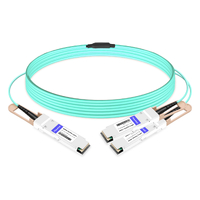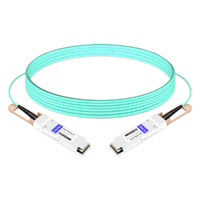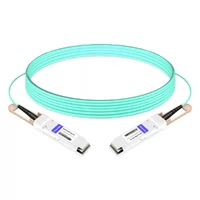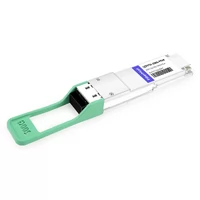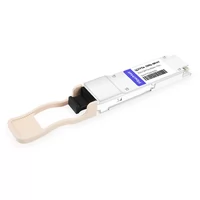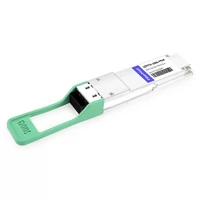

Network demands are escalating at an unprecedented rate due to continuous technological advancements. QSFP56 (Quad Small Form-factor Pluggable 56) transceivers and modules represent a significant leap forward in high-speed data transmission, delivering superior performance, enhanced energy efficiency, and rapid scalability. This comprehensive guide explores everything you need to know about QSFP56 technology, detailing its features, advantages, applications, and deployment strategies. Whether you are a network engineer, an IT professional, or simply interested in the latest developments in optical transceivers, this article provides the essential insights needed to navigate the evolving landscape of high-speed networking.
What is a QSFP56 Transceiver?

Overview of QSFP56
A QSFP56 transceiver is a compact, hot-swappable optical module designed for high-speed data communication networks. Fully compatible with 200 Gigabit Ethernet, it is an ideal solution for enterprises and data centers seeking to maximize bandwidth while minimizing latency. Retaining the established QSFP form factor, the QSFP56 transceiver leverages PAM4 (Pulse Amplitude Modulation 4-level) technology to achieve up to 50 Gbps per lane. This advancement not only doubles the data rate per channel compared to its predecessor but also maintains backward compatibility with legacy QSFP hardware, ensuring seamless integration and cost-effective scalability.
Functions and Applications
The QSFP56 is a crucial component in high-speed networking environments. Fundamentally, this device enables data transmission over optical fiber cables by converting electrical signals into optical signals, thereby facilitating faster and more reliable communication. Utilizing PAM4 modulation, the QSFP56 transceiver transmits data at 50 Gbps per lane, aggregating up to 200 Gbps within a single module. This capability is essential for meeting the massive data throughput requirements of modern data centers, cloud computing services, and enterprise networks where 100G QSFP28 and 200G QSFP56 are widely deployed.
Data Center Interconnects
Within data centers (DCs), QSFP56 transceivers are utilized to interconnect servers, storage devices, and core switches. They deliver the high bandwidth and low latency required for demanding workloads such as virtualization, big data analytics, and real-time streaming applications. Industry data indicates that adopting these advanced modules can reduce power consumption by up to 40% compared to older models, all while providing significantly superior performance.
High-Performance Computing (HPC)
In High-Performance Computing (HPC) environments, supercomputers rely on low-latency, high-speed networks built with numerous QSFP56 modules. These networks enable rapid data exchange across distributed systems, which is critical for complex computational workloads and scientific simulations. In large parallel processing clusters, individual nodes often compute distinct segments of a simulation but depend on synchronized data from all other nodes to advance. By supporting 200 Gbps data rates, QSFP56 modules eliminate bandwidth bottlenecks, maximize cluster efficiency, and accelerate time-to-insight for complex research.
Enterprise Network Upgrades
For enterprises upgrading their network infrastructure, QSFP56 transceivers provide the scalability required during rapid growth phases. Because they are backward compatible with legacy QSFP ports, organizations can incrementally upgrade network performance without overhauling their entire infrastructure. Consequently, the QSFP56 serves as a highly cost-effective solution for boosting organizational network capacity and overall performance.
Cloud Services
In cloud service delivery, speed and reliability are paramount, particularly when managing massive volumes of concurrent data traffic. The high capacities provided by QSFP56 transceivers enable dynamic resource allocation, ensuring consistent Quality of Service (QoS) across cloud applications. Furthermore, the 200 Gbps throughput ensures that these networks can scale efficiently to accommodate exponential traffic growth.
In summary, the versatility and high performance of QSFP56 transceivers make them indispensable across various high-speed networking sectors. Whether deployed for DC interconnects, HPC clusters, enterprise upgrades, or cloud infrastructure, these modules consistently deliver increased bandwidth, reduced latency, and optimized power consumption, cementing their role as a cornerstone of modern optical networking.
Form Factor and Compatibility
QSFP56 transceivers adhere to the Quad Small Form-factor Pluggable (QSFP) standard, ensuring a compact footprint that maximizes port density on network equipment. These transceivers are mechanically compatible with legacy QSFP and QSFP+ ports, allowing operators to transition to higher speeds without extensive physical infrastructure changes. This is particularly beneficial for data centers seeking a phased approach to capacity expansion.
Additionally, these modules are hot-pluggable, meaning they can be installed or replaced without powering down the host device. This minimizes network downtime and streamlines maintenance, significantly boosting operational efficiency in dynamic, high-availability environments.
What are the Differences Between QSFP28 and QSFP56?

Speed and Data Rate Comparison
The primary distinction between QSFP28 and QSFP56 lies in their speed and data throughput capacity. Utilizing four lanes operating at 25 Gbps each via NRZ (Non-Return-to-Zero) modulation, QSFP28 transceivers support an aggregate data rate of 100 Gbps. This makes them highly suitable for standard enterprise environments and data centers where reliable 100G connectivity is required.
In contrast, the QSFP56 transceiver doubles this capacity to a maximum aggregate rate of 200 Gbps. This is achieved by running four lanes at 50 Gbps each, utilizing advanced PAM4 modulation. The significantly higher data transfer rate makes the QSFP56 ideal for bandwidth-intensive applications that demand ultra-low latency and streamlined scalability, such as next-generation cloud networks and HPC systems. Ultimately, while both play vital roles, QSFP56 outperforms QSFP28 by satisfying the rigorous demands of modern 200G architectures.
Electrical Interface Specifications
While both modules share a similar physical footprint, their electrical interface specifications differ significantly to accommodate their respective data rates.
QSFP28 Electrical Interface:
Delivering a total throughput of 100 Gbps, the QSFP28 employs a 4×25 Gbps electrical interface. It complies with IEEE standards such as IEEE 802.3bj, ensuring seamless compatibility with Ethernet and Fibre Channel applications. NRZ is the standard signaling method used here; it maintains excellent signal integrity over standard distances while keeping processing requirements relatively simple.
QSFP56 Electrical Interface:
To achieve 200G throughput, the QSFP56 utilizes an upgraded 4×50 Gbps electrical interface driven by PAM4 modulation. PAM4 represents two bits of data per symbol rather than the single bit used in NRZ, effectively doubling the bandwidth capacity within the same frequency range. This implementation aligns with the IEEE 802.3cd standard. Because PAM4 signaling is more complex, QSFP56 modules often incorporate sophisticated Forward Error Correction (FEC) algorithms to ensure robust signal fidelity during transmission.
Backward Compatibility
When planning network migrations, backward compatibility is highly advantageous. Generally, QSFP56 network ports are designed to accept legacy QSFP28 modules, facilitating a smooth transition. Conversely, inserting a QSFP56 transceiver into an older QSFP28 port depends heavily on the specific module’s dual-rate/fallback capabilities and the host system’s design. If supported, the transceiver steps down to operate at 100 Gbps using the NRZ modulation scheme. This flexibility allows network operators to execute incremental upgrades without overhauling existing infrastructure or disrupting ongoing services.
How Does QSFP56 Compare to QSFP-DD?

Technological Advancements
Both QSFP56 and QSFP-DD (Quad Small Form-factor Pluggable Double Density) were developed to address the escalating demand for bandwidth in data centers. While QSFP56 utilizes four PAM4 lanes to reach 200 Gbps, the QSFP-DD introduces an eight-lane electrical configuration. By leveraging eight lanes of 50 Gbps PAM4 signaling, QSFP-DD doubles the aggregate capacity to 400 Gbps.
Physical and electrical interface differences highlight this shift. QSFP-DD modules feature a double-row electrical contact pad to support the additional lanes while maintaining a hybrid connector design. This ensures backward compatibility with legacy QSFP modules, providing an excellent migration path. Furthermore, thermal management systems in QSFP-DD devices are significantly upgraded compared to standard QSFP modules to safely dissipate the increased heat generated by the 400G data throughput.
In conclusion, while both rely on PAM4 technology, the double-density architecture of the QSFP-DD sets a new benchmark, making 400 Gbps networks a reality where 200 Gbps is no longer sufficient.
Use Cases in Data Centers
Data centers deploy both QSFP56 and QSFP-DD modules depending on capacity requirements. QSFP56 is an excellent choice for spine-leaf architectures, high-frequency trading networks, and HPC clusters that require robust 200 Gbps connectivity while leveraging existing QSFP physical infrastructure.
Conversely, environments demanding maximum possible bandwidth—such as hyperscale cloud providers, Content Delivery Networks (CDNs), and core telecom data centers—heavily favor QSFP-DD. With a 400 Gbps capacity, this module is essential for future-proofing infrastructures against the exponential traffic growth driven by AI, IoT, and 5G technologies.
Comparing 200G QSFP56 to 400G QSFP-DD
The fundamental difference between these two modules is total throughput. QSFP56 reaches 200 Gbps via four lanes of PAM4, offering a seamless upgrade path for standard high-speed infrastructures.
QSFP-DD delivers 400 Gbps by doubling the density of the electrical interface to eight lanes. It scales effectively to meet the ultra-high bandwidth and low-latency demands of hyperscale providers. In summary, opt for QSFP56 to meet current high-performance needs with excellent cost-efficiency; choose QSFP-DD when architecting next-generation data centers prepared for massive future scaling.
What are the Key Applications of QSFP56 Modules in Data Centers?

High-Speed Ethernet Connections
QSFP56 modules are essential for establishing 200 Gigabit Ethernet links in modern data centers. They are frequently used to aggregate multiple 25G or 50G connections, significantly improving network throughput and reducing latency. Furthermore, they provide robust uplinks between distribution and core switches, ensuring smooth data flows across the entire facility.
Interoperability with Existing Networks
A major advantage of QSFP56 modules is their seamless integration into existing network topologies. Designed to be interchangeable with QSFP28 interfaces at the physical level, they allow operators to transition from 100G to 200G links with minimal infrastructure disruption. Adherence to strict Multi-Source Agreements (MSAs) guarantees compatibility with both legacy systems and modern high-speed architectures, particularly within standard leaf-spine deployments.
Impact on Data Center Performance
Deploying QSFP56 modules dramatically enhances overall data center efficiency. By enabling robust 200G Ethernet links, these modules alleviate network congestion and optimize data processing for demanding, data-driven workloads. In addition to doubling port density without increasing the physical rack space, their advanced internal design promotes energy efficiency, lowering both operational expenses (OpEx) and the facility’s carbon footprint.
Understanding 200G QSFP56 Optical and DAC Cables

Optical Module Characteristics
200G QSFP56 optical modules offer several critical features for high-performance environments. First, they rely on PAM4 signaling to maximize throughput over optical fibers. They are available in various configurations, ranging from short-reach (SR4) modules supporting up to 100 meters over multimode fiber, to long-reach (LR4) solutions capable of spanning 10 kilometers or more over single-mode fiber.
These modules strictly adhere to IEEE and MSA standards, ensuring cross-vendor interoperability. Most incorporate Digital Diagnostic Monitoring (DDM), allowing network administrators to monitor real-time operating parameters such as temperature, voltage, laser bias current, and optical transmit/receive power. Built for excellent energy efficiency, QSFP56 optical modules reduce power consumption per bit, helping facilities remain environmentally friendly while expanding capacity.
Direct Attach Copper (DAC) Cable Features
Direct Attach Copper (DAC) cables provide a highly cost-effective and reliable solution for short-distance data transmission within racks. A DAC assembly consists of twinaxial copper cables permanently terminated with transceiver modules at both ends. They provide highly stable links at speeds up to 200 Gbps.
The primary advantage of DAC cables is their ultra-low latency, making them indispensable for high-frequency data exchanges. The robust shielding of the twinax design ensures exceptional signal integrity and minimal Electromagnetic Interference (EMI). Additionally, because DAC cables lack active optical components, they consume significantly less power than optical modules and eliminate the cost of buying separate transceivers. Hot-swappable and plug-and-play, DAC cables are the perfect interconnect solution for adjacent servers and top-of-rack (ToR) switches.
Choosing Between Optical and Copper Solutions
Selecting the appropriate medium depends entirely on distance, bandwidth, and budget constraints:
- Optical Solutions (Fiber): Essential for long-range data transmission. They support massive bandwidths over long distances with negligible signal loss and total immunity to EMI, making them perfect for core data center links and telecom infrastructures.
- Copper Solutions (DAC): Ideal for intra-rack or adjacent-rack connections (typically under 3 to 5 meters). They offer lower latency, reduced power consumption, and substantial cost savings compared to optical modules, significantly lowering deployment OpEx.
What are the Standards and Specifications for QSFP56?

Compliance with IEEE 802.3bs
The QSFP56 standard strictly complies with the IEEE 802.3bs specification, which governs the physical layer and management parameters for 200 Gbps and 400 Gbps Ethernet. This standard ensures that modules handle high-speed data with high signal fidelity and minimal bit error rates. By establishing uniform guidelines for electrical interfaces and modulation schemes, IEEE 802.3bs guarantees vendor-neutral interoperability across complex network ecosystems.
QSFP-DD MSA Overview
The Multi-Source Agreement (MSA) for QSFP-DD defines the mechanical, electrical, and thermal parameters for double-density interfaces. Accommodating an eight-lane electrical interface (50 Gbps per lane), the MSA ensures that 400G modules operate reliably in high-density environments while maintaining backward compatibility with standard QSFP form factors.
Key Specifications and Parameters
Data Rate: Supports an aggregate data rate of up to 200 Gbps (QSFP56) or 400 Gbps (QSFP-DD).
Modulation: Utilizes PAM4 (Pulse Amplitude Modulation) to double data throughput per lane without increasing bandwidth frequency requirements.
Form Factor: Retains mechanical compatibility with legacy QSFP ports, facilitating seamless backward compatibility and doubling port efficiency.
Electrical Interface: Features a high-speed electrical interface (up to 76 pins in DD configurations) engineered for low-latency, minimal-error transmission.
Power Consumption: Optimized for thermal efficiency, typically consuming between 5W and 12W for standard QSFP56, and up to 15W for QSFP-DD modules.
Applications: Widely deployed in data centers, HPC clusters, and enterprise core networks.
Standards Compliance: Fully compliant with IEEE 802.3bs and relevant MSAs to guarantee reliable cross-vendor interoperability.
Reference Sources
Frequently Asked Questions (FAQs)
Q: What is the difference between QSFP56 and QSFP28?
A: The primary distinctions are the maximum data rates and modulation techniques. QSFP28 utilizes NRZ modulation to support data rates up to 100 Gbps, whereas QSFP56 utilizes PAM4 modulation to support data rates up to 200 Gbps.
Q: How does QSFP56 compare to QSFP-DD?
A: QSFP-DD (Double Density) features double the electrical lanes of the QSFP56. While both utilize 50 Gbps PAM4 lanes, QSFP56 uses four lanes to achieve 200G, whereas QSFP-DD uses eight lanes to achieve up to 400G. However, QSFP-DD ports are highly versatile and can generally support 200G modules as well.
Q: What type of modulation is used in QSFP56 transceivers?
A: QSFP56 transceivers utilize 4-level Pulse Amplitude Modulation (PAM4). PAM4 transmits two bits of data per symbol, doubling the data throughput over a given bandwidth compared to the legacy NRZ modulation used in older modules.
Q: Can QSFP56 modules be used in existing QSFP ports?
A: Yes, they feature physical backward compatibility and can be plugged into older QSFP28 ports. However, to achieve their full 200 Gbps potential, the host switch or router must explicitly support 200G PAM4 signaling; otherwise, the module will step down to lower fallback speeds (e.g., 100 Gbps) if supported by the device firmware.
Q: Are QSFP56 optical transceivers suitable for 200G Ethernet?
A: Absolutely. These devices were engineered specifically for 200G Ethernet applications, making them highly effective for high-density server interconnects and high-performance computing environments where maximum throughput is required in limited rack space.
Q: What connectors are employed with QSFP56 modules?
A: Optical QSFP56 modules typically employ dual LC connectors or MPO/MTP connectors depending on whether they are short-reach or long-reach. DAC configurations utilize permanently attached copper connectors designed to fit standard QSFP receptacles.
Q: Why should I use QSFP56 instead of other transceivers?
A: Key advantages include double the data rate (200G) of legacy modules, highly efficient PAM4 modulation, physical backward compatibility with existing QSFP ports, and excellent power efficiency per bit. This makes them highly economical for modernizing data center fabrics.
Q: How does PAM4 differ from NRZ modulation?
A: NRZ uses two voltage levels to represent a single bit per signal cycle (0 or 1). PAM4 uses four distinct voltage levels to represent two bits per signal cycle (00, 01, 10, or 11). This allows PAM4 to transmit twice the volume of data within the same frequency bandwidth, making it essential for 200G and 400G networks.
Q: In the context of QSFP56 transceivers, what does “compliant” mean?
A: Compliance means the device strictly adheres to ratified industry specifications, such as IEEE 802.3bs and related MSAs. This guarantees that the module will operate reliably and interoperate seamlessly with hardware manufactured by different global vendors.
Q: How is QSFP56-DD different from QSFP56?
A: QSFP56-DD (commonly referred to simply as QSFP-DD) doubles the number of electrical lanes from four to eight. Consequently, while the QSFP56 caps out at 200 Gbps, the QSFP56-DD supports aggregate data rates of up to 400 Gbps, providing an essential pathway for hyperscale network expansion.
Related Products:
-
 NVIDIA MFS1S90-H003E Compatible 3m (10ft) 2x200G QSFP56 to 2x200G QSFP56 PAM4 Breakout Active Optical Cable
$800.00
-
NVIDIA(Mellanox) MMA1T00-HS Compatible 200G Infiniband HDR QSFP56 SR4 850nm 100m MPO-12 APC OM3/OM4 FEC PAM4 Optical Transceiver Module
$139.00
-
NVIDIA(Mellanox) MCP7H50-H001R30 Compatible 1m (3ft) Infiniband HDR 200G QSFP56 to 2x100G QSFP56 PAM4 Passive Breakout Direct Attach Copper Cable
$55.00
-
NVIDIA(Mellanox) MFS1S50-H003E Compatible 3m (10ft) 200G HDR QSFP56 to 2x100G QSFP56 PAM4 Breakout Active Optical Cable
$480.00
-
NVIDIA(Mellanox) MFS1S00-H003E Compatible 3m (10ft) 200G HDR QSFP56 to QSFP56 Active Optical Cable
$350.00
-
NVIDIA MFS1S00-H003V Compatible 3m (10ft) 200G InfiniBand HDR QSFP56 to QSFP56 Active Optical Cable
$350.00
-
NVIDIA(Mellanox) MCP1650-H00AE30 Compatible 0.5m (1.6ft) Infiniband HDR 200G QSFP56 to QSFP56 PAM4 Passive Direct Attach Copper Twinax Cable
$45.00
-
NVIDIA(Mellanox) MMS1W50-HM Compatible 200G InfiniBand HDR QSFP56 FR4 PAM4 CWDM4 2km LC SMF FEC Optical Transceiver Module
$650.00
-
QSFP56-200G-SR4M 200G QSFP56 SR4 PAM4 850nm 100m MTP/MPO APC OM3 FEC Optical Transceiver Module
$139.00
-
QSFP56-200G-FR4S 200G QSFP56 FR4 PAM4 CWDM4 2km LC SMF FEC Optical Transceiver Module
$650.00