


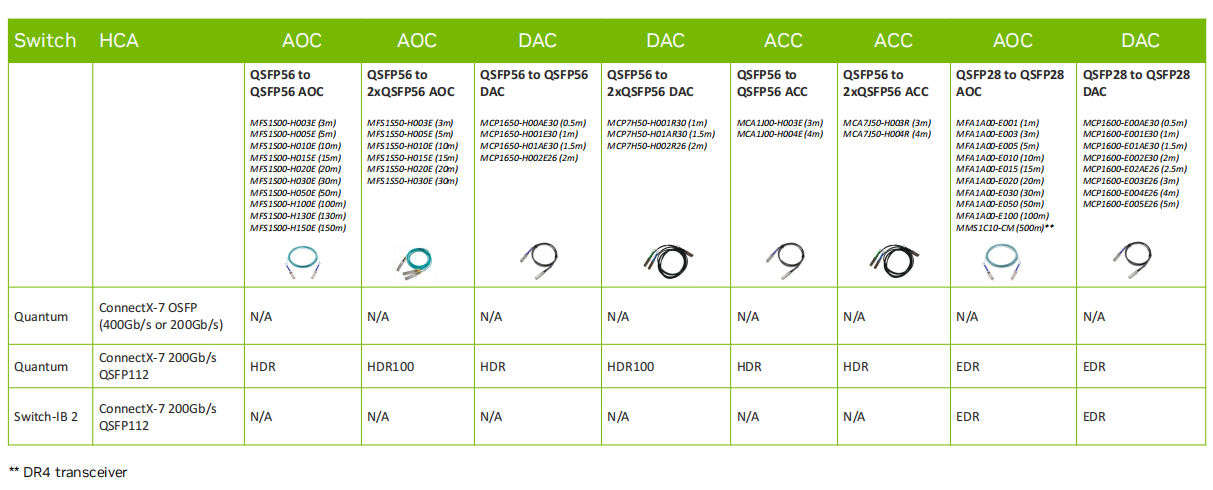
It can be compatible with HDR/EDR cables, but you need to be aware that using HDR/EDR cables will reduce the connection speed because the maximum bandwidth of HDR/EDR cables are 200 Gb/s and 100 Gb/s respectively. Therefore, if you want to fully utilize the performance of CX7 NDR 200 QSFP112, it is recommended that you use NDR cables, which can provide 400 Gb/s of bandwidth.
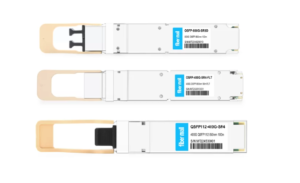
800G SR8 and 400G SR4 Optical Transceiver Modules Compatibility and Interconnection Test Report
Version Change Log Writer V0 Sample Test Cassie Test Purpose Test Objects:800G OSFP SR8/400G OSFP SR4/400G Q112 SR4. By conducting corresponding tests, the test parameters meet the relevant industry standards, and the test modules can be normally used for Nvidia (Mellanox) MQM9790 switch, Nvidia (Mellanox) ConnectX-7 network card and Nvidia (Mellanox) BlueField-3, laying a foundation for

4-Node DGX Spark Cluster Setup: From Hardware BOM and Cabling to First Boot and 200G Interconnect
Building a 4-node NVIDIA DGX Spark cluster involves more than simply connecting four powerful AI systems. The real challenges often lie in the details: a machine without native USB-A ports, a switch port that refuses to establish a link, or a firmware update that fails unexpectedly and requires system recovery. This
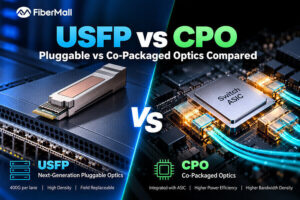
USFP vs CPO: Pluggable vs Co-Packaged Optics Compared
USFP vs CPO is a choice between two ways to move data inside an AI data center. USFP (Ultra-Dense Small Form Factor Pluggable) is a pluggable 400G-per-lane optical module you can swap in the field. CPO (co-packaged optics) integrates the optical engine directly into the switch chip to save power, at the
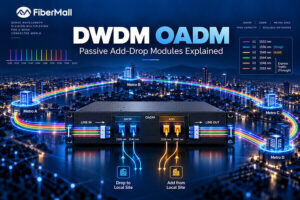
DWDM OADM: Passive Add-Drop Modules Explained
Every DWDM OADM a wavelength passes through introduces some optical loss. Across five cascaded nodes, that loss can consume a substantial share of the link budget—potentially comparable to tens of kilometers of fiber, depending on the OADM design. That is a detail an initial network plan can easily overlook. It
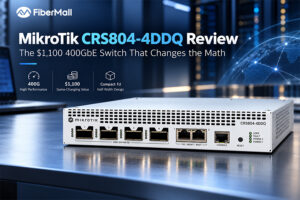
MikroTik CRS804-4DDQ Review: The $1,100 400GbE Switch That Changes the Math
Four 400G ports, 1.6 Tbps of aggregate one-direction port bandwidth, and a compact chassis at an unusually accessible price. The hardware is compelling; optical interconnect costs can determine the total budget. Four 400GbE ports delivering 1.6 Tbps of aggregate one-direction port bandwidth, in a half-width chassis you can lift with

USFP vs OSFP vs QSFP-DD: Form Factors Compared
The three high-density pluggable form factors relevant to 400G, 800G, and next-generation AI networks are QSFP-DD, OSFP, and the newly announced USFP design. QSFP-DD offers broad backward compatibility with supported legacy QSFP modules, OSFP provides a larger form factor with integrated heatsink options and support for higher-power module generations, and
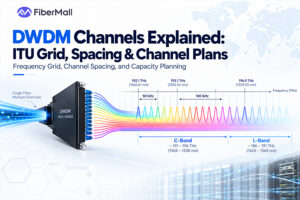
DWDM Channels Explained: ITU Grid, Spacing & Channel Plans
Two DWDM transceivers can both be labeled “channel 29” and still fail to establish a link. The channel label does not uniquely identify the optical frequency. Different vendors may use different numbering conventions, while the transceivers and filters must operate at compatible frequencies for the link to work. If you’ve