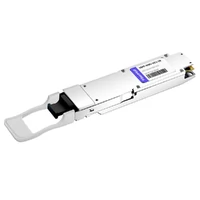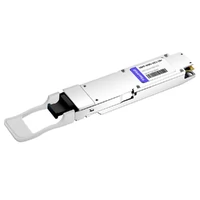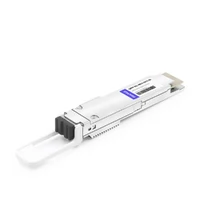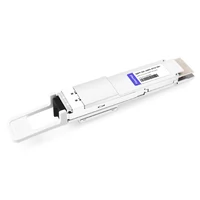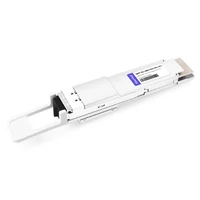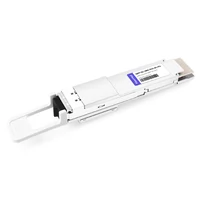

The release of the 400G ZR coherent optical transceiver module marked an important milestone in networking technology. This module was created to serve the growing need for long-distance data transfer. Telecommunication networks, cloud providers, and data centers can now enjoy hassle-free integration due to its pluggable interface. With a 400 Gbps data transfer rate, the 400G ZR optical fiber module is both cost-effective and scalable. This article discusses the revolutionary 400G ZR module in detail, outlining its key features, important benefits, and innovative aspects that enhance modern optical communication. Whether you are a network administrator, systems technician, or technology enthusiast, this guide will help you understand how the 400G ZR is revolutionizing the industry.
What is the Coherent 400G ZR Technology?

How does the 400G ZR Optical Transceiver Function?
The 400G ZR optical transceiver utilizes coherent optical technology to transmit data at 400 Gbps over distances up to 120 kilometers. It uses digital signal processing (DSP) to ensure reliable performance by encoding and decoding the optical signals. The 400G ZR also employs dense wavelength division multiplexing (DWDM), which maximizes utilization of existing optical fiber infrastructure. The module complies with open standards from the OIF (Optical Internetworking Forum), guaranteeing interoperability across network equipment. Its compact QSFP-DD form factor enables easy integration into high-capacity data centers and metro networks.
What Makes 400G ZR Coherent Optics Stand Out?
The 400G ZR coherent optics outperform the rest of the industry in long-range, high-speed data transport and power efficiency. This technology was developed for point-to-point, high-capacity links up to 120 kilometers to meet the demands of cloud and data center interconnections.
The most important detail is that it follows the OIF ZR interoperability standard. This standard enables multi-vendor compatibility, opening up and diversifying the optical ecosystem. It supports 400 Gbps data rates, so the solution can handle immense data traffic and enable quicker service deployment for bandwidth-demanding applications such as AI/ML, video streaming, and large-scale storage replication.
Another key aspect is energy consumption. The QSFP-DD module consumes approximately 15–20 watts, making it more efficient than traditional line cards in legacy equipment. This efficiency helps data centers reduce operational expenses, lower carbon emissions, and gain better control over operations.
In terms of cost efficiency, 400G ZR replaces complex proprietary DWDM systems with simpler pluggable modules that work directly in switches and routers. It eliminates the need for standalone optical transport equipment, reducing capital expenditures. Moreover, transmitting multiple wavelengths over the same fiber pair improves infrastructure utilization and provides the scalability needed for future requirements without extensive upgrades.
The swift increase in global data traffic concerns telecom operators, cloud service providers, and enterprises. 400G ZR coherent optics address this challenge through superior performance, cost-effectiveness, and efficiency. Adoption of these optics advances automation and optoelectronics-defined interfaces.
Why is 400G ZR Important for Optical Networks?
400G ZR is of great importance to optical networks because it reduces latency and enhances bandwidth for long-range links. Its integration of high-precision telecommunication-grade lasers provides precision and simplifies data transfer over long distances. By using standard modules, coherent optical technology is seamlessly incorporated, eliminating proprietary systems and complexity. Standardization enables seamless scaling among cloud service providers, telecom operators, and vendors. Moreover, compliant 400G ZR enhances bandwidth capacity within data centers and backbone networks. Most importantly, it maintains reliability during traffic surges and improves overall performance.
The Power of 400G QSFP-DD DCO ZR
The 400G QSFP-DD DCO ZR leverages advanced coherent optical technology to deliver 400 Gbps over distances up to 120 kilometers without external amplification in many cases. This is enabled by sophisticated digital signal processing (DSP), which ensures reliable signal encoding and decoding across long-haul links. By utilizing dense wavelength division multiplexing (DWDM), the module maximizes fiber capacity by transmitting multiple wavelengths over a single fiber pair. Compliant with the Optical Internetworking Forum (OIF) 400ZR standard, the module ensures interoperability across multi-vendor equipment, fostering an open optical ecosystem. Its compact QSFP-DD form factor integrates seamlessly into high-density data centers and metropolitan networks, supporting applications like AI/ML workloads, video streaming, and large-scale storage replication.
How Does 400G ZR Compare with Other Optical Technologies?

Key Features and Benefits
- High-Speed, Long-Distance Transmission: Supports 400 Gbps over 120 km, ideal for DCI and metro networks, ensuring rapid deployment for bandwidth-intensive applications.
- Energy Efficiency: Consumes approximately 10-15 watts, significantly lower than legacy line cards, reducing operational costs and environmental impact.
- Cost-Effectiveness: Eliminates the need for standalone DWDM systems, lowering capital expenditures and enabling scalable infrastructure upgrades.
- Interoperability: Adheres to OIF 400ZR and OpenZR+ standards, ensuring compatibility across vendors and reducing proprietary lock-in.
- Compact Design: The QSFP-DD form factor maximizes port density, with hot-pluggable functionality for easy installation and maintenance.
400G ZR & Older Modules
Unlike traditional modules used in telecommunication networks, 400G ZR focuses on long-distance fiber links and high-bandwidth data streams. Traditional modules often rely on proprietary solutions, whereas 400G ZR uses the open-standard specification set by the OIF. This guarantees cross-vendor interoperability. Moreover, 400G ZR combines digital coherent optics, enabling it to support distances up to 120 km with high bandwidth—unlike shorter-reach adapters designed for less demanding uses, data centers, or backbone network upgrades.
Concrete Advantages of 400G ZR Features for Data Center Usage
- Optimized Connectivity: The 400G ZR standard simplifies data center interconnects by integrating high-bandwidth, long-distance transmission into a cost-effective solution that reduces overall network complexity.
- Reliable Data Transmission: With 120 km reach support, the 400G ZR ensures fast, enduring performance for current data-handling frameworks.
- Reduced Expenses: This technology lowers the need for extra equipment such as amplifiers or multiplexers, decreasing both capital and operational expenditures. Interoperability with other vendors follows OIF requirements, making integration easy in multi-vendor setups.
- Support for Future Opportunities: 400G ZR can handle additional data center traffic with ease and efficiency, making it the preferred choice for network expansion.
Innovative Aspects of 400G QSFP-DD DCO ZR
The 400G QSFP-DD DCO ZR incorporates cutting-edge technologies:
- 7nm DSP Technology: Enhances signal integrity and reduces latency.
- Silicon Photonics Integration: Enables compact, power-efficient designs.
- Narrow Linewidth ITLA: Supports precise wavelength tuning for DWDM applications.
- High TX Power Variants: Offers up to +3 dBm transmit power, extending reach and reducing reliance on external amplifiers.
These innovations position the 400G QSFP-DD DCO ZR as a cornerstone for next-generation optical networks, addressing escalating global data demands.
What Are the Main Features of The 400G ZR Transceiver Module?

Delving Within The QSFP-DD Form Factor
The Quad Small Form Factor Pluggable DD (QSFP-DD) supports serial data rates up to 400 Gbps with 8 parallel high-speed electrical lanes, each capable of 50 Gbps. Like other transceivers, QSFP-DD modules are backward compatible with older versions, making them easy to incorporate into existing systems. Furthermore, the compact form factor increases port density in network equipment, optimizing data centers and meeting growing bandwidth demands.
The Benefit of Tunable Wavelengths
Tunable wavelengths provide extreme flexibility and efficiency in optical networking. The ability to change wavelengths in real time reduces inventory and operational costs by eliminating the need for many fixed modules with different wavelengths. Fixed modules make networks harder to scale and deploy, while tunable modules enhance expansion, especially under rapid changes in resource availability. Furthermore, tunable technology enables reuse of wavelengths on dedicated ports, optimizing resources in high-capacity networks.
Power Optimization and Flexible Solutions using 400G ZR
400G ZR lowers energy requirements for transmitting large amounts of data, improving power efficiency. It offers greater range, lower latency, and consistent data processing reliability, making it ideal for linking data center units and metropolitan area networks. Moreover, 400G ZR allows operators to meet additional bandwidth requirements with minimal extra network infrastructure, lower operational costs, and greater network resilience. It also enables effortless interconnection of devices from different suppliers and simplifies deployment planning.
Parameter Comparison of 400G QSFP-DD DCO ZR Modules
The following table compares four 400G QSFP-DD DCO ZR modules from FiberMall, highlighting their specifications and use cases.
| Feature | QSFP-DD-400G-DCO-ZR | QSFP-DD-400G-DCO-ZR-HTx | QSFP-DD-400G-DCO-ZR+ | QSFP-DD-400G-DCO-ZR+-HTx |
| Standards | OIF 400ZR | OIF 400ZR | OpenZR+ MSA | OpenZR+ MSA |
| Data Rate | 400 Gbps | 400 Gbps | 100G/200G/300G/400G | 100G/200G/300G/400G |
| Reach (Amplified) | ~120 km | ~120 km | ~480 km+ | ~480 km+ |
| Reach (Unamplified) | ~40 km | ~40 km | ~80–120 km | ~80–120 km |
| Tx Power | -10 to -6 dBm | +1 dBm | -10 to -6 dBm | +1 dBm |
| Modulation | DP-16QAM | DP-16QAM | DP-QPSK, 8QAM, 16QAM | DP-QPSK, 8QAM, 16QAM |
| FEC | O-FEC | O-FEC | O-FEC, E-FEC | O-FEC, E-FEC |
| Wavelength | C-band | C-band | C/Super C-band | C/Super C-band |
| Grid Spacing | 75/100 GHz | 75/100 GHz | 75/100 GHz | 75/100 GHz |
| Applications | DCI, access | DCI, high-loss WDM | Metro, long-haul | Metro, long-haul, high-loss WDM |
| Power Consumption | ~15–20W | ~15–20W | ~20–25W | ~20–25W |
| Connector | Duplex LC | Duplex LC | Duplex LC | Duplex LC |
| Compatibility | Cisco, Juniper | Cisco, Juniper | Cisco, Nokia, Arista | Cisco, Nokia, Arista |
| Use Case | Short-range DCI | Short-range DCI, legacy WDM | Metro, long-haul | Metro, long-haul, legacy WDM |
How is 400G ZR Implemented into the Optical Networks?

400G ZR Implementation in Fiber Optic Systems
The integration of 400G ZR in fiber optic systems uses pluggable transceiver modules compliant with the 400G ZR specification. These modules are inserted into corresponding slots of routers or switches and communicate with adjacent optical systems. With coherent DWDM, 400G ZR allows data transmission over distances of several hundred kilometers. Its modular structure guarantees interoperability between vendors, facilitating easier adoption and lowering expenses. Network operators can efficiently increase bandwidth while maintaining dependable performance and reliability.
Integrating 400G ZR and Maintaining Seamless Interconnect
To integrate 400G ZR effectively, the relevant hardware, software, and network configurations must use correct interfaces. Additional steps, such as testing compatibility with other vendor equipment and confirming transceiver compliance with the 400G ZR standard, are crucial. Adequate optical signal quality within DWDM, appropriate power levels, and proper dispersion management must be maintained. Configuration adjustments and powerful monitoring tools further mitigate issues such as signal degradation. This approach guarantees dependable performance while fully leveraging 400G ZR.
Configuration of 400G QSFP-DD DCO ZR Modules on Juniper and Cisco Switches
Configuring the 400G Coherent High TX Power QSFP-DD DCO OpenZR+ C-band Tunable Optical Transceiver Module on Juniper and Cisco 400G QSFP-DD switches involves setting the wavelength, module ID, and transmit power, followed by verifying the changes. Below are the specific commands for each platform.
Juniper Switch Configuration:
To configure the wavelength, module ID (host and media IDs), and transmit power on a Juniper switch, use the following commands for interface et-0/0/53:
set interfaces et-0/0/53 optics-options wavelength 1567.13
set interfaces et-0/0/53 optics-options application hostid 17 mediaid 70
set interfaces et-0/0/53 optics-options tx-power 0
commit
show configuration | display set | match 0/0/53
- Wavelength: Sets the DWDM wavelength to 1567.13 nm.
- Host/Media ID: Configures the application-specific IDs (hostid 17, mediaid 70) for module identification.
- TX Power: Sets the transmit power to 0 dBm.
- Verification: The show configuration command confirms the applied settings for interface et-0/0/53.
Cisco Switch Configuration:
For a Cisco switch, configure the module on interface Ethernet 1/3 as follows:
switch# configure terminal
switch(config)# interface ethernet 1/3
switch(config-if)# zr-optics fec cFEC muxponder 1×400 modulation 16QAM dac-rate 1×1
switch(config-if)# zr-optics cd-min -2300 cd-max 2300
switch(config-if)# zr-optics transmit-power -190
switch(config-if)# zr-optics dwdm-carrier 100MHz-grid frequency 1913000
- FEC and Modulation: Configures CFEC forward error correction, 1×400 Gbps muxponder mode, 16QAM modulation, and 1×1 DAC rate.
- Chromatic Dispersion: Sets chromatic dispersion limits (cd-min -2300, cd-max 2300 ps/nm) for signal optimization.
- Transmit Power: Adjusts to -19.0 dBm (specified as -190 in units of 0.1 dBm).
- DWDM Carrier: Sets the DWDM frequency to 191.3000 THz on a 100 MHz grid.
- Verification: Use show running-config interface ethernet 1/3 or show zr-optics to confirm the configuration.
These commands enable precise tuning of the 400G QSFP-DD DCO ZR module, ensuring compatibility with DWDM systems and optimal performance for specific network requirements. Always verify configurations to avoid service disruptions.
What are the problems and opportunities of 400G ZR?

Resolving Restrictions on Data Rate and Distance
Although striking the ideal balance between data rate and distance with 400G ZR technology is physically and operationally demanding, it adheres to defined parameters such as signal attenuation and dispersion. High data rates introduce accuracy challenges. To retain signal integrity, advanced error correction methodologies (FEC) are used extensively. Practical limits on transmission distance without quality degradation can be improved through amplification and wavelength management solutions that do not interfere with performance. Evolving optical technologies create opportunities for innovations in modulation formats and signal processing to mitigate such limitations.
The Contribution of 400G ZR Technology to DCI Strategies of the Future
As a flagship of ZR technology, 400G ZR simplifies the scaling of Data Center Interconnect (DCI) strategies by integrating high-capacity optical interfaces directly into routers and switches. No separate transponder equipment is needed, as it becomes an integral part of routers and switches due to its cost-effectiveness and reduced complexity. This lowers operational costs, eliminates redundancy, streamlines processes, and enables vertical integration while decreasing network architecture complexity. Moreover, the integrated Ethernet format supports simple cross-vendor environments. All these features make 400G ZR a pivotal element in improving cloud-based services and enhancing efficiency in modern cloud and data center infrastructures.
Industry Impact and Adoption
The 400G QSFP-DD DCO ZR has gained traction among hyperscale cloud providers (e.g., Microsoft, Amazon, Google) and telecom operators (e.g., AT&T, COLT). Industry reports indicate 190,000 ports shipped in 2022, with projections of 250,000 units by 2026. The technology reduces the total cost of ownership by up to 45% through simplified architectures and lower power consumption. Cisco’s Routed Optical Network (RON) solutions, post-Acacia acquisition, integrate 400G ZR for streamlined IP+optical fusion, while operators like Arelion report significant savings and agility.
With global data traffic soaring, the 400G QSFP-DD DCO ZR is critical for future-proofing networks. Its support for high-capacity, low-latency links positions it for 5G backhaul, edge computing, and AI-driven data centers. Standardization efforts by the Open Data Center Committee (ODCC) and developments toward 800G ZR signal a path to even higher-speed solutions.
The 400G QSFP-DD DCO ZR is redefining optical networking with its performance, efficiency, and scalability. Its advanced coherent technology, compact form factor, and open standards compliance make it ideal for data centers, telecoms, and cloud providers. The comparison of FiberMall’s modules highlights options for standard and high TX power applications, while configuration commands for Juniper and Cisco switches provide practical guidance for deployment. As networks evolve toward the terabit era, the 400G QSFP-DD DCO ZR remains a pivotal solution for meeting tomorrow’s digital demands.
Frequently Asked Questions (FAQ)
Q: What is the 400G ZR optical transceiver module?
A: The 400G ZR is a coherent optical transceiver module for DWDM optical networks. It enables high-density data transmission over long distances and uses pluggable coherent optics technology, supporting up to 400 Gbps transmission while adhering to the OIF 400ZR implementation agreement.
Q: What is the role of the 400G ZR module with respect to the enhancement of DWDM systems?
A: The 400G ZR module enhances DWDM systems through high-density long-distance optical transmission with minimal power consumption. In addition, the modules support C-band and DWDM tunable wavelengths, optimizing the use of fiber-optic networks.
Q: Which benefits are supported with the installation of pluggable coherent optics?
A: The 400G ZR modules with coherent pluggable designs offer benefits such as lowering operational costs through reduced power consumption, enabling simpler network upgrades, and ease of deployment in existing networks without drastic changes. Moreover, they allow easier integration with coherent QSFP-DD/OSFP form factors for routing and line systems.
Q: Why does the OIF 400ZR implementation agreement matter?
A: The OIF 400ZR Implementation Agreement details specifications for 400ZR modules—ensuring compatibility across multiple pieces of equipment, including coherent QSFP-DD and OSFP optical modules. It allows devices from different vendors to interface freely, ensuring widespread usability and compatibility.
Q: In what ways does the 400G ZR control power usage?
A: The 400G ZR uses efficient design and advanced photonic technologies that greatly minimize power requirements. This supports high-speed data communication and is especially beneficial for high-density deployments where operational sustainability is needed.
Q: What is the range of distances the 400G ZR can reliably transmit data?
A: The 400G ZR is designed to reliably transmit data over distances of 120 kilometers. It is also suited for long-haul and metro networks, providing broader regional coverage for fiber optic networks.
Q: Is it possible to integrate the existing 400G ZR Module into a network infrastructure that was not specifically designed for it?
A: Yes, its pluggable form factor and adherence to industry standards allow integration into existing network infrastructures. The module is compatible with multiple line systems and is widely supported by network equipment providers such as Juniper Networks.
Q: In what aspects does the 400G ZR differ from traditional optical modules?
A: Compared with conventional modules, 400G ZR offers a higher data rate (up to 400 Gb), more effective optical transmission over longer ranges with better OSNR, and output power levels up to 0 dBm. Its qualification under implementation agreements enables interoperability with coherent transceiver technologies such as QSFP-DD ZR, meeting the demands of current networks.
Q: What exactly does Juniper Networks do to assist the 400G ZR?
A: Juniper Networks offers 400G ZR-compatible network equipment that increases support for ZR modules. Their products integrate seamlessly with these modules, enhancing the deployment and management of coherent technologies for dense and efficient optical interconnect solutions in different network environments.
Reference Sources
- Title:Demonstration of 400G High Power ZR+ IP over WDM in Key Network Scenarios with End-to-End 400GE Traffic
- Authors: Yu Rong Zhou et al.
- Publication Date: 2024-03-24
- Citation Token: (Zhou et al., 2024, pp. 1–3)
- Summary: This paper demonstrates successful use of 400G high power ZR+ optics in IP over Wave Division Multiplexing WDM applications. The research examines the behavior of these optics in fundamental network situations, particularly targeting end-to-end 400GE telemetry and streaming telemetry for performance monitoring and evaluation. The approach consists of having the experiment conduct steps to measure the defined parameters of the 400G ZR+ optics in a practical network environment.
- Title:Field Demonstration of Disaggregated Optical Network Consisting of ZR+ and Coherent Channels using Power Equalization by Switched Gain Equalization Controlled Amplifiers
- Authors: Sumit Chatterjee et al.
- Publication Date: 2023-03-01
- Citation Token: (Chatterjee et al., 2023, pp. 1–3)
- Summary: This paper presents a practical evaluation of a 400G-ZR+ QSFP-DD-DCO interfaced with ten coherent channels, emphasizing interoperability across multiple vendors. The approach is based on SimAlign simulation verification using switched gain equalization controlled amplifiers. The findings confirm the merit of disaggregation in optical networks with regard to operational performance and flexibility.
- Title:Cost Model Comparison of ZR/ZR+ Modules Against Traditional WDM Transponders for 400G IP/WDM Core Networks
- Authors: P. Wright et al.
- Publication Date: 2020-12-01
- Citation Token: (Wright et al., 2020, pp. 1–4)
- Summary: The document provides a cost model for ZR/ZR+ module integration, alongside comparison to traditional Wavelength Division Multiplexing (WDM) transponders, within the context of 400G IP/WDM core networks. It offers an exhaustive consideration including details of cost implications of various network architecture configurations while demonstrating the feasibility of integrating WDM optics into IP routers at low cost and without loss of port density.
- Title:927-km End-to-End Interoperable 400-GbEthernet Optical Communications through 2-km 400GBASE-FR4, 8×100-km 400G-OpenROADM and 125-km 400-ZR Fiber Lines
- Authors: E. Pincemin et al.
- Publication Date: 2022-03-01
- Citation Token: (Pincemin et al., 2022, pp. 1–3)
- Summary: This paper details the first instance of the optical transmission of 400-GbE data flows of 927 km using various fiber line sections in an end-to-end interoperable manner. It involves developing experimental arrangements to verify the performance and interoperability of various optical parts, proving the 400G performance claim of the developed 400G optics.
- Title:Silicon Photonic ZR/ZR+ DCO-CFP2 Interface for DCI and Metro-Regional 400G Optical Communications
- Authors: E. Pincemin, Y. Loussouarn
- Publication Date: 2021-06-01
- Citation Token: (Pincemin & Loussouarn, 2021, pp. 1–3)
- Summary: This research develops a 400-Gbps DP-16QAM silicon photonic DCO-CFP2 interface employing standard Forward Error Correction (FEC) techniques. The approach includes relating experimental measurements of the interface’s performance with its applicability to Data Center Interconnect (DCI) as well as metro and regional optical networks.
- Wavelength-division multiplexing
- Transceiver
Related Products:
-
 OSFP-400G-DCO-ZR 400G Coherent OSFP-DCO ZR C-band Tunable Optical Transceiver Module
$7000.00
-
OSFP-400G-DCO-ZR+ 400G Coherent OSFP-DCO ZR+ C-band Tunable Optical Transceiver Module
$7000.00
-
QSFP-DD-400G-DCO-ZR 400G Coherent QSFP-DD DCO C-band Tunable Optical Transceiver Module
$4550.00
-
QSFP-DD-400G-DCO-ZR+ 400G Coherent QSFP-DD DCO C-band Tunable Optical Transceiver Module
$4680.00
-
QSFP-DD-400G-DCO-ZR+-HTx 400G Coherent High TX Power QSFP-DD DCO OpenZR+ C-band Tunable Optical Transceiver Module
$5500.00
-
QSFP-DD-400G-DCO-ZR-HTx 400G Coherent High TX Power QSFP-DD DCO ZR C-band Tunable Optical Transceiver Module
$5200.00