


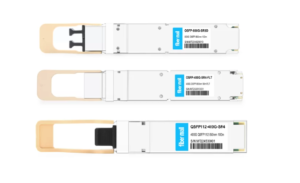
800G SR8 and 400G SR4 Optical Transceiver Modules Compatibility and Interconnection Test Report
Version Change Log Writer V0 Sample Test Cassie Test Purpose Test Objects:800G OSFP SR8/400G OSFP SR4/400G Q112 SR4. By conducting corresponding tests, the test parameters meet the relevant industry standards,
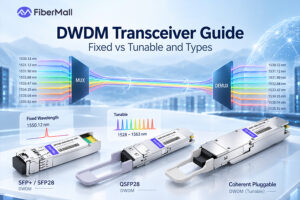
DWDM Transceiver Guide: Fixed vs Tunable and Types
Some DWDM link failures begin before anyone touches a fiber. Consider a hypothetical case: a regional operator adds a 10G wavelength to an active 40-channel C-band MUX. The optics support

How RoCE Switches Build an End-to-End Lossless Network for RDMA
As AI clusters expand from hundreds to thousands of GPUs, network performance has become a critical factor in distributed training efficiency. High-speed Ethernet networks must deliver more than raw bandwidth.
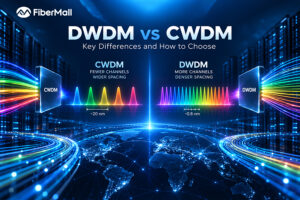
DWDM vs CWDM: Key Differences and How to Choose
One of the fundamental differences between DWDM and CWDM is how far apart their optical wavelengths are spaced. CWDM uses a channel spacing of 20 nanometers. DWDM packs channels much
DWDM Complete Guide: Dense Wavelength Division Multiplexing
A metro fiber route between two data centers can reach its capacity limit faster than expected. When it does, the immediate response may be to deploy additional fiber. However, installing

QSFP112 Troubleshooting Guide: Fix Link Down, Flaps and FEC Errors
Imagine an engineer named Priya troubleshooting a 400G QSFP112 port that suddenly went down at 2:10 a.m. The module appeared in the switch inventory, but the link indicator remained dark.
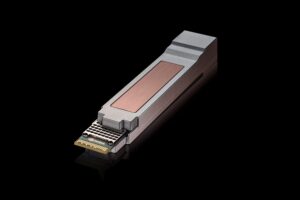
NVIDIA and Cisco Unveil USFP Optics — 400G per Lane and 12.8Tb/s for AI Factories
October 14, 2026 — NVIDIA and Cisco have announced Ultra-Dense Small Form Factor Pluggable (USFP), a new optical transceiver form factor designed as the first pluggable module to carry 400Gb/s-per-lane electrical signals.