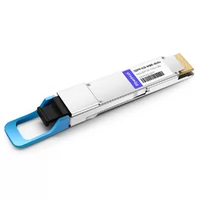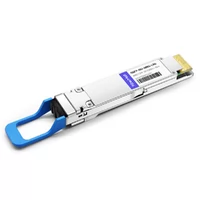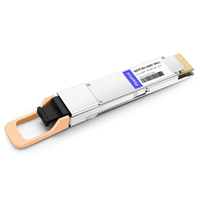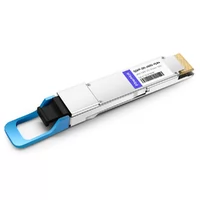

David stared at the quote on his screen. The total cost for the optical transceivers amounted to eight million dollars. His director had asked for a budget estimate for a data center-wide 400G system upgrade. Calculating the costs across 1,200 switch ports using standard Cisco list pricing, David watched the total QSFP-DD spend multiply faster than he could blink. Unsurprisingly, the CFO rejected the proposal within forty-eight hours. David wasn’t the first network director to face this predicament, and he certainly won’t be the last.
QSFP-DD pricing creates significant challenges for buyers due to the extreme opacity of the market. Standard procurement guides list endless catalog numbers without valuable context, overwhelming engineers with technical specifications while completely obscuring actual market costs.
This guide delivers clear, accurate pricing data. It breaks down the current costs for 400G and 800G modules, provides an objective comparison between OEM and third-party products, and reveals the volume discount tiers that most vendors keep secret. Finally, it presents a Total Cost of Ownership (TCO) framework to help you reframe optics from a simple consumable into a strategic infrastructure asset. If you need a refresher on the underlying technology first, check out our complete QSFP-DD guide.
QSFP-DD Price by Module Type (2026)
The 400G transceiver price spread between the most economical and the most expensive modules is roughly 100:1. A short-reach SR8 for in-rack connections costs under $2,000 from a reputable third-party vendor, while a coherent ZR+ for long-haul Data Center Interconnect (DCI) can exceed $130,000 from an Original Equipment Manufacturer (OEM).
Understanding this range matters. Most buyers don’t need a $130,000 module, but without structured pricing data, it is impossible to benchmark your specific requirements. Ultimately, the module types and transmission distances you deploy dictate the final price you pay. For a deeper dive into functionality, see our guide to 400G QSFP-DD module types.

400G QSFP-DD Module Prices
| Module Type | Third-Party Price | OEM List Price | Typical Savings |
| SR8 (100m MMF) | $1,400 – $1,800 | ~$6,200 | 71–77% |
| DR4 (500m SMF) | ~$2,850 | ~$5,200 | ~45% |
| FR4 (2km SMF) | $769 – $2,500 | ~$6,700 | 63–88% |
| LR4 (10km SMF) | $925 – $3,500 | ~$10,400 | 66–91% |
| ZR (80km SMF) | $10,857 – $30,000 | ~$111,000 | 73–90% |
| ZR+ (120km+ SMF) | $12,000 – $35,000 | ~$135,000 | 74–91% |
SR8 modules dominate modern data center deployments, serving as the workhorse for in-rack and cross-row connectivity. Priced between $1,400 and $1,800 from reputable third-party vendors, this range represents the standard entry point for 400G adoption.
DR4 and FR4 modules bridge the gap between data center rows and shorter campus links. The third-party ecosystem for these reaches is highly competitive, driving significant price compression over the past eighteen months.
LR4, ZR, and ZR+ modules are where procurement costs escalate rapidly. An OEM LR4 priced at over $10,000 can easily turn a standard DCI deployment into a budget crisis. Coherent ZR and ZR+ optics represent the single largest line-item expense in many wide-area network builds, but they are also where third-party alternatives unlock the most dramatic absolute savings.
800G QSFP-DD Module Prices
Pricing for 800G QSFP-DD modules is still finding its equilibrium. While reliable third-party options exist, the ecosystem remains relatively consolidated.
| Module Type | Third-Party Price | OEM List Price |
| SR8 | $3,500 – $5,000 | ~$7,000 – $8,500 |
| DR8 | $4,000 – $6,000 | ~$8,000 – $10,000 |
Compared to the highly commoditized 400G market, 800G pricing is still maturing. Buyers can expect to pay roughly 60% to 70% of OEM list prices for proven third-party 800G transceivers. Because Digital Optical Monitoring (DOM) integration and firmware compatibility can still vary among early compatible units, many enterprise engineers currently prefer OEM modules for highly critical 800G production workloads, anticipating broader third-party stabilization by 2027.
Cable and Accessory Costs
Never overlook the physical layer infrastructure. The transceiver module is only one part of the total deployment spend.
- 400G DAC (3m): $100 – $150
- 400G AOC: $400 – $800 (varies by length)
- 800G DAC (1m): $200 – $300
Direct Attach Copper (DAC) cables are incredibly cost-effective for in-rack connections under 3 meters, while Active Optical Cables (AOCs) command a premium for extended intra-row reaches. Whenever architecture permits, utilizing a single $120 DAC to replace a pair of $1,400 SR8 modules yields massive savings. While copper isn’t viable for every topology, rigorously mapping reach requirements before defaulting to optical transceivers is a best practice.
OEM vs Third-Party: What’s the Real Difference?
Marcus, a network architect at a Midwestern telecom, was floored by the OEM quote for 400G ZR+ modules required for a new DCI link: $135,000 per module. He needed twelve. When a colleague recommended a validated, compatible vendor offering units at $12,000, Marcus naturally assumed the underlying hardware was vastly inferior.
It wasn’t. The exact same industry-standard merchant DSP (such as Marvell) powered both modules. They utilized the same lasers, identical photodiodes, and shared the exact same optical performance tolerances. That massive price gap wasn’t a reflection of engineering quality—it was driven entirely by brand premiums, distribution markups, and proprietary EEPROM coding.
The Hardware Reality
The vast majority of top-tier third-party QSFP-DD transceivers share identical bills of materials with their OEM counterparts, assembled in the same contract manufacturing facilities in Asia and validated on the exact same testing beds. The tangible differences come down to three factors:
- EEPROM Coding: OEM modules contain proprietary cryptographic identifiers that satisfy firmware handshakes inside the host switch.
- Heatsink Aesthetics: Minor mechanical variations in external thermal casing exist, though heat dissipation performance remains functionally equivalent.
- Firmware Validation: Network operating systems frequently lock out unbranded optics unless the module’s EEPROM is flawlessly programmed to emulate the OEM signature.
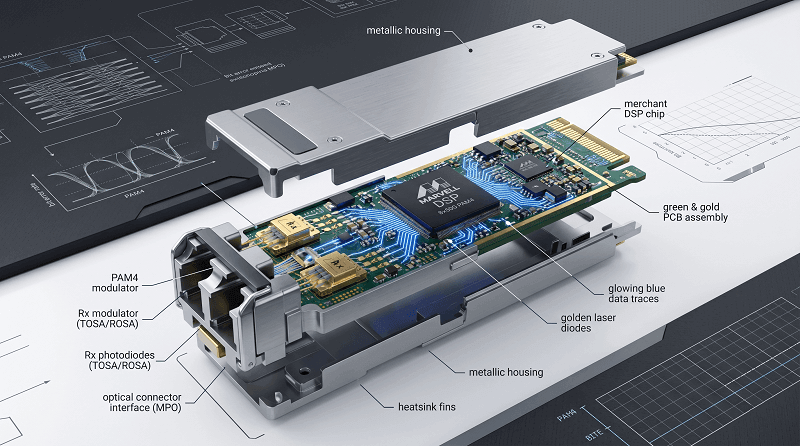
Reputable third-party vendors like FiberMall individually program and test modules for targeted switch platforms. A true “Cisco-compatible” QSFP-DD is not a generic, off-the-shelf optic; it is a precision-coded component engineered to interface seamlessly with Cisco’s specific environment. For more details, read our QSFP-DD compatibility guide.
Support and Warranty Trade-offs
When evaluating OEM against compatible transceivers, risk allocation and support frameworks are the true differentiators. OEM optics fall under the switch vendor’s unified enterprise support umbrella. The primary risk associated with third-party optics is support finger-pointing: if a switch chassis experiences a complex failure, an OEM support technician may attempt to blame the unbranded optic in the port.
Fortunately, premium third-party vendors have evolved to mitigate this entirely, routinely offering:
- Lifetime hardware warranties
- Advance-replacement Return Merchandise Authorization (RMA) programs
- Guaranteed 24-hour turnaround on replacement shipments
- Direct access to specialized optical engineers rather than generalist call centers
The trade-off is clear-cut: OEM procurement provides single-vendor accountability (“one throat to choke”), while premium third-party procurement yields 60% to 90% capital expenditure savings backed by robust, specialized component-level support.
When to Choose OEM
OEM transceivers remain the most logical choice in highly specific scenarios:
- Mission-Critical Single Points of Failure: Core links where downtime directly impacts revenue generation, necessitating an unassailable, unified SLA from the chassis vendor.
- Strict Contractual Mandates: Enterprise agreements or government contracts that explicitly forbid third-party components.
- Complex Coherent Deployments in Unproven Topologies: Early-stage ZR/ZR+ deployments featuring highly volatile chromatic dispersion or extreme temperature profiles, where native operating system integration minimizes deployment friction.
When to Choose Third-Party
Validated third-party QSFP-DD modules are the optimal choice for the vast majority of enterprise and cloud architectures:
- Standard Client Optics: Mature form factors like SR8, DR4, FR4, and LR4 where compatible alternatives match OEM reliability bit-for-bit.
- Hyperscale and High-Density Deployments: Projects requiring 500+ modules, where aggregate savings are too substantial to ignore.
- CAPEX-Constrained Environments: Scaling startups, research labs, and mid-sized data centers seeking to deploy high-performance 400G fabrics that would be financially unfeasible under OEM pricing structures.
- Staging and Development Fabrics: Environments where spending $6,000 on an OEM lab optic is entirely irrational when a $1,400 compatible unit delivers the exact same optical signal.
For environments that need flexibility between form factors, adapter converter modules can also help you bridge third party QSFP-DD and legacy form factors.
Understanding Volume Pricing and Discounts
Procuring QSFP-DD modules at a scale of 10,000 units doesn’t just unlock a minor discount—it fundamentally shifts the procurement conversation. Many procurement teams view published list prices as a rigid baseline. In reality, optical pricing curves flatten non-linearly against volume. Mastering these discount tiers allows organizations to strategically restructure their buying cycles.
Typical Volume Discount Tiers
| Volume Tier | Discount Range | Effective Price (400G SR8 Example) |
| 1–100 units | List price | $1,400 – $1,800 |
| 100–1,000 units | 10–20% | $1,120 – $1,620 |
| 1,000–10,000 units | 20–35% | $910 – $1,440 |
| 10,000+ units | 30–45% | $770 – $1,260 |
These tiers serve as an approximate baseline; negotiated figures depend heavily on vendor relationships, module complexity, and committed lead times. Coherent transceivers typically experience shallower discount curves than standard client optics due to inherently higher underlying component costs and tighter manufacturing margins.
Negotiation Strategies
When procuring transceivers at scale, several proven tactics consistently unlock superior pricing structures:
- Multi-year Forecast Commitments: Manufacturers heavily prioritize revenue predictability. Signing a two- to three-year agreement backed by dependable quarterly deployment forecasts routinely extracts an additional 5% to 10% discount beyond standard volume tiers.
- Comprehensive Infrastructure Bundling: A vendor quoting 2,000 transceivers alongside 4,000 DACs and structured patch panels possesses significantly more margin flexibility. Cross-layer bundling consistently out-negotiates isolated, module-only RFPs.
- Direct-to-Manufacturer Procurement: Executing orders exceeding 5,000 units directly with an established factory completely bypasses traditional distributor and value-added reseller (VAR) markups, eliminating unnecessary overhead.
- Certified Remanufactured Optics: Select vendors provide fully recertified, factory-refurbished OEM modules carrying fresh warranties at 40% to 60% off list pricing. This serves as an excellent middle ground when enterprise policies dictate OEM branding but budgets demand aggressive cost reduction.
QSFP-DD TCO: Beyond the Module Price
Finance executives frequently view optical transceivers as basic consumables—analogous to printer ink. You purchase them, plug them in, and replace them when necessary. That specific framing is deeply flawed and financially detrimental.

Over a standard three-year operational lifecycle, the upfront acquisition cost of the module accounts for only about 40% of its true financial footprint. Host switch port allocation, power draw, physical cabling infrastructure, rack space footprint, and supplemental cooling demands consume the remaining 60%. Presenting optical procurement through the lens of Total Cost of Ownership (TCO) is the definitive strategy for securing executive budget approval.
Sarah, a data center director based in Virginia, experienced this firsthand when her CFO rejected a $3 million CAPEX request for a facility-wide 400G upgrade. In response, Sarah constructed a comprehensive TCO model demonstrating that migrating to 400G QSFP-DD fabrics consolidated physical switch port requirements by a factor of 4:1. Drastically fewer required chassis meant massive reductions in ambient power draw, minimized cooling footprints, and streamlined overhead cabling runs. The net three-year TCO proved highly positive, recouping the initial investment entirely. The CFO signed off on the initiative that afternoon.
3-Year TCO Comparison: 100G vs 400G
| Cost Component | 100G QSFP28 (1 Tbps) | 400G QSFP-DD (1 Tbps) |
| Modules Required | 10 units | 3 units (includes 1 redundant spare) |
| Module cost (third-party) | ~$800 × 10 = $8,000 | ~$1,500 × 3 = $4,500 |
| Switch ports | 10 ports | 3 ports |
| Switch cost (allocated) | ~$1,500 × 10 = $15,000 | ~$1,500 × 3 = $4,500 |
| Power (3 years) | ~$118 | ~$95 |
| Cabling | ~$2,000 | ~$800 |
| Rack space / cooling | ~$1,500 | ~$500 |
| 3-Year TCO | ~$26,618 | ~$10,395 |
These optical transceiver TCO numbers are illustrative but directionally accurate. The 4:1 port consolidation is the dominant factor. Every eliminated port removes switch hardware, power draw, and physical complexity. For more on power considerations, see our QSFP-DD power guide.
Sample TCO Calculation
Let’s walk through a concrete pricing scenario where an infrastructure upgrade requires 1 Tbps of aggregate capacity within a data center fabric.
Option A: 100G QSFP28 Architecture
- Transceiver Acquisition: 10 modules @ $800 each = $8,000
- Switch Chassis Allocation: 10 ports @ $1,500 allocated cost per port = $15,000
- Operational Power: 10 modules × 4.5W × 24 hours × 365 days × 3 years @ $0.10/kWh = ~$118
- Structured Cabling & Patching: ~$2,000
- Facility Overhead (Cooling & Rack Space): ~$1,500
- Total 3-Year Lifecycle Spend: ~$26,618
Option B: 400G QSFP-DD Architecture
- Transceiver Acquisition: 3 modules @ $1,500 each = $4,500 (Note: Provides 1.2 Tbps, ensuring full capacity plus redundancy)
- Switch Chassis Allocation: 3 ports @ $1,500 allocated cost per port = $4,500
- Operational Power: 3 modules × 12W × 24 hours × 365 days × 3 years @ $0.10/kWh = ~$95
- Structured Cabling & Patching: ~$800
- Facility Overhead (Cooling & Rack Space): ~$500
- Total 3-Year Lifecycle Spend: ~$10,395
Net Lifecycle Impact: Migrating to a consolidated 400G interface yields net savings of roughly $16,223 per Tbps over a three-year operational window. When scaled across a massive 100 Tbps core deployment, that aggregate delta pays for a substantial portion of the physical host switch upgrade itself. That is precisely the narrative that wins definitive CFO approval.
Procurement Decision Framework
Answering three straightforward questions allows network architects to identify the exact price tier and sourcing model suitable for their deployments. The vast majority of procurement paralysis stems from treating every network link like a unique, isolated case. In reality, evaluating your reach parameters, risk tolerance, and aggregate deployment scale isolates the optimal sourcing path in under ninety seconds.
The Three-Question Framework
1. What’s the reach requirement?
- Under 100 meters: SR8 or DAC
- 500 meters to 2 km: DR4 or FR4
- 10 km: LR4
- 80 km+: ZR or ZR+
2. What’s the risk tolerance?
- Low Risk: OEM for all coherent optics; third-party for standard client optics
- Medium Risk: Third-party for everything except mission-critical single points of failure
- High Risk Tolerance: Third-party across the board, with spares on the shelf
3. What’s the deployment scale?
- Under 100 modules: Compare the QSFP-DD price across 2–3 third-party vendors
- 100–1,000 modules: Negotiate volume discounts and request samples for testing
- 1,000+ modules: Go factory-direct. The savings at this scale are transformative.
Decision Matrix
| Target Topology / Use Case | Recommended Module Form Factor | Recommended Sourcing Path |
| In-Rack Topologies (<3m) | Passive DAC or SR8 | Third-Party Compatible |
| Intra-Row Connectivity (<100m) | SR8 Transceiver | Third-Party Compatible |
| Campus / Metro Rings (<2km) | DR4 / FR4 Transceiver | Third-Party Compatible |
| Standard DCI Interconnect (<10km) | LR4 Transceiver | Third-Party or Certified Remanufactured OEM |
| Long-Haul DCI (>80km) | Coherent ZR / ZR+ | OEM or Rigorously Lab-Validated Third-Party |
| High-Density AI Cluster Fabrics | DR8 (800G) | Premium Third-Party (if proven); OEM (for early adopters) |
This matrix does not account for highly bespoke edge cases, it successfully addresses 90% of standard enterprise workloads, stripping the guesswork out of cost forecasting. If you are planning a large-scale procurement cycle and require highly specific, volume-adjusted pricing for your exact module mix, contact FiberMall for a tailored engineering quote.
QSFP-DD Price FAQ
How much does a standard 400G QSFP-DD transceiver cost?
Third-party 400G QSFP-DD transceivers range from roughly $769 for short-reach FR4 modules up to $35,000 for highly advanced coherent ZR+ units. By comparison, OEM list pricing spans from $5,200 to over $135,000. The vast majority of enterprise data center operators pay between $1,400 and $2,500 per module for standard client-facing SR8 or DR4 form factors.
Is it safeto deploy third-party QSFP-DD transceivers in production environments?
Yes, particularly for standard client optics. Numerous documented hyperscale and enterprise deployments report zero hardware failures over multi-year operational windows when utilizing highly reputable third-party suppliers. The critical requirement is sourcing exclusively from established vendors who precision-code internal EEPROMs to match your target switch operating system and back their components with advance-replacement SLAs.
What is the tangible difference between OEM and compatible QSFP-DD modules?
Despite massive discrepancies in unit pricing, the underlying hardware components are frequently identical, sharing the exact same lasers, merchant DSPs, and photodiodes. The core differentiators are proprietary EEPROM platform coding, external heatsink branding, and the back-end support framework. OEM sourcing provides unified, single-vendor chassis support, while premium third-party procurement yields 60% to 90% capital savings paired with direct, component-level engineering support.
How do I effectively justify necessary QSFP-DD expenditure to my CFO?
Frame the entire conversation around comprehensive Total Cost of Ownership (TCO) rather than isolated per-unit acquisition costs. Demonstrate how migrating to 400G interfaces drives a 4:1 consolidation in physical switch ports, slashing total required chassis counts, cutting facility power draws, and streamlining structured cabling overhead. Despite commanding a higher individual module acquisition cost, a consolidated 400G fabric routinely yields a significantly lower three-year TCO than an equivalent aggregated 100G architecture.
Are validated third-party options available for 800G deployments?
Yes, though the ecosystem remains relatively narrow. A select group of premium vendors currently supply reliable 800G QSFP-DD modules at roughly 60% to 70% of standard OEM pricing. However, because low-level integration factors like Digital Optical Monitoring (DOM) reporting can still vary slightly across early platform releases, many infrastructure architects currently prioritize OEM units for highly sensitive 800G core production rings, expecting broader third-party standardization by 2027.
What volume discounts structures should procurement teams anticipate?
Discounts scale predictably against committed volume: roughly 10% to 20% at 100+ units, 20% to 35% at 1,000+ units, and 30% to 45% for orders exceeding 10,000 units. Note that highly complex coherent transceivers feature shallower discount curves than highly commoditized client optics. Executing multi-year contractual commitments and aggressively bundling cross-layer cabling assets typically extracts an additional 5% to 10% discount margin.
QSFP-DD Price: Key Takeaways
David eventually secured executive approval for his infrastructure upgrade. He didn’t get his original $8 million request—he secured $2.1 million. By strategically transitioning to validated third-party transceivers for standard client-facing links, executing a negotiated three-year corporate volume commitment, and reframing the core financial proposal around comprehensive TCO rather than isolated module price tags, he successfully delivered the project. The upgraded network fabric went live six months later.
Core Summary Rules for Network Directors:
- A Massive Spectrum: Unit prices span an immense gap from $1,400 to over $135,000 per module depending on reach classification and vendor branding. Evaluating OEM against compatible alternatives relies entirely on balancing reach parameters, risk tolerance, and aggregate scale.
- Equivalent Hardware at a Fraction of the Cost: Certified third-party and direct-to-manufacturer channels deliver 60% to 90% capital expenditure savings while providing identical component-level performance for standard client optics. The absolute capital saved on long-haul coherent modules alone is frequently large enough to fund supplemental facility expansion projects.
- Look Beyond the Initial Price Tag: Upfront acquisition costs represent merely 40% of total operational lifecycle spend. Aggressive 4:1 port consolidation, reduced physical chassis counts, and slashed ambient power draws make 400G architectures demonstrably more cost-effective than aggregated 100G deployments over a standard three-year window.
- Leverage Sourcing Leverage: Volume discounts are highly impactful. When procuring 1,000+ units, accepting baseline list pricing is a failure of negotiation. When scaling past 10,000 units, procurement should bypass traditional channels entirely to source factory-direct.
- Avoid Analysis Paralysis: Relying strictly on the three-question procurement framework—reach, risk, and scale—cuts through unnecessary operational complexity.
As next-generation 1.6T modules transition from roadmap concepts to early data center evaluations, historical pricing patterns are guaranteed to repeat: steep initial OEM brand premiums, gradual third-party market validation, and eventual commoditization where the exact same high-performance DSP sits inside both a $40,000 OEM module and a $6,000 compatible unit. Infrastructure leaders who master these underlying market dynamics today will consistently engineer faster, more resilient networks at a fraction of the cost.
If you’re planning a 400G or 800G deployment and want a firm QSFP-DD price for your module mix, contact FiberMall for a tailored quote. We manufacture QSFP-DD modules factory-direct and can structure volume pricing that fits your procurement cycle.
Related Products:
-
 QSFP-DD-400G-SR8 400G QSFP-DD SR8 PAM4 850nm 100m MTP/MPO OM3 FEC Optical Transceiver Module
$149.00
QSFP-DD-400G-SR8 400G QSFP-DD SR8 PAM4 850nm 100m MTP/MPO OM3 FEC Optical Transceiver Module
$149.00
-
QSFP-DD-400G-DR4 400G QSFP-DD DR4 PAM4 1310nm 500m MTP/MPO SMF FEC Optical Transceiver Module
$400.00
-
QSFP-DD-400G-SR4 QSFP-DD 400G SR4 PAM4 850nm 100m MTP/MPO-12 OM4 FEC Optical Transceiver Module
$450.00
-
QSFP-DD-400G-FR4 400G QSFP-DD FR4 PAM4 CWDM4 2km LC SMF FEC Optical Transceiver Module
$500.00
-
QSFP-DD-400G-XDR4 400G QSFP-DD XDR4 PAM4 1310nm 2km MTP/MPO-12 SMF FEC Optical Transceiver Module
$550.00
-
QSFP-DD-400G-LR4 400G QSFP-DD LR4 PAM4 CWDM4 10km LC SMF FEC Optical Transceiver Module
$600.00
-
QSFP-DD-400G-SR4.2 400Gb/s QSFP-DD SR4 BiDi PAM4 850nm/910nm 100m/150m OM4/OM5 MMF MPO-12 FEC Optical Transceiver Module
$750.00
-
QSFP-DD-400G-PLR4 400G QSFP-DD PLR4 PAM4 1310nm 10km MTP/MPO-12 SMF FEC Optical Transceiver Module
$750.00
-
QSFP-DD-400G-LR8 400G QSFP-DD LR8 PAM4 LWDM8 10km LC SMF FEC Optical Transceiver Module
$3800.00
-
QSFP-DD-400G-ER4L 400G QSFP-DD ER4 Lite 30km LWDM4 LC SMF with FEC Optical Transceiver Module
$3000.00
-
QSFP-DD-400G-ER4 400G QSFP-DD ER4 PAM4 LWDM4 40km LC SMF without FEC Optical Transceiver Module
$3500.00
-
QSFP-DD-400G-ER8 400G QSFP-DD ER8 PAM4 LWDM8 40km LC SMF FEC Optical Transceiver Module
$3800.00