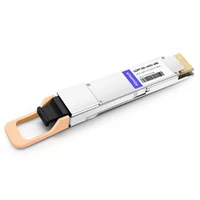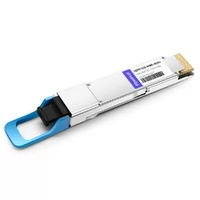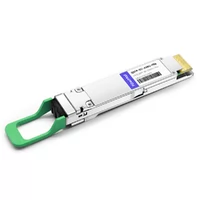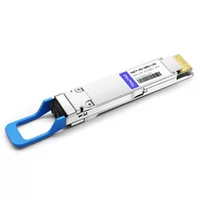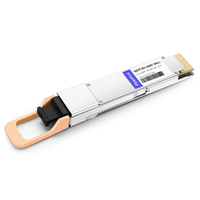

John Chen stared at the purchase order on his screen. The order included two hundred units of 400G SR8 modules. The total cost reached $320,000. His team had spent weeks negotiating the price. The vendor had confirmed availability. Everything appeared to be in perfect condition.
The facilities manager contacted him through phone call. “John, you know we only have MPO-12 infrastructure, right? SR8 needs MPO-16.”
The procurement process encountered three weeks of delays. John learned a hard lesson: 400G QSFP-DD module selection isn’t just about speed and distance. The selection process requires you to select the proper optical module according to your existing fiber plant. The costs of SR8, DR4, FR4, and LR4 systems extend beyond their respective price points.
Data centers experience weekly events that mirror John’s story. Network engineers assume all 400G modules work the same way. The modules function through different operational methods. The incorrect choice results in either stranded investment or fiber re-cabling. Your fiber verification process must occur PRIOR TO module selection and NOT after.

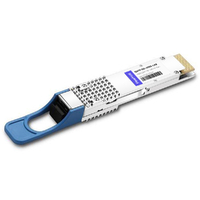
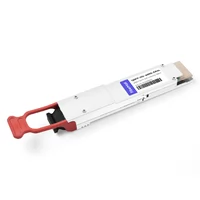
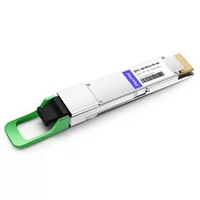
The guide serves as an all-inclusive 400G QSFP-DD module type reference. The module specifications and fiber requirements and breakout capabilities and power profiles will be presented to you. For a complete overview of QSFP-DD technology, see our QSFP-DD transceiver complete guide. For form factor comparisons, check our QSFP-DD vs QSFP28 vs OSFP comparison.
Quick Reference: 400G QSFP-DD Module Comparison
Here’s everything you need to know at a glance.
| Specification | SR8 | DR4 | FR4 | LR4 | ZR |
| Distance | 100m (OM4) 150m (OM5) | 500m | 2km | 10km | 80km |
| Fiber Type | Multimode (OM4/OM5) | Singlemode | Singlemode | Singlemode | Singlemode |
| Connector | MPO-16 | MPO-12 APC | Duplex LC | Duplex LC | Duplex LC |
| Lanes | 8×50G | 4×100G | 4×100G CWDM | 4×100G CWDM | Coherent |
| Breakout Support | ✅ Yes | ✅ Yes | ❌ No | ❌ No | ❌ No |
| Typical Power | 6-8W | 8-10W | 10-12W | 10-12W | 15-18W |
| Best For | In-rack, short reach | Data center spine | Campus DCI | Long-haul DCI | Metro networks |
SR8 is the most affordable option but needs MPO-16 multimode support. DR4 provides maximum functionality through its ability to support multiple breakout configurations. FR4 and LR4 use CWDM for longer distances, but no breakout. ZR uses coherent technology to manage metro-scale distances.

Understanding Each 400G QSFP-DD Module Type
SR8 (Short Reach 8-lane)
SR8 transmits eight 50G PAM4 electrical lanes over eight pairs of multimode fiber. It’s the lowest-cost 400G option—but with specific fiber requirements that trip up many deployments.
Key characteristics:
- Distance: 100m over OM4, 150m over OM5
- Fiber: MPO-16 multimode (OM4 or OM5)
- Connector: MPO-16 female
- Power: 6-8W
- Breakout: Supports 400G → 4×100G breakout
SR8 operates best in environments that have high-density requirements but need short-distance connectivity. The AI training clusters use SR8 for all GPU-to-switch connections between their rack equipment. The 100m reach covers most intra-rack and adjacent-rack scenarios.
Critical insight: SR8 needs MPO-16 as its system requirement, not MPO-12. Eight lanes need 16 fibers (8 transmit, 8 receive). Many facilities upgraded from 100G have MPO-12 infrastructure. The mismatch results in both time costs and financial expenses.
For a detailed breakdown of MPO-16 connectivity, see our MPO-16 connector guide.
DR4 (Direct Reach 4-lane)
DR4 uses four 100G PAM4 lanes over parallel singlemode fiber. It offers the best balance of reach, cost, and flexibility for data center applications.
Key characteristics:
- Distance: 500m
- Fiber: MPO-12 singlemode (APC polish)
- Connector: MPO-12 APC female
- Power: 8-10W
- Breakout: Supports 400G → 4×100G breakout
The 500m reach of DR4 enables it to handle almost all data center interconnect situations. DR4 supports all three types of connections, which include spine-to-leaf connections and building-to-building connections, and intra-campus connections. The MPO-12 connector enables the connection of current single-mode networks to 100G networks.
The breakout advantage: DR4 supports native breakout to four 100G connections. This matters for gradual migrations. Organizations can start using 400G spine switches through existing 100G leaf switches while planning to upgrade their leaf optics at a future time.
For MPO-12 APC connectivity details, see our MPO-12 APC guide.
FR4 (Fiber Reach 4-lane)
FR4 uses CWDM (Coarse Wavelength Division Multiplexing) to transmit four 100G lanes over a single duplex fiber pair. This reduces fiber count but eliminates breakout capabilities.
Key characteristics:
- Distance: 2km
- Fiber: Duplex singlemode (OS2)
- Connector: Duplex LC
- Power: 10-12W
- Breakout: Point-to-point only
FR4 targets campus interconnects and data center-to-data center links within metro distances. The 2km reach fits many enterprise scenarios where buildings sit 500m to 2km apart.
CWDM advantage: Four wavelengths (1271nm, 1291nm, 1311nm, 1331nm) travel down one fiber pair. The system provides 400G bandwidth through its single fiber connection without needing multiple fibers used by parallel optics. The integrated system provides unified functionality but lacks support for system components that need to be separated from the main unit.
LR4 (Long Reach 4-lane)
LR4 extends FR4’s CWDM approach to 10km distances. It’s overkill for many data centers but essential for true long-haul connections.
Key characteristics:
- Distance: 10km
- Fiber: Duplex singlemode (OS2)
- Connector: Duplex LC
- Power: 10-12W
- Breakout: Point-to-point only
The LR4 system provides networking connections between campus areas and remote data centers and WAN edge systems. Data center engineers will find all their needs met through FR4 which extends to 2 kilometers so they will not require LR4.
The pricing situation shows that LR4 modules have a 30 to 40 percent higher cost than FR4 modules. Buyers who purchase LR4 products tend to specify more features than needed which results in unnecessary expenses. Select FR4 as your option except when you absolutely require 2 kilometers or longer distance capabilities.
ZR/ZR+ (Coherent Optics)
ZR and ZR+ use coherent optical technology for extended reach. These are specialized modules for carrier and large-scale DCI applications.
Key characteristics (ZR):
- Distance: 80km
- Fiber: Duplex singlemode (OS2)
- Connector: Duplex LC
- Power: 15-18W
- DSP: Integrated digital signal processor
Key characteristics (ZR+):
- Distance: 120km+
- Power: 18-25W
- Amplification: May require EDFA for longer distances
ZR modules enable metro and regional interconnects without traditional coherent transponder equipment. They’re plug-and-play coherent optics in QSFP-DD form factor.
Power warning: ZR modules push QSFP-DD thermal limits. Verify your switch can supply 15-18W per port before ordering. For power and thermal planning guidance, see our QSFP-DD power and thermal guide.
Fiber and Connector Requirements
MPO-16 vs MPO-12: The Critical Distinction
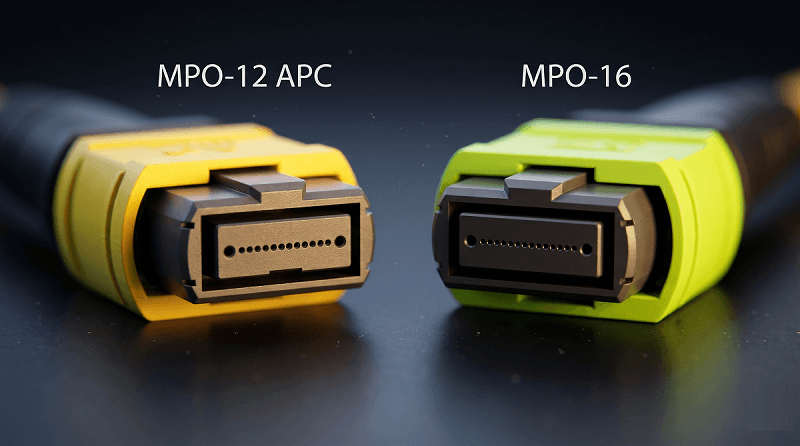
This is where most module selection mistakes happen. The connector requirements differ fundamentally by module type:
| Module | Connector | Fiber Count | Polish | Cable Color |
| SR8 | MPO-16 | 16 fibers | PC/UPC | Aqua (OM4) or Lime Green (OM5) |
| DR4 | MPO-12 | 8 fibers (4 pairs) | APC | Yellow (OS2) |
| FR4 | Duplex LC | 2 fibers | UPC | Yellow (OS2) |
| LR4 | Duplex LC | 2 fibers | UPC | Yellow (OS2) |
| ZR | Duplex LC | 2 fibers | UPC | Yellow (OS2) |
SR8’s MPO-16 requirement surprises many engineers. Eight lanes need 16 fibers—eight for transmit, eight for receive. MPO-12 can’t accommodate this. If your facility has MPO-12 multimode infrastructure, you cannot deploy SR8 without recabling.
DR4 uses MPO-12 APC (Angled Physical Contact). The APC polish reduces back reflection critical at 100G lane speeds. Don’t use PC polish—your link margins will suffer.
Multimode vs Singlemode Decision
Your module choice commits you to a fiber type:
Multimode (SR8 only):
- Lower cost per meter
- Shorter distances (100-150m)
- No upgrade path beyond 400G
- MPO-16 required
Singlemode (DR4, FR4, LR4, ZR):
- Higher cost per meter
- Longer distances (500m-120km)
- Upgrade path to 800G and beyond
- MPO-12 or duplex LC
Strategic recommendation for new builds: Deploy single-mode everywhere. The cost difference has narrowed. Single-mode supports 800G and future speeds. Multimode is a dead end for bandwidth growth.
For comprehensive fiber selection guidance, see our singlemode vs multimode fiber guide.
Breakout Compatibility: Which Modules Support 400G to 100G
Maria Rodriguez planned her 400G upgrade carefully. First, she ordered 48 FR4 modules to establish spine-to-leaf connections. She discovered the problem after this point because her leaf switches operated at 100G. The system required FR4 to function, which it could not do.
The new 400G spine required 400G → 4×100G QSFP-DD breakout cables to connect with the existing 100G leaf infrastructure. That requirement cannot be met because FR4 does not support it. The system supports only SR8 and DR4 as its functioning standards.
Breakout Compatibility Matrix:
| Module | Breakout Support | Breakout Configuration |
| SR8 | ✅ Yes | 400G → 4×100G SR4 |
| DR4 | ✅ Yes | 400G → 4×100G DR |
| FR4 | ❌ No | Point-to-point only |
| LR4 | ❌ No | Point-to-point only |
| ZR | ❌ No | Point-to-point only |
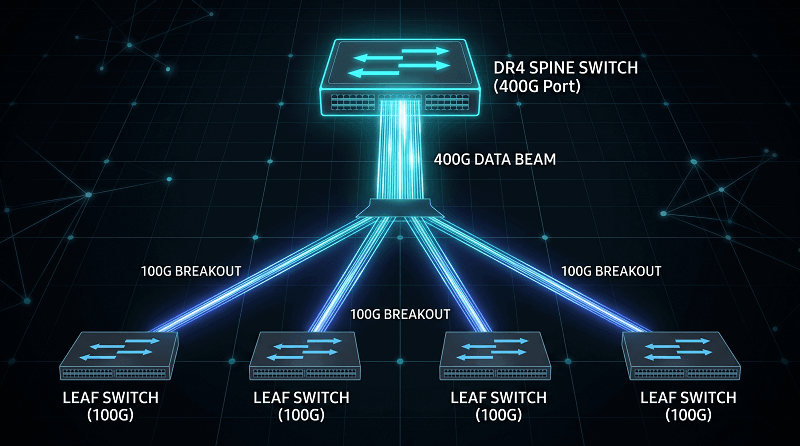
Breakout Use Cases
Gradual Migration Strategy:
- Deploy 400G spine switches with DR4 modules
- Use breakout cables to connect existing 100G leaf switches
- Upgrade leaf switches to 400G over time
- Remove breakout cables as leaf upgrades complete
Mixed-Speed Environments:
Some servers need 100G. Others need 400G. Breakout from SR8 or DR4 spine lets you serve both without separate switch tiers.
For breakout cable specifications and compatibility, see our QSFP-DD cable compatibility guide.
Module Selection Decision Framework
Distance-Based Selection Matrix
Start with distance. It’s the primary constraint that eliminates options.
| Distance | Fiber Available | Choose | Why |
| 0-100m | OM4/OM5 MPO-16 | SR8 | Lowest cost |
| 0-500m | SMF MPO-12 | DR4 | Versatile, breakout capable |
| 100-500m | SMF only | DR4 | SR8 won’t reach |
| 500m-2km | SMF | FR4 | Cost-effective for CWDM |
| 2km-10km | SMF | LR4 | Extended reach |
| 10km-80km | SMF | ZR | Metro coherent |
| 80km+ | SMF | ZR+ | Long-haul coherent |
Decision Flowchart
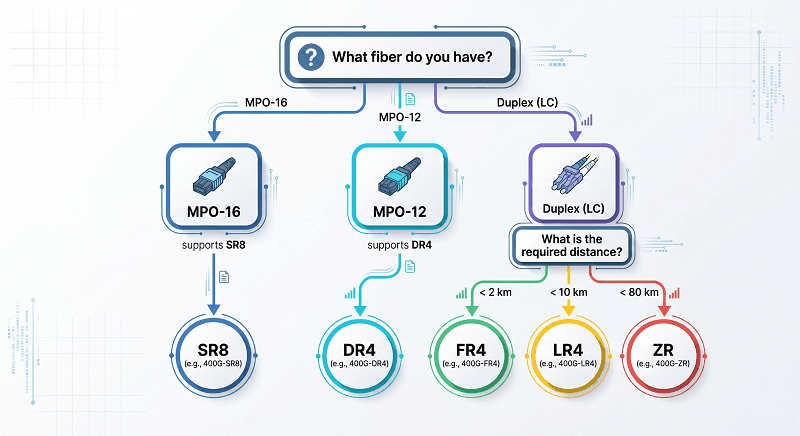
Step 1: What fiber do you have?
- MPO-16 multimode → SR8 only
- MPO-12 singlemode → DR4 (or FR4/LR4 with conversion)
- Duplex singlemode → FR4, LR4, or ZR
Step 2: Do you need breakout to 100G?
- Yes → SR8 or DR4 only
- No → Any module fits
Step 3: What’s your distance?
- Under 100m → SR8 if you have MPO-16, DR4 otherwise
- 100m-500m → DR4
- 500m-2km → FR4
- 2km-10km → LR4
- 10km+ → ZR/ZR+
Common Selection Mistakes
1.Ordering SR8 without MPO-16 verification
- Check your fiber plant first
- MPO-12 won’t work
2.Assuming all modules support breakout
- Only SR8 and DR4 do
- FR4/LR4/ZR are point-to-point
3.Over-specifying LR4
- FR4 covers 2km at lower cost
- LR4 only for 2km-10km
4.Ignoring power budgets
- ZR modules need 15-18W per port
- Verify switch power capacity
Power Consumption and Thermal Planning
Power consumption varies significantly by module type. Your switch power budget must accommodate these differences.
Power by Module Type
| Module | Typical Power | Max Power | Thermal Class |
| SR8 | 6-8W | 10W | Class 4-5 |
| DR4 | 8-10W | 12W | Class 5-6 |
| FR4 | 10-12W | 14W | Class 6-7 |
| LR4 | 10-12W | 14W | Class 6-7 |
| ZR | 15-18W | 20W | Class 8 |
| ZR+ | 18-25W | 25W | Class 8+ |
Power calculation example: A 32-port switch fully populated with ZR modules draws 480-640W just for optics. Add 400-500W for the switch itself. You’re looking at 900-1,100W per switch. Across 100 switches, that’s 90-110kW of power and cooling.
Thermal planning implications:
- Standard data center modules (SR8, DR4): Standard cooling sufficient
- High-power modules (FR4, LR4): Verify airflow and inlet temperatures
- Coherent modules (ZR, ZR+): May need thermal derating or switch platforms with enhanced cooling
For detailed thermal planning guidance, see our QSFP-DD power and thermal guide.
Real-World Deployment Scenarios
Scenario 1: AI Training Cluster (SR8 Selection)
David Park built infrastructure for a 2,048 GPU AI training cluster. Network topology was straightforward: NVIDIA Spectrum switches connected to GPU nodes.
Requirements:
- 400G to every GPU
- 2-meter average cable runs within racks
- Cost minimization for 2,000+ ports
Decision: SR8 on existing OM4 infrastructure
Outcome: SR8 modules cost 40% less than DR4. At 2,000 ports, that saved $800,000. The MPO-16 requirement was fine—the facility was purpose-built with new cabling.
Lesson: SR8 shines in greenfield, short-reach, high-density deployments.
Scenario 2: Enterprise Data Center Refresh (DR4 Selection)
Sarah Chen managed network infrastructure for a financial services firm. Her 5-year-old 100G infrastructure needed upgrading.
Requirements:
- 400G spine-to-spine for bandwidth growth
- Maintain 100G leaf connections during transition
- Distances under 300m
Decision: DR4 everywhere for standardization
Outcome: DR4 breakout cables connected the 400G spine to existing 100G leaf switches. As leaf switches upgrade, remove breakout cables for native 400G. Single module type simplified sparing and procurement.
Lesson: DR4 is the safe default for mixed-speed data centers.
Scenario 3: Campus Interconnect (FR4 Selection)
Michael Torres connected two data centers 1.2km apart across a corporate campus. The procurement team suggested LR4 “to be safe.”
Requirements:
- 1.2km distance
- 400G bandwidth between facilities
- Cost efficiency
Decision: FR4 over LR4
Outcome: FR4 delivered the required 1.2km reach at 2,400permoduleversus2,400permoduleversus3,800 for LR4. Sixteen links saved $22,400. The CWDM approach also simplified fiber management—only 32 fibers total instead of 64.
Lesson: Don’t over-specify. FR4 covers most campus scenarios at lower cost.
Module Pricing and Availability
Module pricing varies by type, volume, and vendor. Here’s 2025 pricing context for budget planning.
Price Range by Module Type
| Module | OEM Price | Third-Party Price | Volume Discount |
| SR8 | $2,800-4,000 | $1,400-2,000 | 15-25% at 100+ |
| DR4 | $4,500-6,000 | $2,500-3,500 | 15-25% at 100+ |
| FR4 | $3,800-5,000 | $2,000-2,800 | 15-25% at 100+ |
| LR4 | $5,500-7,500 | $2,800-4,000 | 15-25% at 100+ |
| ZR | $12,000-18,000 | $8,000-12,000 | 10-20% at 50+ |
| ZR+ | $18,000-25,000 | $12,000-18,000 | 10-20% at 50+ |
Pricing trends: 400G module prices have declined 30-40% since 2023. SR8 leads the decline due to volume in AI clusters. ZR/ZR+ remain premium due to DSP complexity.
Availability notes:
- SR8, DR4: Excellent availability, standard lead times
- FR4, LR4: Good availability
- ZR: Moderate availability, 4-6 week lead times
- ZR+: Limited availability, 8-12 week lead times
For comprehensive cost analysis and TCO calculations, see our QSFP-DD pricing and TCO guide.
FAQ
Can I use SR8 with MPO-12 fiber?
The connector requirements for SR8 connections need MPO-16 connectors because the system requires 16 fibers to transmit and receive data through eight lanes. The system needs 16 fibers to operate which MPO-12 only provides through its 12 fiber positions. Your facility needs to install MPO-16 cables because SR8 requires them for deployment with existing MPO-12 multimode infrastructure.
Which 400G modules support breakout to 100G?
The 400G to 4×100G breakout support exists only for SR8 and DR4. SR8 breaks out to four 100G SR4 connections. DR4 breaks out to four 100G DR connections. The three protocols FR4, LR4 and ZR operate only through point-to-point connections, which do not support lower speed breaking out functionality.
Should I choose multimode or single-mode for a new data center?
For new buildings, select single-mode DR4 because it provides better performance. Single-mode technology enables extended distance connections while delivering an upgrade path to 800G and compatibility with standard MPO-12 infrastructure. The cost gap has narrowed significantly.
What’s the difference between FR4 and LR4?
The distinction between FR4 and LR4 emerges from their respective operational ranges which extend to 2 kilometers and 10 kilometers. Both technologies utilize CWDM with duplex single-mode fiber for their operation. LR4 costs 30-40% more than FR4. The preferred data center interconnect solution for distances below 2 kilometers should be FR4. The LR4 solution becomes essential when distances range between 2 kilometers and 10 kilometers.
Will my network support different module types together?
The answer is yes but with certain conditions. The different module types require special connectors to establish their connection. SR8 connects to SR8. DR4 connects to DR4. You can deploy SR8 within racks, DR4 for spine-leaf, and FR4 for campus—all in the same network. The link requires matching modules for both ends.
What power consumption level do 400G modules operate at?
SR8 requires between 6W and 8W of power. DR4 requires between 8W and 10W of power. FR4 and LR4 consume between 10W and 12W of power. ZR requires between 15W and 18W of power. ZR+ requires between 18W and 25W of power. The 32-port ZR switch consumes between 480W and 640W for its optical components when fully populated. Verify your switch power budget and cooling capacity before deploying high-power modules.
What is the least expensive 400G module for short-distance applications?
If you have MPO-16 multimode fiber then SR8 becomes your most affordable option. DR4 serves as your short-reach solution when you possess singlemode connectivity. SR8 typically costs 40-50% less than DR4, but the fiber infrastructure requirement limits its applicability.
Will I require fiber upgrades to support 400G?
Your module selection determines the answer. Users must upgrade to MPO-16 multimode because SR8 requires this standard while they currently possess MPO-12. DR4 uses MPO-12 singlemode which many facilities already have from 100G deployments. FR4, LR4, and ZR use standard duplex singlemode. You must check your fiber plant before ordering modules.
Conclusion
The 400G QSFP-DD module landscape offers options for every distance and application. But choosing wrong costs time, money, and operational headaches.
Key takeaways for your selection:
- Verify your fiber first. SR8 needs MPO-16. DR4 needs MPO-12. FR4/LR4/ZR need duplex singlemode. Check before ordering.
- Consider breakout needs. Only SR8 and DR4 support 400G → 4×100G. If gradual migration matters, these are your options.
- Don’t over-specify distance. FR4 covers 2km. LR4 covers 10km. ZR covers 80km. Buy what you need, not the maximum available.
- Plan for power. ZR modules draw 15-18W. A full switch of ZR optics needs serious power and cooling. Verify your infrastructure can handle it.
- Think long-term for new builds. Singlemode (DR4/FR4) provides an 800G upgrade path. Multimode (SR8) dead-ends at 400G.
Don’t repeat John’s mistake. Before you submit that purchase order, audit your fiber plant. Confirm your distance requirements. Verify breakout needs. Model your power budget.
For assistance selecting the right 400G QSFP-DD module types for your infrastructure, contact FiberMall’s technical team. Our engineers can analyze your fiber plant, distance requirements, and migration strategy to recommend the optimal module mix for your deployment.
Related Products:
-
 QSFP-DD-400G-SR8 400G QSFP-DD SR8 PAM4 850nm 100m MTP/MPO OM3 FEC Optical Transceiver Module
$149.00
-
QSFP-DD-400G-XDR4 400G QSFP-DD XDR4 PAM4 1310nm 2km MTP/MPO-12 SMF FEC Optical Transceiver Module
$550.00
-
QSFP-DD-400G-SR4 QSFP-DD 400G SR4 PAM4 850nm 100m MTP/MPO-12 OM4 FEC Optical Transceiver Module
$450.00
-
QSFP-DD-400G-FR4 400G QSFP-DD FR4 PAM4 CWDM4 2km LC SMF FEC Optical Transceiver Module
$500.00
-
QSFP-DD-400G-LR4 400G QSFP-DD LR4 PAM4 CWDM4 10km LC SMF FEC Optical Transceiver Module
$600.00
-
QSFP-DD-400G-SR4.2 400Gb/s QSFP-DD SR4 BiDi PAM4 850nm/910nm 100m/150m OM4/OM5 MMF MPO-12 FEC Optical Transceiver Module
$750.00
-
QSFP-DD-400G-ER8 400G QSFP-DD ER8 PAM4 LWDM8 40km LC SMF FEC Optical Transceiver Module
$3800.00
-
QSFP-DD-400G-ER4 400G QSFP-DD ER4 PAM4 LWDM4 40km LC SMF without FEC Optical Transceiver Module
$3500.00
-
QSFP-DD-400G-LR8 400G QSFP-DD LR8 PAM4 LWDM8 10km LC SMF FEC Optical Transceiver Module
$3800.00
-
QSFP-DD-400G-ER4L 400G QSFP-DD ER4 Lite 30km LWDM4 LC SMF with FEC Optical Transceiver Module
$3000.00
-
QDD-4X100G-FR-4Si QSFP-DD 4 x 100G FR PAM4 1310nm 2km MTP/MPO-12 SMF FEC CMIS4.0 Silicon photonics Optical Transceiver Module
$750.00
-
QDD-4X100G-FR-Si QSFP-DD 4 x100G FR PAM4 1310nm 2km MTP/MPO-12 SMF FEC CMIS3.0 Silicon photonics Optical Transceiver Module
$650.00