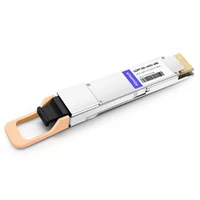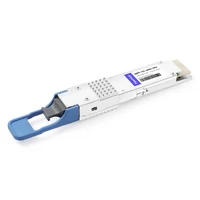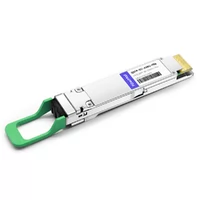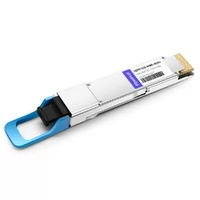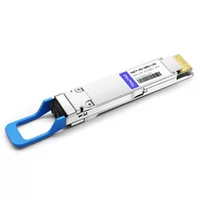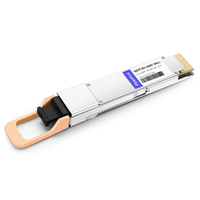

The discovery became clear to him when he realized that QSFP-DD and QSFP28 were two different technologies. The OSFP standard required them to use different equipment. The expense of his “400G upgrade” turned into a $450,000 optics replacement, which created a purchasing disaster for him.
Data centers experience weekly incidents similar to Michael’s situation. The QSFP-DD vs QSFP28 vs OSFP decision seems like a minor technical detail. The decision is not trivial because it determines your entire system and future technology updates and long-term spending until you choose another option.
For a deeper dive into QSFP-DD specifically, see our complete QSFP-DD transceiver guide. Already comparing QSFP-DD and OSFP? Check our detailed QSFP-DD vs OSFP comparison. For module-specific details, explore our 400G QSFP-DD module types guide.
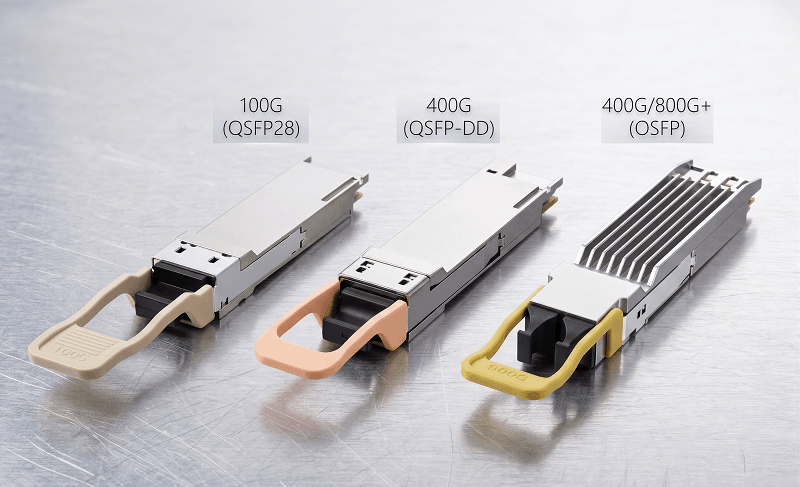
Quick Reference: Three-Way Comparison
Here’s everything you need to know at a glance.
| Specification | QSFP28 | QSFP-DD | OSFP |
| Max Speed | 100G | 400G/800G | 400G/800G/1.6T |
| Electrical Lanes | 4×25G | 8×50G/100G | 8×50G/100G |
| Width | 18.35mm | 18.35mm | 22.58mm |
| Max Power | ~6W | ~15W | ~25W |
| Backward Compatibility | QSFP+ | QSFP+/28/56 | None |
| 1RU Port Density | 36 ports | 36 ports | 32 ports |
| Best For | Current 100G | 400G migration | Greenfield AI/HPC |
QSFP28 is your current reality. QSFP-DD is your upgrade path with existing optics. OSFP is your greenfield performance play. Choose wrong and you’re stuck—or spending money you didn’t budget.
Understanding Each Form Factor
Before choosing, understand what each form factor actually does. The differences aren’t just speed. They’re compatibility, density, and thermal capacity.
QSFP28: The 100G Standard
QSFP28 (Quad Small Form-factor Pluggable 28) has been the workhorse of data center networking since 2016. It uses four 25G electrical lanes to deliver 100Gbps aggregate bandwidth.
Key characteristics:
- Four 25G NRZ electrical lanes
- 18.35mm width (same as QSFP+, QSFP-DD)
- Up to 6W power consumption
- Mature ecosystem with widespread vendor support
QSFP28 dominates current enterprise and cloud data centers. If you’re running 100G today, you’re almost certainly using QSFP28. The question isn’t whether to move away from it—it’s when and how.
QSFP-DD: Backward-Compatible 400G/800G
QSFP-DD (Double Density) doubles the electrical lanes to eight while maintaining the same physical width as QSFP28. The “double density” refers to the electrical interface, not the physical size.
Key characteristics:
- Eight 50G/100G PAM4 electrical lanes
- Same 18.35mm width as QSFP28
- 400G (8×50G) and 800G (8×100G) support
- Backward compatible with QSFP28 modules
QSFP-DD’s defining feature is backward compatibility. A QSFP-DD port accepts QSFP28 modules. This means you can deploy QSFP-DD switches today and continue using your existing 100G optics. When you’re ready for 400G, upgrade the modules. No stranded investment. No forklift replacement. Learn more in our QSFP-DD backward compatibility guide.
OSFP: Performance-Optimized 400G/800G
OSFP (Octal Small Form-factor Pluggable) takes a clean-sheet approach. It’s larger than QSFP-DD and QSFP28. That extra space accommodates integrated heatsinks and enables higher power capacity.
Key characteristics:
- Eight 50G/100G PAM4 electrical lanes
- 22.58mm width (23% wider than QSFP-DD)
- Up to 25W power capacity
- No backward compatibility with QSFP modules
OSFP targets high-performance applications that require thermal headroom for their operation. The system supports artificial intelligence training clusters. The system provides support for long-distance coherent optical systems. The system will support future 1.6T modules. OSFP provides benefits for greenfield infrastructure projects that require no support for existing QSFP28 equipment.
Backward Compatibility: What Works in What
This is where most confusion happens. Let’s be absolutely clear about what fits where.
The Compatibility Matrix
| Port Type | QSFP28 Module | QSFP-DD Module | OSFP Module |
| QSFP28 Port | ✅ Fits | ❌ Too deep | ❌ Too wide |
| QSFP-DD Port | ✅ Fits | ✅ Fits | ❌ Too wide |
| OSFP Port | ❌ Wrong keying | ❌ Wrong keying | ✅ Fits |
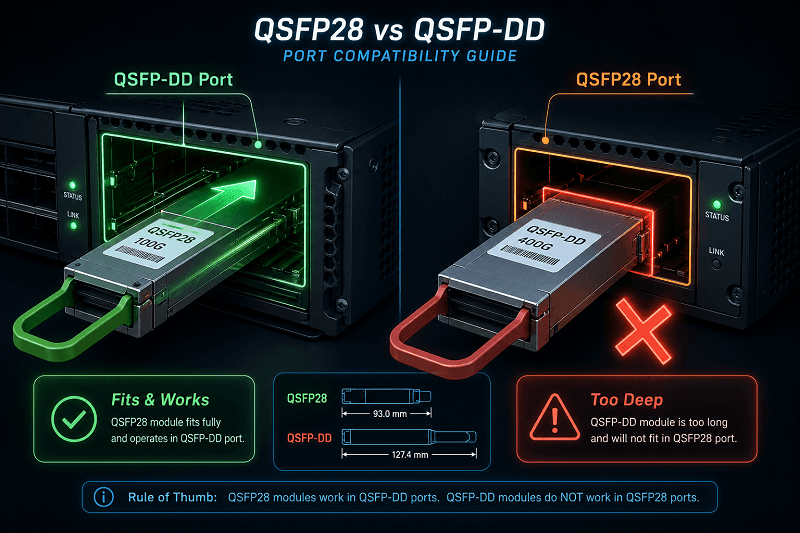
Critical insight: Compatibility is one-way, not bidirectional. QSFP-DD accepts QSFP28. QSFP28 does not accept QSFP-DD. No adapter makes them work in reverse.
The One-Way Street Explained
QSFP-DD ports accept QSFP28 modules because the physical dimensions work: QSFP-DD cages are deeper to accommodate the additional electrical pins, but QSFP28 modules simply sit shallower in the cage. The electrical signaling is compatible.
The reverse fails for two reasons:
- Physical incompatibility: QSFP-DD modules extend deeper than QSFP28 cages allow. They literally won’t fit.
- Electrical incompatibility: QSFP-DD requires eight lanes. QSFP28 only provides four. Even if you could physically force a QSFP-DD module into a QSFP28 port, it wouldn’t function.
OSFP: Complete Isolation
OSFP is electrically and mechanically isolated from the QSFP family. Its 60-pin connector uses a different pinout. Its 22.58mm width prevents insertion into QSFP cages. Its keying mechanism is completely different.
Adapter modules exist (QSFP28-to-OSFP), but these add cost, complexity, and potential failure points. They’re useful for limited legacy connections, not migration strategies. For comprehensive compatibility information, see our QSFP-DD compatibility guide.
Physical and Performance Comparison
Form Factor Dimensions
| Specification | QSFP28 | QSFP-DD | OSFP |
| Width | 18.35mm | 18.35mm | 22.58mm |
| Height | 8.5mm | 8.5mm | 13.0mm |
| Depth | ~30mm | ~35mm | ~40mm |
| Volume | ~4.7 cm³ | ~5.4 cm³ | ~11.8 cm³ |
The width difference between QSFP-DD and OSFP directly impacts port density. A 1RU switch fits 36 QSFP-DD ports but only 32 OSFP ports. For a 100-switch deployment, that’s 400 fewer ports—or 12 additional switches required with OSFP.
Power and Thermal Differences
Power consumption increases with speed and complexity:
| Module Type | QSFP28 | QSFP-DD | OSFP |
| SR (Short Reach) | 3-4W | 6-8W | 6-8W |
| LR (Long Reach) | 4-5W | 12-15W | 12-15W |
| ZR (Coherent) | N/A | 15-20W | 15-25W |
| Max Supported | ~6W | ~15W | ~25W |
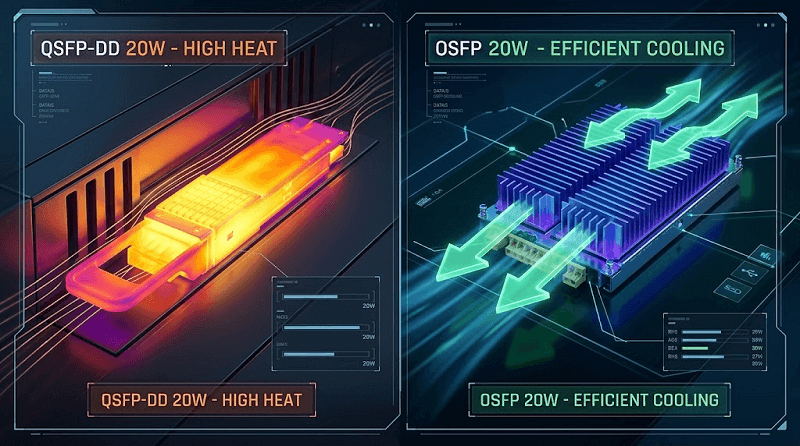
QSFP-DD handles standard 400G modules fine. But high-power ZR coherent optics push its thermal limits. OSFP’s integrated heatsink and larger volume provide margin for 20W+ modules.
Speed Capabilities
QSFP28: Capped at 100G. No upgrade path beyond using more ports.
QSFP-DD: 400G today, 800G with QSFP-DD800 modules. 1.6T possible but thermally challenging.
OSFP: 400G and 800G today. Positioned as the preferred form factor for 1.6T development.
Migration Paths: From QSFP28 to 400G
Most readers are facing a specific situation: existing QSFP28 infrastructure and a mandate to upgrade to 400G. Here’s how to navigate that transition.
Migration Path 1: QSFP28 to QSFP-DD (Recommended for Most)
When to choose: You have existing QSFP28 modules you want to preserve
The approach:
- Phase 1: Install QSFP-DD switches, continue using QSFP28 modules
- Phase 2: Upgrade spine links to 400G QSFP-DD where bandwidth demands require
- Phase 3: Gradually upgrade ToR connections as server NICs transition
Timeline: 12-24 months typical for complete migration
Cost considerations: Preserve existing optics investment. No adapter costs. Gradual capital expenditure.
Sarah Kim operates the infrastructure systems that support the financial services company that contains 48 leaf switches. Her team spent $400,000 to purchase QSFP28 optical modules, which included SR4s for in-rack connections and LR4s for cross-campus connections. She chose QSFP-DD switches and executed a gradual system transition that lasted 18 months. The campus connections operated with existing optical modules. The backbone system received its first upgrade to 400G. The network operated at 400G for essential areas and 100G for sections that could handle that speed by the 18th month. The system experienced no downtime and the organization did not need to buy emergency supplies. The organization saved $400,000 by choosing to keep the optical modules instead of replacing them immediately. The organization made a $0,000 investment to acquire QSFP28 optical modules, which included SR4s for in-rack connections and LR4s for cross-campus connections. She chose QSFP-DD switches and executed a gradual system transition that lasted 18 months. The campus connections operated with existing optical modules. The backbone system received its first upgrade to 400G. The network operated at 400G for essential areas and 100G for sections that could handle that speed by the 18th month. The system experienced no downtime, and the organization did not need to buy emergency supplies. The organization saved $340,000 by choosing to keep the optical modules instead of replacing them immediately.
Migration Path 2: QSFP28 to OSFP (Rare)
When to choose: You have specific high-power requirements (ZR+) and minimal existing optics investment
The approach:
- Accept complete optics replacement
- Budget for QSFP28-to-OSFP adapters for any legacy connections
- Standardize on OSFP for all new capacity
Timeline: Immediate cutover (no phased approach possible)
Cost considerations: Full optics replacement required. Adapters add $200-400 per legacy connection.
Greenfield Decision: QSFP-DD vs OSFP
Choose QSFP-DD when:
- Building enterprise or cloud data center
- Mixed workload environment
- Want flexibility to integrate with existing infrastructure later
- Power requirements under 15W per module
Choose OSFP when:
- Building AI training cluster
- Need ZR+ coherent optics for long-haul DCI
- No legacy compatibility requirements
- Want maximum thermal headroom for future modules
Decision Flowchart
Start with one question: Do you have existing QSFP28 infrastructure?
- YES → QSFP-DD (backward compatibility is invaluable)
- NO → Next question: Do you need ZR+ or 1.6T?
- YES → OSFP (thermal headroom)
- NO → QSFP-DD (broader ecosystem, better density)
TCO and Cost Comparison
Form factor choice impacts total cost through hardware, power, and migration costs.
Module Pricing
Standard module pricing is comparable across form factors:
| Module Type | QSFP28 | QSFP-DD | OSFP |
| SR (100G/400G) | $200-500 | $1,400-2,500 | $1,400-2,500 |
| LR (100G/400G) | $400-800 | $2,500-4,000 | $2,500-4,000 |
| ZR (Coherent) | N/A | $8,000-15,000 | $8,000-15,000 |
The form factor itself doesn’t drive price. Volume, vendor, and specifications do.
Infrastructure Cost Factors
Switch costs: QSFP-DD switches average $200-400 less per port than OSFP due to higher volume and simpler thermal design.
Power and cooling: OSFP modules consume slightly more power on average. Over three years, this adds $50-100 per switch in electricity costs.
Migration costs: QSFP-DD’s backward compatibility eliminates adapter costs. OSFP requires either adapters ($200-400 per port) or complete optics replacement. For detailed cable requirements, see our QSFP-DD cable compatibility guide. For complete cost analysis, see our QSFP-DD pricing and TCO guide.
Real-World TCO Scenario
Scenario: 100-rack data center, 2,000 ports, migrating from 100G to 400G
QSFP-DD approach:
- Preserve 60% of existing QSFP28 optics: $480,000 saved
- No adapter costs
- 12% fewer switches due to density: $180,000 saved
- 3-year TCO advantage: ~$660,000
OSFP approach:
- Replace 100% of optics: $1,200,000
- Adapter costs for retained connections: $160,000
- Additional switches for equivalent capacity: $180,000
- 3-year TCO premium: ~$1,540,000
For greenfield deployments without existing optics, the gap narrows but QSFP-DD maintains an advantage due to switch cost and density.
Real-World Deployment Scenarios
Scenario 1: Enterprise Data Center Refresh
Situation: Mid-size enterprise, 5-year-old 100G infrastructure, 200 QSFP28 optics in service
Requirements: Upgrade spine to 400G, preserve ToR 100G during transition
Decision: QSFP-DD
Rationale: Backward compatibility
Outcome: The 18-month migration process achieved its goals through complete execution without any operational interruptions. The system automatically decommissioned existing optics when the server underwent its upgrade process. The total optics investment during the project saved $300,000 when compared to the decision of replacing all equipment at once. The organization executed its phased migration according to the established budget cycle.
Scenario 2: AI Training Cluster Greenfield
Situation: AI startup building first GPU cluster, no existing infrastructure
Requirements: 400G to every GPU, ZR+ coherent for cross-campus model sync
Decision: OSFP
Rationale: No legacy compatibility needs. ZR+ at 20W requires OSFP thermal headroom. Future 800G/1.6T roadmap favors OSFP. See our QSFP-DD for AI and HPC guide for GPU cluster networking best practices.
Outcome: Deployed 64-port OSFP switches. ZR+ modules run within thermal spec at 22W. Confident upgrade path to 800G and beyond.
Scenario 3: Cloud Provider Multi-Region
Situation: Hyperscale cloud provider expanding to new region, existing facilities use QSFP28/QSFP-DD
Requirements: New build, opportunity to standardize
Decision: OSFP for new region only
Rationale: Clean slate with no legacy constraints. Standardize on OSFP for all new capacity going forward. Maintain QSFP-DD in existing facilities.
Outcome: Dual standard manageable with proper procurement processes. New builds use OSFP. Existing facilities stay QSFP-DD. Supply chain simplified for new capacity.
FAQ
Can I use QSFP28 modules in QSFP-DD ports?
The QSFP-DD ports allow you to use QSFP28 modules, which enable the deployment of QSFP-DD switches while maintaining your current 100G optical equipment. The system supports one-way backward compatibility because QSFP-DD modules cannot be used in QSFP28 ports.
Do QSFP-DD modules work with QSFP28 ports?
The answer is no. The QSFP-DD modules need eight electrical lanes because their physical depth exceeds standard dimensions. The devices can’t work with QSFP28 cages because they need to connect through their physical design.
Which form factor is cheaper overall?
Enterprise environments see QSFP-DD as the better option because it provides lower total cost of ownership through its dual benefits of backward compatibility and increased port capacity, which reduces needed switches and results in lower switch expenses. OSFP applies to particular high-power use cases because its thermal benefits make the extra cost worthwhile.
Do I need new cables when upgrading from QSFP28 to QSFP-DD?
It depends on your current cable infrastructure. QSFP28 SR4 uses MPO-12. QSFP-DD SR8 uses MPO-16. Different fiber counts require different cables. However, QSFP-DD DR4 uses MPO-12 APC, the same as many QSFP28 single-mode applications. Check your specific module types. For complete MPO cable guidance, see our MPO connector complete guide.
Can I mix QSFP-DD and OSFP in the same network?
The two modules QSFP-DD and OSFP cannot establish direct connections with each other. You would need a switch or router with both port types as an intermediary, or use transponder/muxponder equipment to convert between form factors.
Which form factor do hyperscalers prefer?
Both. Google and Meta increasingly use OSFP for new builds. The two companies, Amazon and Microsoft, use QSFP-DD as their primary connection method to maintain backward compatibility. The choice depends on specific workload requirements and infrastructure strategy.
What about 800G? Is it available in both form factors?
Yes. QSFP-DD800 and OSFP800 are both available. OSFP may have thermal advantages for high-power 800G variants, but standard modules perform equivalently. For 1.6T, OSFP appears better positioned based on current industry development. Learn more about QSFP-DD 800G deployment and power consumption considerations.
Conclusion
The QSFP-DD vs QSFP28 vs OSFP decision hinges on your starting point and destination. There’s no universal “best” choice—only the right choice for your specific situation.
Key takeaways:
- Have QSFP28 infrastructure? QSFP-DD is almost certainly your answer. Backward compatibility preserves investment and enables phased migration.
- Building greenfield AI/HPC? OSFP merits consideration. Thermal headroom for ZR+ and cleaner 1.6T roadmap may justify the ecosystem switch.
- Planning 800G? Both form factors work. OSFP has thermal advantages for high-power variants.
- Cost-sensitive? QSFP-DD wins on TCO for most scenarios. OSFP’s advantages are specific to high-power applications.
Don’t repeat Michael’s mistake. Before you sign that purchase order, verify your existing inventory. Confirm your backward compatibility requirements. Model your TCO, including migration costs.
For assistance in navigating the QSFP-DD vs QSFP28 vs OSFP decision for your specific infrastructure, contact FiberMall’s technical team. Our engineers can analyze your existing equipment, model TCO scenarios, and recommend the optimal form factor strategy for your 400G/800G deployment. If you encounter issues during migration, refer to our QSFP-DD troubleshooting guide for common problems and solutions.
Related Products:
-
 QSFP-DD-400G-SR8 400G QSFP-DD SR8 PAM4 850nm 100m MTP/MPO OM3 FEC Optical Transceiver Module
$149.00
-
QSFP-DD-400G-DR4 400G QSFP-DD DR4 PAM4 1310nm 500m MTP/MPO SMF FEC Optical Transceiver Module
$400.00
-
QSFP-DD-400G-FR4 400G QSFP-DD FR4 PAM4 CWDM4 2km LC SMF FEC Optical Transceiver Module
$500.00
-
QSFP-DD-400G-XDR4 400G QSFP-DD XDR4 PAM4 1310nm 2km MTP/MPO-12 SMF FEC Optical Transceiver Module
$550.00
-
QSFP-DD-400G-LR4 400G QSFP-DD LR4 PAM4 CWDM4 10km LC SMF FEC Optical Transceiver Module
$600.00
-
QSFP-DD-400G-SR4.2 400Gb/s QSFP-DD SR4 BiDi PAM4 850nm/910nm 100m/150m OM4/OM5 MMF MPO-12 FEC Optical Transceiver Module
$750.00
-
QSFP28-100G-SR4 100G QSFP28 SR4 850nm 100m MTP/MPO MMF DDM Transceiver Module
$40.00
-
QSFP28-100G-DR1 100G QSFP28 Single Lambda DR 1310nm 500m LC SMF with FEC DDM Optical Transceiver
$180.00
-
QSFP28-100G-FR1 100G QSFP28 Single Lambda FR 1310nm 2km LC SMF with FEC DDM Optical Transceiver
$215.00
-
QSFP28-100G-SWDM4 100G QSFP28 SWDM4 850nm-940nm 100m LC MMF DDM Optical Transceiver
$300.00
-
NVIDIA MMA4Z00-NS Compatible 800GBASE 2 x SR4/SR8 OSFP PAM4 850nm 100m DOM Dual MPO-12 MMF Optical Transceiver Module
$550.00
-
NVIDIA MMA4Z00-NS-FLT Compatible 800GBASE 2 x SR4/SR8 OSFP RHS/Flat Top PAM4 850nm 100m DOM Dual MPO-12 MMF Optical Transceiver Module
$600.00
-
NVIDIA MMS4X00-NM Compatible 800GBASE 2 x DR4/DR8 OSFP IHS/Closed Finned Top PAM4 1310nm 500m DOM Dual MTP/MPO-12 SMF Optical Transceiver Module
$600.00
-
NVIDIA MMS4X00-NM-FLT Compatible 800GBASE 2 x DR4/DR8 OSFP Flat Top PAM4 1310nm 500m DOM Dual MTP/MPO-12 SMF Optical Transceiver Module
$650.00