


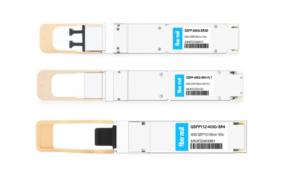
800G SR8 and 400G SR4 Optical Transceiver Modules Compatibility and Interconnection Test Report
Version Change Log Writer V0 Sample Test Cassie Test Purpose Test Objects:800G OSFP SR8/400G OSFP SR4/400G Q112 SR4. By conducting corresponding tests, the test parameters meet the relevant industry standards,
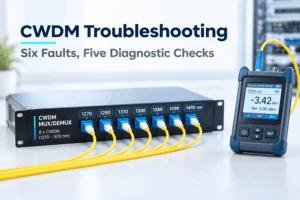
CWDM Troubleshooting: Six Faults, Five Measurements
Most CWDM link failures are not dead modules. A passive CWDM plant has no amplifier to query and no management plane to read, so the fault has to be proven
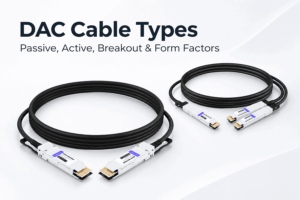
DAC Cable Types: Passive, Active, Breakout & Form Factors
What Are DAC Cable Types? Direct Attach Copper (DAC) cables are commonly classified by four independent attributes: signal conditioning, connector form factor, connection topology, and application. These attributes determine how a
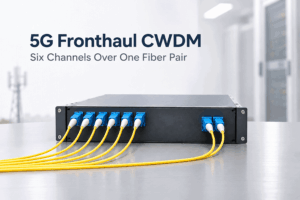
5G Fronthaul CWDM: Six Channels Over One Fiber Pair
5G fronthaul CWDM can carry six independent 25G channels over a single fiber pair at distances of up to 10 km with suitable transceivers and a properly engineered optical budget.
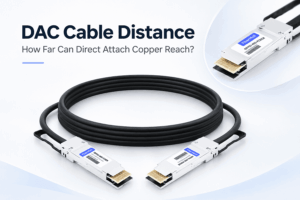
DAC Cable Distance: How Far Can Direct Attach Copper Reach?
A passive DAC cable can typically reach 7–8 m at 10G, 3–5 m at 25G, 5 m at 40G, around 3 m at 50G and 200G, and approximately 2–5 m
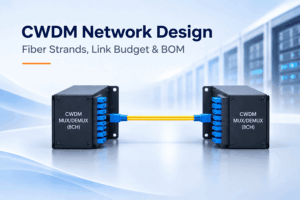
CWDM Network Design: From Strand Count to Bill of Materials
A CWDM network design starts with three practical questions: how many fiber strands are available, how much optical loss the transmission path introduces, and how many independent channels the network
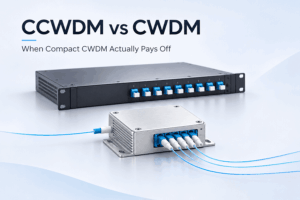
CCWDM vs CWDM: When Compact CWDM Actually Pays Off
A CCWDM (Compact CWDM) module performs the same wavelength multiplexing and demultiplexing functions as a conventional CWDM module, but uses a more compact optical architecture. By integrating thin-film filters into