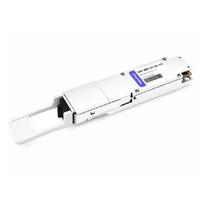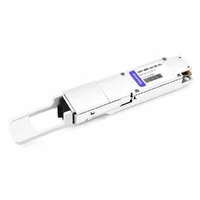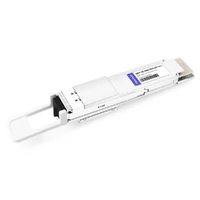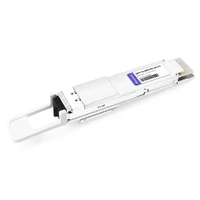

When Tomas bid out a 200 km metro connection for his service provider, he asked for “400G ZR” modules and got a stack of quotes he couldn’t compare. Every vendor priced a slightly different thing. Some offered 400ZR, some ZR+, a couple pushed OpenZR+, and nobody seemed to agree on what distance any of them actually covered.
His problem is common. 400G ZR vs ZR+ vs OpenZR+ looks like a three-way tie at first glance, but the three names sit on completely different footing. One is a formal OIF standard, one is a vague category label, and one is an open multi-source agreement. Engineers keep tripping over that distinction when they spec a link past 120 km or try to mix 100G and 400G on the same fiber.
This guide sorts out the difference. You’ll learn what each standard actually guarantees, compare them side by side on reach, modulation, FEC, power, and interoperability, and get a decision framework you can use the next time a switch port needs a coherent module. If you’re newer to coherent optics overall, our complete guide to coherent optical modules covers the full family from 100G ZR through 800G ZR+.
What Is 400G ZR (OIF 400ZR)?
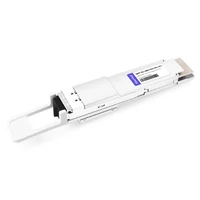
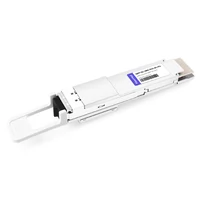
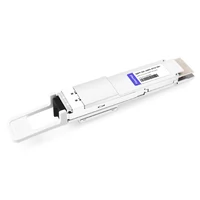
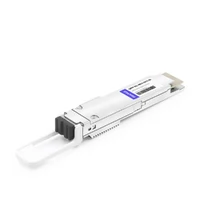
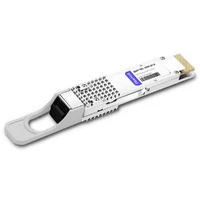
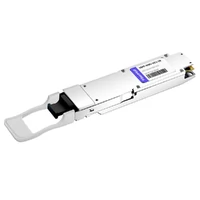
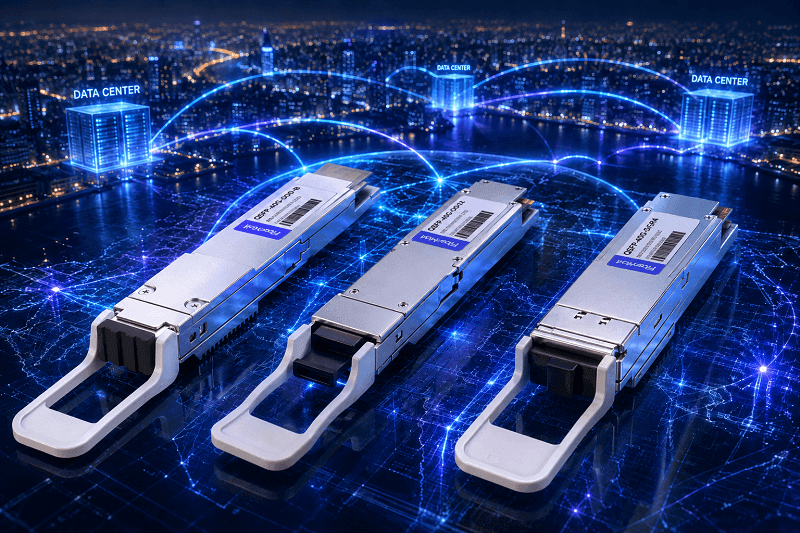
A 400G ZR module is a pluggable coherent transceiver defined by the OIF 400ZR Implementation Agreement, released in March 2020. It carries a single 400 GbE signal over one tunable DWDM wavelength, typically in a QSFP-DD or OSFP package, and it reaches about 80-120 km over amplified fiber.
The OIF wrote 400ZR to be a fixed, interoperable workhorse. The line rate is 400G and only 400G. The modulation is a single DP-16QAM format at roughly 60 Gbaud. The forward error correction is the OIF’s concatenated FEC (C-FEC).
Because everything is pinned down by the agreement, a 400ZR module from one vendor talks to a 400ZR module from another vendor without negotiation. That’s the whole point.
Power stays modest, around 15-18W, which is why 400ZR fit the QSFP-DD form factor in the first place. Ethernet is the only client interface, so you won’t find OTN framing here.
Tomas should have stopped reading at this section. His link was 200 km, and plain 400ZR tops out well before that. But the naming keeps pulling people in the wrong direction.
What Is 400G ZR+? The Vendor-Defined Category
Here’s where the terminology gets slippery. “ZR+” is not one standard. It’s an umbrella label for extended-reach coherent modules that go beyond the OIF 400ZR spec, and each vendor implements it their own way.
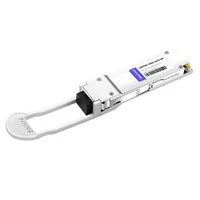
The capabilities are roughly consistent across vendors: flexible modulation (QPSK, 8QAM, or 16QAM), line rates from 100G to 400G, and longer reach. Some ZR+ modules use oFEC for stronger error correction, some stick with C-FEC. The trade-off is power, which climbs to roughly 20-25W, and price, which climbs with it.
The problem with ZR+ is vendor lock-in. Since there’s no governing standard, two “ZR+” modules from different vendors may not interoperate. In practice, you often end up deploying matched pairs from the same vendor, and if you try to mix, the DSPs and FEC modes may simply refuse to line up.
It’s worth reading the fine print on any ZR+ quote. When a vendor says “ZR+,” ask what modulation, what FEC, and what reach they actually mean, because the answer varies.

What Is OpenZR+? The Interoperable MSA
OpenZR+ answers the interoperability problem that ZR+ left open. It’s a multi-source agreement (MSA) backed by a group of companies including Microsoft, Cisco, Inphi, and Juniper, first published in September 2020.
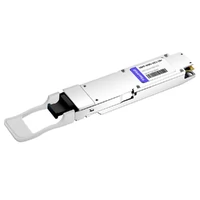
The MSA builds directly on OIF 400ZR and adds what ZR+ needed to be useful across vendors. It standardizes OpenFEC (oFEC), which gives higher net coding gain than C-FEC and enables the longer reach. It defines flexible line rates from 100G to 400G, letting you run 4x100G or 1x400G on the same hardware. It supports both OTN and Ethernet client interfaces.
And because it’s an MSA, OpenZR+ modules are meant to interoperate across vendors the way 400ZR modules do.
That standardization is exactly why OpenZR+ became the default recommendation for metro rings. One regional operator we’ve worked with runs OpenZR+ modules from three different suppliers on the same DWDM line system. They validated the FEC and operating modes up front, and the modules have coexisted on the ring for over a year without a forced vendor refresh. You could not pull that off with proprietary ZR+ implementations.
Reach for OpenZR+ typically lands around 480-1,000+ km on amplified DWDM or ROADM-based systems, depending on the modulation you select.
One honest caveat: OpenZR+ interoperability isn’t quite as frictionless as the brochure makes it sound. Full multi-vendor operation still depends on matching firmware, DSP implementations, and operating modes. Many operators still deploy matched vendor pairs on complex optical paths, even under the MSA. It’s better than proprietary ZR+, but it’s not plug-and-play with every vendor under every condition.
400G ZR vs ZR+ vs OpenZR+: Side-by-Side Comparison
The quickest way to see the difference is the table. This is the comparison that answers most “400G ZR vs ZR+ vs OpenZR+” questions before the deeper reading starts.
| Feature | 400G ZR | ZR+ | OpenZR+ |
| Standard | OIF 400ZR IA | Vendor-defined | OpenZR+ MSA |
| Line rates | 400G only | 100G-400G | 100G-400G |
| Modulation | Fixed DP-16QAM | QPSK / 8QAM / 16QAM | QPSK / 8QAM / 16QAM |
| FEC | C-FEC | C-FEC or oFEC | OpenFEC (oFEC) |
| Typical reach | 80-120 km | 450-600 km | 480-1,000+ km |
| Power | ~15-18W | ~20-25W | ~20-25W |
| Client interface | Ethernet | Ethernet + OTN | Ethernet + OTN |
| Interoperability | Multi-vendor | Vendor lock-in | Multi-vendor (MSA) |
| Best for | Point-to-point DCI | Metro/regional, ROADMs | Metro rings, multi-rate |

Reach: The Distance Story
Reach is the single biggest driver in this decision. 400G ZR stops around 120 km amplified. ZR+ stretches to 450-600 km, and OpenZR+ reaches 480-1,000+ km on the right line system.
If your link is under 80 km, plain 400G ZR usually covers it. Past 120 km, you’re firmly in ZR+ or OpenZR+ territory.
FEC: C-FEC vs oFEC
The forward error correction choice explains a lot of the reach difference. 400ZR’s C-FEC is tuned for the 80-120 km window and keeps power low. OpenZR+’s oFEC delivers more net coding gain, which is how the same-size module closes links three to five times longer. The stronger the FEC, the more reach you get for the same launch power.
Interoperability: The Real Trade-off
This is the dimension that matters most for procurement. 400ZR and OpenZR+ both promise multi-vendor interoperability, one through an OIF standard and one through an MSA. Generic ZR+ carries no such promise. If your network mixes switch vendors or you want the option to source from multiple suppliers, that difference decides the spec.
Power and Form Factor
Power follows reach. 400G ZR runs at 15-18W, which fits comfortably in QSFP-DD cages and dense 1U switches. ZR+ and OpenZR+ typically draw 20-25W, and at that level QSFP-DD starts to hit its thermal ceiling. That’s why higher-power coherent modules usually ship in OSFP, which has more package volume and better heat-sink capacity.
If your switch only takes QSFP-DD, verify the port’s power class against the module before you commit, or you’ll end up with a module that won’t initialize. Our QSFP-DD transceiver guide covers the form-factor trade-offs in detail.
How to Choose: 400G ZR, ZR+, or OpenZR+?
Decision frameworks are worth more than spec tables. Start with your link budget and topology, then let the answers drive the standard.
Under 120 km, Point-to-Point, 400G Only → 400G ZR
If you’re linking two data centers on dark fiber and you only need 400G, start with 400G ZR. It’s interoperable, lowest cost, lowest power, and the easiest to source. Most DCI links under 80 km fall here.
Under 120 km but Through ROADMs → High-Power ZR+
A simple point-to-point link under 120 km still gets tricky when it passes through ROADMs. Each add-drop stage adds loss and filtering penalties. You’ll likely need a high-power ZR+ variant to close the budget, even though the physical distance is short.
Over 120 km, Metro or Regional → ZR+ or OpenZR+
Past 120 km, choose between generic ZR+ and OpenZR+ based on how much you value multi-vendor flexibility. If you can commit to matched vendor pairs, ZR+ works. If you want options, OpenZR+ is the safer bet.
Mixed Rates on One Fiber → OpenZR+
This one is decisive. If you need 4x100G, 200G, or a mix of 100G-400G on the same line system, plain 400G ZR can’t do it. That’s OpenZR+ territory, since the MSA defines the flexible rates and oFEC that make multi-rate operation work.
When Lena’s team expanded a metro ring for a financial client, they planned four 100G services on a single fiber pair. The initial spec called for 400G ZR modules, which would have wasted 75% of the wavelength. Swapping to OpenZR+ let them pack the four services onto one module and keep the ring topology they already had.
The module change took a day. The savings in fiber and transponder costs were the reason the project got approved at all.
Multi-Vendor or Future 800G Upgrade → OpenZR+ / OSFP
If you’re planning to mix vendors now or upgrade to 800G later, OpenZR+ plus the OSFP form factor gives you the thermal headroom and the standards path. Our 400G ZR QSFP-DD buying guide walks through the purchase decision in more depth, and the OSFP guide covers why the larger form factor matters for high-power coherent modules.
A quick decision checklist for your next link:
- Measure the actual link distance, including every amplifier and ROADM hop.
- Confirm the line rates you need today, not the ones the module can theoretically do.
- Ask whether the network mixes switch or module vendors.
- Check the form factor your switch supports and its power ceiling.
- Verify the FEC mode both ends will run before you buy.
400G ZR, ZR+, OpenZR+ vs 800G ZR: What Comes Next?
Worth a section of its own, because the 400G choice affects your upgrade path. 800G ZR/ZR+ is the fastest-growing segment in coherent optics right now. Cignal AI projects a 145% compound annual growth rate for 800G ZR/ZR+ between 2025 and 2029, driven largely by AI scale-across architectures that stretch compute clusters across multiple data centers. Nokia has called 800G ZR/ZR+ “the new currency in AI-scale connectivity,” and hyperscalers are already rolling them out at scale.
The reach and rate story repeats at 800G: 800ZR handles the shorter DCI links, 800ZR+ extends the reach, and the same OIF / MSA structure applies. If you spec OSFP for your 400G deployment, you keep a cleaner path to 800G, since the high-power 800ZR modules need that form factor’s thermal headroom. QSFP-DD, great for low-power 400ZR, gets tighter for the higher-power 800G variants.

So the form factor you choose for 400G today quietly decides how easy the 800G upgrade is later. Keep that in mind before you lock in the spec.
That forward-looking angle is what sold a data center operator we know on OSFP. They weren’t at 800G yet, but their AI workloads were growing fast enough that a refresh inside two years was almost certain. Spec’ing OSFP for their 400G ZR links cost a little more now and saved them a full form-factor migration later. Most operators don’t get to make that choice twice.
FAQ
What is the difference between 400G ZR and ZR+?
400G ZR is an OIF-standardized module with fixed 400G line rate, C-FEC, and 80-120 km reach. ZR+ is a vendor-defined extended-reach category with flexible rates up to 400G, stronger FEC options, and reach of 450-600+ km, but no guaranteed multi-vendor interoperability.
What is OpenZR+?
OpenZR+ is a multi-source agreement (MSA) that extends OIF 400ZR with OpenFEC (oFEC), flexible 100G-400G line rates, and OTN support, enabling 480-1,000+ km reach with better multi-vendor interoperability than proprietary ZR+.
Is OpenZR+ interoperable?
Yes, within limits. The MSA standardizes the modulation, FEC, and management, so OpenZR+ modules interoperate across vendors better than generic ZR+. In practice, full interoperability can still depend on matched firmware and DSP implementations on complex optical paths.
How far can 400G ZR+ transmit?
Typical ZR+ modules reach 450-600 km on amplified DWDM systems. OpenZR+ modules stretch to 480-1,000+ km depending on modulation, line rate, and the line system.
Can 400G ZR carry 100G?
No. 400G ZR is fixed at 400G. If you need 100G, 200G, or mixed rates on the same wavelength, you need ZR+ or OpenZR+.
Final Thoughts
The three standards in the 400G ZR vs ZR+ vs OpenZR+ comparison are not interchangeable, and the naming makes that easy to forget.
The takeaways worth keeping:
- 400G ZR is the OIF-standardized, interoperable choice for point-to-point links up to about 120 km.
- ZR+ is a vendor-defined extended-reach category, not a standard, so matched pairs and careful quoting matter.
- OpenZR+ is the open MSA that adds oFEC and flexible 100G-400G rates with better multi-vendor interoperability.
- Reach, topology, and mixed-rate needs should drive the decision, not the module name.
- Choose OSFP for high-power variants and a cleaner 800G upgrade path.
If you’re still weighing which standard fits your links and budget, talk to our networking engineers. We help teams work through reach, topology, form factor, and FEC before they spend. And if you’re comparing costs across the coherent family, our coherent module price guide has the 2026 pricing breakdown for 400G ZR, 800G ZR+, and DCO modules.
Related Products:
-
 OSFP-800G-DCO-ZR+-HTx 800G Coherent High TX Power OSFP DCO ZR+ C-band Tunable Optical Transceiver Module
$12000.00
-
OSFP-800G-DCO-ZR-HTx 800G Coherent High TX Power OSFP DCO ZR C-band Tunable Optical Transceiver Module
$11000.00
-
QSFP-DD-800G-DCO-ZR+-HTx 800G Coherent High TX Power QSFP-DD DCO ZR+ C-band Tunable Optical Transceiver Module
$12000.00
-
QSFP-DD-800G-DCO-ZR-HTx 800G Coherent High TX Power QSFP-DD DCO ZR C-band Tunable Optical Transceiver Module
$11000.00
-
QSFP-DD-400G-DCO-ZR+-HTx 400G Coherent High TX Power QSFP-DD DCO OpenZR+ C-band Tunable Optical Transceiver Module
$5500.00
-
QSFP-DD-400G-DCO-ZR-HTx 400G Coherent High TX Power QSFP-DD DCO ZR C-band Tunable Optical Transceiver Module
$5200.00
-
QSFP28-100G-DCO-ZR 100G Coherent QSFP28 DCO C-band Tunable Optical Transceiver Module
$3600.00
-
OSFP-400G-DCO-ZR+ 400G Coherent OSFP-DCO ZR+ C-band Tunable Optical Transceiver Module
$7000.00
-
QSFP-DD-400G-DCO-ZR+ 400G Coherent QSFP-DD DCO C-band Tunable Optical Transceiver Module
$4680.00
-
QSFP-DD-400G-DCO-ZR 400G Coherent QSFP-DD DCO C-band Tunable Optical Transceiver Module
$4550.00
-
QSFP-DD-100G-DCO 100G Coherent QSFP-DD DCO C-band Tunable Optical Transceiver Module
$5500.00
-
OSFP-400G-DCO-ZR 400G Coherent OSFP-DCO ZR C-band Tunable Optical Transceiver Module
$7000.00