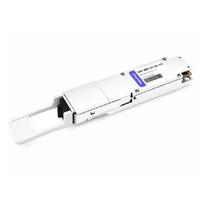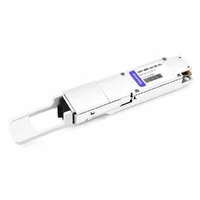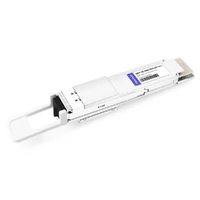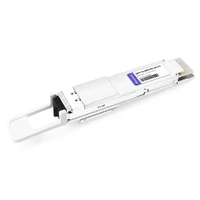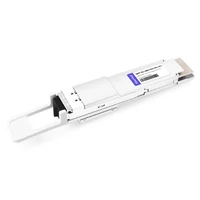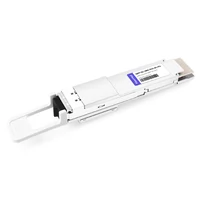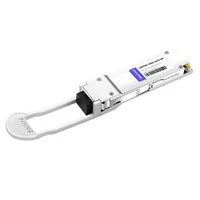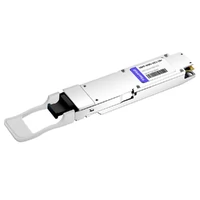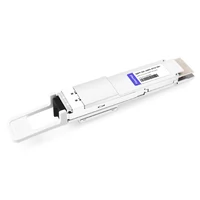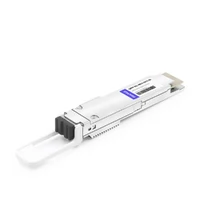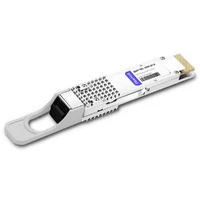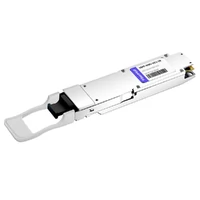

A 400G ZR quote can be confusing because the numbers vary enormously depending on where you buy the module.
A public OEM list price can exceed $100,000 per module, while third-party compatible 400G ZR QSFP-DD modules are often available for a small fraction of that amount. The difference is not simply a matter of hardware cost. OEM pricing may include vendor qualification, platform support, software integration, warranty coverage, and a commercial discount structure that makes the published list price very different from the final negotiated price.
That makes it difficult to answer a seemingly simple question: How much does a 400G ZR module actually cost in 2026?
This guide focuses on the commercial side of 400G coherent optics. It covers 2026 pricing benchmarks, the factors that affect module cost, OEM versus third-party compatible sourcing, volume pricing, and the total-cost difference between coherent pluggables and traditional transponder-based architectures.
If you are still deciding which optical specification you need, our 400G ZR QSFP-DD buying guide covers specifications, reach, platform compatibility, and deployment considerations in more detail.

How Much Does a 400G ZR Module Cost in 2026?
There is no single market price for a 400G ZR module.
Public pricing in 2026 generally falls into two very different categories: OEM list pricing and third-party compatible market pricing.
For third-party compatible optics, a standard 400G ZR QSFP-DD module commonly falls in the range of approximately $6,000–$9,000 per module, depending on the supplier, optical output power, DSP generation, warranty, interoperability testing, quantity, and host-platform coding.
400G ZR+, OpenZR+, and higher-output coherent modules usually cost more. A practical market range is roughly $8,000–$16,000 or more per module, particularly for products designed for regional, ROADM-based, or longer-reach networks.
OEM public list pricing is dramatically higher. For example, published Cisco pricing for the QDD-400G-ZR-S has been around $110,000, while the corresponding 400G ZR+ product has appeared above $130,000.
However, OEM list price should not be confused with the final transaction price. Large operators, enterprise customers, distributors, and service providers frequently negotiate substantial discounts.
A useful 2026 pricing benchmark is therefore:
- Third-party compatible 400G ZR QSFP-DD: approximately $6,000–$9,000
- Third-party 400G ZR+ / OpenZR+: approximately $8,000–$16,000+
- OEM 400G ZR public list price: often above $100,000
- OEM 400G ZR+ public list price: often above $120,000
When compatible pricing is compared directly with public OEM list pricing, the apparent difference can exceed 85–90%. But that comparison needs context: OEM list prices are often heavily discounted, so the actual saving versus a negotiated OEM quote may be significantly smaller.
For budgeting, the best approach is to compare actual quotes at the same quantity, reach, support level, and compatibility requirement, rather than comparing an OEM list price with a third-party street price.

Why 400G ZR Prices Vary So Widely
Several factors explain why two modules that both say “400G ZR” can have very different prices.
OEM vs Third-Party Compatible Modules
The largest price difference usually comes from the sourcing model.
OEM optics are supplied and qualified by the router, switch, or optical-system manufacturer. They typically include platform-specific validation, firmware integration, vendor support, lifecycle management, and a defined escalation path when something goes wrong.
Third-party compatible modules can use coherent DSPs, tunable lasers, optical engines, drivers, TIAs, and other components from the same broader merchant component ecosystem used across the coherent-optics industry. However, this does not mean that every compatible product has the same bill of materials as the OEM version.
Different suppliers may use different:
- coherent DSP generations;
- lasers and optical engines;
- drivers and receivers;
- firmware implementations;
- thermal designs;
- EEPROM and CMIS coding;
- manufacturing processes;
- calibration procedures; and
- interoperability test programs.
The important question is therefore not whether two modules contain identical components. It is whether the compatible module meets the required optical specification and has been validated on the intended platform.
Standard 400ZR interoperability is primarily based on the OIF 400ZR Implementation Agreement, rather than IEEE 802.3ct.
For compatible modules, platform coding is also important. Cisco, Arista, Juniper, Nokia, Huawei, and other systems may apply different module-recognition, telemetry, alarm, and software-support requirements.
That is why a compatible coherent optic should be tested on the actual host platform before a large deployment.
Form Factor: QSFP-DD vs OSFP
Form factor moves the number less than sourcing, but it matters. 400G ZR ships mostly in QSFP-DD, which caps power around 15-18W and keeps port density high. OSFP variants have more thermal headroom for extended-reach and ZR+ optics, which usually adds a little to the price. For most metro DCI deployments, QSFP-DD is the cost-efficient choice, and it’s the one you’ll see quoted most often.
Standard vs Extended Reach
Plain 400G ZR is a fixed 400G, DP-16QAM, C-FEC module for 80-120 km links. ZR+ and OpenZR+ add flexible modulation, longer reach out to 450-1,000+ km, and higher power. Every one of those additions shows up in the bill of materials, which is why ZR+ and OpenZR+ pricing sits a tier above standard 400G ZR.
If your links stay under 120 km, paying for extended reach you’ll never use is wasted budget. Our 400G ZR vs ZR+ vs OpenZR+ comparison walks through when each tier is worth the money.
Component Costs Under the Hood
Prices are anchored by what’s inside the module. A coherent DSP on a 7nm or 5nm process runs $100-300 per module. III-V semiconductor wafers (InP and GaAs) account for roughly 25-35% of the bill of materials.
Advanced packaging adds another 15-20%. And supply constraints on tunable lasers and CoWoS-style packaging have kept near-term prices firmer than pure volume curves would suggest.
That’s also why coherent modules have shallower discount curves than commodity client optics. There’s less margin to give away when a third of your cost is an expensive wafer.
400G ZR Price Trends: 2023-2026
The overall direction of the 400ZR market has been toward lower cost per transported bit.
400ZR has moved from an early coherent-pluggable technology into a mature, high-volume DCI platform. More module vendors, greater DSP availability, higher manufacturing volumes, and stronger multi-vendor ecosystems have increased price competition.
However, it is difficult to assign one universal annual price-decline percentage to the entire market.
Pricing varies significantly between:
- OEM and compatible modules;
- North American, European, and Asian markets;
- standard ZR and ZR+;
- low-power and high-output-power designs;
- single-unit and volume orders;
- current-generation and older-generation DSPs; and
- new, excess-stock, refurbished, and used products.
The more useful trend is that 400G ZR is now a mature coherent-pluggable segment, while 800G ZR/ZR+ is moving into the higher-performance and higher-price position.
By 2026, 800G ZR/ZR+ deployment is beginning to scale, especially in AI-related scale-across DCI networks. At the same time, 400G coherent pluggables continue to represent an important part of deployed coherent bandwidth.
For operators with existing 400G requirements, this creates a favorable buying environment: the technology is mature, the supplier base is broad, and 800G is absorbing more of the early-adopter premium.
That does not mean every network should remain at 400G.
A greenfield network with rapidly growing inter-data-center traffic may justify 800G from the start. But for existing 400G router ports and metro/DCI links, 400ZR continues to provide a strong balance of cost, density, interoperability, and reach.
OEM vs Compatible 400G ZR: The Real Price Comparison
Price alone does not decide whether an OEM or compatible module is the better choice.
An OEM module generally provides:
- direct platform-vendor qualification;
- established software support;
- validated telemetry and alarms;
- a single support path for the router and optics;
- defined lifecycle management; and
- lower organizational risk for networks that require strict vendor support.
A third-party compatible module generally provides:
- substantially lower acquisition cost;
- platform-specific coding;
- more flexible commercial terms;
- potentially shorter sourcing cycles;
- multi-platform options from one supplier; and
- a lower cost structure for large port counts.
The trade-off is validation.
Consider a 240 km amplified regional link. Standard 400ZR would not normally be the correct optical choice for that distance. The engineer would instead need to evaluate an appropriate ZR+/OpenZR+ mode together with the optical line system.
Even then, simply inserting a module and checking whether the link comes up is not enough.
A useful qualification should include:
- host compatibility;
- transmit and receive optical power;
- OSNR margin;
- pre-FEC BER;
- post-FEC error performance;
- chromatic-dispersion tolerance;
- FEC mode;
- module temperature;
- wavelength tuning;
- line-system compatibility; and
- performance under realistic traffic load.
If pre-FEC BER operates too close to the FEC threshold, environmental changes or additional optical penalties can consume the remaining margin and eventually produce uncorrectable post-FEC errors.
The correct decision therefore is not:
“Use OEM above 80 km and compatible below 80 km.”
There is no universal 80 km boundary between OEM and compatible optics.
The decision should be based on optical margin, line-system design, interoperability, host-platform support, operational requirements, SLA, and the quality of the supplier’s validation process.
For straightforward point-to-point DCI, well-tested compatible 400ZR modules can offer a compelling cost advantage.
For complex ROADM networks, long-haul routes, strict support contracts, or deployments where the organization requires a single vendor to own the complete fault-resolution process, OEM optics may justify their higher cost.
400G ZR vs Transponder: Total Cost of Ownership
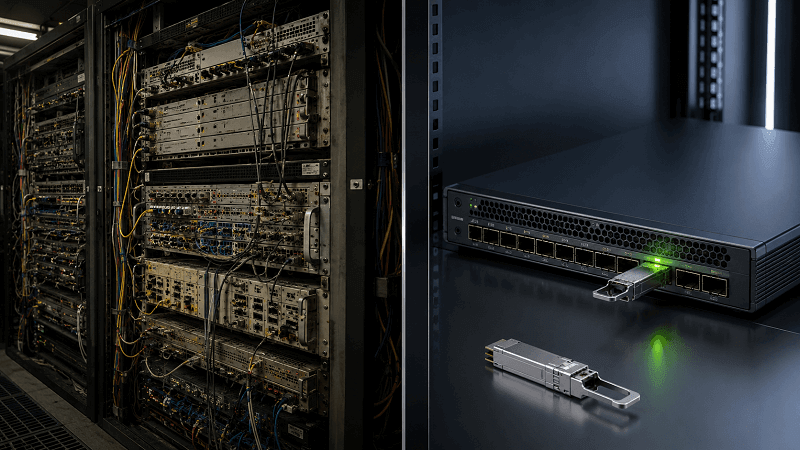
Unit price only tells part of the story. The reason 400G ZR replaced transponder shelves isn’t just the module price, it’s everything the module eliminates.
A traditional 400G DWDM link needs a pair of carrier-grade trans ponders at 15,000- 25,000, plus grey modules at 200-400 each, plus chassis and rack space. A 400G ZR pluggable does the same job in a router port that already exists. The hardware gap is obvious, and the power gap is even bigger: a transponder pair draws roughly 120W per link, while a 400G ZR+ pair draws around 44W. That’s more than a 3x difference that compounds across racks, across a year of operation, across an entire fleet.
| Cost component | Transponder architecture | 400G ZR pluggables |
| Transport hardware per link | 15,000 – 5,000 | 6,000 – 18,000 |
| Grey optics | 200 – 400 each | not needed |
| Chassis / rack space | required | none |
| Power per link | ~120W | ~44W (about 15W per ZR module) |
| 5-year energy cost | high | roughly 3x lower |
| Approximate per-Gbps cost | higher | ~$45/Gbps at 400G |
Industry estimates put the equipment, power, and space savings of IP-over-DWDM with 400G ZR at 30-50% versus traditional transport. Cisco cites over 66% cost optimization for a router-plus-QDD-ZR architecture. The architecture won because the numbers work.
One honest caveat on the TCO side: coherent modules still need an optical line system. On links near the 80-120 km range you’ll likely add an EDFA, and multi-wavelength deployments need a DWDM mux. Those costs are real, but one EDFA typically serves multiple 400G ZR modules on the same fiber pair, which keeps the per-link number low. If you’re new to the full coherent family, our complete guide to coherent optical modules covers the architecture from 100G ZR through 800G ZR+.
400G ZR Volume Discounts and Bulk Pricing
Lena buys transceivers for a network distributor that moves a few hundred modules a quarter. When she first asked a supplier about 400G ZR pricing, she got the single-unit retail number. When she asked for a quote on 250 units, the per-unit price dropped about 18%. Her rule now: always ask for the volume price before you build the budget.
Discount tiers for coherent modules follow a shallower curve than commodity client optics, but they exist, and they’re worth negotiating.
| Order size | Typical discount |
| 10-50 units | 5-10% |
| 100+ units | 10-20% |
| 1,000+ units | 20-35% |
| 10,000+ units | 30-45% |
Two notes. First, coherent transceivers carry more component cost than 10G or 100G client optics, so suppliers have less margin to give at high volume. Second, the biggest discounts go to buyers who commit to a forecast. If you can commit to a quarterly quantity, you’ll get a better number than a one-off purchase, and it makes the supplier’s own planning easier too.
How to Get the Best 400G ZR Price: Procurement Checklist
A short checklist to keep you from overpaying, in the order you should work through it:
1. Benchmark against compatible pricing before you accept any OEM quote. The 55-90% gap is real and it resets your negotiation floor.
2. Ask for volume pricing at your actual quantity, not the single-unit number.
3. Request EEPROM coding that matches your platform. Cisco, Arista, and Juniper all use different acceptance logic.
4. Get warranty terms in writing. Coherent modules fail differently than client optics, and support matters when they do.
5. Ask about interop validation. A good supplier has tested against your switch model and can show you the lab report.
6. Confirm lead time and MOQ. Coherent supply chains are still tight on DSP capacity and advanced packaging.
7. Request a demo or eval unit. Validating one module on your bench is worth more than any price concession on paper.
Red flags to watch: suppliers that won’t share lab test reports, unclear warranty language, coding images that don’t match your platform, and prices far below the $4,000-5,000 floor for a legitimate 400G ZR module. If a deal looks too good, the EEPROM, the laser quality, or the support is where the corners got cut.
Need a straight answer on 400G ZR pricing for your deployment? Request a quote or explore our DWDM transceiver options. Either way you’ll get a number based on your actual quantity and reach, not a list price.

Frequently Asked Questions
What does a 400G ZR module cost in 2026?
Third-party compatible 400G ZR QSFP-DD modules commonly fall around $6,000–$9,000 per unit, although public pricing varies significantly by supplier and configuration. ZR+/OpenZR+ modules are generally more expensive and can fall around $8,000–$16,000 or more.
OEM public list prices can exceed $100,000, but negotiated OEM pricing may be substantially lower.
Why are OEM 400G ZR modules so expensive?
OEM list prices reflect support, certification, and margin, not just hardware. The same underlying components are available in compatible modules at a fraction of the price. OEM still carries more value on long-haul and ROADM-heavy links where validation and chassis warranty matter.
Are compatible 400G ZR modules safe for long-haul links?
They can be, but validation matters more than in client optics. Test the module on your platform, check pre-FEC BER and OSNR margin, and confirm the EEPROM coding. Most buyer guides recommend OEM or rigorously lab-validated compatible modules past 80 km.
What’s the price difference between 400G ZR and ZR+?
Third-party standard 400ZR modules may cost roughly $6,000–$9,000, while ZR+/OpenZR+ modules may cost approximately $8,000–$16,000+.
The premium reflects capabilities such as stronger FEC, flexible line rates and modulation, greater dispersion tolerance, longer reach, and—in some designs—higher optical output power.
Will 400G ZR prices keep falling?
Yes. 400ZR is the most commoditized coherent segment, with annual erosion of 8-12% and EU pricing down 30-40% since 2023. The premium is shifting to 800G ZR/ZR+ as hyperscalers scale AI data centers.
What is the per-Gbps cost of 400G ZR?
At an 18,000 per-port price, 400GZR+works out to roughly 45/Gbps. 800G coherent drops that to about $18/Gbps, which is one reason large operators are already moving toward 800G.
Final Thoughts
The 400G ZR price story is really two stories. There’s the sticker-shock number on an OEM quote, and there’s the market price most buyers actually pay. Understanding the gap, the drivers behind it, and the volume levers you can pull is what separates a project that fits the budget from one that stalls in procurement.
What to remember:
- Compatible 400G ZR modules run 6,000 – 9,000, a 55-90% saving versus OEM list.
- Prices keep falling, roughly 8-12% a year and 30-40% off since 2023.
- Volume discounts of 10-45% are available if you commit to quantity.
- TCO beats transponder shelves on hardware, power, and space, even with line system costs included.
- Validate any compatible module on your platform before you trust it on a long-haul link.
If you’re planning a 400G ZR deployment and want realistic pricing, talk to our networking engineers. They’ll help you match the right module to your reach and budget, and give you a quote that reflects what you’re actually buying.
Related Products:
-
 OSFP-800G-DCO-ZR+-HTx 800G Coherent High TX Power OSFP DCO ZR+ C-band Tunable Optical Transceiver Module
$12000.00
-
OSFP-800G-DCO-ZR-HTx 800G Coherent High TX Power OSFP DCO ZR C-band Tunable Optical Transceiver Module
$11000.00
-
QSFP-DD-800G-DCO-ZR+-HTx 800G Coherent High TX Power QSFP-DD DCO ZR+ C-band Tunable Optical Transceiver Module
$12000.00
-
QSFP-DD-800G-DCO-ZR-HTx 800G Coherent High TX Power QSFP-DD DCO ZR C-band Tunable Optical Transceiver Module
$11000.00
-
QSFP-DD-400G-DCO-ZR+-HTx 400G Coherent High TX Power QSFP-DD DCO OpenZR+ C-band Tunable Optical Transceiver Module
$5500.00
-
QSFP-DD-400G-DCO-ZR-HTx 400G Coherent High TX Power QSFP-DD DCO ZR C-band Tunable Optical Transceiver Module
$5200.00
-
QSFP28-100G-DCO-ZR 100G Coherent QSFP28 DCO C-band Tunable Optical Transceiver Module
$3600.00
-
OSFP-400G-DCO-ZR+ 400G Coherent OSFP-DCO ZR+ C-band Tunable Optical Transceiver Module
$7000.00
-
QSFP-DD-400G-DCO-ZR+ 400G Coherent QSFP-DD DCO C-band Tunable Optical Transceiver Module
$4680.00
-
QSFP-DD-400G-DCO-ZR 400G Coherent QSFP-DD DCO C-band Tunable Optical Transceiver Module
$4550.00
-
QSFP-DD-100G-DCO 100G Coherent QSFP-DD DCO C-band Tunable Optical Transceiver Module
$5500.00
-
OSFP-400G-DCO-ZR 400G Coherent OSFP-DCO ZR C-band Tunable Optical Transceiver Module
$7000.00