
A 2024 AI cluster build can ship with 200G HDR adapters while the rack next door runs 800G XDR. Same protocol. Same vendor. Two decades of bandwidth evolution compressed into the same aisle.
That’s the reality of InfiniBand generations. SDR, DDR, QDR, FDR, EDR, HDR, NDR, XDR, and the coming GDR are not just marketing labels. They determine which switches, NICs, cables, and optics you can use together. Pick the wrong generation and your “compatible” parts refuse to link up.
In this guide, we’ll walk through every InfiniBand generation from 2001 to the 1.6T roadmap. You’ll get a single speed chart, the connector each generation uses, the NVIDIA hardware that ships it, and a practical way to choose for your next AI or HPC fabric.

Why InfiniBand Generations Matter
InfiniBand has doubled effective bandwidth roughly every two to three years for more than two decades. Each jump changes the physical layer: the lane rate, the encoding, the connector, the power budget, and sometimes the cable type.
Everything shifts.
A network architect buying a 400G NDR fabric can’t simply plug in 200G HDR cables because the switch uses OSFP cages while the older gear uses QSFP56. The same auto-negotiation that makes InfiniBand backward compatible at the protocol level doesn’t fix a mechanical mismatch.
Here’s a real example. Marcus, a senior infrastructure engineer at a Midwest AI startup, ordered ConnectX-7 NDR NICs and Quantum-2 switches for a 256-GPU cluster. He assumed his existing QSFP56 AOC stock would work at 200G. It didn’t.
The Quantum-2 switch ports were OSFP, not QSFP56. He ate a two-week delay while sourcing OSFP-to-QSFP56 adapter cables. Generation awareness would’ve saved him the headache.
If you want the big-picture view of why InfiniBand dominates AI networking, see our What is InfiniBand guide.
The InfiniBand Naming Conundrum
The acronyms look arbitrary, but they follow a rough pattern.
Sort of.
SDR, DDR, QDR describe how many bits transfer per clock edge: single, double, quad.
FDR is “Fourteen Data Rate” because it pushes 14.0625 Gb/s per lane.
EDR, HDR, NDR, XDR, GDR are descriptive marketing names marking major bandwidth jumps.
InfiniBand links also come in lane widths:
1x: 1 lane, rarely used in modern data centers
4x: 4 lanes, the standard for almost every NIC and switch port
12x: 12 lanes, mostly inter-switch links in large HPC systems
When vendors quote “400G InfiniBand,” they mean a 4x NDR link. A 1x NDR link is 100G. A 12x NDR link is 1.2T. Always check lane width before comparing numbers.
InfiniBand Generations Comparison Table
| Generation | Full Name | Year | Per-Lane Rate | 4x Raw Rate | 4x Effective Rate | Encoding | Connector | Representative Hardware |
| SDR | Single Data Rate | 2001 | 2.5 Gb/s | 10 Gb/s | ~8 Gb/s | 8b/10b | CX4 | Mellanox InfiniHost III |
| DDR | Double Data Rate | 2005 | 5 Gb/s | 20 Gb/s | ~16 Gb/s | 8b/10b | CX4 | ConnectX-2 |
| QDR | Quad Data Rate | 2007 | 10 Gb/s | 40 Gb/s | ~32 Gb/s | 8b/10b | QSFP+ | ConnectX-2/3 |
| FDR10 | – | 2011 | 10.3125 Gb/s | 40 Gb/s | ~39 Gb/s | 64b/66b | QSFP+ | Switch-IB |
| FDR | Fourteen Data Rate | 2011 | 14.0625 Gb/s | 56 Gb/s | ~54 Gb/s | 64b/66b | QSFP+ | ConnectX-3 Pro |
| EDR | Enhanced Data Rate | 2014 | 25.78125 Gb/s | 100 Gb/s | ~97 Gb/s | 64b/66b | QSFP28 | ConnectX-4/5 |
| HDR | High Data Rate | 2018 | 53.125 Gb/s | 200 Gb/s | ~200 Gb/s | PAM4 + FEC | QSFP56 | ConnectX-6, Quantum-1 |
| NDR | Next Data Rate | 2021 | 106.25 Gb/s | 400 Gb/s | ~400 Gb/s | PAM4 + FEC | OSFP / QSFP112 | ConnectX-7, Quantum-2 |
| XDR | eXtreme Data Rate | 2024 | 200 Gb/s | 800 Gb/s | ~800 Gb/s | PAM4 + FEC | OSFP | ConnectX-8, Quantum-X800 |
| GDR | Gigantic Data Rate | 2027+ | ~400 Gb/s | 1.6 Tb/s | ~1.6 Tb/s | PAM4 + FEC | OSFP-XD / CPO | ConnectX-9 (projected) |
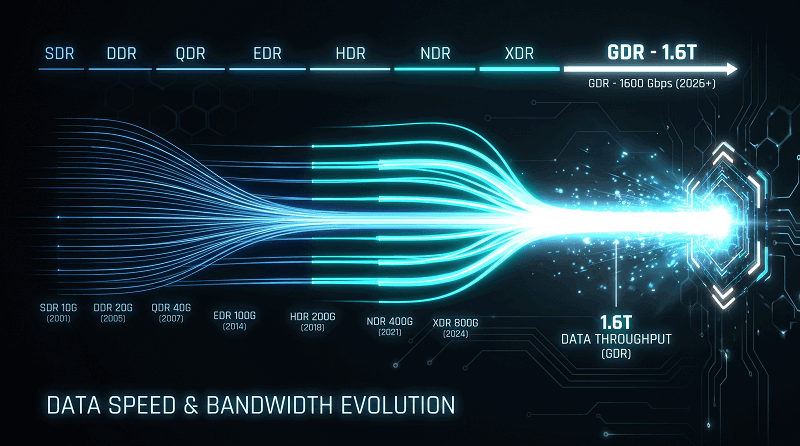
The InfiniBand generations in order are SDR, DDR, QDR, FDR, EDR, HDR, NDR, XDR, and the future GDR. Each step roughly doubles the effective bandwidth of the previous one while changing enough of the physical layer that you can’t ignore connector and cabling differences.
Early InfiniBand: SDR, DDR, and QDR (2001–2008)
The first InfiniBand generations used 8b/10b encoding. Every 8 data bits became 10 transmitted bits, giving 80% efficiency. SDR ran 2.5 Gb/s per lane, DDR doubled that to 5 Gb/s, and QDR hit 10 Gb/s.
SDR and DDR used the CX4 connector, a large screw-retained interface that looks nothing like modern QSFP. QDR moved to QSFP+, the same form factor that would dominate 40G Ethernet. At the time, a 40G QDR link was staggeringly fast.
These generations still exist in legacy HPC clusters and older storage fabrics. If you’re maintaining a QDR installation today, you’re probably planning a migration rather than an expansion. Parts are available, but new development stopped years ago.
The Transition Era: FDR and EDR (2011–2015)
FDR introduced 64b/66b encoding. Overhead dropped from 20% to about 3%, so a 56 Gb/s raw link delivered roughly 54 Gb/s of usable data. FDR10 was a transitional 40G variant that used 64b/66b but at a lower lane rate for compatibility with 40G Ethernet gear.
EDR pushed the lane rate to 25.78125 Gb/s and delivered 100G over QSFP28. This was the generation where InfiniBand started looking like modern data center networking. ConnectX-4 and ConnectX-5 cards shipped EDR, and 100G became the baseline for serious HPC clusters.
The big shift here was not just speed. It was efficiency. Moving from 8b/10b to 64b/66b meant less of the raw signaling rate was wasted on line coding. For bandwidth-hungry workloads, that mattered.
Modern InfiniBand: HDR and NDR (2018–2024)
HDR moved to PAM4 modulation and forward error correction (FEC). PAM4 carries two bits per symbol instead of one, so a 50 Gb/s lane in NRZ becomes roughly 100 Gb/s in PAM4. HDR delivers 200G over QSFP56.
NDR doubled the lane rate again to 106.25 Gb/s and pushed the port rate to 400G. NVIDIA switched to OSFP on the switch side for better thermal and power headroom, while some NICs use QSFP112. Quantum-2 switches offer 64 ports of 400G with 51.2 Tb/s of aggregate switching capacity, roughly three times the capacity of Quantum-1.
HDR and NDR also introduced split-lane modes:
HDR100: 2 lanes × 50 Gb/s = 100G
NDR200: 2 lanes × 106.25 Gb/s = 200G
These modes let a single physical port act as two lower-speed links, which helps when you need more host connections than raw bandwidth. ConnectX-7 and ConnectX-8 adapters support both full and split-lane operation.
For a deep dive into deploying 400G NDR, see our 800G NDR InfiniBand deployment guide.
The Frontier: XDR and GDR (2024–2027+)
XDR is the current shipping frontier. It uses 200 Gb/s per lane to deliver 800G ports. NVIDIA’s Quantum-X800 switch packs 144 OSFP ports with 115.2 Tb/s of switching capacity and can connect up to 10,368 ConnectX-8 SuperNICs in a two-tier fat-tree.
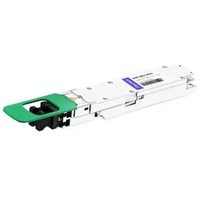
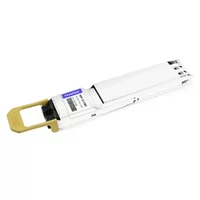
ConnectX-8 uses a single OSFP cage and can auto-negotiate down through XDR, NDR, NDR200, HDR, HDR100, EDR, FDR, and SDR. One important caveat: ConnectX-8 uses OSFP RHS (Riding Heat Sink, flat-topped to utilize server airflow) modules, while Quantum-X800 uses OSFP IHS (Integrated Heat Sink, featuring built-in fins for switch cooling) modules. They aren’t interchangeable because of the heatsink height differences.
GDR is the projected next step. Industry roadmaps point to 1.6 Tb/s ports using 224G PAM4 SerDes (in an 8-lane configuration) or next-generation 448G SerDes, utilizing OSFP-XD or co-packaged optics. NVIDIA has signaled 1.6T InfiniBand for late 2026 or 2027, though production volumes will likely follow in 2027–2028.
Encoding, Modulation, and Efficiency
Each generation change is also an encoding change.
No exceptions.
8b/10b (SDR–QDR): 20% overhead, simple, reliable clock recovery
64b/66b (FDR–EDR): ~3% overhead, uses scrambling instead of lookup tables
PAM4 + FEC (HDR–XDR): near-zero encoding overhead but adds FEC latency
Why does this matter? A 40G QDR link only delivers about 32G of usable data. A 56G FDR link delivers about 54G. The efficiency gain from FDR onward is why bandwidth numbers started tracking closer to the raw lane rate.
PAM4 is less forgiving than NRZ. It needs stronger FEC, better signal integrity, and more power. That’s why NDR switch ports use OSFP instead of QSFP56: the module needs more thermal headroom for the DSP and optics.

Connector and Cable Evolution by Generation
| Generation | Typical Connector | Notes |
| SDR / DDR | CX4 / SFF-8470 | Large, screw-retained, copper only |
| QDR / FDR10 / FDR | QSFP+ | 4-lane, copper and optical |
| EDR | QSFP28 | 4 × ~25G lanes |
| HDR | QSFP56 | Same footprint as QSFP28, PAM4 signaling |
| NDR (NICs) | QSFP112 | 4 × ~100G lanes |
| NDR / XDR (switches) | OSFP | 8-lane, higher power/thermal |
| GDR | OSFP-XD / CPO | Projected 1.6T form factor |
The connector often determines whether two devices can physically link. A QSFP56 module won’t fit an OSFP cage. An OSFP module won’t fit a QSFP112 cage. Even when adapters exist, they add loss, cost, and failure points.
If you need help matching cables and transceivers to your InfiniBand generation, our InfiniBand cables guide breaks down the options.
Backward Compatibility and Auto-Negotiation Across InfiniBand Generations
InfiniBand is backward compatible at the protocol level. A ConnectX-8 can talk to a ConnectX-3 if both ends agree on a common generation and the physical layer matches. Auto-negotiation handles the speed and width.
Mostly.
But compatibility has limits:
Mechanical form factor must match or use a qualified adapter
Cable EEPROM must report supported speeds correctly
Switch and NIC firmware must align for split-lane modes
Power budgets at NDR and XDR can exceed what older QSFP modules can supply
The protocol doesn’t magically convert an OSFP port into a QSFP56 port. Always verify the cage type before you order.
Which InfiniBand Generation Should You Buy in 2026?
The right generation depends on scale, GPU generation, budget, and timeline.
| Use Case | Recommended Generation | Why |
| Lab / testbed / tight budget | HDR (200G) | Mature, lower cost, still fast enough for many workloads |
| 8–64 GPUs / A100 | HDR or NDR200 | Cost-effective; NDR200 preserves upgrade path |
| 64–512 GPUs / H100-H200 | NDR (400G) | Current sweet spot for production AI training |
| 1,000+ GPUs / B200+ | XDR (800G) | Bandwidth and radix needed for frontier models |
| Planning 2027+ refresh | Watch GDR (1.6T) | Roadmap generation; don’t deploy until ecosystem matures |
HDR is a solid choice for smaller clusters where every dollar counts. NDR is the safe default for modern H100 and H200 deployments. XDR makes sense when you’re building at the scale where network topology depth starts hurting tail latency.
For non-production labs, used HDR gear can stretch a tight budget. Just verify firmware support and cable compatibility before you buy.
If you’re weighing InfiniBand against Ethernet for an AI cluster, our InfiniBand vs RoCEv2 comparison covers the decision in detail.

Physical Layer Considerations for InfiniBand Generations
Every generation has physical-layer implications that procurement teams sometimes miss.
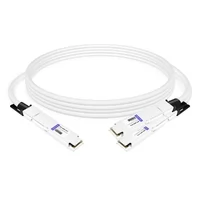
DAC cables work for short reaches up to about 3 meters. They’re cheap and low power but get thicker and stiffer as lane rates rise.
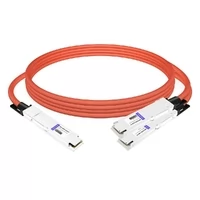
AOC cables cover mid-range distances up to about 100 meters. They add cost but simplify cabling.
Optical transceivers are required for longer runs and structured fiber plants. At 400G and 800G, transceiver power can hit 20–30W per port.
Power and thermal matter more at each generation. A 144-port XDR switch can dissipate thousands of watts. Rack cooling, airflow direction, and cable management become first-class design constraints, not afterthoughts.
At 800G, DAC bend radius and connector insertion force become real concerns. Plan rack layout before the switches arrive.
This is where FiberMall focuses.
We test our 800G NDR InfiniBand modules, 400G OSFP/QSFP112 transceivers, and InfiniBand-compatible DAC/AOC cables for Quantum-2, ConnectX-7, and HGX platforms.
InfiniBand Generations FAQ
What does SDR stand for in InfiniBand?
SDR stands for Single Data Rate. It was the first InfiniBand generation, running 2.5 Gb/s per lane with 8b/10b encoding and CX4 connectors.
What are the InfiniBand generations in order?
The InfiniBand generations in order are SDR, DDR, QDR, FDR, EDR, HDR, NDR, XDR, and the future GDR. Each generation roughly doubles the effective bandwidth of the previous one.
Is NDR backward compatible with HDR?
Protocol-level backward compatibility exists, but the physical connectors may differ. NDR switch ports often use OSFP, while HDR uses QSFP56. You need compatible cables or adapters.
What cable does NDR use?
NDR 400G typically uses OSFP DAC, AOC, or optical transceivers on the switch side. Some NDR NICs use QSFP112. Always verify the cage type on both ends.
What is HDR100 vs HDR?
HDR100 is a split-lane mode that runs 100G using two of the four HDR lanes. It’s useful when you need more ports at lower bandwidth.
When will GDR InfiniBand ship?
GDR is projected for late 2026 or 2027 at 1.6 Tb/s. Production volumes’ll likely follow in 2027–2028.
Which InfiniBand generation is best for AI training?
For H100/H200 clusters, NDR 400G is the current default. For frontier training at 1,000+ GPUs, XDR 800G is the better fit.
What is the difference between NDR and XDR?
NDR delivers 400G per port using 106.25 Gb/s lanes. XDR delivers 800G per port using 200 Gb/s lanes. XDR uses Quantum-X800 switches and ConnectX-8 SuperNICs.
Conclusion
The InfiniBand generations from SDR to GDR trace a clear arc: roughly double the bandwidth every few years, and pay for it with new connectors, stronger FEC, and higher power. The protocol stays familiar, but the physical layer keeps moving.
For most buyers in 2026, the practical choice is between HDR, NDR, and XDR. HDR remains cost-effective for smaller clusters. NDR is the safe production standard for H100 and H200. XDR is the right bet for large-scale frontier AI.
Start with the GPU count and work backward to switches, NICs, and cables. The generation you pick should match the thermal and cabling budget of the rack, not just the peak bandwidth on paper.
Get the physical layer right whichever generation you choose. The fastest NIC can’t outrun a mismatched cable or an under-cooled switch. If you’re planning an InfiniBand deployment, contact FiberMall for a compatibility check or quote on tested InfiniBand transceivers, cables, and optics.
Related Products:
-
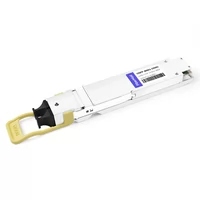
 NVIDIA MMA4Z00-NS400 Compatible 400G OSFP SR4 Flat Top PAM4 850nm 30m on OM3/50m on OM4 MTP/MPO-12 Multimode FEC Optical Transceiver Module
$400.00
NVIDIA MMA4Z00-NS400 Compatible 400G OSFP SR4 Flat Top PAM4 850nm 30m on OM3/50m on OM4 MTP/MPO-12 Multimode FEC Optical Transceiver Module
$400.00
-
NVIDIA MMS4X00-NS400 Compatible 400G OSFP DR4 Flat Top PAM4 1310nm MTP/MPO-12 500m SMF FEC Optical Transceiver Module
$450.00
-
NVIDIA MMA1Z00-NS400 Compatible 400G QSFP112 VR4 PAM4 850nm 50m MTP/MPO-12 OM4 FEC Optical Transceiver Module
$385.00
-
NVIDIA MMS1X00-NS400 Compatible 400G NDR QSFP112 DR4 PAM4 1310nm 500m MPO-12 with FEC Optical Transceiver Module
$500.00
-
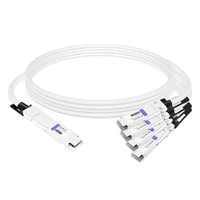
NVIDIA MCP7Y70-H001 Compatible 1m (3ft) 400G Twin-port 2x200G OSFP to 4x100G QSFP56 Passive Breakout Direct Attach Copper Cable
$120.00
-
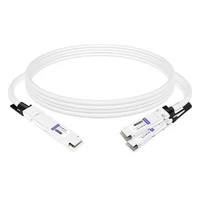
NVIDIA MCP7Y60-H001 Compatible 1m (3ft) 400G OSFP to 2x200G QSFP56 Passive Direct Attach Cable
$99.00
-
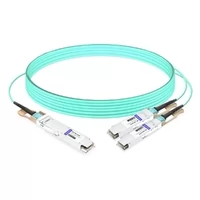
NVIDIA MFA7U10-H003 Compatible 3m (10ft) 400G OSFP to 2x200G QSFP56 twin port HDR Breakout Active Optical Cable
$750.00
-
NVIDIA MMA4Z00-NS Compatible 800GBASE 2 x SR4/SR8 OSFP PAM4 850nm 100m DOM Dual MPO-12 MMF Optical Transceiver Module
$550.00
-
NVIDIA MMA4Z00-NS-FLT Compatible 800GBASE 2 x SR4/SR8 OSFP RHS/Flat Top PAM4 850nm 100m DOM Dual MPO-12 MMF Optical Transceiver Module
$600.00
-
NVIDIA MMS4X00-NM Compatible 800GBASE 2 x DR4/DR8 OSFP IHS/Closed Finned Top PAM4 1310nm 500m DOM Dual MTP/MPO-12 SMF Optical Transceiver Module
$600.00
-
NVIDIA MMS4X00-NM-FLT Compatible 800GBASE 2 x DR4/DR8 OSFP Flat Top PAM4 1310nm 500m DOM Dual MTP/MPO-12 SMF Optical Transceiver Module
$650.00
-
NVIDIA MMS4X50-NM Compatible 800G 2x FR4 OSFP IHS/Closed Finned Top PAM4 1310nm 2km DOM Dual Duplex LC SMF InfiniBand NDR Optical Transceiver Module
$1000.00
-
NVIDIA MCP7Y00-N001 Compatible 1m (3ft) 800Gb Twin-port OSFP to 2x400G OSFP InfiniBand NDR Breakout Direct Attach Copper Cable
$160.00
-
NVIDIA MCA7J60-N004 Compatible 4m (13ft) 800G Twin-port OSFP to 2x400G OSFP InfiniBand NDR Breakout Active Copper Cable
$800.00
-
NVIDIA MMS4A00 (980-9IAH1-00XM00) Compatible 1.6T 2 x DR4/DR8 OSFP224 PAM4 1311nm 500m IHS/Finned Top Dual MPO-12 SMF Optical Transceiver Module
$1500.00
-
NVIDIA MMS4A50 Compatible 1.6T 2xFR4/FR8 OSFP224 PAM4 1310nm 2km IHS/Finned Top Dual Duplex LC SMF Optical Transceiver Module
$1800.00
-
NVIDIA MMS4A00-RHS Compatible 1.6T 2xDR4/DR8 OSFP224 PAM4 1311nm 500m RHS/Flat Top Dual MPO-12/APC InfiniBand XDR SMF Optical Transceiver Module
$2000.00
-
NVIDIA MCA7K20-X001 Compatible 1m (3ft) Twin-port 2x800Gb/s OSFP224 IHS/Finned Top to 4x400Gb/s OSFP224 RHS/Flat Top InfiniBand XDR Active Copper Splitter Cable
$2059.00