
Maaria, a procurement engineer at a Midwest AI startup, opened three quotes for the same 64-port NDR switch. One read $36,500. The third, from an authorized NVIDIA channel partner, hit $119,000. Same part number. Same datasheet. Wildly different InfiniBand price.
If you’re budgeting a new AI or HPC fabric, you’ve probably felt Maria’s confusion. InfiniBand pricing isn’t transparent. The same component can span a 3× range depending on generation, procurement channel, urgency, and whether you need cables and optics bundled.
This guide breaks down 2026 InfiniBand pricing component by component, from legacy adapters to NDR switches. We’ll show how to control total cost of ownership without breaking compatibility. If you’re weighing the difference between InfiniBand and Ethernet, the numbers below will help you build a realistic budget.
Here’s what we’ll cover: real switch, HCA, and cable price ranges; how cluster size changes the math; hidden TCO factors; and practical ways to lower your InfiniBand cost without sacrificing reliability.

How Much Does InfiniBand Cost in 2026?
A complete InfiniBand deployment in 2026 typically ranges from a few thousand dollars for a small lab cluster to several million dollars for a production AI training fabric. Individual components vary even more: a used 40 Gb/s adapter can cost under $100, while a top-end NDR 400G switch can exceed $35,000 on the gray market and $100,000 through authorized channels.
The table below gives a quick reference for typical component-level InfiniBand price ranges by generation.
| Component | Generation | Speed | Typical 2026 Price Range |
| Switch | FDR | 56 Gb/s | $5,000 |
| Switch | EDR | 100 Gb/s | $12,500 |
| Switch | HDR | 200 Gb/s | $16,000 |
| Switch | NDR | 400 Gb/s | $42,000 |
| HCA | QDR/FDR | 40–56 Gb/s | $1,000 |
| HCA | EDR/HDR | 100–200 Gb/s | $1,200 |
| HCA | NDR | 400 Gb/s | $1,700 |
| Cable (DAC) | EDR/HDR | 100–200 Gb/s | $250 |
| Cable (AOC) | EDR/HDR/NDR | 100–400 Gb/s | $2,600 |
These figures are market estimates based on B2B listings, OEM price lists, and analyst comparisons. Your actual quote depends on volume, warranty, support terms, and lead time. For the latest switch market data, see Accio’s InfiniBand HDR switch rack listings.
Want a fast compatibility check before you buy? Contact FiberMall to verify cable, optics, and adapter compatibility for your target switch generation.
InfiniBand Switch Price by Generation
Switches usually dominate the hardware line item. They set the ceiling. The InfiniBand generations ladder tells most of the story: each new speed tier adds cost, port complexity, and power.
| Generation | Speed | Typical Ports | Example Models | 2026 Price Range |
| SDR | 10 Gb/s | 24 | Legacy Voltaire/Mellanox | 50-500 used |
| DDR | 20 Gb/s | 24 | IBM 44R9972 era | 100-800 used |
| QDR | 40 Gb/s | 36 | Mellanox SX6036 | 300-3000 |
| FDR | 56 Gb/s | 12–36 | Mellanox SX6012, SX6025 | 300-5000 |
| EDR | 100 Gb/s | 16–36 | Mellanox SB7890, MSN2100 | 1750-12500 |
| HDR | 200 Gb/s | 40 | Mellanox MQM8700, MQM8790 | 3800-16000 |
| NDR | 400 Gb/s | 32–64 | Mellanox MQM9700, MQM9790 | 15000-42000 |
| XDR | 800 Gb/s | 64 | Quantum-X800 | 50000-12000+ |
The gap between gray-market and authorized pricing is the single biggest source of sticker shock. A Mellanox MQM9700-NS2F NDR 64-port switch might list around $28,000 on B2B marketplaces, while the same SKU through an authorized NVIDIA partner can run $120,000. The lower figure often means used, refurbished, or third-party-supplied gear without a factory warranty. The higher figure includes support, guaranteed authenticity, and direct escalation paths.
In 2026, NDR supply remains tight. AI demand has pushed spot-market premiums for the MQM9790-NS2F to roughly $42,000 for priority orders, with bulk orders settling closer to $32,000. If your build can wait, Q4 2026 may bring modest relief as supply catches up.
InfiniBand HCA and Adapter Card Prices
Host Channel Adapters, sometimes called InfiniBand NICs, connect servers to the fabric. Prices here swing based on age, port count, and whether the card supports VPI dual-mode (InfiniBand plus Ethernet).
| Generation | Speed | Example Models | 2026 Price Range |
| Legacy PCI-X | 10 Gb/s | Dell Topspin dual-port | 39-190 used |
| DDR/QDR | 20–40 Gb/s | ConnectX-2, HP 592520-B21 | 40-400 used/refurb |
| FDR | 56 Gb/s | ConnectX-3 MCX354A-FCBT | 200-1000 |
| EDR/HDR100 | 100 Gb/s | MCX653106A-ECAT, HPE 872726-B21 | 200-1160 |
| HDR | 200 Gb/s | MCX653106A-HDAT, HPE P31324-B21 | 200-1190 |
| NDR | 400 Gb/s | ConnectX-7 MCX75310AAS-NEAT | 1200-1700 |
| NDR/XDR | 400–800 Gb/s | ConnectX-8 C8240 | 2200+ |
Single-port cards are usually cheaper than dual-port cards, but dual-port designs can reduce total server slot usage in dense racks. VPI cards that run both InfiniBand and Ethernet add flexibility, though purist InfiniBand deployments rarely need it.
Refurbished 40 Gb/s adapters are a steal for labs. For production AI clusters, most buyers target HDR 200 Gb/s or NDR 400 Gb/s cards to match current GPU server expectations. If you’re buying in volume, ask about MOQ discounts. Some B2B listings show very low per-unit prices because they require a minimum order of 10 or 50 cards.
InfiniBand Cable and Optics Pricing
Cabling is easy to underestimate. In fact, it’s the most common budget surprise. In a dense 800G NDR build, InfiniBand cables and optics can consume 15–25% of the total fabric budget.
| Cable Type | Generation | Form Factor | Length | Typical Price |
| Passive DAC | EDR 100G | QSFP28 | 1.5 m | ~$198 |
| Passive DAC | EDR 100G | QSFP28 | 3 m | ~$210 |
| AOC | EDR 100G | QSFP28 | 10 m | ~$678 |
| AOC | EDR 100G | QSFP28 | 15 m | ~$645 |
| Passive DAC | HDR 200G | QSFP56 | 1 m | ~$207 |
| Passive DAC | HDR 200G | QSFP56 | 1.5 m | ~$228 |
| Passive DAC | NDR 800G | OSFP | 1 m | ~$125 |
| ACC | NDR 800G | OSFP | 3 m | ~$600 |
| Breakout ACC | NDR 800G | OSFP | 4 m | ~$800 |
| AOC/breakout | NDR 400G | QSFP56 | 5–30 m | ~$1605-2605 |
DAC is the cheapest option for short reaches, usually 2 meters or less at 200G and very short at 400G/800G. ACC extends reach a bit farther with active copper, while AOC supports longer distances and improves airflow. For anything beyond 100 meters, optical transceivers with separate fiber become necessary.

OEM-branded Mellanox LinkX cables carry a premium. Third-party MSA-compatible cables can cut that cost significantly, but only if they pass the same physical and firmware checks. The wrong heatsink, polarity, or EEPROM can cause link-down errors that are painful to debug at 3 a.m. For Mellanox-specific guidance, read our post on Mellanox InfiniBand DAC/AOC cables.
Cluster-Level InfiniBand Deployment Cost
Component prices become meaningful only when you scale them to a cluster. Below are representative 2026 CapEx estimates for common build sizes.
| Cluster Size | Switches | HCAs | Cables/Optics | Total Fabric Estimate |
| 4-node lab | 1× FDR ($400) | 4× FDR ($400) | DAC ($300) | ~$1,100 |
| 16-node training | 2× HDR leaf ($18,000) | 16× HDR ($12,000) | DAC/AOC ($4,000) | ~$34,000 |
| 64-node AI cluster | 2× NDR leaf ($50,000) | 64× NDR ($96,000) | DAC/AOC ($25,000) | ~$171,000 |
| 64-GPU H100 NDR | 1× NDR spine ($65,000) | 64× ConnectX-7 ($102,000) | OSFP cabling ($25,000) | ~$490,000 |
| 512-GPU cluster | Leaf-spine fabric ($2.5M) | 512× NDR ($850K) | Cables/optics ($600K) | ~$2.5M hardware |
| 1,000-GPU cluster | Multi-tier fabric | 1,000× NDR | Cables/optics | ~$15M |
James, a senior infrastructure lead at a biotech firm, learned this the hard way. His team budgeted $380,000 for a 64-GPU NDR fabric based on switch and adapter list prices alone. When they added breakout cables, optical transceivers for cross-rack links, spare adapters, and a redundant Subnet Manager server, the real number climbed to $487,000.
The surprise wasn’t the hardware markup. It was the cabling and contingency line items that had been treated as rounding errors.
For a deeper deployment walkthrough, see our 800G NDR InfiniBand deployment guide.

InfiniBand vs Ethernet Cost Comparison
Most buyers don’t choose InfiniBand in a vacuum. They compare it to Ethernet, often RoCEv2, for the same AI or HPC workload.
| Component | InfiniBand | Ethernet/RoCEv2 |
| Adapter per port | 2000-3000 | 800-1500 |
| 40-port switch | ~$50,000 | ~$25,000 |
| DAC cable | 500-800 | 200-400 |
| 1,000-GPU cluster fabric | ~$15M | ~$7M |
At the hardware level, InfiniBand typically costs 1.5× to 2× more than Ethernet. Over three years, the gap can widen. A 512-GPU InfiniBand fabric might carry a hardware cost of ~$2.5M, while an equivalent build might run ~$1.3M for Ethernet, and a 3-year TCO of ~$2.4M according to Vitex analysis.
So why pay the premium? InfiniBand delivers sub-microsecond latency, deterministic lossless forwarding, and tighter NCCL/MPI integration. For large-scale LLM training or tightly coupled HPC, that performance can shorten training time enough to justify the extra spend. For inference, smaller clusters, or workloads that aren’t communication-bound, Ethernet is usually the smarter InfiniBand vs Ethernet guide choice.

Hidden Costs and TCO Factors
Hardware is only the starting line. Operational costs often decide whether an InfiniBand deployment makes financial sense. Don’t ignore them.
Support and maintenance typically run about 18% of hardware cost per year. On a $500,000 hardware investment, that means spending $90,000 annually before you power anything on.
Power and cooling favor InfiniBand slightly per bit moved, but the absolute draw is still significant. Budget roughly $16,000-20,000 more per year than an equivalent Ethernet fabric at the 512-GPU scale.
Specialized staff are harder to find. A qualified InfiniBand engineer can command $200,000 or more, and one engineer can manage roughly 10,000 InfiniBand ports versus 4,000 Ethernet ports. The salary premium adds up.
Training and certification cost more too. Expect 30,000-45,000 in year one if your team is new to IB Verbs, Subnet Manager, and MPI/NCCL tuning.
Lead times create indirect cost. Major-vendor InfiniBand switches often quote 16–26 weeks. Every week of delay on a 512-GPU H100 cluster can burn $80,000-120,000 in idle GPU compute.
Vendor lock-in is the quiet tax. NVIDIA/Mellanox dominates the InfiniBand ecosystem, which limits bargaining power. Ethernet’s multi-vendor market can drive 20–30% savings through competitive bidding.
For a fuller TCO discussion, Juniper’s whitepaper *Comparison of InfiniBand and RDMA over Converged Ethernet* walks through CapEx and OpEx assumptions in detail.
How to Reduce InfiniBand Price Without Sacrificing Compatibility
You can lower your InfiniBand cost legitimately. The key is knowing where to cut and where to stay conservative.
Use third-party MSA-compatible cables and optics. It’s often the fastest win. A FiberMall-compatible OSFP DAC or AOC can match the electrical and optical specs of an OEM cable at a lower price point. The savings multiply across hundreds of links.
Verify four things before you buy: firmware/EEPROM compatibility, heatsink clearance, polarity, and reach. A cable that works in a lab bench may fail in a fully populated switch because of thermal or EEPROM differences.
Buy refurbished for non-production tiers. Labs, dev clusters, and backup fabrics can run on used FDR or EDR gear without issue. Avoid gray-market parts for production AI training where downtime is expensive.
Bundle procurement, then split support. Buying switches, HCAs, and cables from a single supplier can unlock volume discounts. You can still purchase support separately if the OEM channel offers better SLAs.
Negotiate support terms. The 18% annual support figure is often negotiable, especially at scale. Ask for multi-year discounts or tiered response times.
A financial services firm we’ve worked with cut its NDR cabling budget by roughly 22% by switching to MSA-compatible OSFP breakout cables for intra-rack links, while keeping Mellanox-branded optics for cross-rack spans. That hybrid approach preserved uptime where it mattered and saved money where the risk was lower.
Browse the FiberMall InfiniBand collection for compatible cables, optics, and transceivers tested against major switch platforms.
InfiniBand Price Checklist for Buyers
Before you sign a quote, run through this checklist.
Confirm the generation and form factor match your switch and adapter ports.
Choose the right cable type: DAC for short runs, AOC for medium runs, optics for long runs.
Plan Subnet Manager redundancy, including failover hardware.
Clarify support terms, response times, and warranty coverage.
Then double-check the less obvious items:
Verify third-party firmware/EEPROM compatibility for any non-OEM parts.
Add 15–20% contingency for cables, optics, spares, and unexpected links.
Check lead times and align them with your GPU or server delivery schedule.
Document vendor lock-in risks and decide whether multi-vendor flexibility matters.
Conclusion
InfiniBand price in 2026 spans a wide range, but the patterns are clear. Legacy adapters and switches are cheap. Modern HDR and NDR gear is expensive, especially through authorized channels.
Cabling and optics are bigger line items than most first budgets assume. And total cost of ownership often separates a good decision from a painful one.
Here are five takeaways to bring back to your team:
Expect a 1.5×–2× hardware premium over Ethernet, and a larger TCO gap.
NDR switches are supply-constrained in 2026; plan lead times and contingencies.
Cables and optics can consume 15–25% of cluster cost, so budget them explicitly.
Third-party MSA-compatible cabling is a proven way to reduce InfiniBand cost without sacrificing compatibility.
Support, staffing, and idle-GPU risk often exceed the hardware price difference.
If you’re planning an InfiniBand deployment and want help matching cables, optics, and adapters to your switch generation, contact FiberMall for a compatibility check or quote.
Related Products:
-
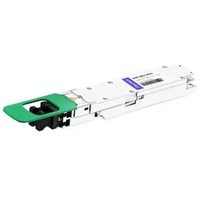
 NVIDIA MMA4Z00-NS400 Compatible 400G OSFP SR4 Flat Top PAM4 850nm 30m on OM3/50m on OM4 MTP/MPO-12 Multimode FEC Optical Transceiver Module
$400.00
NVIDIA MMA4Z00-NS400 Compatible 400G OSFP SR4 Flat Top PAM4 850nm 30m on OM3/50m on OM4 MTP/MPO-12 Multimode FEC Optical Transceiver Module
$400.00
-
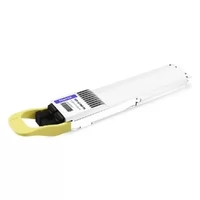
NVIDIA MMS4X00-NS400 Compatible 400G OSFP DR4 Flat Top PAM4 1310nm MTP/MPO-12 500m SMF FEC Optical Transceiver Module
$450.00
-
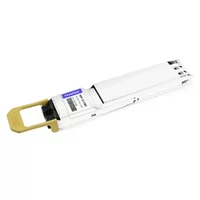
NVIDIA MMA1Z00-NS400 Compatible 400G QSFP112 VR4 PAM4 850nm 50m MTP/MPO-12 OM4 FEC Optical Transceiver Module
$385.00
-
NVIDIA MMS1X00-NS400 Compatible 400G NDR QSFP112 DR4 PAM4 1310nm 500m MPO-12 with FEC Optical Transceiver Module
$500.00
-
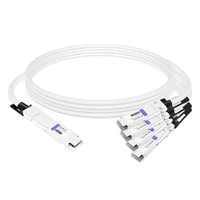
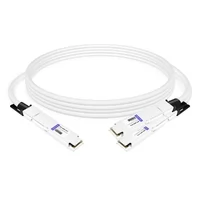
NVIDIA MCP7Y70-H001 Compatible 1m (3ft) 400G Twin-port 2x200G OSFP to 4x100G QSFP56 Passive Breakout Direct Attach Copper Cable
$120.00
-
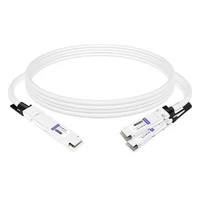
NVIDIA MCP7Y60-H001 Compatible 1m (3ft) 400G OSFP to 2x200G QSFP56 Passive Direct Attach Cable
$99.00
-
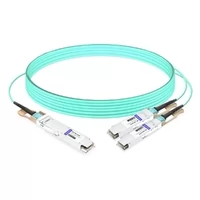
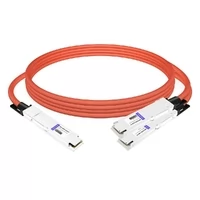
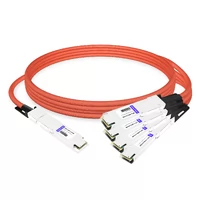
NVIDIA MFA7U10-H003 Compatible 3m (10ft) 400G OSFP to 2x200G QSFP56 twin port HDR Breakout Active Optical Cable
$750.00
-
NVIDIA MMA4Z00-NS Compatible 800GBASE 2 x SR4/SR8 OSFP PAM4 850nm 100m DOM Dual MPO-12 MMF Optical Transceiver Module
$550.00
-
NVIDIA MMA4Z00-NS-FLT Compatible 800GBASE 2 x SR4/SR8 OSFP RHS/Flat Top PAM4 850nm 100m DOM Dual MPO-12 MMF Optical Transceiver Module
$600.00
-
NVIDIA MMS4X00-NM Compatible 800GBASE 2 x DR4/DR8 OSFP IHS/Closed Finned Top PAM4 1310nm 500m DOM Dual MTP/MPO-12 SMF Optical Transceiver Module
$600.00
-
NVIDIA MMS4X00-NM-FLT Compatible 800GBASE 2 x DR4/DR8 OSFP Flat Top PAM4 1310nm 500m DOM Dual MTP/MPO-12 SMF Optical Transceiver Module
$650.00
-
NVIDIA MMS4X50-NM Compatible 800G 2x FR4 OSFP IHS/Closed Finned Top PAM4 1310nm 2km DOM Dual Duplex LC SMF InfiniBand NDR Optical Transceiver Module
$1000.00
-
NVIDIA MCP7Y00-N001 Compatible 1m (3ft) 800Gb Twin-port OSFP to 2x400G OSFP InfiniBand NDR Breakout Direct Attach Copper Cable
$160.00
-
NVIDIA MCA7J60-N004 Compatible 4m (13ft) 800G Twin-port OSFP to 2x400G OSFP InfiniBand NDR Breakout Active Copper Cable
$800.00
-
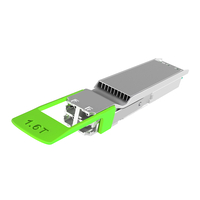
NVIDIA MMS4A00 (980-9IAH1-00XM00) Compatible 1.6T 2 x DR4/DR8 OSFP224 PAM4 1311nm 500m IHS/Finned Top Dual MPO-12 SMF Optical Transceiver Module
$1500.00
-
NVIDIA MMS4A50 Compatible 1.6T 2xFR4/FR8 OSFP224 PAM4 1310nm 2km IHS/Finned Top Dual Duplex LC SMF Optical Transceiver Module
$1800.00
-
NVIDIA MMS4A00-RHS Compatible 1.6T 2xDR4/DR8 OSFP224 PAM4 1311nm 500m RHS/Flat Top Dual MPO-12/APC InfiniBand XDR SMF Optical Transceiver Module
$2000.00
-
NVIDIA MCA7K20-X001 Compatible 1m (3ft) Twin-port 2x800Gb/s OSFP224 IHS/Finned Top to 4x400Gb/s OSFP224 RHS/Flat Top InfiniBand XDR Active Copper Splitter Cable
$2059.00