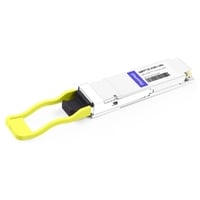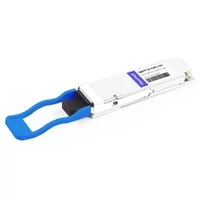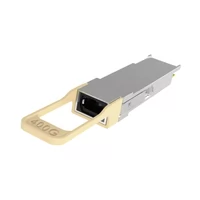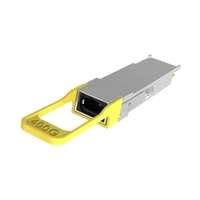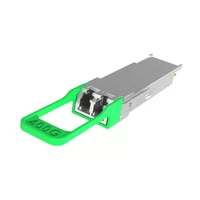

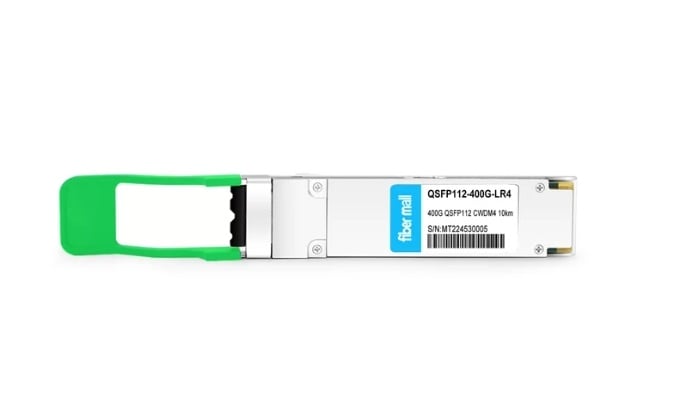
The 400G QSFP112 optical transceiver module is a game changer in networking and data transmission. With rising demand for faster data transfer rates, this device provides higher bandwidth, lower latency, and better power efficiency. This article explores the technical specifications, use cases, and performance benefits of the 400G QSFP112 module. Understanding how it works helps IT professionals and network engineers appreciate its contributions to modern data centers and telecom infrastructure. The information provided gives a comprehensive overview of these advanced transceivers to support upgrade or future-growth decisions.
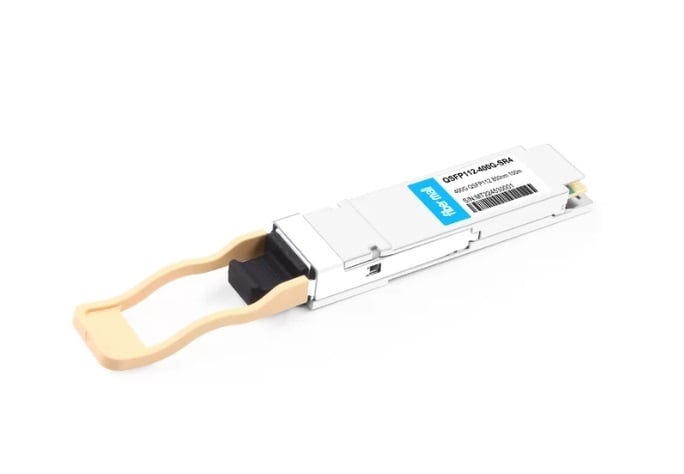
What is a QSFP112 Transceiver?
How does a QSFP112 work?
The QSFP112 transceiver converts electrical signals to optical signals for data transmission over fiber optic cables using advanced laser technology. A highly advanced laser modulates the data onto a light signal. This light signal travels through the optical fiber, enabling significantly higher data transfer speeds and minimizing signal attenuation over long distances. On the receiving side, it converts the optical signals back to electrical signals for processing. It also incorporates advanced error correction to ensure data integrity and seamless integration with various network protocols.
What are the features of QSFP112 Transceivers?
QSFP112 transceivers offer several key attributes that excel in high-speed networking:
- High Data Rate: Up to 400 Gbps to meet the demands of current data centers and telecommunication networks.
- Low Power Consumption: Energy-efficient design reduces operational costs and heat dissipation compared with previous models.
- Extended Reach: Suitable for intra- and inter-data center applications.
- Compatibility: Easily integrates into existing network infrastructure and supports multiple protocols.
- Enhanced Signal Integrity: Advanced error detection/correction and reduced latency improve transmission reliability.
- Compact Design: Small size allows higher port density in space-limited equipment racks.
These features position QSFP112 as essential for high-performance, scalable networking solutions.
What are the applications of QSFP112 Transceiver Modules?
QSFP112 transceiver modules are used in many high-speed network environments due to their adaptability and robustness:
- Data Centers: Enable fast, low-latency data transfer to support growing storage and processing needs.
- Telecommunications: Allow efficient long-distance data transmission across wide areas.
- High-Performance Computing (HPC): Provide the high throughput required for advanced scientific computing.
These examples highlight their importance in modern networking infrastructure.
What are the Specifications of 400G QSFP112?
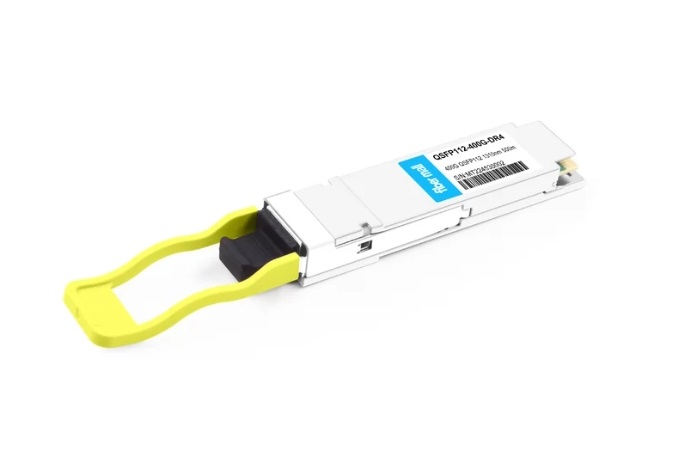
Key Specifications of 400g QSFP112 Modules
The 400g QSFP112 modules have technical specifications to fit high-speed networking environments. Some of these specs include:
- Data Rate: Up to 400 Gbps for large-scale data transfer.
- Form Factor: QSFP112 (standard QSFP form factor).
- Wavelengths: Options typically range from 850 nm to 1310 nm.
- Reach: Short-reach (SR), long-reach (LR), and extended-reach (ER) versions available.
- Power Consumption: Approximately 8-15W per module.
- Temperature Range: 0°C to 70°C for reliable operation.
- Connector Type: MPO or LC, depending on the model.
These specifications make the 400G QSFP112 module essential for high-speed networks.
Compatibility with other fiber cables and optics
400G QSFP112 modules support single-mode fiber (SMF) and multimode fiber (MMF) cables. They operate over distances up to 10 km or more on SMF at 1310 nm using LC or MPO connectors. On MMF, they support up to 100 m at 850 nm with MPO connectors. The modules are also interoperable with DWDM systems and optical amplifiers.
Understanding PAM4 and dual CDR Technology
PAM4 (Pulse Amplitude Modulation 4-Level) is an advanced modulation technique that doubles data capacity per lane compared to NRZ by using four amplitude levels. Dual CDR (Clock Data Recovery) technology extracts timing information and regenerates clean clock signals at both ends to reduce jitter and maintain signal integrity. Both technologies enable higher data rates and reliable performance in modules like the 400G QSFP112.
How do QSFP112 Transceivers compare to other Transceiver types?
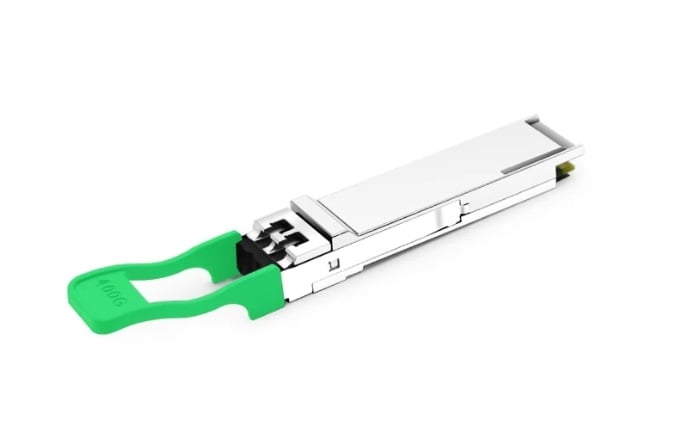
Comparing QSFP112 and QSFP-DD
QSFP112 supports up to 400 Gbps using 4 lanes and PAM4 modulation. It maximizes efficiency within existing QSFP infrastructure. QSFP-DD uses an 8-lane design for up to 800 Gbps and higher port density, making it ideal for next-generation ultra-high-density applications.
What are the differences between 400G QSFP112 and QSFP28?
The 400G QSFP112 supports 400 Gbps with PAM4 modulation for next-generation high-speed networks while maintaining QSFP interface compatibility. QSFP28 supports only 100 Gbps using NRZ modulation and is suited for cost-effective 100G Ethernet networks.
How does QSFP112 fit into the next generation of the QSFP family?
QSFP112 represents a major advancement in the QSFP family by delivering 400 Gbps with PAM4 modulation—four times the speed of QSFP28. It maintains backward compatibility for seamless upgrades and supports ultra-high-speed data center interconnects, cloud computing, AI, and big data applications.
How do QSFP112 Modules enhance Data Center Cabling?
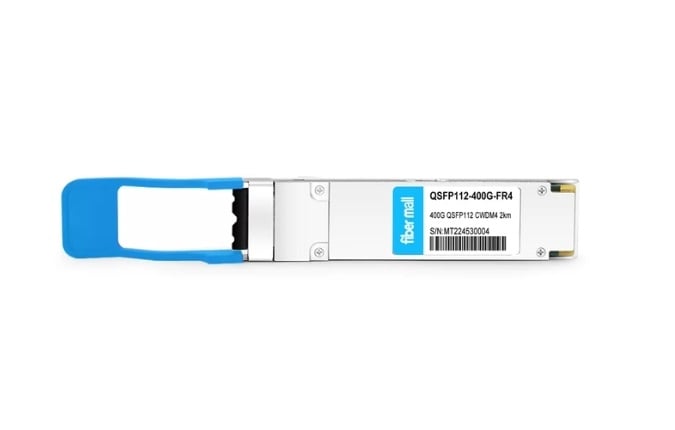
Benefits of using QSFP112 in Data Centers
Increased 400 Gbps data-handling capacity for cloud computing, AI, and large-scale processing.
Improved power efficiency that lowers operational costs and heat dissipation.
Backward compatibility with existing QSFP interfaces for cost-effective upgrades without full infrastructure changes.
How to optimize Data Center performance with 400g QSFP112 Modules
Conduct a network assessment to identify bottlenecks. Use high-quality low-loss cables designed for 400G. Deploy software-defined networking (SDN) for dynamic resource allocation. Integrate with compatible high-performance switches featuring load balancing and redundancy. Ensure proper cooling and power management to meet thermal and efficiency requirements.
Migration paths using QSFP112 for future-proof data center cabling
Adopt a modular infrastructure for easy scalability. Combine multimode fiber (MMF) for short-reach and single-mode fiber (SMF) for longer distances. Use high-density patch panels and structured cabling. Implement thorough testing and validation to meet 400G performance standards.
What are the Compatibility and usage guidelines for QSFP112?
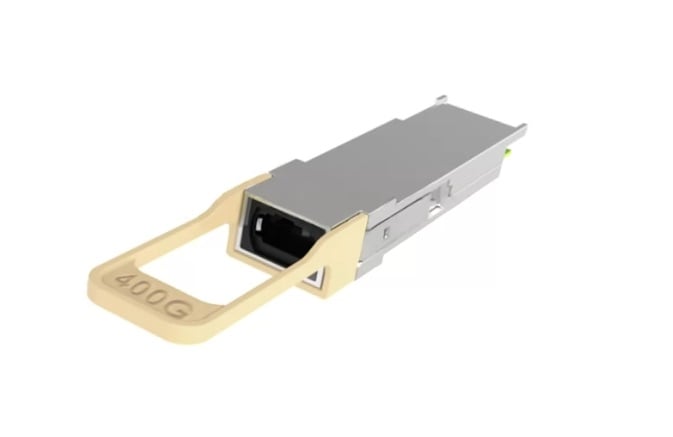
Devices and switches that support QSFP112 Transceivers
- Cisco Nexus 9000 Series
- Arista 7500R3 Series
- Juniper Networks QFX Series (e.g., QFX5220)
Installation tips for QSFP112 Modules
- Ensure Proper Handling: Use an antistatic wrist strap and avoid touching gold connectors.
- Verify Firmware Compatibility: Confirm the latest firmware supports QSFP112.
- Correct Insertion and Removal: Slide gently until it clicks; pull straight after releasing the latch.
- Clean Optical Interfaces: Use lint-free swabs and isopropyl alcohol.
- Label and Organize: Label modules and cables for easy identification.
- Monitor and Test: Use network management tools to verify performance.
Maintaining and troubleshooting QSFP112 Transceivers
Regular Upkeep Procedures
- Clean transceivers and connectors regularly with lint-free swabs and isopropyl alcohol.
- Keep firmware up to date.
- Monitor operating temperature within the specified range.
Troubleshooting Common Issues
- Link Failure: Check seating, cleanliness, configuration, and firmware.
- Signal Loss: Inspect cables and measure optical power.
- Performance Degradation: Monitor metrics and address bit-error-rate issues promptly.
What are the matching products for QSFP112 Transceivers?
Direct Attach Cables (DAC) compatible with QSFP112
- Passive DACs: For short distances up to 5 m.
- Active DACs: For extended reach up to 15 m with improved signal quality.
- Breakout DACs: Split one QSFP112 port into multiple lower-speed ports.
Active Optical Cables (AOC) for QSFP112 Modules
- QSFP112 AOC: Supports connections up to 100 m.
- QSFP112 to QSFP112 AOC: For point-to-point low-latency links.
- QSFP112 Breakout AOC: Splits one port into multiple lower-speed ports.
Breakout Cables suitable for QSFP112 Transceivers
Breakout cables are compatible with QSFP112 transceivers; they allow different network setups by changing a single high-speed connection into many lower-speed connections. Below are some of the breakout cable options:
- QSFP112 to 4x SFP28 Breakout Cable
- QSFP112 to 4x SFP+ Breakout Cable
- QSFP112 to 2x QSFP56 Breakout Cable
Reference Sources
Frequently Asked Questions (FAQs)
Q: What is a 400G QSFP112 Optical Transceiver Module?
A: It is a high-speed network connector supporting up to 400 Gbps Ethernet in data centers and high-performance computing environments.
Q: How does a 400G QSFP112 Transceiver compare to a QSFP-DD800 module?
A: The QSFP112 handles 400 Gbps (4 lanes). QSFP-DD800 supports up to 800 Gbps (8 lanes) with higher density.
Q: Can I use 400g QSFP112 transceivers with existing fiber optic networks?
A: Yes. They are backward compatible with the current fiber optic infrastructure.
Q: What are the typical applications for 400G QSFP112 transceivers?
A: Data centers, cloud computing, 5G wireless and optical networks, InfiniBand, OTN, and Ethernet up to 400 Gb/s.
Q: What types of cables can be connected to 400G QSFP112 Transceivers?
A: DAC breakout cables, AOC breakout cables, fiber patch cords, supporting both single-mode and multimode fiber.
Q: What is the reach of 400G QSFP112 Transceivers?
A: Up to 100 m on MMF and 2 km (or more) on SMF, depending on the model.
Q: Do 400G QSFP112 Transceivers have any special features for signal integrity and thermal management?
A: Yes, they include advanced signal processing and are designed for reliable operation under varying conditions.
Q: Are there any specific MSA codes that 400G QSFP112 transceivers comply with?
A: Yes, they comply with QSFP112 MSA and CMIS for interoperability.
Q: How can I ensure compatibility with my existing network devices when using 400G QSFP112 transceivers?
A: Verify third-party compatibility, check manufacturer specifications, and perform testing before full deployment.
Related Products:
-
 QSFP112-400G-SR4 400G QSFP112 SR4 PAM4 850nm 100m MTP/MPO-12 OM3 FEC Optical Transceiver Module
$400.00
QSFP112-400G-SR4 400G QSFP112 SR4 PAM4 850nm 100m MTP/MPO-12 OM3 FEC Optical Transceiver Module
$400.00
-
QSFP112-400G-DR4 400G QSFP112 DR4 PAM4 1310nm 500m MTP/MPO-12 with KP4 FEC Optical Transceiver Module
$500.00
-
QSFP112-400G-FR1 4x100G QSFP112 FR1 PAM4 1310nm 2km MTP/MPO-12 SMF FEC Optical Transceiver Module
$800.00
-
QSFP112-400G-FR4 400G QSFP112 FR4 PAM4 CWDM 2km Duplex LC SMF FEC Optical Transceiver Module
$600.00
-
QSFP112-400G-LR4 400G QSFP112 LR4 PAM4 CWDM 10km Duplex LC SMF FEC Optical Transceiver Module
$1000.00
-
LQSFP112-400G-SR4 400G LPO QSFP112 SR4 PAM4 850nm 50m MTP/MPO-12 OM3 FEC Optical Transceiver Module
$800.00
-
LQSFP112-400G-DR4 400G LPO QSFP112 DR4 PAM4 1310nm 500m MTP/MPO-12 with KP4 FEC Optical Transceiver Module
$1200.00
-
LQSFP112-400G-FR4 400G LPO QSFP112 FR4 PAM4 CWDM 2km Duplex LC SMF FEC Optical Transceiver Module
$1350.00