
As artificial intelligence, cloud computing, distributed storage, and high-capacity content delivery continue to increase traffic between data centers, network operators need optical transport solutions that can scale bandwidth without adding excessive equipment, power consumption, or operational complexity.
To address these requirements, FiberMall has introduced a new portfolio of 800G DCO coherent OSFP and QSFP-DD transceivers.
Together, the four products provide network operators with a choice of OSFP or QSFP-DD packaging and ZR or ZR+ transmission modes, supporting different host platforms, optical link requirements, and network architectures. FiberMall currently lists all four models in its coherent optical transceiver portfolio.

Meeting the Next Wave of 800G Transport Demand
The transition to 800G is no longer limited to short-reach connections inside AI data centers. As GPU clusters, cloud regions, storage systems, and edge facilities become more distributed, the optical transport layer must carry significantly more traffic between geographically separated sites.
Traditional coherent transport systems commonly rely on separate transponders, client-side optical modules, line-side cards, and multiple fiber connections. Although this architecture remains appropriate for many carrier networks, it can increase rack-space requirements, power consumption, equipment count, and management complexity.
DCO, or Digital Coherent Optics, integrates coherent transmission functions into a compact pluggable transceiver. When supported by the host platform, the module can generate a tunable DWDM wavelength directly from a router, switch, or compatible transport device.
This approach supports more direct IP-over-DWDM architectures and can reduce the number of conversion stages between the Ethernet client interface and the optical line system. FiberMall has previously applied the same direct coherent-pluggable approach to its 400G ZR and ZR+ solutions for data center interconnect networks.
Four 800G Coherent Modules for Different Network Requirements
FiberMall’s new product family combines two physical form factors with two coherent transmission categories.
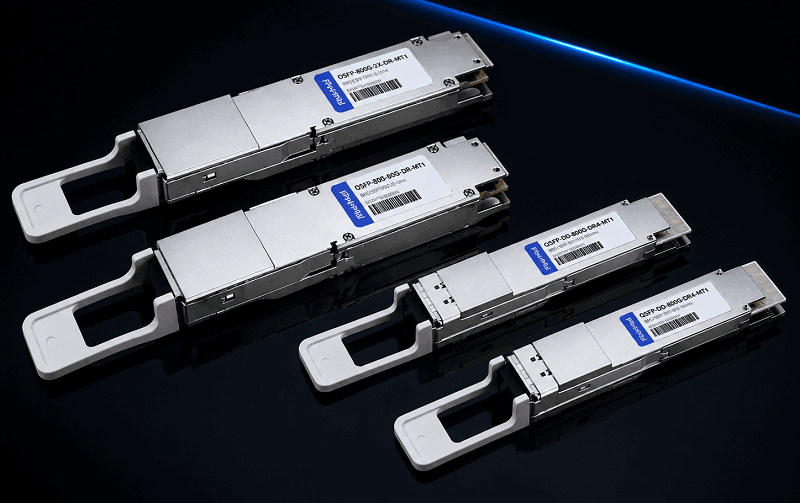
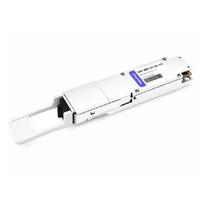
OSFP-800G-DCO-ZR-HTx
The OSFP-800G-DCO-ZR-HTx is designed for compatible OSFP-based routers, switches, and optical transport platforms. It provides an 800G coherent ZR option for high-capacity point-to-point links and metro data center interconnect applications.
The larger OSFP mechanical envelope can provide additional thermal-management capacity, which is important for high-performance coherent modules that integrate advanced optical and digital signal-processing components.
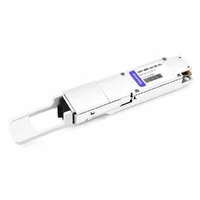
OSFP-800G-DCO-ZR+-HTx
The OSFP-800G-DCO-ZR+-HTx extends the OSFP product family to ZR+ applications. It is intended for networks requiring greater optical performance, additional link-budget flexibility, or operation across more complex optical paths.
ZR+ coherent modules are commonly considered for extended metro, regional, and long-haul applications where higher performance is required than in a basic point-to-point ZR deployment. FiberMall’s analysis of the 800G coherent market identifies ZR+ as an important option for extending coherent pluggable technology beyond conventional metro DCI.
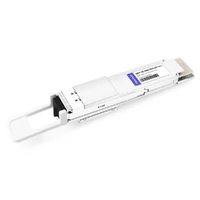
QSFP-DD-800G-DCO-ZR-HTx
The QSFP-DD-800G-DCO-ZR-HTx brings 800G coherent ZR functionality to compatible QSFP-DD platforms. It is suitable for network operators that want to maintain a QSFP-based equipment architecture while upgrading individual optical interfaces to 800G coherent transmission.
QSFP-DD uses eight high-speed electrical lanes and is widely deployed in high-density switching and routing platforms. It is physically different from OSFP, so the selected module must match the cage type of the host equipment.
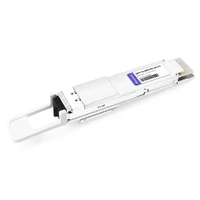
QSFP-DD-800G-DCO-ZR+-HTx
The QSFP-DD-800G-DCO-ZR+-HTx combines the compact QSFP-DD form factor with ZR+ coherent transmission capabilities. It provides an option for compatible high-density router and transport platforms that require extended optical performance without moving to an OSFP hardware architecture.
The availability of both ZR and ZR+ in QSFP-DD format allows customers to maintain a consistent physical interface while selecting the coherent operating mode appropriate for each optical route.
OSFP and QSFP-DD Platform Flexibility
OSFP and QSFP-DD are two distinct physical form factors used by 800G network equipment. An OSFP module cannot be inserted directly into a QSFP-DD cage, and a QSFP-DD module cannot be inserted into an OSFP cage.
By offering the same 800G coherent product concept in both formats, FiberMall enables customers to select modules according to the physical interface used by their routers, switches, or transport platforms.
The OSFP versions are suitable for systems designed around the OSFP mechanical and thermal architecture. The QSFP-DD versions support compatible platforms using the smaller QSFP-derived form factor and double-density electrical interface.
Although the physical formats differ, OSFP and QSFP-DD coherent modules can potentially operate across the same optical link when both ends use compatible wavelengths, line modes, modulation settings, FEC configurations, and management parameters.
ZR and ZR+ Options for Different Optical Routes
The four-product portfolio allows network designers to choose between ZR and ZR+ according to the required transmission environment.
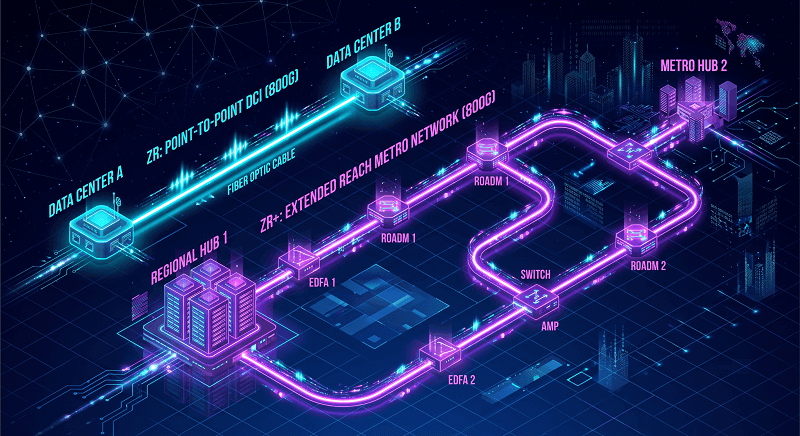
The 800G DCO ZR modules are positioned for high-capacity metro and data center interconnect links where network simplicity, interoperability, and direct router-to-router coherent transmission are primary considerations.
The 800G DCO ZR+ modules are intended for optical paths that require greater performance or extended reach. These may include regional links, amplified DWDM systems, ROADM-based networks, or routes with higher accumulated loss and more demanding OSNR requirements.
The exact achievable distance cannot be determined by the ZR or ZR+ designation alone. It depends on factors including:
- Fiber type and total span loss
- DWDM MUX/DEMUX insertion loss
- Connector and splice loss
- EDFA gain and noise figure
- ROADM pass-through loss
- Channel spacing and wavelength plan
- Optical signal-to-noise ratio
- Chromatic dispersion and nonlinear effects
- Selected modulation and FEC mode
- Host-platform configuration
A complete link-budget and OSNR analysis should therefore be performed before deploying any 800G coherent optical link.
High TX Power Improves Link-Budget Flexibility
All four modules are positioned as high-TX-power coherent transceivers. Higher optical output power can provide additional link-budget flexibility when the transmission path includes passive DWDM components, fiber distribution frames, patch panels, connectors, or multiple optical nodes.
This capability can be particularly useful in IPoDWDM applications, where the coherent module is installed directly in a router or switch and connected to an existing optical line system.
However, high transmit power does not automatically eliminate the need for amplifiers or guarantee a specific transmission distance. The complete optical path must still be evaluated for launch power, receiver input limits, OSNR, nonlinear penalties, and amplifier configuration.
The goal is not simply to maximize output power, but to deliver an appropriate optical power level for the target line system while maintaining adequate performance margin.
Tunable C-Band Operation Simplifies Wavelength Management
The four 800G coherent modules support tunable operation in the DWDM C-band. Instead of stocking a different fixed-wavelength transceiver for every channel, operators can configure the module for the wavelength required by the network’s channel plan.
C-band tunability can help operators:
- Assign modules to different DWDM channels
- Simplify wavelength-specific inventory
- Accelerate replacement and restoration
- Add capacity without changing the fiber infrastructure
- Integrate modules with compatible open line systems
- Reconfigure wavelengths as network requirements change
This flexibility is valuable in data center interconnect, metro transport, and multi-wavelength point-to-point networks where available spectrum must be used efficiently.
Supporting IPoDWDM and Simplified DCI Architectures
One of the principal applications for 800G DCO coherent OSFP and QSFP-DD modules is IP over DWDM.
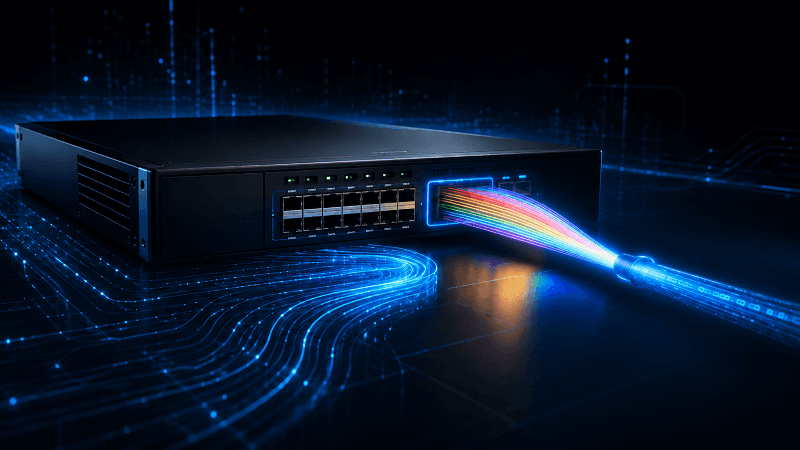
In a traditional architecture, a router may connect through a short-reach client transceiver to an external optical transponder. The transponder then converts the client signal into a coherent DWDM wavelength.
With a compatible DCO module, the router or switch can generate the coherent wavelength directly. This may eliminate the separate client-side transceiver, transponder port, and associated fiber patching.
Potential architectural benefits include:
- Fewer active network devices
- Reduced rack-space requirements
- Fewer optical conversion stages
- Simplified fiber connectivity
- Lower equipment-management overhead
- Faster capacity provisioning
- More direct integration between IP and optical networks
FiberMall’s market analysis identifies the evolution from separate DCI boxes toward IPoDWDM as an important direction for coherent pluggable deployment.
Applications for the Four-Product Portfolio
The 800G DCO coherent OSFP and QSFP-DD ZR/ZR+ modules are designed for high-capacity optical transmission applications including:
Data Center Interconnect
The modules can connect cloud data centers, AI computing facilities, colocation sites, storage locations, and disaster-recovery centers through dedicated fiber or compatible DWDM infrastructure.
Metro Optical Networks
Network operators can use the modules to add 800G wavelength capacity between metro sites, carrier facilities, internet exchange points, and regional network hubs.
IP over DWDM
Compatible routers and switches can generate tunable coherent wavelengths directly, reducing reliance on separate transponder equipment.
Regional and Extended-Reach Networks
The ZR+ variants provide additional options for optical routes that extend beyond conventional point-to-point metro DCI or include amplifiers, ROADMs, and other line-system components.
AI and Cloud Backbone Expansion
As AI clusters generate increasing amounts of inter-site traffic, 800G coherent transmission can increase capacity between computing, storage, and cloud facilities while making more efficient use of existing fiber resources.
Compatibility and Link Validation Are Essential
Installing an 800G coherent module requires more than matching the data rate and physical form factor. The host equipment must provide appropriate electrical interfaces, power delivery, cooling, firmware, management functions, and coherent configuration support.
Before ordering or deploying the modules, customers should confirm:
- Host equipment manufacturer and model
- OSFP or QSFP-DD cage type
- Supported module power class
- Available airflow and cooling capacity
- Host firmware version
- CMIS and coherent-management support
- Required client-side interface mode
- Line-side modulation and FEC mode
- DWDM channel plan
- Target transmission distance
- Total optical-path loss
- EDFA or ROADM configuration
- Receiver input-power range
FiberMall can provide module coding, host-recognition testing, wavelength configuration, optical-power verification, traffic testing, and link-budget analysis according to the customer’s target equipment and network design.
Expanding FiberMall’s Coherent Optical Portfolio
The launch of these four 800G products expands FiberMall’s coherent portfolio beyond its existing 100G, 200G, and 400G solutions.
The new family gives customers four clearly defined choices:
- OSFP with ZR
- OSFP with ZR+
- QSFP-DD with ZR
- QSFP-DD with ZR+
This portfolio structure allows network operators to select the appropriate physical package and coherent transmission class without changing their overall 800G optical-network strategy.
Building the Next Generation of 800G Optical Transport
As AI infrastructure, cloud computing, and distributed data centers continue to increase inter-site bandwidth demand, optical transport networks must scale alongside the computing layer.
FiberMall’s new 800G DCO coherent OSFP and QSFP-DD ZR/ZR+ transceivers provide a compact and flexible approach to deploying 800G coherent wavelengths from compatible networking platforms.
By combining two widely used pluggable form factors, ZR and ZR+ transmission options, high TX power, and tunable C-band operation, the four-product portfolio addresses a broad range of DCI, metro, IPoDWDM, regional, and extended-reach network requirements.
Customers can select the module according to their host interface and optical route:
- OSFP-800G-DCO-ZR-HTx
- OSFP-800G-DCO-ZR+-HTx
- QSFP-DD-800G-DCO-ZR-HTx
- QSFP-DD-800G-DCO-ZR+-HTx
For module selection, host-platform compatibility testing, wavelength planning, or optical link-budget evaluation, customers can contact FiberMall’s technical team or visit the corresponding product pages.
Frequently Asked Questions
How many 800G coherent products are included in the new FiberMall portfolio?
The portfolio includes four products: OSFP ZR, OSFP ZR+, QSFP-DD ZR, and QSFP-DD ZR+. All four modules support 800G coherent transmission, high TX power, and tunable C-band operation.
What is the difference between the ZR and ZR+ versions?
ZR is generally intended for standardized point-to-point DCI and metro applications. ZR+ provides additional performance flexibility for extended-reach or more complex optical networks. The final selection should be based on the complete link budget, OSNR, modulation mode, and line-system configuration.
What is the difference between OSFP and QSFP-DD?
OSFP and QSFP-DD are physically different module form factors. The correct version must match the host equipment’s cage type, power capability, cooling design, firmware, and management interface.
Can an OSFP coherent module connect to a QSFP-DD coherent module?
Potentially, yes. The physical form factor only affects the host-side installation. Modules at opposite ends can interoperate when their line-side wavelength, modulation, FEC, data rate, and coherent operating modes are compatible.
Does high TX power guarantee a longer transmission distance?
No. High transmit power can improve the optical link budget, but actual reach also depends on fiber loss, OSNR, receiver performance, amplifier noise, dispersion, nonlinear effects, and system configuration.
Can the modules be connected directly to a DWDM MUX/DEMUX?
They can be used with a compatible C-band DWDM MUX/DEMUX when the channel grid, passband, insertion loss, optical power, and OSNR meet the link requirements. A system-level link evaluation is recommended before deployment.
Can these modules be installed in any 800G OSFP or QSFP-DD port?
Not necessarily. The host platform must support the module’s power consumption, thermal requirements, coherent management, firmware, FEC modes, and line-side configuration. Physical compatibility alone is not sufficient.
What information should customers provide for product selection?
Customers should provide the host equipment model, port type, target distance, fiber route, DWDM equipment, channel spacing, estimated link loss, amplifier configuration, and required application. FiberMall can then recommend the appropriate ZR or ZR+ and OSFP or QSFP-DD model.
Related Products:
-
 OSFP-800G-DCO-ZR+-HTx 800G Coherent High TX Power OSFP DCO ZR+ C-band Tunable Optical Transceiver Module
$12000.00
-
OSFP-800G-DCO-ZR-HTx 800G Coherent High TX Power OSFP DCO ZR C-band Tunable Optical Transceiver Module
$11000.00
-
QSFP-DD-800G-DCO-ZR+-HTx 800G Coherent High TX Power QSFP-DD DCO ZR+ C-band Tunable Optical Transceiver Module
$12000.00
-
QSFP-DD-800G-DCO-ZR-HTx 800G Coherent High TX Power QSFP-DD DCO ZR C-band Tunable Optical Transceiver Module
$11000.00