


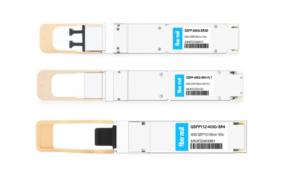
800G SR8 and 400G SR4 Optical Transceiver Modules Compatibility and Interconnection Test Report
Version Change Log Writer V0 Sample Test Cassie Test Purpose Test Objects:800G OSFP SR8/400G OSFP SR4/400G Q112 SR4. By conducting corresponding tests, the test parameters meet the relevant industry standards,

4-Node DGX Spark Cluster Setup: From Hardware BOM and Cabling to First Boot and 200G Interconnect
Building a 4-node NVIDIA DGX Spark cluster involves more than simply connecting four powerful AI systems. The real challenges often lie in the details: a machine without native USB-A ports, a
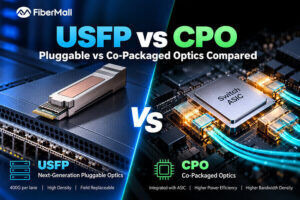
USFP vs CPO: Pluggable vs Co-Packaged Optics Compared
USFP vs CPO is a choice between two ways to move data inside an AI data center. USFP (Ultra-Dense Small Form Factor Pluggable) is a pluggable 400G-per-lane optical module you can
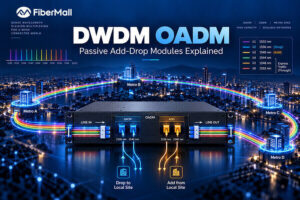
DWDM OADM: Passive Add-Drop Modules Explained
Every DWDM OADM a wavelength passes through introduces some optical loss. Across five cascaded nodes, that loss can consume a substantial share of the link budget—potentially comparable to tens of
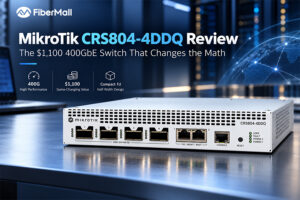
MikroTik CRS804-4DDQ Review: The $1,100 400GbE Switch That Changes the Math
Four 400G ports, 1.6 Tbps of aggregate one-direction port bandwidth, and a compact chassis at an unusually accessible price. The hardware is compelling; optical interconnect costs can determine the total
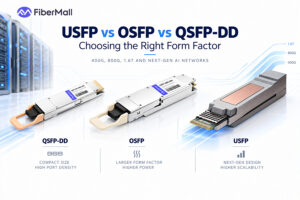
USFP vs OSFP vs QSFP-DD: Form Factors Compared
The three high-density pluggable form factors relevant to 400G, 800G, and next-generation AI networks are QSFP-DD, OSFP, and the newly announced USFP design. QSFP-DD offers broad backward compatibility with supported
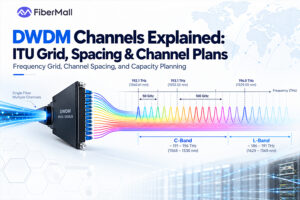
DWDM Channels Explained: ITU Grid, Spacing & Channel Plans
Two DWDM transceivers can both be labeled “channel 29” and still fail to establish a link. The channel label does not uniquely identify the optical frequency. Different vendors may use