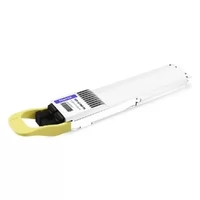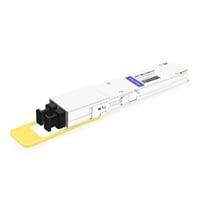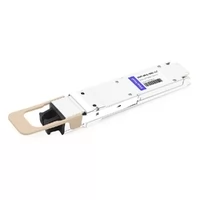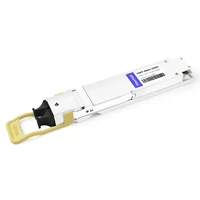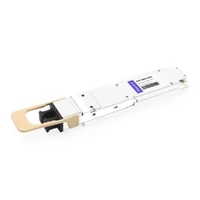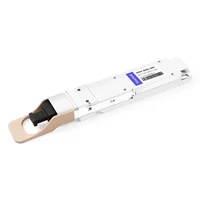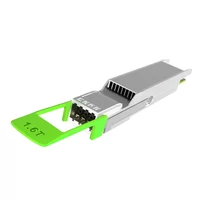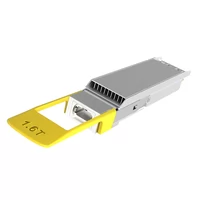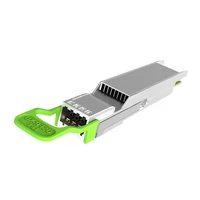

The infrastructure team selected OSFP 800G transceivers for the spine layer after they had already established a QSFP-DD system. The team made their decision after reviewing the impending technology roadmap, which they had previously seen. The 2024 form factor design decision determines which state-of-the-art cluster will maintain its competitive edge until 2028 because 1.6T modules will begin production in 2026, and NVIDIA’s Blackwell architecture requires massive east-west data movement.
The optical transceiver market is experiencing its fastest upgrade cycle in history. The transition from 400G to 800G took roughly three years. The transition to 1.6T will take place within the next eighteen months. Data center architects and network engineers face a critical decision point because they need to select a form factor that will safeguard their infrastructure investments and meet the bandwidth requirements of AI workloads.
This guide provides the complete OSFP roadmap from 2025 through 2027. The document includes specific quarterly timelines, which enable users to evaluate QSFP-DD through direct comparison and provide technical details about 1.6T deployment and the framework, which helps users decide based on actual deployment scenarios. This roadmap helps you choose the best option for your needs, whether you plan to establish a new AI cluster or upgrade current systems.
FiberMall has provided optical transceivers for worldwide data center installations. Our engineering teams have tracked OSFP development from the initial MSA meetings through today’s commercial deployments. The guide contains both technical specifications and practical deployment experience, which we acquired through our work with hyperscaler cloud providers and enterprise data centers.
What Is OSFP? Technical Foundation
The OSFP octal small form factor pluggable standard has created a completely new design for optical transceiver connections. The development of OSFP started from zero because engineers wanted to create a system that could handle the thermal and power requirements of 800G+ data transmission.
The “Octal” designation refers to the eight electrical lanes that carry data. Each lane operates at 100Gb/s using PAM4 modulation, which delivers 800Gb/s aggregate bandwidth. The 1.6T modules establish lane speeds of 200Gb/s through their 224G PAM4 SerDes signaling system.
Key Technical Specifications
| Specification | OSFP Value | QSFP-DD Value |
| Dimensions | 22.58 × 107.8 mm | 18.35 × 89.4 mm |
| Electrical Lanes | 8 lanes | 8 lanes |
| Power Capacity | 25W+ | ~20W |
| Thermal Design | Integrated heat sink (IHS) | Standard |
| 1.6T Ready | Yes | Challenging |
OSFP provides crucial thermal cooling space because its dimensions exceed the 18.35mm width of QSFP-DD. The 800G OSFP module has a power usage range between 15W and 20W. At 1.6T, the power draw sits between 22W and 30W, which depends on both reach and architectural design. The OSFP form factor manages thermal production through its built-in heat sinks and advanced airflow system.
Two physical variants exist for different applications:
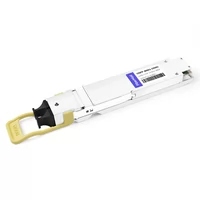
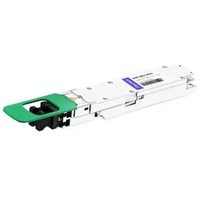
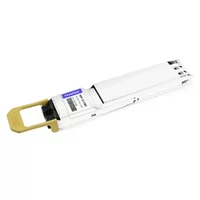
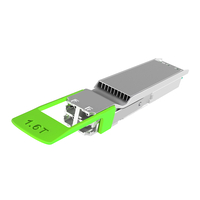
OSFP-IHS (Integrated Heat Sink): The standard variant for switch deployments. The integrated heat sink provides direct thermal contact with switch cage cooling systems. This is the most common variant for spine and leaf switches.
OSFP-RHS (Raised Heat Sink): Designed for network interface cards (NICs), DPUs, and liquid-cooled environments. The raised heat sink orientation accommodates different airflow patterns in server environments.
OSFP modules use the Common Management Interface Specification (CMIS) 5.0 and later for device management. The system enables digital diagnostics and inventory tracking while monitoring temperature and voltage and optical power levels in real time.
The OSFP Multi-Source Agreement (MSA) defines the mechanical, electrical, and thermal specifications that ensure interoperability between vendors. For a complete technical overview of OSFP specifications, see our OSFP transceiver complete guide.

OSFP vs QSFP-DD: The Form Factor Decision
The choice between OSFP and QSFP-DD isn’t about picking a winner. Your deployment scenario requires you to select the most suitable form factor. The two options present valid benefits which depend on your current system limitations and your planned system upgrades and your desired performance outcomes.
Side-by-Side Comparison
| Feature | OSFP | QSFP-DD |
| Form Factor Width | 22.58 mm | 18.35 mm |
| Backward Compatibility | Requires adapter | Native QSFP28/56/112 support |
| Port Density (1RU) | ~32-36 ports | ~36-40 ports |
| Power Handling | 25W+ capacity | ~20W limit |
| Thermal Management | Superior (IHS/RHS options) | Standard |
| 1.6T Readiness | Designed for 1.6T and beyond | Challenging at 1.6T |
| Current Ecosystem | Growing rapidly | Mature and established |
When QSFP-DD Makes Sense
The reasons why QSFP-DD remains the dominant choice for enterprise and cloud provider deployments. The existing QSFP28 and QSFP56 systems support QSFP-DD because it provides backward compatibility. Your existing cables, breakout strategies, and operational procedures transfer directly. The system enables migration with minimal training needs because it maintains essential working links.
The smaller form factor enables companies to install more equipment within their available space. A 1RU switch can accommodate 36-40 QSFP-DD ports versus 32-36 OSFP ports. The additional ports provide spine switches with crucial bandwidth advantages because those ports increase overall system capacity.
The system works well for 400G and 800G deployments, which require no more than 1.6T capacity for the next five years. The ecosystem has reached the full development stage with price levels that match market standards and products available for purchase through all supply channels.
When OSFP Is the Better Choice
OSFP becomes the clear choice for specific scenarios:
AI and HPC Clusters: The advanced thermal management system, together with its increased power handling ability, operates effectively when you need to install 32 ports of 800G into one switch. The 25W+ thermal envelope accommodates high-power coherent optics like 800G ZR/ZR+ for data center interconnects.
1.6T Migration Path: The OSFP upgrade system will enable infrastructure development until 1.6T capacity for the period from 2027 until 2028. OSFP1600 modules fit existing OSFP cages. The same switch hardware that handles 800G today will support 1.6T with software updates.
Greenfield Deployments: OSFP establishes essential infrastructure for the next ten years at new data center sites that lack existing system constraints. The form factor was designed with 1.6T and 3.2T speeds in mind.
Senior network architect Sarah Chen explained her decision-making process for our recent hyperscale deployment through this statement. “We evaluated both form factors for our AI training cluster. The thermal simulations showed QSFP-DD would work, but we’d be at the edge of the envelope. We could handle 1.6T through OSFP without needing to modify our cooling system design.”
The 2025-2027 OSFP Roadmap Timeline
The OSFP transition is happening faster than previous speed generations. Understanding the quarterly timeline helps infrastructure planners time their deployments and procurement cycles.
2025: The 800G Peak and 1.6T Early Adoption
Q1 2025
- 1.6T OSFP modules enter commercial production
- Initial shipments: approximately 20,000 units industry-wide
- NVIDIA Blackwell GPU clusters drive early demand
- IEEE 802.3dj (1.6T Ethernet standard) nears final approval
Q2 2025
- Broadcom Tomahawk 6 switches (102.4 Tbps, 64×1.6T ports) begin shipping
- Major cloud providers begin 1.6T validation testing
- OSFP1600 pricing holds at 3-4× premium over equivalent 800G modules
Q3 2025
- Second-source 1.6T vendors enter market
- OSFP-XD (Extended Density) sampling begins for hyperscalers
- 800G OSFP shipments reach peak volumes
Q4 2025
- Enterprise adoption of 800G OSFP accelerates
- 1.6T module costs begin gradual decline
- Infrastructure planners finalize 2026 deployment specifications
2026: The Year of 1.6T Volume Production
Q1-Q2 2026
- Industry projections: 30+ million 1.6T units manufactured
- NVIDIA Spectrum-6 and Quantum-X switches enter volume production
- 1.6T pricing drops to approximately 2× 800G premium
- OSFP-XD form factor gains traction for ultra-high-density applications
Q3-Q4 2026
- 1.6T becomes standard specification for new AI cluster builds
- Tier-2 cloud providers begin widespread deployment
- 800G transitions from “cutting edge” to “mainstream workhorse”
- Early 3.2T development work begins in vendor labs
2027 and Beyond: Mainstream 1.6T and Path to 3.2T
2027
- 1.6T OSFP dominates new hyperscale deployments
- 800G remains viable for enterprise and cost-sensitive applications
- OSFP-XD matures as the form factor for 3.2T development
- Co-Packaged Optics (CPO) emerges as alternative for ultra-short reach
2028+
- 3.2T OSFP-XD enters early commercial deployment
- 1.6T pricing approaches current 800G levels
- Industry attention shifts to 448G SerDes and 6.4T optical signaling
The market demonstrates a predictable pattern which consists of three stages: hyperscalers will begin to adopt technology in 2025, volume production will enable wider deployment in 2026, and main street consumers will start using the technology in 2027. Organizations planning infrastructure refreshes should align their timelines with this trajectory.
1.6T OSFP Specifications and Variants
Understanding the technical specifications of 1.6T OSFP modules is essential for infrastructure planning. Two distinct form factor variants serve different deployment scenarios.
OSFP1600 (Standard Form Factor)
OSFP1600 standard dimension requirements match those of 400G and 800G OSFP modules. The ability to use 1.6T modules with existing OSFP switch cages without any need for hardware changes represents substantial backward compatibility.
Technical Specifications:
- Data Rate: 1.6 Tbps (8 × 200G PAM4 lanes)
- Electrical Interface: 8 × 224G PAM4 SerDes
- Power Consumption: 15-20W (LPO variants), 22-30W (DSP-based)
- Management Interface: CMIS 5.2/5.3
- Backward Compatibility: Full (existing OSFP cages)
The 224G electrical signaling represents a significant leap from 112G used in 800G modules. This requires updated switch ASICs with 3nm process technology to achieve acceptable power and signal integrity. The IEEE 802.3dj standard defines the 1.6 Terabit Ethernet PHY layer specifications.
OSFP-XD (Extended Density)
OSFP-XD (eXtended Density) represents a departure from backward compatibility in exchange for higher lane count and future scalability.
Technical Specifications:
- Data Rate: 1.6T (current) / 3.2T (future)
- Lane Configuration: 16 × 100G lanes (scalable to 16 × 200G)
- Physical Dimensions: 28.15mm width, ~5mm taller than standard OSFP
- Power Capacity: Up to 33.5W
- Backward Compatibility: None (requires new cage design)
The 16-lane architecture enables both current 1.6T operation (16 × 100G) and future 3.2T (16 × 200G) without changing the form factor. Hyperscalers have reportedly committed to OSFP-XD for 92% of their 2025 1.6T procurement despite the incompatibility with existing infrastructure.
Common 1.6T Module Types
| Module Type | Reach | Application | Power Target |
| OSFP-DR8-1.6T | 500m | Intra-data center | ~26W |
| OSFP-2FR4-1.6T | 2km | Large campus/spine | ~30W |
| OSFP-LR8-1.6T | 10km | Metro/DCI | ~30W |
| LPO variants | <2km | AI cluster short reach | <20W |
For detailed 1.6T OSFP specifications, refer to our 1.6T OSFP complete guide.
AI Infrastructure: The Primary 1.6T Driver
Artificial intelligence workloads create new demands for data center network infrastructure. The data center now experiences more substantial east-west traffic because GPUs need to share model parameters during training instead of using traditional north-south traffic patterns which handle data movement into and out of the facility.
The Bandwidth Explosion
A single GPT-class model training run can saturate 100G links thousands of times over which leads to 100,000 times link saturation. NVIDIA’s latest GPU clusters connect 100,000+ accelerators in a single fabric. Each GPU requires 400Gbps to 800Gbps of interconnect bandwidth. The math is relentless: 100,000 GPUs × 800Gbps = 80 petabits per second of aggregate interconnect capacity.
Data center networks experience a demand that becomes concentrated on their spine layer. Where 400G was sufficient for general cloud workloads, AI training requires 800G today and 1.6T by 2026.
Why OSFP Dominates AI Deployments
NVIDIA has established OSFP as the standard for its Quantum-X800 InfiniBand switches and Spectrum-X Ethernet systems. The market demand for this single vendor solution accounts for more than 60 percent of the 1.6 trillion dollar market. The AI infrastructure vendor that controls the market establishes the standard which all industry participants will adopt.
NVIDIA’s selection process involves multiple factors. OSFP’s thermal advantages play a crucial role in the design of AI clusters.
Power Density: The 800G switch with 32 ports consumes between 480 and 640 watts for its optical modules. The value reaches between 800 and 960 watts at 1.6 terabits. OSFP provides sufficient thermal design margin to maintain performance levels through continuous training operations while preventing system throttling.
Latency Sensitivity: AI training requires tight synchronization across thousands of GPUs. The training process loses efficiency because thermal throttling causes jitters. OSFP’s advanced cooling system keeps operating temperatures at stable levels.
East-West Optimization: AI clusters prioritize east-west bandwidth over north-south. The port density of OSFP requires slightly fewer ports per rack unit which becomes acceptable because each port provides maximum bandwidth without causing thermal issues.
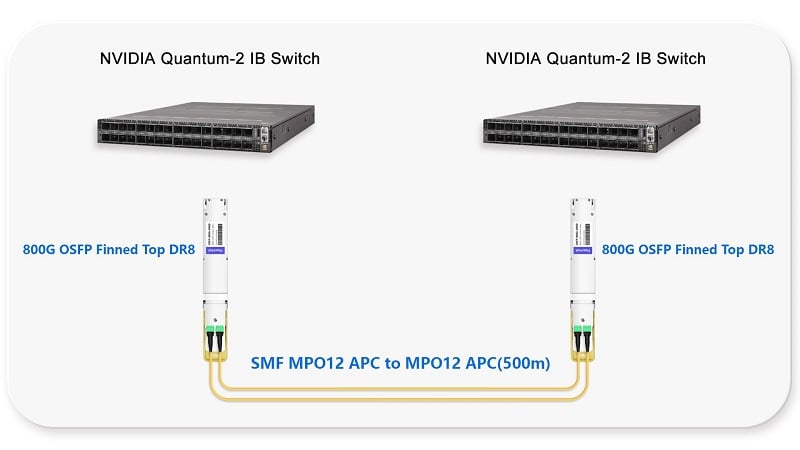
Real-World Impact
A major cloud provider we worked with upgraded their AI training fabric from 400G to 800G OSFP in late 2024. Their training iteration time for a large language model dropped by 34%. The network was no longer the bottleneck. The system’s compute capacity increased from 67% to 91% during the period.
The performance improvement justifies the infrastructure expenses, which exceed three to four times their initial costs. The training process consumes millions of dollars in electricity costs; therefore, the 34% faster completion time provides instant return on investment.
Linear Pluggable Optics (LPO) and OSFP
The introduction of Linear Pluggable Optics has brought about the greatest transformation to optical transceiver design since the industry shifted from direct detection to coherent detection technology. The OSFP standard benefits from LPO because it delivers essential advantages at a specific expense.
What Is LPO?
The Digital Signal Processor (DSP) chip present in traditional optical transceivers performs three functions which include signal conditioning and equalization and error correction. The DSP brings additional energy requirements and processing delays and increases system expenses.
LPO eliminates the DSP. The system uses linear drivers together with transimpedance amplifiers (TIAs) to perform electrical-to-optical conversion. The switch ASIC uses its SerDes system to manage all signal processing tasks.
Performance Benefits
Power Reduction: Removing the DSP reduces module power consumption by 40-50%. An 800G DSP-based module draws 16W; the LPO equivalent draws 8-8.5W. At data center scale, this translates to hundreds of kilowatts saved.
Latency Reduction: DSP processing adds 50-60 nanoseconds of latency. LPO cuts this to under 5 nanoseconds. For AI training workloads where microseconds matter, this 90% reduction is significant.
Cost Reduction: DSP chips account for 30-40% of module cost. LPO modules cost 25-30% less than equivalent DSP-based alternatives.
Limitations and Trade-offs
LPO isn’t universally applicable. The trade-offs constrain deployment scenarios:
Reach Limitation: LPO works reliably only for short reaches—typically under 2 kilometers. The lack of DSP equalization limits the optical signal’s ability to overcome fiber impairments over distance.
Switch Dependency: LPO requires close coordination between module and switch ASIC. Not all switches support LPO operation. The switch vendor must specifically validate and qualify LPO modules.
Tighter Tolerances: LPO modules require higher-quality fiber infrastructure. Connector cleanliness and fiber specifications matter more without DSP compensation.
LPO Variants in OSFP
| Variant | Reach | Application | Power |
| 800G-DR8 LPO | 500m | AI cluster, intra-DC | ~8W |
| 800G-SR8 LPO | 100m | Rack-to-rack, MMF | ~7W |
| 1.6T-DR8 LPO | 500m | Future AI fabrics | ~18W |
For AI clusters with predictable short-reach requirements, LPO within OSFP form factors offers the best of both worlds: pluggable flexibility with near-CPO power efficiency.
Deployment Planning: Thermal, Power, and Cost
Planning an OSFP deployment requires attention to three critical factors that differ significantly from previous-generation optics.
Thermal Planning
OSFP modules run hot. Infrastructure teams must design for thermal loads that exceed previous generations by 3-4×.
Power Dissipation by Speed:
- 400G OSFP: 8-12W per module
- 800G OSFP: 15-20W per module
- 1.6T OSFP: 22-30W per module
A fully populated 32-port 800G switch dissipates 480-640W from optics alone. The same switch at 1.6T reaches 700-960W. This approaches the thermal density of compute servers in a networking form factor.
Practical Recommendations:
- Specify switches with adequate thermal design: Verify the switch platform’s cooling capacity at full 1.6T load, not just 800G.
- Plan for 3-4 m/s airflow: Standard data center cooling may need enhancement for dense OSFP deployments.
- Monitor intake temperatures: Keep switch intake air below 25°C for optimal optical module performance.
- Consider aisle containment: Hot aisle/cold aisle containment becomes essential at these power densities.
Power Budgeting
The power draw affects more than just electricity bills. It impacts:
UPS Sizing: A rack with four 32-port 800G switches requires 2.5-3.5kW just for optics. UPS and generator capacity must account for this.
Circuit Planning: 208V 30A circuits provide ~5kW usable capacity. Two densely populated switches can saturate a circuit.
PDU Selection: Three-phase PDUs may be necessary for high-density networking racks.
Cost Trajectory and TCO
Understanding the cost trajectory helps timing decisions.
Current Pricing (Early 2025):
- 800G OSFP: $400-800 depending on reach
- 1.6T OSFP: $1,300-1,500 (3-4× 800G premium)
Projected 2026 Pricing:
- 1.6T OSFP: $800-1,100 (2× 800G premium)
TCO Considerations:
The total cost of ownership includes more than module pricing:
- Power costs: At 0.10/kWh, a 20W module costs 0.10/kWh, a 20W module costs 17.50/year to power. Over 5 years, that’s $87.50—potentially 10-15% of module cost.
- Cooling costs: Data center cooling typically adds 1.5-2× the power cost.
- Installation and maintenance: Higher-density fiber requires more careful cable management.
For migration planning, organizations should evaluate whether to deploy 800G now or wait for 1.6T availability. The decision depends on:
- Immediate bandwidth requirements: If 400G is saturated, 800G provides relief.
- Procurement cycles: Long lead times may force 800G deployment.
- Budget cycles: 1.6T may align better with future fiscal years.
For detailed deployment guidance, see our OSFP data center deployment guide.
OSFP Roadmap Decision Framework: When to Choose What
The form factor decision ultimately depends on your specific constraints. This framework provides clear recommendations based on common deployment scenarios.
Decision Matrix
| Scenario | Recommendation | Rationale |
| Enterprise upgrading 100G→400G/800G | QSFP-DD | Backward compatibility protects existing investment |
| Cloud provider with mixed infrastructure | QSFP-DD | Flexibility across multiple switch generations |
| Hyperscale AI cluster (new build) | OSFP | Thermal headroom and 1.6T path critical |
| High-power 800G ZR/ZR+ optics | OSFP | Power capacity for coherent modules |
| Future-proofing for 1.6T+ | OSFP or OSFP-XD | Clear upgrade path without hardware replacement |
| Maximum port density (spine) | QSFP-DD | 36-40 ports vs 32-36 for OSFP |
| AI training with LPO requirements | OSFP | LPO ecosystem developing faster for OSFP |
Timing Considerations
Deploy 800G Now If:
- Current 400G links are saturated
- Procurement cycles require immediate action
- 1.6T switch silicon isn’t available for your platform
Wait for 1.6T If:
- Current infrastructure handles traffic adequately
- 2026 budget cycles align with deployment
- AI workload requirements justify latest technology
Migration Strategies
Gradual Migration (Brownfield):
- Deploy OSFP in new spine layers
- Use breakout cables (800G → 2×400G) for leaf connectivity
- Migrate leaves to native OSFP in subsequent refresh cycles
- Retire QSFP-DD infrastructure over 3-4 years
Greenfield Deployment:
- Standardize on OSFP from day one
- Specify 1.6T-capable switch hardware
- Deploy 800G initially with 1.6T upgrade path
- Plan fiber infrastructure for 1.6T reaches
Still unsure which form factor fits your deployment? FiberMall’s engineering team can analyze your specific requirements and provide customized recommendations. Contact our data center networking experts for a consultation.
Conclusion
The OSFP roadmap through 2027 is clear:2025 will establish 800G as the mainstream standard while 1.6T enters limited production. 2026 marks the start of 1.6T volume deployment because its pricing has reached acceptable premium levels. 1.6T will dominate new hyperscale builds by 2027, while 800G will be used for enterprise and cost-sensitive applications.
The hyperscaler that deployed that 100000GPU cluster in late 2024 made their form factor decision based on this timeline. OSFP provided them with thermal capacity to support 800G today and enabled hardware-compatible access to 1.6T in 2026. Their infrastructure investment remains protected through 2028 and beyond.
Your decision depends on your specific constraints:
- Backward compatibility with existing infrastructure → QSFP-DD
- Future-proofing for 1.6T AI workloads → OSFP
- Maximum port density for spine aggregation → QSFP-DD
- Thermal headroom for high-power optics → OSFP
The optical networking industry has reached an agreement about its future development. The two form factors will continue to exist throughout the decade because they serve different deployment needs. The key is making an informed choice based on your roadmap, not generic recommendations.
Ready to deploy OSFP in your data center? Explore FiberMall’s OSFP transceiver solutions or request a quote for your specific requirements. Our engineering team has supported OSFP deployments worldwide and can ensure your infrastructure meets both today’s 800G needs and tomorrow’s 1.6T demands.
Related Products:
-
 NVIDIA MMA4Z00-NS Compatible 800GBASE 2 x SR4/SR8 OSFP PAM4 850nm 100m DOM Dual MPO-12 MMF Optical Transceiver Module
$550.00
NVIDIA MMA4Z00-NS Compatible 800GBASE 2 x SR4/SR8 OSFP PAM4 850nm 100m DOM Dual MPO-12 MMF Optical Transceiver Module
$550.00
-
NVIDIA MMA4Z00-NS-FLT Compatible 800GBASE 2 x SR4/SR8 OSFP RHS/Flat Top PAM4 850nm 100m DOM Dual MPO-12 MMF Optical Transceiver Module
$600.00
-
NVIDIA MMS4X00-NM Compatible 800GBASE 2 x DR4/DR8 OSFP IHS/Closed Finned Top PAM4 1310nm 500m DOM Dual MTP/MPO-12 SMF Optical Transceiver Module
$600.00
-
NVIDIA MMS4X00-NM-FLT Compatible 800GBASE 2 x DR4/DR8 OSFP Flat Top PAM4 1310nm 500m DOM Dual MTP/MPO-12 SMF Optical Transceiver Module
$650.00
-
NVIDIA MMS4X50-NM Compatible 800G 2x FR4 OSFP IHS/Closed Finned Top PAM4 1310nm 2km DOM Dual Duplex LC SMF InfiniBand NDR Optical Transceiver Module
$1000.00
-
NVIDIA MMS4A00 (980-9IAH1-00XM00) Compatible 1.6T 2 x DR4/DR8 OSFP224 PAM4 1311nm 500m IHS/Finned Top Dual MPO-12 SMF Optical Transceiver Module
$1500.00
-
NVIDIA MMS4A50 Compatible 1.6T 2xFR4/FR8 OSFP224 PAM4 1310nm 2km IHS/Finned Top Dual Duplex LC SMF Optical Transceiver Module
$1800.00
-
NVIDIA MMS4A00-RHS Compatible 1.6T 2xDR4/DR8 OSFP224 PAM4 1311nm 500m RHS/Flat Top Dual MPO-12/APC InfiniBand XDR SMF Optical Transceiver Module
$2000.00
-
OSFP-800G-DR8D-FLT Compatible 800GBASE 2 x DR4/DR8 OSFP Flat Top PAM4 1310nm 500m DOM Dual MTP/MPO-12 SMF Optical Transceiver Module
$650.00
-
OSFP-800G-SR8D-FLT Compatible 800G 2 x SR4/SR8 OSFP RHS/Flat Top PAM4 850nm 100m DOM Dual MPO-12 MMF Optical Transceiver Module
$600.00
-
OSFP-800G-DR8D Compatible 800GBASE 2 x DR4/DR8 OSFP PAM4 1310nm 500m DOM Dual MTP/MPO-12 SMF Optical Transceiver Module
$550.00
-
OSFP-800G-2FR4L 800G 2 x FR4 OSFP IHS/Closed Finned Top PAM4 1310nm 2km DOM Dual Duplex LC SMF InfiniBand NDR Optical Transceiver Module
$1000.00
-
OSFP-800G-SR8D Compatible 800GBASE 2 x SR4/SR8 OSFP PAM4 850nm 100m DOM Dual MPO-12 MMF Optical Transceiver Module
$550.00
-
OSFP-800G-SR8 OSFP 800GBASE SR8 OSFP PAM4 850nm MTP/MPO-16 100m OM4 MMF FEC Optical Transceiver Module
$650.00
-
OSFP-1.6T-DR8D 1.6T 2 x DR4/DR8 OSFP224 PAM4 1311nm 500m Dual MPO-12 SMF Optical Transceiver Module
$1500.00
-
OSFP-1.6T-4FR2 1.6T OSFP 4FR2 PAM4 1291/1311nm 2km SN SMF Optical Transceiver Module
$3500.00
-
OSFP-1.6T-DR8 1.6T 2 x DR4/DR8 OSFP224 PAM4 1311nm 500m MPO-16 SMF Optical Transceiver Module
$3000.00
-
OSFP-XD-1.6T-4FR2 1.6T OSFP-XD 4xFR2 PAM4 1291/1311nm 2km SN SMF Optical Transceiver Module
$5000.00