
A 1,024-GPU training cluster can waste 15-30% of its GPU cycles waiting on the network. That is not a CPU bottleneck. It is not a storage bottleneck. It is the fabric.
And the wrong choice between InfiniBand and RoCEv2 can turn a $10 million infrastructure investment into an underperforming money pit before the first model checkpoint finishes.
If you are designing an AI cluster in 2026, you have probably already heard the arguments. InfiniBand gives you the lowest latency. RoCEv2 saves money. Spectrum-X splits the difference.
The truth is messier. The right fabric depends on scale, workload, team skills, and how much operational discipline you are willing to apply. In this guide, we will compare InfiniBand vs RoCEv2 on performance, cost, real deployments, and the physical layer details that most comparisons ignore.
Here is what we will cover: how each fabric achieves lossless behavior, where the latency and throughput numbers actually land, what Meta’s 24,000-GPU RoCEv2 cluster proves (and what it does not), and a decision framework you can use with your own numbers.
Why AI Clusters Need Lossless, Low-Latency Networking
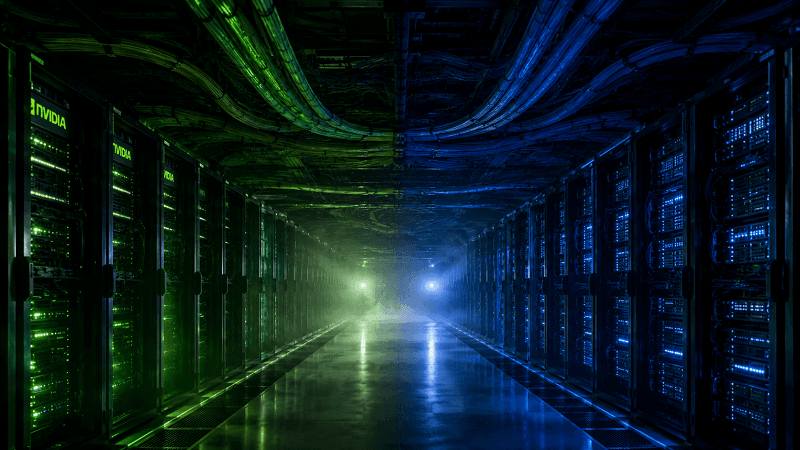
AI training generates enormous east-west traffic. Distributed SGD synchronizes gradients across hundreds or thousands of GPUs every step. A single all-reduce across a few hundred GPUs can move terabytes of data. If one packet arrives late, the entire collective stalls and every GPU waits.
That is why average latency is the wrong metric. P99 latency and jitter matter more. One slow packet can bottleneck the whole step.
The network must also be lossless, because a dropped packet in RDMA usually triggers a retry that costs microseconds, not nanoseconds. This is the core problem InfiniBand vs RoCEv2 designs are both trying to solve.
Here is a concrete example. Marcus, an infrastructure lead at a mid-size AI startup, built a 256-GPU training cluster with standard 400GbE. The cluster looked fine on paper.
But at 512 GPUs, tail latency spiked during all-to-all operations. Training throughput improved by about 12% after switching to InfiniBand Quantum-2. The fabric had been the silent killer.
How InfiniBand Works
InfiniBand is purpose-built for this environment. It uses credit-based flow control. A receiver advertises buffer credits to a sender. The sender transmits only when credits are available.
Packets are never dropped due to buffer overrun. This is fundamentally different from Ethernet, which is lossy by default.
The architecture also offloads transport processing to the Host Channel Adapter (HCA). Applications post work requests directly to the NIC through user-space libraries like libibverbs and rdma-core.
The kernel is bypassed. Data stays in pinned user buffers. The HCA handles the rest.
InfiniBand’s biggest performance advantage for large-scale training is SHARP (Scalable Hierarchical Aggregation and Reduction Protocol). With SHARP enabled on Quantum-2 switches, the switch silicon itself sums gradients in-flight. For clusters of 16 or more nodes, that drops all-reduce round-trips toward O(1).
Standard all-reduce without SHARP takes O(log N) round-trips. This in-switch offload is the biggest technical differentiator in any InfiniBand vs RoCEv2 discussion.
A central Subnet Manager handles deterministic routing. Adaptive routing on Quantum-2 can dynamically reroute around congestion. For tightly coupled collectives, this predictability is the whole point.

How RoCEv2 Works
RoCEv2 stands for RDMA over Converged Ethernet version 2. It encapsulates RDMA traffic in UDP/IP packets and runs on standard Ethernet switches. That is the good news.
The catch is that RDMA requires lossless transport, and Ethernet is not lossless by design. So the InfiniBand vs RoCEv2 tradeoff starts with credit-based guarantees versus configured losslessness.
To make Ethernet lossless, RoCEv2 relies on three mechanisms:
PFC (Priority Flow Control, IEEE 802.1Qbb): Pauses traffic on a specific 802.1p priority when a receiver buffer is full.
ECN (Explicit Congestion Notification, RFC 3168): Marks packets at congestion points so endpoints reduce their rate before buffers overflow.
DCQCN (Data Center Quantized Congestion Notification): Combines ECN with rate-based congestion control on the NIC.
These three have to be tuned together. If PFC triggers before ECN can act, you get stop-start behavior and tail latency spikes. If ECN thresholds are too high, packets drop before the signal reaches the sender. If priorities mismatch between NIC and switch, PFC is silently ignored and RDMA connections reset.
RoCEv2’s real advantage is the breadth of the Ethernet ecosystem. It runs on Arista, Cisco, Juniper, and Broadcom switches. Your existing data center networking team probably already knows BGP, EVPN-VXLAN, and QoS. That familiarity is worth something when you are evaluating InfiniBand vs RoCEv2 for a brownfield deployment.
InfiniBand vs RoCEv2: Performance Comparison
Let’s look at the numbers that actually matter for AI training.
| Metric | InfiniBand NDR | RoCEv2 400GbE | Notes |
| Small-message latency | 0.6-1.2 µs | 2-5 µs (well-tuned) | IB is 2-3x lower |
| 8xH100 all-reduce bandwidth | ~350 GB/s | ~270-290 GB/s | RoCEv2 ~77-83% of IB |
| 64-node all-reduce | ~100% baseline | ~75-85% of IB | Gap widens with scale |
| Lossless behavior | Native (credit-based) | Configured (PFC + ECN) | IB is zero-drop by design |
| In-switch collective offload | SHARP v3 | None | Major IB advantage at scale |
| Adaptive routing | Native | ECMP/flowlet (or Spectrum-X) | IB more deterministic |
The gap is real, but it is not always decisive. For small-scale training or inference, a 5-10% throughput difference may not justify a 2-3x fabric premium. For frontier training with 100B+ parameter models on 64+ GPUs, that same gap translates directly into dollars and wall-clock time. In other words, the InfiniBand vs RoCEv2 performance gap is workload-dependent.
There is also a hidden performance variable: tuning. Poorly tuned RoCEv2 can deliver only ~70% of InfiniBand performance. Properly tuned RoCEv2 hits 90-95%.
The protocol is capable, but the configuration is not forgiving. This is why InfiniBand vs RoCEv2 comparisons often understate the importance of operational skill.
InfiniBand vs RoCEv2: Cost Comparison
Cost is where RoCEv2 makes its case. The hardware numbers are not subtle.
| Component | InfiniBand NDR | Commodity RoCEv2 | Spectrum-X |
| 64x NICs | ~$400,000 | ~$140,000 | ~$250,000 |
| Switch | ~$65,000 | ~$20,000 | ~$47,000 |
| Cables/Optics | ~$25,000 | ~$15,000 | ~$20,000 |
| 8-node, 64-GPU fabric total | ~$490,000 | ~$175,000 | ~$317,000 |
| Amortized per GPU/hour | ~$0.29 | ~$0.10 | ~$0.19 |
At 1,024 GPUs, the InfiniBand fabric can cost ~7.7 million, while a comparable RoCEv2 fabric runs closer to 6 million. Those savings multiply fast. Still, the InfiniBand vs RoCEv2 cost comparison only tells part of the story.
But hardware is not the whole cost. RoCEv2 requires more operational engineering. PFC/ECN tuning, firmware alignment across GPU driver, CUDA, NCCL, NIC firmware, and switch firmware, plus monitoring for PFC storms, all consume engineering hours. If you do not have a team that can own that, the savings evaporate in debugging time.
InfiniBand is more expensive to buy but simpler to operate at scale. The credit-based model removes an entire category of tuning problems. For teams without deep lossless Ethernet experience, that simplicity has real value in the InfiniBand vs RoCEv2 decision.
Real-World Deployment Proof Points
The most important data point in the InfiniBand vs RoCEv2 debate is Meta. In 2024, Meta published details of its RoCEv2-based AI training clusters, including the fabric used to train LLaMA 3.1 405B on 24,000 H100 GPUs. The model has 405 billion parameters, was trained on 15 trillion tokens, and consumed roughly 30 million H100-hours.

Meta’s architecture uses a dedicated backend network separate from general data center traffic. It is a two-stage Clos “AI Zone” with rack training switches, cluster training switches, and aggregator training switches for LLM scale. RoCEv2 traffic runs on its own fabric with PFC-based lossless behavior.
Meta’s engineers found that standard ECMP performed poorly due to low flow entropy and burstiness. Path pinning hurt training performance by up to 30% when rack allocation was fragmented. Their enhanced ECMP plus QP scaling improved AllReduce performance by up to 40%.
Surprisingly, Meta reported running 400G RoCEv2 with PFC only, without DCQCN, for over a year without persistent congestion issues. They use receiver-driven admission control through NCCL clear-to-send packets to throttle senders. This is not a generic recipe. It works because Meta can coordinate the collective library and the network closely.
Microsoft has also run RoCEv2 at scale, but its SIGCOMM 2016 paper documented harder lessons: RDMA transport livelock, deadlock, NIC PFC storms, and slow-receiver symptoms. ECMP only achieved about 60% network utilization for RDMA traffic. The message is clear: RoCEv2 works, but it takes engineering effort.
When InfiniBand Wins
InfiniBand is the right choice when determinism is worth paying for. In the InfiniBand vs RoCEv2 choice, that usually means one of the following scenarios.
Frontier model training with more than 64 GPUs and 100B+ parameters
Tightly coupled HPC simulations like molecular dynamics or financial modeling
Workloads where tail latency directly affects wall-clock time
Teams that value a single-vendor stack and centralized support
Environments where PFC storm debugging is not an acceptable risk
The “plug-and-play” lossless behavior of InfiniBand is not really plug-and-play, but it is dramatically simpler than configuring PFC and ECN across a multi-vendor Ethernet fabric. For clusters where a 12-25% throughput gap matters, the premium pays for itself.
When RoCEv2 Wins
RoCEv2 is the right choice when flexibility and cost matter more than the last microsecond. The InfiniBand vs RoCEv2 decision often tilts toward Ethernet in these cases.
Cost optimization is a primary constraint
The team already runs Arista/Cisco/Juniper Ethernet fabrics
Multi-tenant AI-as-a-Service deployment requiring EVPN-VXLAN
Smaller clusters of 8-32 GPUs for fine-tuning or inference
Heterogeneous GPU roadmap including AMD or Intel accelerators
Integration with existing enterprise Ethernet infrastructure
Here is another mini-story. Sarah, a network reliability engineer at a cloud provider, spent three weeks debugging a PFC storm that paused an entire fabric because of one bad cable and a misconfigured buffer threshold. After that incident, her team invested in automated PFC monitoring and standardized buffer templates. RoCEv2 stayed, but only because they built the operational discipline to run it.
The Hidden Cost of RoCEv2: Tuning and Operations
This is where most InfiniBand vs RoCEv2 comparisons fall short. RoCEv2 is not just a different protocol. It is a different operational model.
The most common failure mode is threshold misconfiguration. PFC and ECN must act in the right order. ECN should mark packets first, giving endpoints time to slow down. PFC should be the last resort, catching only what ECN cannot.
A typical 100G threshold strategy looks like this:
ECN marking starts: ~150 KB
ECN 100% marking: ~3 MB
PFC XOFF (pause): just above ECN full
PFC XON (resume): below XOFF with hysteresis
If PFC triggers first, the NIC never gets the ECN signal. It gets paused, then unpaused, then blasts traffic again. The result is a stop-start cycle, tail latency explosions, and in the worst case a PFC storm that stalls unrelated traffic.
You also need to monitor the right counters. High PFC pause frame counts are a red flag. ECN-marked packets should be active during congestion. If PFC is doing all the work, your thresholds are wrong.
Firmware alignment is another hidden tax. NVIDIA ConnectX-7 NICs, switch ASICs, GPU drivers, CUDA, and NCCL all have compatibility matrices.
An NCCL update can expose a NIC firmware bug. A switch firmware fix can change ECN behavior. Keeping the stack synchronized is ongoing work.
Spectrum-X and UEC: The Middle Grounds
Two alternatives complicate the binary InfiniBand vs RoCEv2 choice.
NVIDIA Spectrum-X is essentially RoCEv2 with NVIDIA’s enhancements: adaptive packet-level routing, DDP reordering, and tighter integration with NVIDIA GPUs. At 8 nodes, Spectrum-X matches InfiniBand within 5%.
At 64 nodes, the gap grows to 10-15% where SHARP provides increasing benefit. Spectrum-X costs about 37% less than InfiniBand but still locks you into NVIDIA switches, NICs, and software.
The Ultra Ethernet Consortium (UEC) released its Specification v1.0 on June 11, 2025. The 562-page document defines a new Ultra Ethernet Transport (UET), link-level reliability, packet trimming, and native multipath.
Members include AMD, Broadcom, Cisco, Intel, Meta, and Microsoft. UEC is the industry’s bet that Ethernet can absorb InfiniBand’s advantages without the proprietary lock-in. Production adoption is likely 2026-2027.
For most buyers in 2026, Spectrum-X is a viable middle ground if you are already NVIDIA-aligned. UEC is worth watching but not waiting for unless your procurement cycle extends into 2027.
Physical Layer Considerations
The fabric decision cannot be separated from the physical layer. A perfectly configured RoCEv2 or InfiniBand network will still fail with the wrong optics or cables. The InfiniBand vs RoCEv2 debate does not matter if the cabling is wrong.
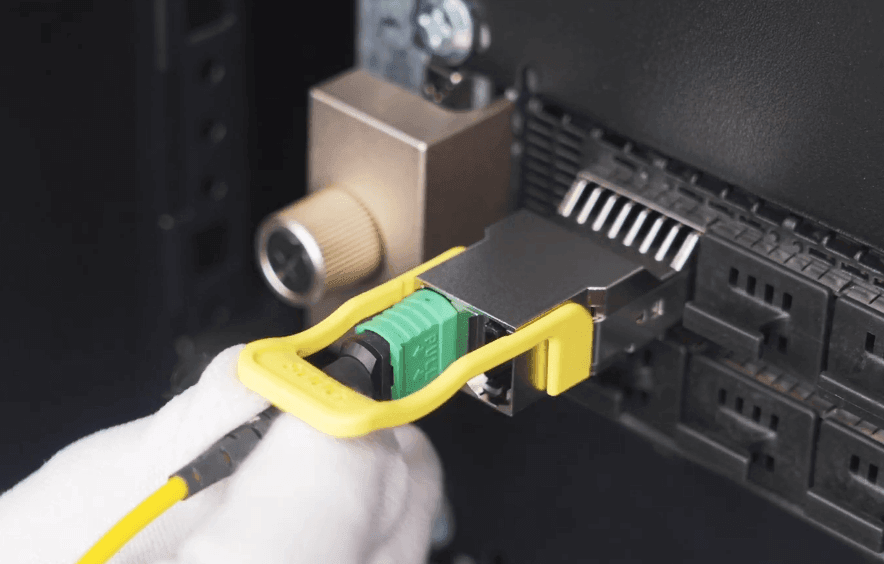
For short distances up to 3 meters, DAC cables are the cheapest option. Mid-range uses AOC. Longer runs need optical transceivers. At 400G and 800G, the choice of connector, polarity, and fiber type matters.
InfiniBand NDR typically uses MPO-12 APC connectors with Method B polarity for optical links. RoCEv2 at 400G/800G uses similar QSFP-DD or OSFP optics but over standard Ethernet switch ports. The transceivers may look similar, but the switch port compatibility and firmware support differ.
Cabling is often 15-25% of the total fabric cost. Buying the cheapest optics to offset RoCEv2 savings is a common mistake.
High bit-error rates, inconsistent latency, and compatibility issues can erase the cost advantage entirely. This is why FiberMall tests its 800G NDR InfiniBand modules, 1.6T OSFP transceivers, and InfiniBand-compatible cables for Quantum-2, ConnectX-7, and HGX platforms.
If you want a deeper dive into the protocol differences behind the InfiniBand vs RoCEv2 comparison, see our InfiniBand RDMA explained guide. For RoCEv2 specifics, our RoCEv2 ultimate guide covers the full stack.
InfiniBand vs RoCEv2: Decision Framework
Use these questions to narrow the choice.
1. How many GPUs?
Under 32: RoCEv2 is usually sufficient.
32-256: Either works; cost and team skills decide.
Over 256: InfiniBand or Spectrum-X unless you have proven RoCEv2 expertise.
2. What model size?
Under 70B parameters: RoCEv2 is typically fine.
70B-400B: InfiniBand or Spectrum-X.
Over 400B: InfiniBand NDR/XDR for deterministic training.
3. Training or inference?
Training: Latency-sensitive; lean IB or Spectrum-X.
Inference: Often less sensitive; RoCEv2 can be cost-effective.
4. What is your team’s expertise?
Deep Ethernet/BGP/QoS team: RoCEv2 is viable.
Limited lossless Ethernet experience: InfiniBand is safer.
5. Is multi-tenancy required?
Yes: RoCEv2 with EVPN-VXLAN is the natural fit.
No: InfiniBand is simpler.
6. Cost or performance priority?
Cost: RoCEv2.
Absolute performance: InfiniBand.
Both: Spectrum-X.
Ready to spec the optics and cables for your fabric? Contact FiberMall’s engineering team for a compatibility check or quote.
InfiniBand vs RoCEv2 FAQ
Is InfiniBand faster than RoCEv2?
Yes, for small-message latency and large-scale all-reduce throughput. InfiniBand NDR delivers ~0.6-1.2 µs latency versus ~2-5 µs for well-tuned RoCEv2. For 8xH100 all-reduce, InfiniBand reaches ~350 GB/s while RoCEv2 reaches ~270-290 GB/s. The InfiniBand vs RoCEv2 latency gap widens at 64+ nodes.
Can RoCEv2 match InfiniBand at scale?
Properly tuned RoCEv2 can reach 90-95% of InfiniBand throughput in many workloads. Meta proved this at 24,000 GPUs. But matching InfiniBand requires careful PFC/ECN tuning, dedicated backend networks, and coordination between NCCL and the fabric. The InfiniBand vs RoCEv2 scale question is not automatic.
Do I need PFC and ECN for RoCEv2?
Yes. RoCEv2 requires lossless Ethernet. PFC prevents buffer overruns. ECN signals congestion before buffers fill.
DCQCN adjusts sender rates. ECN should act before PFC. If PFC triggers first, you get unstable behavior and tail latency spikes.
What cable do I need for InfiniBand vs RoCEv2?
Short distances use DAC. Mid-range uses AOC. Longer runs need optical transceivers.
InfiniBand NDR commonly uses MPO-12 APC connectors with Method B polarity. RoCEv2 at 400G/800G uses QSFP-DD or OSFP optics but on Ethernet switch ports. Always verify switch compatibility and firmware support.
Is Spectrum-X better than both?
Spectrum-X is a pragmatic middle ground for NVIDIA-centric deployments. It matches InfiniBand within 5% at small scale and costs about 37% less. At 64+ nodes it trails InfiniBand by 10-15%. It still locks you into NVIDIA, so the InfiniBand vs RoCEv2 vs Spectrum-X answer depends on your vendor strategy.
What is UEC and should I wait for it?
UEC (Ultra Ethernet Consortium) released its v1.0 specification in June 2025. It defines an open Ethernet transport with InfiniBand-like features: multipath, link-level reliability, and better congestion control. If your deployment timeline is late 2026 or 2027, UEC is worth evaluating. For immediate InfiniBand vs RoCEv2 deployments, choose among the three options already shipping today.
Conclusion
The InfiniBand vs RoCEv2 debate is not about picking a winner. It is about matching the fabric to your workload, scale, budget, and operational maturity. InfiniBand gives you predictable, low-latency, lossless behavior at a premium.
RoCEv2 gives you cost savings and ecosystem flexibility if you are willing to invest in tuning. Spectrum-X and UEC are making the middle ground more attractive.
The physical layer matters either way. The best fabric decision can be undermined by the wrong transceivers, cables, or polarity.
If you are building or expanding an AI fabric, get the optics right from the start. FiberMall supplies 800G NDR InfiniBand modules, 1.6T OSFP transceivers, and InfiniBand-compatible cables tested for Quantum-2, ConnectX-7, and HGX platforms. Contact our team for a quote or compatibility check.
Related Products:
-
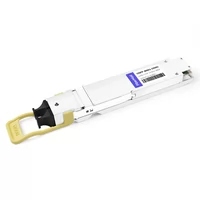
 NVIDIA MMA4Z00-NS400 Compatible 400G OSFP SR4 Flat Top PAM4 850nm 30m on OM3/50m on OM4 MTP/MPO-12 Multimode FEC Optical Transceiver Module
$400.00
NVIDIA MMA4Z00-NS400 Compatible 400G OSFP SR4 Flat Top PAM4 850nm 30m on OM3/50m on OM4 MTP/MPO-12 Multimode FEC Optical Transceiver Module
$400.00
-
NVIDIA MMS4X00-NS400 Compatible 400G OSFP DR4 Flat Top PAM4 1310nm MTP/MPO-12 500m SMF FEC Optical Transceiver Module
$450.00
-
NVIDIA MMA1Z00-NS400 Compatible 400G QSFP112 VR4 PAM4 850nm 50m MTP/MPO-12 OM4 FEC Optical Transceiver Module
$385.00
-
NVIDIA MMS1X00-NS400 Compatible 400G NDR QSFP112 DR4 PAM4 1310nm 500m MPO-12 with FEC Optical Transceiver Module
$500.00
-
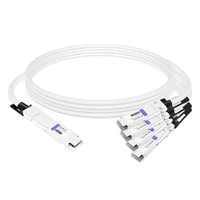
NVIDIA MCP7Y70-H001 Compatible 1m (3ft) 400G Twin-port 2x200G OSFP to 4x100G QSFP56 Passive Breakout Direct Attach Copper Cable
$120.00
-
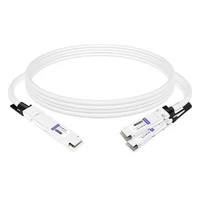
NVIDIA MCP7Y60-H001 Compatible 1m (3ft) 400G OSFP to 2x200G QSFP56 Passive Direct Attach Cable
$99.00
-
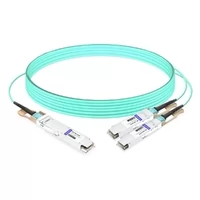
NVIDIA MFA7U10-H003 Compatible 3m (10ft) 400G OSFP to 2x200G QSFP56 twin port HDR Breakout Active Optical Cable
$750.00
-
NVIDIA MMA4Z00-NS Compatible 800GBASE 2 x SR4/SR8 OSFP PAM4 850nm 100m DOM Dual MPO-12 MMF Optical Transceiver Module
$550.00
-
NVIDIA MMA4Z00-NS-FLT Compatible 800GBASE 2 x SR4/SR8 OSFP RHS/Flat Top PAM4 850nm 100m DOM Dual MPO-12 MMF Optical Transceiver Module
$600.00
-
NVIDIA MMS4X00-NM Compatible 800GBASE 2 x DR4/DR8 OSFP IHS/Closed Finned Top PAM4 1310nm 500m DOM Dual MTP/MPO-12 SMF Optical Transceiver Module
$600.00
-
NVIDIA MMS4X00-NM-FLT Compatible 800GBASE 2 x DR4/DR8 OSFP Flat Top PAM4 1310nm 500m DOM Dual MTP/MPO-12 SMF Optical Transceiver Module
$650.00
-
NVIDIA MMS4X50-NM Compatible 800G 2x FR4 OSFP IHS/Closed Finned Top PAM4 1310nm 2km DOM Dual Duplex LC SMF InfiniBand NDR Optical Transceiver Module
$1000.00
-
NVIDIA MCP7Y00-N001 Compatible 1m (3ft) 800Gb Twin-port OSFP to 2x400G OSFP InfiniBand NDR Breakout Direct Attach Copper Cable
$160.00
-
NVIDIA MCA7J60-N004 Compatible 4m (13ft) 800G Twin-port OSFP to 2x400G OSFP InfiniBand NDR Breakout Active Copper Cable
$800.00
-
NVIDIA MMS4A00 (980-9IAH1-00XM00) Compatible 1.6T 2 x DR4/DR8 OSFP224 PAM4 1311nm 500m IHS/Finned Top Dual MPO-12 SMF Optical Transceiver Module
$1500.00
-
NVIDIA MMS4A50 Compatible 1.6T 2xFR4/FR8 OSFP224 PAM4 1310nm 2km IHS/Finned Top Dual Duplex LC SMF Optical Transceiver Module
$1800.00
-
NVIDIA MMS4A00-RHS Compatible 1.6T 2xDR4/DR8 OSFP224 PAM4 1311nm 500m RHS/Flat Top Dual MPO-12/APC InfiniBand XDR SMF Optical Transceiver Module
$2000.00
-
NVIDIA MCA7K20-X001 Compatible 1m (3ft) Twin-port 2x800Gb/s OSFP224 IHS/Finned Top to 4x400Gb/s OSFP224 RHS/Flat Top InfiniBand XDR Active Copper Splitter Cable
$2059.00