


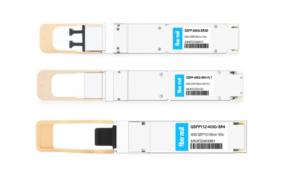
800G SR8 and 400G SR4 Optical Transceiver Modules Compatibility and Interconnection Test Report
Version Change Log Writer V0 Sample Test Cassie Test Purpose Test Objects:800G OSFP SR8/400G OSFP SR4/400G Q112 SR4. By conducting corresponding tests, the test parameters meet the relevant industry standards, and the test modules can be normally used for Nvidia (Mellanox) MQM9790 switch, Nvidia (Mellanox) ConnectX-7 network card and Nvidia (Mellanox) BlueField-3, laying a foundation for
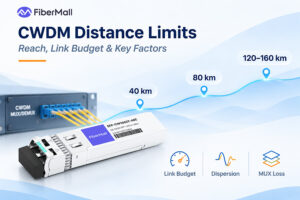
CWDM Distance Limits: How Far CWDM Can Reach
How far can CWDM transmit? The answer depends on the data rate, operating wavelength, optical power budget, fiber characteristics, and passive component losses. Typical CWDM transceiver specifications cover a wide range of distances. At 10G, shorter-wavelength modules are commonly rated for 10 to 40 km, while selected longer-wavelength modules support

Passive vs Active DAC Cable: Reach, Power & When to Use
Passive and active DAC cables both transmit electrical signals over shielded twinax copper. The key difference is how they handle signal degradation. Passive DAC cables rely on the host SerDes for signal transmission and equalization, while active copper cables add signal-conditioning electronics inside the connectors. These electronics may use analog
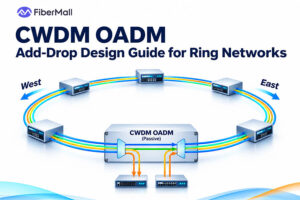
CWDM OADM: Add-Drop Design Guide for Ring Networks
A CWDM OADM adds and drops selected wavelengths at an intermediate site while all other channels continue along the express path without being dropped or converted. Use one when one or more channels need to leave or join a fiber mid-span. Use a mux/demux at terminal sites, where all channels
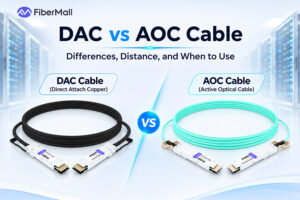
DAC vs AOC Cable: Differences, Distance, and When to Use
DAC and AOC cables both provide fixed, plug-and-play connections between two ports, but they solve different problems. A DAC (direct attach copper) cable carries electrical signals over twinax copper and offers advantages in cost, power consumption, and latency for short in-rack connections. An AOC (active optical cable) converts electrical signals
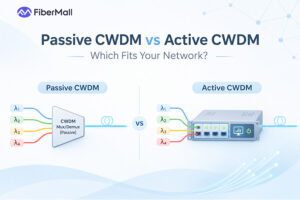
Passive CWDM vs Active CWDM: Which Fits Your Network
Passive CWDM uses optical filters in the transmission path and colored optics in the switches. Active CWDM adds powered transponders, muxponders, or other active optical equipment. Choose passive when your switches support compatible CWDM optics and the link budget closes. Choose active when you need OEO regeneration, protocol conversion, or

What Is a DAC Cable? Direct Attach Copper Explained
A DAC cable, or direct attach copper cable, is a fixed-length twinax copper cable assembly with transceiver-style connectors permanently attached to both ends. It connects servers, switches, and storage devices over short distances without requiring separate optical transceivers. Because it carries electrical signals over copper rather than converting them to