
When Amara’s team maxed out their two-building GPU cluster, the network crew got a new assignment: link the training sites 90 kilometers apart at 800 Gbps per connection. The first proposals came back with transponder shelves, a DWDM line system, and a six-figure bill. Then someone asked why they couldn’t just slide coherent modules into the routers they already owned.
That question is the entire 800G ZR story in one sentence.
800G ZR is a single-wavelength coherent module that carries 800 Gbps over 80 to 120 kilometers of single-mode fiber from a standard OSFP port. It turned what used to be a specialty telecom project into an ordering decision. And it’s the fastest-growing coherent product ever: Cignal AI expects 800ZR/ZR+ shipments to pass 200,000 ports in 2026 with revenue above $1 billion, on a 145% compound annual growth rate through 2029.
This guide covers what the OIF 800ZR standard guarantees, how the 800G ZR+ extension changes reach and rate flexibility, which form factor survives the power draw, and when to choose either over a 400G ZR or a direct-detect module. We’ll close with the 2026 cost picture and how AI scale-across is driving demand. If you’re sizing a metro or regional coherent link right now, talk to our networking experts about whether 800G ZR or ZR+ fits your reach and budget. Otherwise, keep reading.

What Is 800G ZR? (The OIF 800ZR Standard)
800G ZR is the coherent pluggable defined by the OIF 800ZR Implementation Agreement, published in October 2024. It’s a fixed 800G, single-carrier module running DP-16QAM at roughly 118 Gbaud, with OIF’s soft-decision OFEC for forward error correction and C-band tunability. Reach lands at 80 to 120 kilometers on an amplified single span, and about 75 kilometers unamplified, per Cisco’s 800G ZR/ZR+ data sheet.
Think of 800ZR as the direct successor to 400ZR. Same point-to-point DCI philosophy, double the capacity, one module instead of two. It speaks 800GbE, 400GbE, 200GbE, and 100GbE client interfaces, so it slots into existing router and switch ports without a separate transponder. FiberMall demonstrated exactly this interoperability at OFC 2024, running 400G ZR and 800G ZR modules from multiple vendors over 8×100 km and 8×125 km spans.
Interoperability is built in, not bolted on. The whole point of the OIF agreement is that a Cisco-hosted 800G ZR on one end talks to an Arista or Juniper-hosted module on the other. For anyone who has managed a proprietary line system, that alone is worth the switch. Our complete guide to coherent optical modules puts 800G ZR in the wider 100ZR to 800ZR family if you want the full context.
What Is 800G ZR+? (Extended Reach, Flexible Rates)
800G ZR+ is the extended-reach sibling, defined by the OpenZR+ and OpenROADM MSAs rather than the OIF. It adds interoperable probabilistic constellation shaping, or PCS, and a higher launch power. PCS shapes the signal to squeeze extra OSNR margin out of a given fiber, which is how a ZR+ module climbs past 1,000 kilometers at 800G. Drop to 400G and vendors like Nokia and Marvell quote reach out to roughly 3,000 kilometers.
The rate is flexible, too. A ZR+ module doesn’t lock you to 800G. On a clean link it runs 800G. On a hard one you dial down to 700G, 600G, 400G, even 200G to hold margin.
That flexibility is why 800ZR+ is now outselling plain 800G ZR, which sounds odd until you look at the bill of materials. The two cost nearly the same to build, and ZR+ does more. Cignal AI pegs ZR+ revenue at roughly 100 million in 2025 and nearly 1 billion in 2026, making it the near-term growth engine of the whole 800G generation.
If the ZR versus ZR+ distinction still feels blurry, our 400G ZR vs ZR+ vs OpenZR+ comparison walks through the same trade-offs at the earlier generation, and the logic carries straight up to 800G.
800G ZR vs 800G ZR+: Side-by-Side Comparison
Here’s the decision table engineers actually ask for.
| Factor | 800G ZR | 800G ZR+ |
| Standard | OIF 800ZR IA (Oct 2024) | OpenZR+ / OpenROADM MSA |
| Line rate | Fixed 800G | 100G to 800G, flexible |
| Modulation | DP-16QAM | DP-16QAM with PCS |
| Baud rate | ~118 Gbaud | ~118 Gbaud |
| FEC | OIF OFEC | OFEC + interoperable PCS |
| Reach | 80-120 km amplified; ~75 km unamplified | 1,000+ km at 800G; ~3,000 km at 400G |
| Launch power | Standard | Higher |
| Power draw | 24-25 W | 26-32 W |
| Form factor | OSFP, QSFP-DD | OSFP primarily |
| ROADM support | Single span, limited | Multi-span, ROADM-ready |
| Best fit | Metro DCI, point-to-point | Regional, long-haul, AI scale-across |

The reach column drives most decisions. Under 120 kilometers with no ROADMs in the path, 800G ZR is the cheaper, simpler pick. Add ROADM hops, regional distances, or multi-rate needs and you move up to ZR+. The modulation story follows: fixed DP-16QAM for ZR, PCS with dial-a-rate for ZR+.
Power is where people get burned. ZR+ draws 26 to 32 watts against ZR’s 24 to 25, and both sit above the thermal ceiling of many pluggable ports. That’s the form-factor problem we’ll unpack below, and it’s the single most common spec surprise in real deployments.
800G ZR vs 400G ZR: Should You Skip the Middle Generation?
If 400G ZR is already a proven workhorse, why jump to 800G? Cost per bit is the short answer. A single 800ZR carries what two 400ZR modules carry, in one port, at lower power. On a per-gigabit basis, 800G-16QAM draws about 0.038 W/Gbps against 0.059 W/Gbps for 400G-16QAM.
Fewer ports, fewer fiber pairs, less cooling.
The market is voting. Dell’Oro tracks 400G ZR’s share of the pluggable coherent market falling from about 93% in 2025 to 61% in 2026, while 800G’s share jumps to roughly 35%. That’s close to a tenfold volume increase in a single year. For greenfield metro DCI, the question is increasingly not whether to buy 800G, but which flavor.
400G ZR still wins in specific corners. Short metro links where a lower power budget matters. Brownfield builds that already have QSFP-DD 400G faceplates and don’t want to touch the chassis. And honestly, any place where a 400G module already in the spares bin is the lowest-friction option.
Our 400G ZR QSFP-DD buying guide covers that path in detail, including the compatibility checks that keep 400G deployments boring and reliable.
There’s a form-factor wrinkle in the upgrade path. Many 400G ZR deployments sit in QSFP-DD ports, while 800G coherent realistically wants OSFP for thermal headroom. Plan that migration now, or you’ll discover it at the worst time.
800G ZR vs Direct-Detect: When Coherent Wins
Direct-detect optics still own the short reach. An 800G DR8 module goes about 500 meters, FR4 reaches 2 kilometers, and LR4 stretches to 10. Past that, PAM4 needs amplification and dispersion compensation, and the economics fall apart fast.
Coherent 800ZR starts where direct-detect ends. It clears 80 to 120 kilometers natively, no amplifier needed in many cases, and it does it over a single fiber pair. That’s not a marginal advantage. It’s the difference between “this link is possible” and “this link needs a line system.”
Stay with direct-detect inside a building or across a campus where the distance is short and the power budget is tight. FR4 and LR4 are cheaper, cooler, and perfectly good there. The coherent vs direct detection comparison has the full side-by-side if you want the engineering detail. For anything metro and beyond, 800G coherent is the only practical 800G answer.
OSFP vs QSFP-DD: The Form Factor Decision for 800G
Here’s the spec that ends up costing money. 800G ZR draws 24 to 25 watts. 800G ZR+ draws 26 to 32.
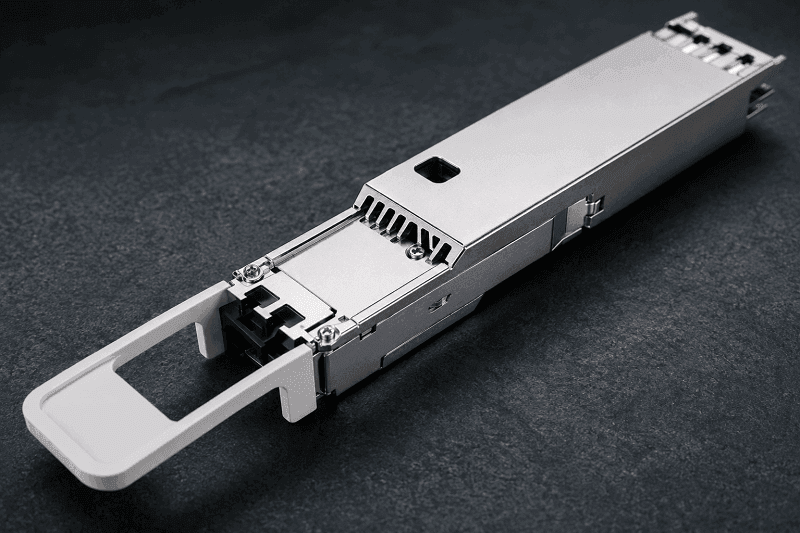
The QSFP-DD form factor, beloved for its port density, has a practical thermal ceiling around 14 to 16 watts for coherent-class modules. It just doesn’t move enough heat for the 800G power class.
OSFP does. The larger housing, bigger faceplate, and integrated heatsink options give it the headroom that 24 to 32 watt modules need. That’s why the OIF’s 800ZR work and most vendor roadmaps lead with OSFP.
Nadia, a hardware architect at a switch vendor we work with, went through this exact decision when her team sized a new 32-port platform. QSFP-DD gave them the density on paper. Then they totaled the thermal load: 32 modules at 28 watts plus the switch fabric pushed a fully loaded chassis past 1.5 kilowatts, and the airflow simply wasn’t there. They shipped OSFP.
The practical rule is clean. OSFP for 800G ZR and ZR+. QSFP-DD stays for 400G brownfield and lower-power coherent.
Before you spec any high-power module, verify the host is qualified for the power class under CMIS, not just physically compatible. Our QSFP-DD transceiver guide explains the form factor, and it’s worth reading before you pick a chassis.
If the OSFP versus QSFP-DD call is the sticking point on your build, the 800G DCO coherent OSFP/QSFP-DD ZR/ZR+ portfolio covers both form factors side by side, and we can help you check the power class against your chassis.
800G Coherent and AI Scale-Across: The 2026 Deployment Story
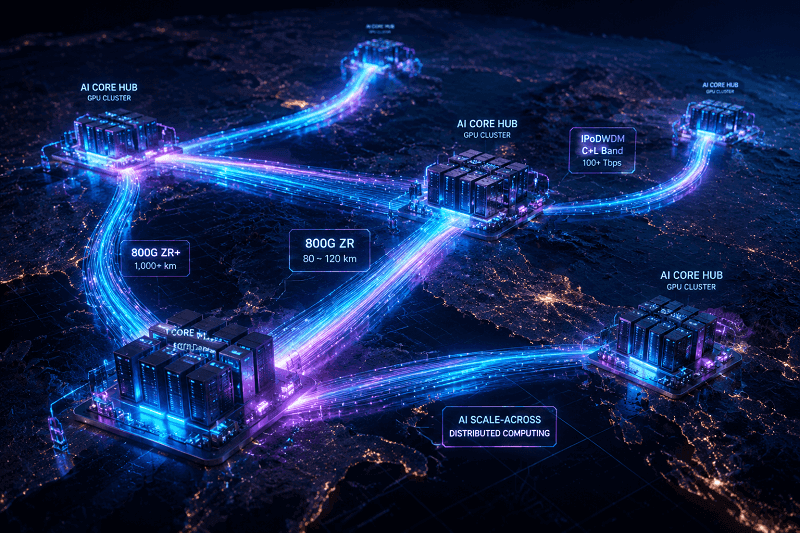
AI is what broke the single-data-center model. Scale-up grew one cluster inside a building. Scale-out spread compute across racks, then across a campus. Scale-across goes further, distributing GPU clusters across metro distances and wiring them into one logical training fabric.
That’s precisely the workload 800G coherent was built for.
The hyperscalers are already there. Cignal AI names Meta as the earliest large 800ZR+ customer with first scale-across deployments, and Microsoft is evaluating 400G-ULH built on the 800ZR+ platform. Cloud operators account for over 80% of deployments. More than a third of IPoDWDM ZR/ZR+ revenue in 2026 is expected to come from 800G modules, and the IPoDWDM systems market is growing about 40%.
Capacity follows the same curve. The classic C-band carries 32 wavelengths. Move to super C+L bands and a single fiber pair supports roughly 100 Tbps. For a metro operator, that’s the “same fiber, more money” upgrade story, and it’s why L-band tunability shows up on 800G module roadmaps.
A deployment checklist for AI scale-across looks like this:
1. Confirm reach and link budget first: span loss, OSNR, ROADM count.
2. Pick the form factor that handles the power class: OSFP for 24 to 32 W.
3. Plan C-band and L-band capacity before you lock wavelengths.
4. Set the interoperable PCS mode: OIF or OpenROADM.
5. Monitor with CMIS/C-CMIS telemetry: pre-FEC BER, OSNR, dispersion.
We’ve written the broader coherent data center interconnect guide for the topology side of this, from dark fiber to DWDM. The module layer is only half the design.
800G ZR/ZR+ Cost and Total Cost of Ownership
Pricing has moved fast, which is good news for buyers. Retail 800G ZR runs roughly 8,000 to 16,000, and 800G ZR+ lands around 12,000 to 20,000 plus, though hyperscaler bulk pricing gets down into the 1,000 to 1,800 range. At launch, 800G carried a 15 to 20% premium over 400G, and that gap is eroding at 8 to 12% a year.
The per-bit math favors 800G on most real links. One 800ZR at about 10,000 retail beats two 400 ZR modules totaling roughly 13,000, with half the ports and less power. And when you count the line system, the gap widens. IP-over-DWDM with coherent pluggables cuts CAPEX by 40 to 65% and OPEX by 50 to 76% by eliminating transponder shelves entirely.
Tomas, the engineering lead at a regional provider, lived this. He had three racks of 100G transponder shelves chewing power and floor space for a 600-kilometer route. He replaced them with 800G ZR+ modules in the routers, freed two racks, and cut the route’s power draw by more than half. The payback period surprised even his CFO.
One practical caveat on procurement: 800G coherent DSPs rely on advanced 3nm CMOS, and lead times are running past nine months. If your build is date-constrained, order early. Our QSFP-DD price guide has the 400G/800G pricing context, and the market analysis of 800G ZR/ZR+ coherent pluggable modules covers the demand side.
800G ZR/ZR+ Compatibility and Interoperability
Compatibility is where 800G coherent either shines or quietly becomes a project. The good news: multi-vendor interoperability is the design intent, proven in public demos. FiberMall participated in the OFC 2024 400G ZR + 800G ZR demonstration with Cisco, Juniper, Ciena, NEC, and Lumentum over 8×100 km and 8×125 km spans. That’s the OIF process working as designed.
ZR+ adds the OpenROADM interoperable PCS layer on top. The nuance is that “interoperable” still assumes matched firmware and DSP generations at both ends. Mix a first-gen ZR+ module with a brand-new one and you can lose the PCS modes you paid for. Acacia’s write-up is the best plain-language explanation of what interoperable PCS actually means in practice.
Before you buy, confirm the host qualification. Check the power class under CMIS, the EEPROM and firmware compatibility, and whether your switch vendor lists the module on its supported matrix. Cisco, Arista, and Nokia all qualify 800G ZR/ZR+ modules, but each has a specific list.
Coherent modules also expose real telemetry: pre-FEC BER, OSNR, chromatic dispersion, and polarization effects. That telemetry is what catches a degrading link before it drops, and it’s worth insisting on.
800G Coherent FAQ
What is 800G ZR?
800G ZR is a coherent pluggable defined by the OIF 800ZR Implementation Agreement (October 2024). It carries a fixed 800G signal over 80 to 120 kilometers on a single wavelength, running DP-16QAM at about 118 Gbaud in an OSFP or QSFP-DD module.
What is the difference between 800G ZR and 800G ZR+?
800G ZR is a fixed-rate, point-to-point module good to about 120 kilometers. 800G ZR+ adds probabilistic constellation shaping and higher launch power, extending reach past 1,000 kilometers and adding flexible rates from 100G to 800G.
How far can 800G ZR transmit?
About 80 to 120 kilometers on an amplified single span, and roughly 75 kilometers unamplified. 800G ZR+ reaches 1,000 kilometers or more, with some vendors quoting up to 1,700 kilometers at 800G and about 3,000 kilometers at 400G.
Is 800G ZR interoperable between vendors?
Yes, by design. The OIF standard and the OpenZR+/OpenROADM PCS layer enable multi-vendor interoperability, demonstrated publicly at OFC 2024 with modules from Cisco, Juniper, Ciena, NEC, Lumentum, and FiberMall.
Why is 800G ZR+ demand higher than 800G ZR?
Because the bill of materials is nearly identical and ZR+ does more: longer reach, flexible rates, and ROADM support. Cignal AI expects ZR+ revenue to jump from about 100 million in 2025 to nearly 1 billion in 2026.
Does 800G ZR need OSFP or QSFP-DD?
OSFP is the practical answer for most deployments. 800G ZR draws 24 to 25 watts and ZR+ draws 26 to 32, above the QSFP-DD thermal ceiling of roughly 14 to 16 watts for coherent modules.
Is 800G coherent replacing 400G ZR?
It’s displacing it on new metro builds. Dell’Oro sees 400G ZR’s share dropping from about 93% in 2025 to 61% in 2026 as 800G climbs to roughly 35%. 400G ZR still makes sense for short metro links and brownfield QSFP-DD networks.
Build 800G Coherent Into Your Network with Confidence
The 800G ZR and ZR+ picture is simpler than the acronym soup suggests. 800G ZR is the OIF-standardized, 120-kilometer metro workhorse. 800G ZR+ stretches to 1,000-plus kilometers with PCS and flexible rates.
OSFP handles the power; QSFP-DD mostly doesn’t. And AI scale-across is fueling the fastest coherent ramp in history, with a 145% CAGR and a million units projected by 2030.
Start with the link budget, not the module. Confirm reach, pick ZR or ZR+ by distance and ROADM count, choose the form factor that cools the module, and check host qualification before you order. The 800G DCO OSFP and QSFP-DD ZR/ZR+ modules cover exactly these variants if you’re ready to compare them side by side.
Sizing a link for your own network? Send us your distances and link budget, and the FiberMall engineering team will map them against the 800G ZR family. Request a quote from our networking experts.
Related Products:
-
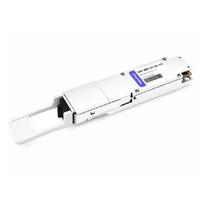
 OSFP-800G-DCO-ZR+-HTx 800G Coherent High TX Power OSFP DCO ZR+ C-band Tunable Optical Transceiver Module
$12000.00
-
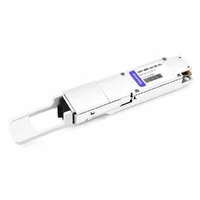
OSFP-800G-DCO-ZR-HTx 800G Coherent High TX Power OSFP DCO ZR C-band Tunable Optical Transceiver Module
$11000.00
-
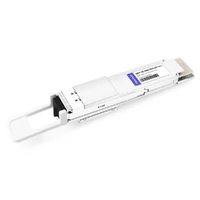
QSFP-DD-800G-DCO-ZR+-HTx 800G Coherent High TX Power QSFP-DD DCO ZR+ C-band Tunable Optical Transceiver Module
$12000.00
-
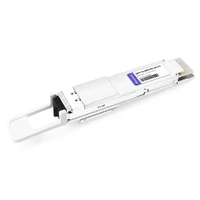
QSFP-DD-800G-DCO-ZR-HTx 800G Coherent High TX Power QSFP-DD DCO ZR C-band Tunable Optical Transceiver Module
$11000.00