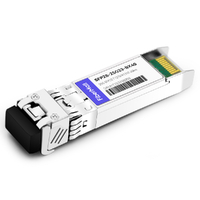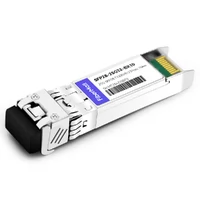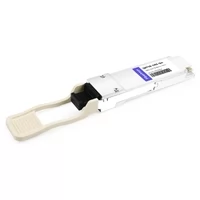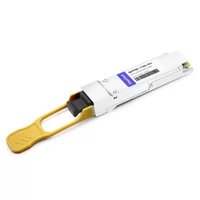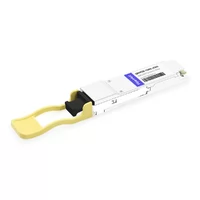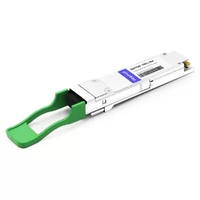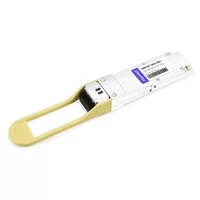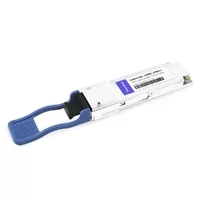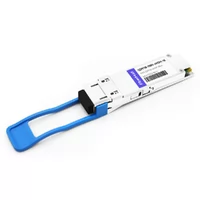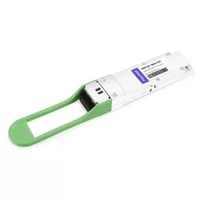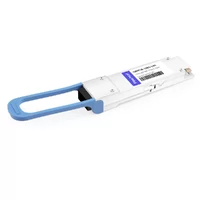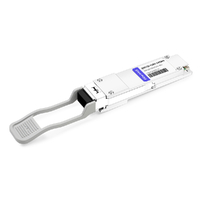

Last spring, a network lead named Marcus signed off on a hundred QSFP28 SR4 modules for what the team called their 100G upgrade. The optics arrived, the rack went in, and then someone finally read the server spec sheet: every NIC was 25G, and the top-of-rack switch had nothing but SFP28 cages. Not one QSFP port.
Tens of thousands of dollars in modules sat in a drawer while the team scrambled for SFP28 spares. The QSFP vs SFP mistake is almost never about speed. It’s about putting the wrong form factor at the wrong layer.
If you’ve ever stood in front of a switch and wondered whether a port takes an SFP or a QSFP module, you’re not alone. The two families share a name, a latch, and a rough shape, yet they serve completely different jobs in a network. This guide gives you one comparison table, one worked port budget, and one decision tree so you can pick the right optical transceiver module for every layer. We’ll cover the single-lane vs quad-lane difference, port density, power and cost per gigabit, LC vs MPO connectors, where each family wins, and how breakout lets the two cooperate.
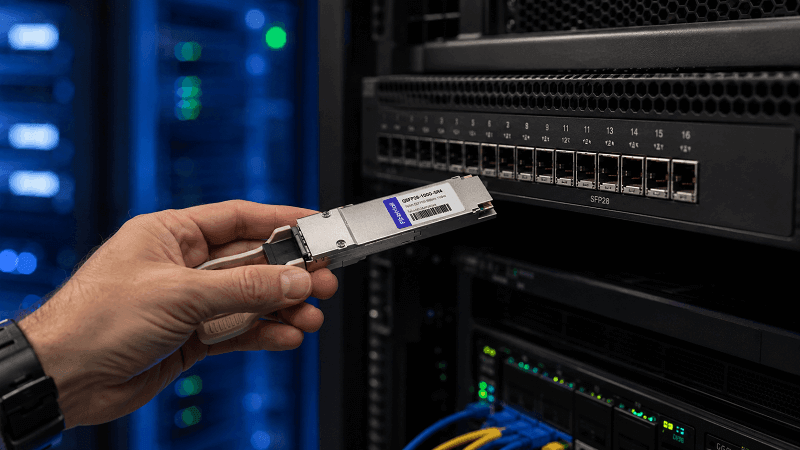
QSFP vs SFP at a Glance
Start with the matrix. This is the reference worth keeping open during any design review, because it shows the whole progression from single-lane SFP to quad-lane QSFP in one place.
| Form factor | Lanes | Line rate | Relative size | Typical power | Connector | Typical role |
| SFP | 1 | 1G | smallest | under 1W | LC (duplex) | Legacy access, management |
| SFP+ | 1 | 10G | smallest | 1-1.5W | LC (duplex) | 10G server and ToR links |
| SFP28 | 1 | 25G | smallest | 1.5-2W | LC (duplex) | 25G access, modern ToR |
| QSFP+ | 4 | 40G | larger | 1.5-3.5W | MPO or LC | 40G aggregation, legacy core |
| QSFP28 | 4 | 100G | larger | 3.5-5.5W | MPO or LC | 100G spine, DCI, uplinks |
Notice the pattern. SFP stays single-lane and small, topping out at 25G. QSFP goes quad-lane and keeps climbing past 100G. Everything else in this guide is a consequence of that one choice.
Want the bigger picture on the quad-lane side? The complete QSFP transceiver family guide walks every generation from QSFP+ to QSFP-DD and the road to 800G.
The Core Difference: Single-Lane vs Quad-Lane
The difference between QSFP and SFP comes down to lanes. An SFP module drives one optical lane, so it tops out at 25G in its SFP28 form. A QSFP module drives four parallel lanes, so a single QSFP28 port carries 100G, the bandwidth of four SFP28 ports, in roughly twice the faceplate width.
Lane count is the whole story. SFP, SFP+, and SFP28 each push a single lane at 1G, 10G, and 25G. QSFP bundles four lanes, which is why the family name starts with “quad,” short for Quad Small Form-factor Pluggable. Four lanes at 10G give you QSFP+ at 40G. Four lanes at 25G give you QSFP28 at 100G. The pattern repeats at every speed: SFP+ vs QSFP+ is one 10G lane against four, and SFP28 vs QSFP28 is one 25G lane against four.
The rates come from IEEE 802.3, which defines 1G through 100G Ethernet and beyond. The form factors come from SFF specifications such as SFF-8431 for SFP+ and SFF-8665 for QSFP28, so a compliant module fits any vendor’s cage. The quad-lane idea keeps scaling past 100G into 200G, and with the wider QSFP-DD cage, into 400G and 800G. Lane architecture, not the logo on the label, decides where a module belongs.
Port Density and Physical Footprint
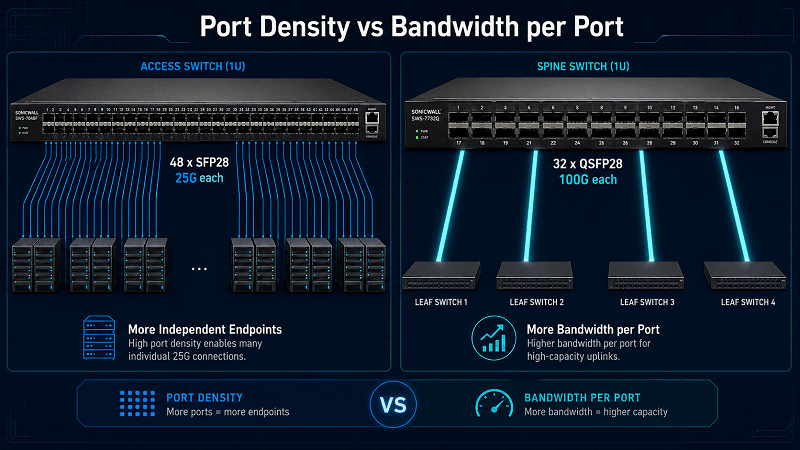
SFP and QSFP modules aren’t the same size, and that matters the moment you run out of faceplate. An SFP cage is narrow, so a 1U switch can carry 48 or more SFP28 ports. A QSFP cage is roughly twice as wide, so the same 1U panel fits far fewer QSFP28 ports, often 32 to 36 in a high-density spine.
The two solve opposite density problems. SFP maximizes the number of independent endpoints you can land in a rack. QSFP maximizes the bandwidth you can push through a single port. A 48-port SFP28 switch fans out to 48 servers. A 32-port QSFP28 spine aggregates 3.2 terabits of uplink capacity in the same rack unit.
Power, Heat, and Cost per Gigabit
Absolute watts favor SFP. An SFP28 module draws around 1.5 to 2 watts, while a QSFP28 module draws 3.5 to 5.5 watts. If you only counted watts per module, SFP would win every time.
Cost per gigabit flips that math. One QSFP28 port delivers 100G for roughly 5 watts, about 0.05 watts per gigabit. Four SFP28 ports deliver the same 100G for 6 to 8 watts, plus four switch ports and four cables. At the aggregation layer, quad-lane is usually cheaper per bit and cooler per bit, even though each module runs hotter.
A data center architect named Priya learned this the hard way when she budgeted a spine refresh on per-module price alone. The QSFP28 optics cost more each, but they replaced four SFP28 ports and four patch cords per link. Her total cable count dropped, and her per-gigabit power fell by almost a third. Module price and system cost are rarely the same number.
Indicative street pricing follows the same pattern. A 25G SFP28 SR module often runs 20 to 60, while a 100G QSFP28 SR module runs 200 to 500, depending on reach and coding (2026 estimates). The QSFP module looks four to eight times pricier until you divide by the four ports it replaces. Treat these as ranges, not quotes, and confirm current pricing before you commit.
Connectors: LC vs MPO
Connector choice follows the lane count. Every SFP module uses a duplex LC connector, one strand for transmit and one for receive. It’s the same small latch you’ve used since 1G, and it plugs straight into a standard LC patch panel.
QSFP splits by optics type. Multimode SR4 modules use a single MPO connector that carries all four lanes on one ribbon. Single-mode LR4 modules use duplex LC, because they multiplex four wavelengths onto one fiber pair. Your cable plant decides which is cheaper: an MPO trunk with breakout harnesses, or duplex LC with wavelength-multiplexed optics. The QSFP cable and MPO breakout guide walks through both.
QSFP vs SFP: Where Each One Wins
So QSFP vs SFP, which is better? Neither. They win at different layers, and a real network needs both. Frame it as SFP vs QSFP or the reverse and the answer is the same: match the form factor to the layer. Here’s the short version:
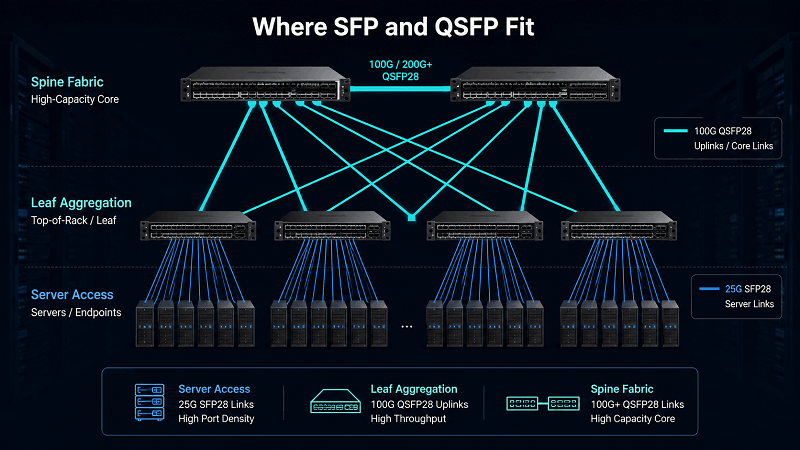
- SFP wins at the access layer. Server downlinks, storage, management ports, and anything at 1G, 10G, or 25G belong on SFP cages. You need many independent links, one per endpoint, and single-lane modules give you that granularity cheaply.
- QSFP wins at the aggregation and spine layers. Uplinks, spine-to-leaf, data center interconnect, and anything at 40G or 100G belong on QSFP cages. You need fat pipes, and quad-lane modules deliver the most bandwidth per port and per watt.
The coexistence pattern is the norm. A modern row runs SFP28 down to servers and QSFP28 up to the spine, which is exactly the design the worked example below uses. For the single-lane side in more depth, browse the 25G SFP28 articles in our transceiver library.
Breakout: When QSFP and SFP Work Together
Breakout is the bridge in the whole QSFP vs SFP decision, and it’s the part most comparisons skip. A 100G QSFP28 port can split into four independent 25G lanes using an MPO-to-4xLC harness. One quad-lane port becomes four single-lane ports.
A network engineer named Elena used exactly this when her new spine switch arrived before her access switches did. She broke one 100G QSFP28 spine port into four 25G SFP28 server links, freed up four ports on the aging top-of-rack switch, and avoided buying a new line card. When the access switches were refreshed six months later, she collapsed the breakout back into a native 100G uplink. The same port served two designs, half a year apart.
Breakout makes sense when you need to land 25G endpoints from a 100G port, or when you’re mid-migration between SFP28 access and QSFP28 aggregation. It doesn’t make sense when you could simply use native SFP28 ports, because breakout adds a harness and some cabling complexity. Use it as a bridge, not a destination.
A Worked Example: A 48-Port Top-of-Rack Switch
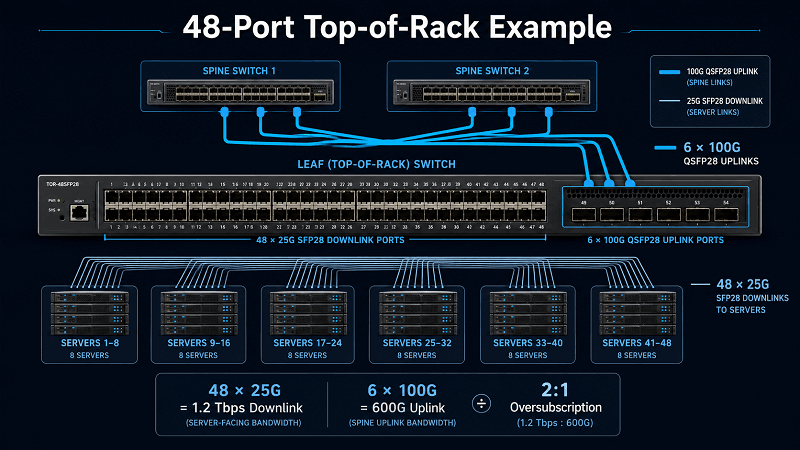
Here’s the arithmetic most comparison articles never show. Picture a 1U top-of-rack switch with 48 SFP28 server ports and 6 QSFP28 uplink ports, a common leaf layout.
Downlink side: 48 servers, each on one 25G SFP28 link. That’s 48 single-lane ports, one per endpoint, at 25G each. Nothing fancy, and exactly what SFP is for.
Uplink side: you need enough northbound bandwidth to avoid oversubscribing those 48 servers. Six QSFP28 ports at 100G give you 600G of uplink, a 2:1 oversubscription ratio against 1.2 terabits of downlink. If you’d bought QSFP28 modules for the server side, as Marcus did, none of them would fit the SFP28 cages. If you’d bought only SFP28 and tried to uplink on it, you’d need 24 single-lane ports to match six quad-lane ones, and the switch doesn’t have them.
Choose the form factor by the layer, and the port budget works itself out. Choose it by the marketing name on the upgrade, and you get a drawer full of stranded modules.
Planning a 100G spine of your own? The complete QSFP28 100G guide compares SR4, LR4, CWDM4, and PSM4 so you can match the optics to the reach.
How to Choose: A QSFP vs SFP Decision Tree
Strip the choice down to four questions, in order:
1. What rate do you need? At 1G, 10G, or 25G per link, you’re in SFP territory. At 40G or 100G, you’re in QSFP territory.
2. What role does the link play? Endpoints and server downlinks point to SFP. Uplinks, spines, and interconnects point to QSFP.
3. How dense is the panel? Many independent links favor SFP. Maximum bandwidth per port favors QSFP.
4. What does the fiber plant support? Duplex LC favors SFP and single-mode QSFP. MPO trunks favor multimode QSFP and breakout.
Run those four questions and the answer is usually obvious. When it isn’t, the tiebreaker is almost always the layer, not the speed. For the generation-by-generation view on the quad-lane side, the QSFP+ vs QSFP28 vs QSFP56 detailed comparison shows how the NRZ generations stack up.
FAQ
What is the difference between QSFP and SFP?
The QSFP vs SFP difference is lane count. SFP modules carry one optical lane and top out at 25G, while QSFP modules carry four parallel lanes and reach 40G or 100G. SFP fits more endpoints in a panel; QSFP moves more bandwidth per port.
Is QSFP faster than SFP?
Per port, yes. A QSFP28 port carries 100G, four times the 25G of an SFP28 port. But “faster” only matters at the layer that needs it. A 25G server doesn’t get faster because you plugged it into a 100G port.
Can I use an SFP module in a QSFP port (or vice versa)?
Not directly. The cages are different sizes, so a module only fits its own cage. Some switches accept an SFP module in a QSFP cage through a mechanical adapter, and breakout lets one QSFP port feed four SFP modules. But you can’t force an SFP module to run as a native QSFP link.
QSFP vs SFP: which is better?
Neither is universally better. SFP is better for many independent, lower-rate access links. QSFP is better for fewer, fatter aggregation and spine links. Most networks need both, connected by breakout.
What is the difference between SFP28 and QSFP28?
Both run 25G per lane, but SFP28 carries one lane for 25G total while QSFP28 carries four lanes for 100G total. Same lane rate, different lane count, different job.
Do QSFP and SFP use the same cable?
Sometimes. Both can use duplex LC single-mode or multimode fiber. Multimode QSFP SR4 uses a single MPO connector instead of LC, so it needs an MPO trunk or a breakout harness. Match the connector to the optics, not the family name.
Conclusion: Two Layers, One Network
QSFP vs SFP isn’t a rivalry to settle. It’s two layers of the same network. SFP gives you many independent, low-rate links at the access layer. QSFP gives you a few fat, high-rate pipes at the aggregation and spine layers. Choose the form factor by the layer, connect the two with breakout, and the port budget takes care of itself.
Marcus eventually swapped those stranded QSFP28 modules for SFP28 spares and redeployed the quad-lane optics where they belonged, at the spine. The fix wasn’t faster gear. It was the right form factor at the right layer. That’s the whole QSFP vs SFP decision.
Ready to spec the links for your fabric? Explore Optical Transceiver Solutions or reach out and we’ll help you match modules to every layer.
Related Products:
-
 SFP28-25G-SR 25G SFP28 SR 850nm 100m LC MMF DDM Transceiver Module
$25.00
SFP28-25G-SR 25G SFP28 SR 850nm 100m LC MMF DDM Transceiver Module
$25.00
-
SFP28-25G-ESR 25G SFP28 ESR 850nm OM3 200m/OM4 300m LC MMF DDM Transceiver Module
$35.00
-
SFP28-25G-ER 25G SFP28 ER 1310nm 40km LC SMF DDM Transceiver Module
$125.00
-
SFP28-25G32-BX40 25GBASE SFP28 BIDI ER TX1310nm/RX1270nm 40km LC SMF DDM Optical Transceiver Module
$180.00
-
SFP28-25G23-BX40 25GBASE SFP28 BIDI ER TX1270nm/RX1310nm 40km LC SMF DDM Optical Transceiver Module
$180.00
-
SFP28-25G32-BX10 25G BX BIDI SFP28 TX1330nm/RX1270nm 10km LC SMF DDM Transceiver Module
$42.00
-
QSFP28-100G-SR4 100G QSFP28 SR4 850nm 100m MTP/MPO MMF DDM Transceiver Module
$40.00
-
QSFP28-112G-SR4 112G OTU4 QSFP28 SR4 850nm 100m MTP/MPO MMF DDM Transceiver Module
$50.00
-
H3C QSFP-100G-eSR4-MM850 Compatible 100G QSFP28 eSR4 850nm 200m on OM3/300m on OM4 MTP/MPO MMF DDM Transceiver Module
$75.00
-
QSFP28-100G-IR4 100G QSFP28 IR4 1310nm (CWDM4) 2km LC SMF DDM Transceiver Module
$110.00
-
QSFP28-100G-DR1 100G QSFP28 Single Lambda DR 1310nm 500m LC SMF with FEC DDM Optical Transceiver
$180.00
-
QSFP28-100G-PSM4 100G QSFP28 PSM4 1310nm 500m MTP/MPO SMF DDM Transceiver Module
$180.00
-
Huawei QSFP-100G-eCWDM4 Compatible 100G QSFP28 eCWDM4 1310nm 10km LC SMF DDM Transceiver Module
$200.00
-
QSFP28-100G-FR1 100G QSFP28 Single Lambda FR 1310nm 2km LC SMF with FEC DDM Optical Transceiver
$215.00
-
QSFP28-100G-LR1 100G QSFP28 Single Lambda LR 1310nm 10km LC SMF with FEC DDM Optical Transceiver
$265.00
-
QSFP28-100G-SR1.2 Single Rate 100G QSFP28 BIDI 850nm & 900nm 100m LC MMF DDM Optical Transceiver
$280.00
-
QSFP28-100G-LR4 100G QSFP28 LR4 1310nm (LAN WDM) 10km LC SMF DDM Transceiver Module
$285.00
-
QSFP28-100G-SWDM4 100G QSFP28 SWDM4 850nm-940nm 100m LC MMF DDM Optical Transceiver
$300.00
-
QSFP28-100G-LR4-20 100G QSFP28 LR4 1310nm LWDM4 20km LC SMF DDM Transceiver Module
$300.00
-
QSFP28-112G-LR4 112G OTU4 QSFP28 LR4 1310nm (LAN WDM) 10km LC SMF DDM Transceiver Module
$350.00