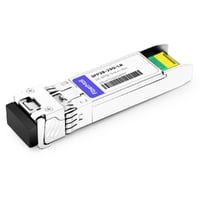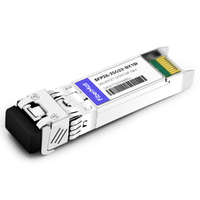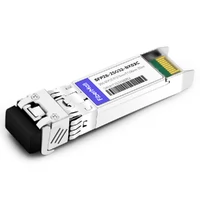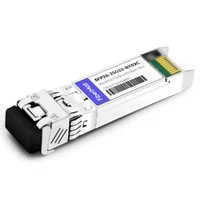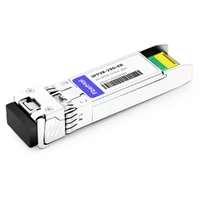

Ask three vendors for an SFP28 price and you’ll get three different numbers, many of them hidden behind a “request a quote” button. That’s a real problem when you’re budgeting dozens or hundreds of 25G ports and the difference between purchasing paths can easily reach tens of thousands of dollars.
This guide fixes that. You’ll get practical 2026 price references for common SFP28 module types, the real gap between OEM and third-party optics, volume discount tiers worth negotiating for, and a 3-year TCO model you can adapt for your next budget review. No fluff, no “contact us” runaround. Just the numbers network engineers and procurement teams actually need.
Fair warning up front: SFP28 prices move around. Tariff policy, regional distribution, component supply, temperature grade, vendor coding, and order volume can all affect the final price. Treat everything below as planning guidance rather than a binding quote. Publicly listed prices referenced in this guide were checked in August 2026.
Before we get into the tables, one quick note on context. This article is the pricing deep-dive in our complete SFP28 transceiver guide. If you need a refresher on the 25G standard, form factors, and reach specs, that’s the place to start.

SFP28 Price by Module Type
Here’s the practical answer to “how much does an SFP28 module cost?” For a typical 25GBASE-SR module in single-unit quantities, third-party pricing commonly falls around $20 to $55, while public-channel OEM pricing can be several hundred dollars or more. For 25GBASE-LR, third-party pricing commonly falls around $40 to $90, while OEM equivalents can cost several hundred to well over $1,000 depending on the vendor, reseller, temperature grade, and support channel.
The optical type, reach, wavelength technology, and sourcing model all have a major impact on what you pay.
Third-Party SFP28 Pricing (SR, LR, ER, BiDi, CWDM, DWDM)
Third-party “compatible” modules are designed around the same SFP28 electrical and optical standards as OEM modules and may use optical components from the same major component suppliers. However, you should not assume that the laser, photodiode, driver IC, or other internal components are identical to those used in an OEM module.
The most important differences are usually vendor coding, EEPROM identification data, qualification process, branding, support model, and supply chain.
Here are useful 2026 third-party reference prices based on publicly listed FiberMall pricing observed in August 2026:
| Module type | Current third-party reference price | Typical reach |
| 25GBASE-SR (850 nm) | ~$25 | 70 m OM3 / 100 m OM4 |
| 25GBASE-LR (1310 nm) | ~$45 | 10 km |
| 25GBASE-ER (1310 nm) | ~$125 | 40 km |
| 25GBASE-BiDi | ~$42 | 10 km over single fiber |
| 25G CWDM | ~$50 | 10 km |
| 25G DWDM, fixed wavelength | ~$265 | 10 km |
| 25G Tunable DWDM | ~$500 | 10 km |
These are public reference prices, not universal market averages. Compatibility coding, industrial-temperature specifications, wavelength, reach, and order quantity can move the actual price substantially.
The SR-to-LR-to-ER ladder remains one of the biggest technical cost drivers. SR generally uses cost-effective 850 nm VCSEL technology for short multimode links. LR commonly uses a 1310 nm DFB-based transmitter for 10 km single-mode transmission. Longer-reach ER implementations require a significantly larger optical power budget and may use higher-performance transmitter and receiver designs, depending on the implementation.
We cover the full breakdown in our SFP28 module types and reach options article. Rule of thumb: buy the shortest reach that reliably meets your optical budget and link-distance requirements. Paying for 40 km ER optics on a 150-meter link makes little economic sense unless there is another technical requirement that justifies it.
One important distinction: standard 25GBASE-ER is generally specified for up to 40 km over single-mode fiber. Some vendors also offer 30 km “ER Lite” products, but these should not be treated as identical to a standard 40 km ER implementation.
OEM SFP28 Pricing (Cisco, Juniper, Arista, HPE)
OEM SFP28 modules carry a serious premium, especially when you compare public reseller or list pricing with direct third-party optics.
Exact OEM pricing varies dramatically by manufacturer, contract discount, region, reseller, temperature grade, and whether you are looking at list price or negotiated enterprise pricing. The following numbers should therefore be treated as planning ranges rather than universal prices:
| Module type | Illustrative OEM public-channel pricing |
| 25GBASE-SR | ~$600-$900+ |
| 25GBASE-LR | ~$400-$1,400+ |
| 25GBASE-ER | ~$900-$3,700+ depending on grade and vendor |
| 25GBASE-BiDi | ~$500+ |
| Passive DAC (25G) | ~$150+ |
| AOC (25G) | ~$600+ |
For example, publicly listed Cisco 25GBASE-SR SFP28 pricing through major enterprise resellers can exceed $850 per unit before account-specific discounts.
Industrial-temperature and specialized single-mode SKUs can push considerably higher, which is how you can end up purchasing a module costing several thousand dollars for a link that a much less expensive compatible part could technically handle.
That doesn’t automatically mean the cheaper module is the right choice. OEM pricing also reflects qualification, vendor support, supply-chain control, warranty handling, and compatibility assurance.
SFP28 Price Comparison Table
For the quick-scan crowd, here’s the basic comparison. Because OEM contract pricing can differ substantially from public reseller pricing, the premium figures below are illustrative rather than fixed ratios.
| SFP28 product | Third-party reference | OEM public-channel planning range | Potential OEM premium |
| 25GBASE-SR | ~$25 | ~$600-$900+ | Can exceed 20× |
| 25GBASE-LR | ~$45 | ~$400-$1,400+ | Can exceed 10× |
| 25GBASE-ER | ~$125 | ~$900-$3,700+ | Highly vendor-dependent |
| 25GBASE-BiDi | ~$42 | ~$500+ | Can exceed 10× |
| 25G CWDM | ~$50 | Vendor-dependent | Varies |
| 25G DWDM, fixed wavelength | ~$265 | Vendor-dependent | Varies |
| Passive DAC (1-3 m) | ~$35 | ~$150+ | ~4× or more |
| AOC (5-15 m) | ~$180 | ~$600+ | ~3× or more |
Again, these comparisons mix third-party public pricing with OEM public-channel planning values. Negotiated OEM enterprise contracts can narrow the gap substantially.
Reach, fiber type, temperature grade, wavelength technology, vendor coding, and support requirements are what move these numbers. That’s the summary. Now let’s dig into why the OEM premium exists and when it’s worth paying.
OEM vs. Third-Party: The Real Cost Gap
The math on a moderate deployment is hard to ignore.
Say you’re building 40 point-to-point optical links. Each link normally requires one transceiver at each end, so you need 80 modules in total. That is the normal endpoint requirement for the links — not redundancy by itself. A fully redundant topology would require additional links and therefore additional transceivers.
Using a conservative OEM SR planning price of $600 per module, 80 modules come to about $48,000.
Third-party SR modules at roughly $25 to $55 per module would put the same 80-module requirement at approximately $2,000 to $4,400.
That’s the difference between a modest optics line item and a major budget decision.
A procurement lead we work with put it bluntly: “We spec’d OEM for the first 25G deployment because nobody wanted to be the one who risked the core. By the third rack, the savings argument won and we’ve bought third-party ever since.”

Why OEM SFP28 Modules Can Cost Several Times More
OEM modules aren’t necessarily several times better in optical performance simply because they cost several times more.
The premium pays for more than the physical optics. Major equipment vendors maintain compatibility databases, qualify modules against specific hardware and software platforms, control firmware and identification behavior, manage their supply chains, and provide integrated warranty and technical support.
Third-party modules may use comparable laser classes, receivers, and electrical components, but the bill of materials is not necessarily identical.
Another major difference is EEPROM identification and vendor coding. Many switches inspect module identification data before accepting a transceiver. A compatible supplier therefore has to program the module for the target platform and validate that it behaves correctly on that equipment.
When OEM Makes Sense
There are legitimate reasons to pay the premium.
If you operate mission-critical infrastructure where direct OEM TAC escalation is essential, using OEM-qualified optics removes one variable from the troubleshooting process.
Some validated designs, support contracts, regulated environments, and procurement policies may also require approved components.
Certain platforms enforce stricter module validation than others, and support for third-party modules may vary not only by hardware platform but also by software version.
Just be clear-eyed about what you’re buying. In many cases, the additional cost is paying for qualification, compatibility assurance, supply-chain control, and vendor support rather than a proportional increase in raw optical performance.
When Third-Party Is the Smart Choice
Third-party compatible modules can make strong financial sense for access, aggregation, data center leaf, lab, and many production deployments when they are properly qualified.
The important word is qualified.
Do not assume that all third-party optics perform the same. Instead of relying on generic claims about OEM versus third-party failure rates, ask the supplier for actual quality data:
- DOA and RMA rates
- Burn-in or aging-test procedures
- Optical parameter test reports
- Compatibility validation
- Component traceability
- Warranty terms
- Advance replacement availability
A supplier that can provide real test data is far more valuable than one that simply promises “100% compatibility.”
Our SFP28 vendor coding and compatibility guide walks through EEPROM behavior on specific platforms if you want the technical depth.

Warranty and Support Truths
Here’s the part buyers often oversimplify: using a third-party optical module does not necessarily mean that every part of your switch warranty immediately disappears, but neither is it accurate to say that third-party optics can never affect warranty or support coverage.
The actual treatment depends on the equipment vendor, warranty terms, support agreement, jurisdiction, hardware platform, and the cause of the failure.
The U.S. Magnuson-Moss Warranty Act is primarily a consumer-product warranty law and should not be used as a blanket legal argument for enterprise networking equipment purchased for commercial use.
Cisco’s published support policy provides a more useful example. If Cisco believes a fault or defect can be traced to a third-party cable, interface component, memory product, or other unauthorized component, Cisco may withhold support for that issue under warranty or a support program. If Cisco determines that the fault is not attributable to the third-party component, it states that support for the affected Cisco product will continue according to the applicable coverage.
Platform behavior also varies. Some Cisco platforms allow third-party transceivers through an unsupported-transceiver configuration, while other products may accept the hardware but provide limited or no TAC support for interoperability problems.
So the correct question is not simply:
“Will third-party optics void my warranty?”
The better questions are:
“Does my exact platform accept this module, and what support limitations apply if I use it?”
Know the answer before you commit.
SFP28 vs. SFP+: Is 25G Worth the Extra Cost?
The old argument that 25G is dramatically more expensive than 10G has become much weaker.
Third-party 25GBASE-SR optics now cost only modestly more than many 10GBASE-SR products. When the price difference per module is relatively small, the bandwidth advantage becomes much more important.
A 25G link carries 2.5 times the nominal Ethernet bandwidth of a 10G link. That can make the optics cost per gigabit substantially lower even when the 25G module costs slightly more per unit.
More importantly, the economics extend beyond the transceiver itself.
A 25G architecture may require fewer switch ports, fewer server-facing links, less cabling, and fewer chassis to deliver the same aggregate bandwidth compared with scaling out a 10G design.
That doesn’t mean every existing 10G network should immediately be replaced. If the existing infrastructure meets capacity requirements, migration costs can outweigh the savings.
But for new deployments where servers, switches, NICs, and application requirements already support 25GbE, SFP28 is usually the more scalable starting point.
We cover the compatibility and speed differences in detail in our SFP28 vs. SFP+ comparison. The short version: new builds should default to SFP28. The price gap to SFP+ has collapsed, and starting on 10G means a forklift upgrade a few years down the road.
Volume Discount Tiers
Nobody buying hundreds of modules should blindly pay the same price shown for a single unit.
Volume purchasing can materially reduce SFP28 pricing, but the actual discount depends on supplier margin, module type, wavelength mix, coding requirements, forecast commitment, and contract length.
Rather than treating a specific percentage as guaranteed market pricing, use the following as a negotiation framework:
| Quantity | Typical purchasing approach | Discount expectation |
| 1-10 | Public / single-unit pricing | Baseline |
| 11-50 | Request project pricing | Modest discount |
| 51-100 | Request volume tier | Stronger discount |
| 101-500 | Negotiate project or quarterly pricing | Material discount |
| 500+ | Request dedicated quotation | Quote-dependent |
| Frame agreement (5,000+) | Negotiate annual or multi-period pricing | Fully negotiated |
Large frame agreements can deliver much better pricing than public single-unit listings, but there is no universal 50%, 60%, or 70% discount rule that applies to every supplier or every SFP28 product.
DWDM, industrial-temperature, BiDi, and long-reach modules also have very different cost structures from basic SR optics, so don’t expect the same discount curve across every SKU.
How to Negotiate Better SFP28 Pricing
A few things that actually work:
- Get multiple compatible suppliers bidding against each other, then use the strongest qualified quote as a benchmark.
- Ask which volume tier your quantity qualifies for instead of accepting the first price offered.
- Don’t accept a flat per-SKU price automatically when a mixed basket could qualify for project-level pricing.
- Ask whether forecast commitments or blanket purchase orders can unlock better pricing.
- Compare landed cost, not just module price. Freight, tariffs, coding, warranty, and replacement service all matter.
Bundle Strategy
Bundling changes the negotiation.
Mix SR modules for short data center links, a smaller number of LR modules for longer runs, and DACs for same-rack connections into one purchasing package.
Even if the supplier does not apply the same discount percentage to every SKU, the larger total order value gives you more negotiating leverage.
The supplier also generally prefers one consolidated PO to five small ones.
Hidden Costs Buyers Forget
Module price is the headline, but it’s not the real cost. Let’s walk the expenses that quietly inflate a 25G optics budget.
Cabling
Passive DACs are usually the cheapest choice for short same-rack and adjacent-rack connections. Depending on length and vendor, a 25G passive DAC may cost only a few tens of dollars.
AOCs cost more but provide longer reach, lower cable weight, and better routing flexibility.
Structured multimode fiber with separate SFP28 SR optics becomes attractive when you need patch-panel flexibility, reusable cabling infrastructure, or distances beyond practical DAC reach.
If you already have OM3 or OM4 fiber installed, reusing that cabling can change the economics significantly.
The cabling decision alone can move your per-link cost by several times. Our 25G DAC vs. AOC cable costs guide breaks down when each makes sense.
Power and Cooling
A typical 25G SR transceiver is around the 1 W class, while LR modules are commonly somewhat higher. Long-reach ER, BiDi, DWDM, and industrial-temperature modules may require additional power depending on the optical architecture.
A fully populated high-density 25G switch can therefore consume tens of watts just from the installed optics.
Over a three-year lifecycle, that contributes to both electricity consumption and cooling load.
This is another reason not to deploy long-reach optics where short-reach modules are sufficient. Higher-performance optical components cost more to buy and may also cost more to operate.
Spares and RMA Speed
Every serious deployment needs spares.
How many depends on supplier quality, fleet size, replacement lead time, and operational risk. A reasonable starting point for planning may be around 2-5% of the installed module count or optics budget, then adjusted based on your own failure history and RMA process.
RMA turnaround also matters.
A supplier offering advance replacement can ship the replacement before receiving the failed module, reducing the amount of spare inventory you need to hold locally.
Don’t compare warranty length alone. Compare actual replacement speed.
Vendor Lock-In and EEPROM Coding
Vendor lock-in is a quiet cost.
If every module must come from one source because your switches enforce strict module validation, you lose negotiating leverage on future purchases.
MSA-compliant optics can improve interoperability and sourcing flexibility, but MSA compliance alone does not guarantee that every switch will accept every third-party module. Vendor identification and platform-specific coding still matter.
The ideal sourcing strategy combines standards compliance with verified compatibility on your exact hardware and software versions.
Shipping, Customs, Tariffs, Lead Time
This is the volatile part.
Tariff policy, customs classification, regional distribution, exchange rates, and supply conditions can all move landed pricing.
A module quoted at $40 from one region may not actually cost $40 after freight, duties, local taxes, and handling.
Lead times can also stretch during demand spikes or component shortages.
For early-stage budgeting, a 10-15% contingency can be useful when landed costs are still uncertain. Once you have final quotations, replace that buffer with actual freight, tariff, and tax numbers.
Always compare current landed cost rather than relying on last quarter’s price sheet.
TCO Analysis: 3-Year Cost Modeling
Let’s put the pieces together with an illustrative deployment model.
Unlike a simple module-price comparison, a useful TCO model should state its assumptions so the numbers can actually be reproduced.
For the example below, we use the following planning assumptions:
- Third-party SR planning price: $35 per module
- OEM SR planning price: $600 per module
- Average optical power: 1.2 W per populated port
- Operation: 24 hours per day, 365 days per year
- Lifecycle: 3 years
- Electricity rate: $0.15/kWh
- PUE for facility power and cooling: 1.5
- Spare inventory: 5% of optics cost
- Cabling: illustrative mixed DAC/AOC/fiber deployment budget
- Vendor support contracts: excluded because they vary too widely by customer and equipment platform
| Deployment | 50 ports | 200 ports | 1,000 ports |
| Optics — third-party SR | ~$1,750 | ~$7,000 | ~$35,000 |
| Optics — OEM SR | ~$30,000 | ~$120,000 | ~$600,000 |
| Cabling — mixed DAC/AOC/fiber | ~$9,000 | ~$35,000 | ~$160,000 |
| Power + cooling over 3 years | ~$355 | ~$1,420 | ~$7,100 |
| Third-party spares — 5% of optics | ~$90 | ~$350 | ~$1,750 |
| OEM spares — 5% of optics | ~$1,500 | ~$6,000 | ~$30,000 |
| Baseline 3-year TCO — third-party | ~$11,200 | ~$43,800 | ~$203,900 |
| Baseline 3-year TCO — OEM | ~$40,900 | ~$162,400 | ~$797,100 |
The model is intentionally transparent so you can replace the assumptions with your own electricity price, module quotation, cable mix, spare ratio, and support contract.
The pattern is clear: with low-cost third-party optics, cabling can become one of the largest line items. With OEM optics, the transceiver cost itself can dominate the TCO.
At 1,000 populated ports in this illustrative model, the difference between the two sourcing strategies is approximately $590,000 over three years before platform-specific support contracts.
That’s why procurement choices matter.
One upgrade team we spoke with swapped an all-OEM 25G build for mixed third-party optics and DACs mid-project. They saved six figures on the optics line alone, kept the same deployment architecture, and used part of the freed budget to expand switching capacity.
The lesson isn’t that every network should abandon OEM optics.
It’s that optics sourcing should be treated as an engineering and TCO decision, not an automatic brand choice.

SFP28 Price Trends & Market Outlook
The 25G market continues to expand even as mainstream module pricing declines.
Market research estimates the global SFP28 market at approximately $1.8 billion in 2024, with projections approaching $3.5 billion by 2031. That corresponds to a compound annual growth rate of approximately 9.9%.
Volume grows while mainstream unit prices decline — a familiar pattern for a maturing optical technology.
One 2026 market study estimated average global SFP28 pricing at approximately $335 per unit in 2024.
That number should not be confused with the price of a normal 25GBASE-SR module.
The market average mixes inexpensive SR and LR products with higher-cost industrial modules, long-reach optics, DWDM products, specialized wavelengths, and other SFP28 variants.
In practice, mainstream SR and LR transceivers sell for far less than the blended industry average.
When to Buy vs. When to Wait
Price erosion argues for buying when you actually need capacity rather than delaying an infrastructure project purely in the hope that modules will become a few dollars cheaper.
The operational cost of running a constrained network can easily exceed the savings from waiting.
The exception is a very large future deployment where the schedule is flexible and you expect a new supplier contract, product generation, or volume commitment to materially change landed cost.
If you’re weighing timing, our 10G-to-25G migration TCO analysis covers the decision framework in more detail.
For 100G QSFP28 economics, including breakout strategies, see our QSFP28 price guide.
FAQ
How much does an SFP28 module cost?
It depends heavily on reach and sourcing. As an August 2026 reference, third-party 25GBASE-SR modules can be found around $25, while LR modules are around $45 from some compatible suppliers. A standard 40 km ER module can start around $125. Fixed-wavelength 10 km DWDM modules cost considerably more, around $265 in current public FiberMall pricing, while tunable 10 km DWDM modules are around $500.
OEM public-channel pricing can be several times higher and, for some SKUs, more than ten times the price of a low-cost compatible module.
Are third-party SFP28 modules reliable?
High-quality third-party modules can be reliable, but there is no single failure-rate percentage that accurately represents the entire third-party market.
Evaluate the supplier rather than the label. Ask for compatibility testing, burn-in procedures, RMA history, optical test data, warranty terms, and component traceability.
A properly qualified compatible module is very different from an unknown module purchased solely because it is cheap.
Do third-party modules void my switch warranty?
Not automatically in every case, but the answer depends on the equipment vendor and support agreement.
For example, Cisco states that it may withhold support when it believes a fault can be traced to an unauthorized third-party component. If the fault is determined not to be attributable to that component, Cisco states that support for the affected Cisco product can continue under the applicable coverage.
The U.S. Magnuson-Moss Warranty Act should not be treated as a blanket rule for commercial enterprise networking equipment because it primarily governs consumer-product warranties.
Always check the exact warranty and support policy for your platform.
Why are OEM SFP28 modules so expensive?
You’re paying for more than the optical components.
OEM pricing can include platform qualification, compatibility validation, supply-chain control, firmware and coding management, certification, inventory, channel margin, technical support, warranty handling, and brand premium.
The physical optical performance may be similar to a qualified compatible module, but the surrounding support model is different.
SFP28 vs. SFP+ cost: is 25G worth it?
For many new deployments, yes.
25GbE delivers 2.5 times the nominal bandwidth of 10GbE while third-party 25G SR optics now cost only modestly more than many 10G SR products.
That often gives 25G a better optics cost per gigabit and can reduce the number of ports required to deliver a given amount of aggregate bandwidth.
Existing 10G networks that still meet capacity requirements do not necessarily need immediate replacement, but new server and access designs should seriously consider SFP28 when the host and switch platforms already support 25GbE.
Conclusion
Here’s the short version.
SFP28 price depends primarily on module type, optical reach, wavelength technology, sourcing model, temperature grade, and order volume.
As of August 2026, publicly listed FiberMall reference pricing puts mainstream third-party 25GBASE-SR around $25, LR around $45, standard 40 km ER around $125, 10 km BiDi around $42, 10 km CWDM around $50, fixed-wavelength 10 km DWDM around $265, and tunable 10 km DWDM around $500.
OEM public-channel pricing can be several times higher and, for some products, more than ten times higher than low-cost compatible optics. Negotiated enterprise OEM pricing may narrow that gap substantially.
Volume purchasing can reduce compatible-module pricing further, but discounts should be treated as quote-dependent rather than assumed percentages.
And the real money is in TCO.
Once you model optics, cabling, power, cooling, spares, and support separately, the sourcing decision on a 1,000-port deployment can change the three-year budget by hundreds of thousands of dollars.
Price your links by actual reach. Use DACs where short copper connections make sense. Use SR where multimode fiber is appropriate. Don’t pay for ER or DWDM unless the optical requirement justifies it. Qualify third-party optics on the exact switch and software version before deployment. And negotiate volume instead of automatically paying public list price.
That combination is where the meaningful savings live.
Need current numbers for your specific quantity and module mix? Explore current 25G SFP28 pricing and compatible modules at FiberMall, or request a quote from our networking team. Budgets are easier to defend when the assumptions are visible and the numbers are current.
Related Products:
-
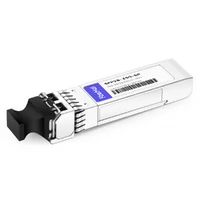
 SFP28-25G-SR 25G SFP28 SR 850nm 100m LC MMF DDM Transceiver Module
$25.00
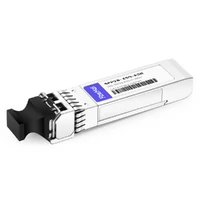
SFP28-25G-SR 25G SFP28 SR 850nm 100m LC MMF DDM Transceiver Module
$25.00
-
SFP28-25G-ESR 25G SFP28 ESR 850nm OM3 200m/OM4 300m LC MMF DDM Transceiver Module
$35.00
-
SFP28-25G32-BX10 25G BX BIDI SFP28 TX1330nm/RX1270nm 10km LC SMF DDM Transceiver Module
$42.00
-
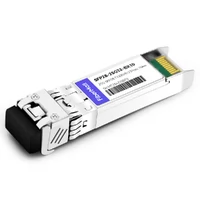
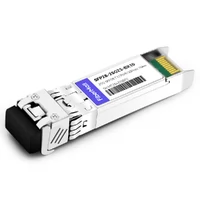
SFP28-25G23-BX10 25G BX BIDI SFP28 TX1270nm/RX1330nm 10km LC SMF DDM Transceiver Module
$42.00
-
SFP28-25G-LR 25G SFP28 LR 1310nm 10km LC SMF DDM Transceiver Module
$45.00
-
SFP28-25G32-BX10I 25G BX BIDI SFP28 TX1330nm/RX1270nm 10km LC SMF DDM Industrial Transceiver Module
$50.00
-
SFP28-25G23-BX10I 25G BX BIDI SFP28 TX1270nm/RX1330nm 10km LC SMF DDM Industrial Transceiver Module
$50.00
-
SFP28-25G32-BX03C 25G BX BIDI SFP28 TX1330nm/RX1270nm 300m LC SMF DDM Transceiver Module
$58.00
-
SFP28-25G23-BX03C 25G BX BIDI SFP28 TX1270nm/RX1330nm 300m LC SMF DDM Transceiver Module
$58.00
-
SFP28-25G-ER 25G SFP28 ER 1310nm 40km LC SMF DDM Transceiver Module
$125.00
-
SFP28-25G32-BX40 25GBASE SFP28 BIDI ER TX1310nm/RX1270nm 40km LC SMF DDM Optical Transceiver Module
$180.00
-
SFP28-25G23-BX40 25GBASE SFP28 BIDI ER TX1270nm/RX1310nm 40km LC SMF DDM Optical Transceiver Module
$180.00