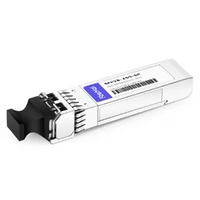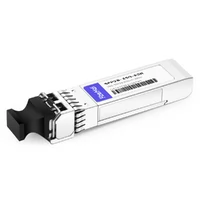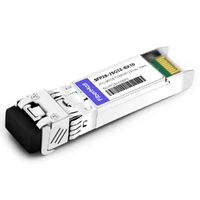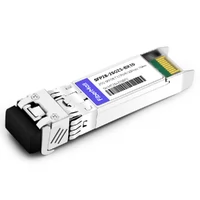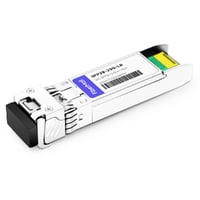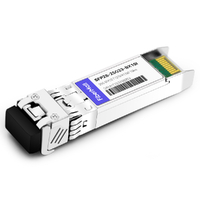

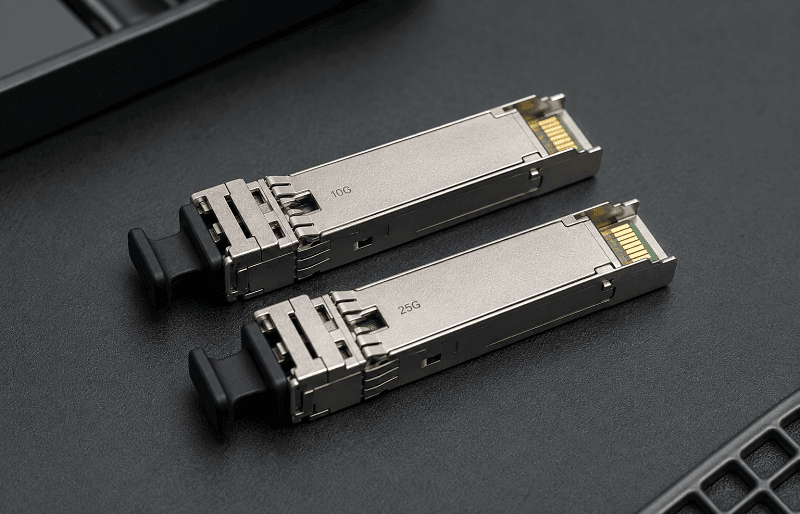
Two modules sit on the bench, identical down to the pull tab and the duplex LC connector. One moves 10 Gbps. The other moves 25 Gbps. You can’t tell them apart by looking.
SFP28 is a hot-pluggable optical transceiver that delivers 25 Gigabit Ethernet over a single electrical lane. It shares the small form factor of SFP and SFP+ but runs about 2.5 times faster, and it follows the IEEE 802.3by standard for 25GBASE-R links.
If you’ve already sorted out SFP vs SFP+ and someone hands you “SFP28,” the natural reaction is: another acronym, another spec sheet. Fair enough. But SFP28 deserves a closer look, because it’s quietly become the default server access module in modern data centers. It’s also the building block that 100G QSFP28 is made of.
By the end of this guide, you’ll know exactly what SFP28 is, what the “28” actually refers to, and where it sits in the SFP family. We’ll cover the key specifications, how the module works in plain language, and the questions engineers ask most when they’re planning 25G links.
Let’s start with the name, since it’s the source of most of the confusion.
What Does SFP28 Stand For?
SFP28 stands for Small Form-Factor Pluggable 28. The “SFP” part you already know from the gigabit modules in enterprise switches. The “28” is where people get tripped up.
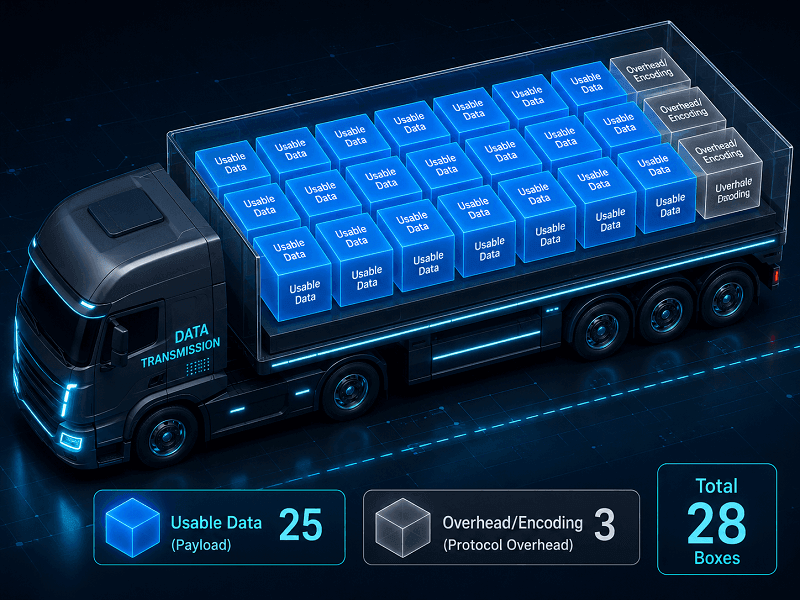
The 28 refers to the raw signaling rate of roughly 28 Gbps on the electrical interface. That raw rate includes encoding overhead, so the usable Ethernet payload ends up at 25 Gbps. Think of it like a delivery truck rated to carry 28 packages: once you account for the packing material and paperwork, about 25 make it through as actual goods.
The IEEE 802.3by standard defines the interface, officially called 25GBASE-R, and the electrical lane runs at 25.78125 Gbps. That’s why you’ll see SFP28 modules described as “25G” in one place and “28G” in another. They’re the same module; the labels are just measuring the raw line rate versus the usable data rate.
One quick note on naming: QSFP28 has the same “28” in its name, but that’s a different animal entirely. The “Q” stands for quad, meaning four 25G lanes that combine for 100 Gbps. We’ll come back to that in the comparison section.
SFP28 at a Glance: Key Specifications
If you only take away one table from this article, make it this one.
| Specification | SFP28 |
| Usable data rate | 25 Gbps |
| Line rate | ~25.78 Gbps |
| Standard | IEEE 802.3by (25GBASE-R) |
| Form factor | SFP (same cage as SFP/SFP+) |
| Lanes | 1 x 25G |
| Encoding | NRZ, 64b/66b |
| Connector | Duplex LC (simplex for BiDi) |
| Fiber types | Multimode (SR) / single-mode (LR, ER) |
| Typical reach | 100 m OM4 (SR), 10 km OS2 (LR) |
| Typical power | 1.0-1.5 W (SR/LR) |
| Monitoring | DDM/DOM via I2C |
| Hot-swap | Yes |
SFP28 modules are hot-pluggable, so you can swap them without powering down the switch. They run on a single 3.3 V supply, and nearly all of them include Digital Diagnostic Monitoring (DDM), sometimes called DOM, which reports optical power, temperature, and laser bias current in real time. That’s genuinely useful when a link drops and you need to know whether the problem is the module, the fiber, or the far end.
Want the full engineering picture across the whole SFP family? Our complete SFP28 transceiver guide covers the specifications and the selection logic in more depth.
How SFP28 Works in Plain Terms
Strip away the jargon and an SFP28 module does what any optical transceiver does. It converts electrical signals from the switch into light for the fiber, then converts incoming light back into electrical signals for the switch.
What makes SFP28 different is how fast it does that work. The module uses a single 25G lane with NRZ modulation, the same modulation scheme as 10G but running at a much higher rate. Because the signal is faster, it degrades more easily over distance, so SFP28 transceivers include a Clock Data Recovery (CDR) circuit that cleans up the electrical signal inside the module.
The other piece engineers notice is Forward Error Correction, or FEC. At 25G, most host ports require Reed-Solomon FEC to keep bit error rates low. RS-FEC takes the link from roughly 5×10^-5 down to about 1×10^-12, which is effectively error-free. That’s why a 25G link works reliably at distances where a naive electrical path would fall apart.
Here’s a story that captures how surprising this can be. A network admin named Marcus was refreshing the server access layer at a mid-sized data center in March 2026. He ordered SFP28 SR modules to replace his 10G SFP+ uplinks, assuming the swap was a simple speed bump.
The modules looked identical to what was already in his leaf switches. But when the first rack came up with marginal signal levels, Marcus had to enable RS-FEC on the ports, reseat a couple of modules, and reterminate one patch panel run before the links settled. Nothing was broken. The engineering assumptions had just changed at 25G.
SFP28 vs SFP, SFP+, and QSFP28: Where Does It Fit?
The fastest way to understand SFP28 is to see the whole SFP family in one row. Here’s the lineup, slowest to fastest.
| Form factor | Data rate | Lanes | Typical use |
| SFP | 1 Gbps | 1 | Enterprise access, legacy gear |
| SFP+ | 10 Gbps | 1 | Server uplinks, storage, aggregation |
| SFP28 | 25 Gbps | 1 | Server access, leaf switches, 5G fronthaul |
| QSFP28 | 100 Gbps | 4 | Spine, data center core |
SFP, SFP+, and SFP28 all share the same physical shell and the same port. The difference is the speed the host port and the module negotiate. That shared form factor is a big deal operationally, because it means you can often reuse existing cabling and, in many cases, the same switch line cards with faster modules.
Backward compatibility follows a simple rule. Higher-speed modules can run in lower-speed ports only if the port supports dual-rate operation, and lower-speed modules can plug into higher-speed ports and simply run at their lower rate. In practice, most SFP28 ports accept 25G, 10G, and 1G modules, and many SFP+ ports accept 10G and 1G. A 25G module in an SFP+ port is the risky case, because it depends entirely on whether the host supports the 25G electrical rate.
We break this down fully in our SFP28 vs SFP+ comparison, complete with a compatibility table and migration advice. For this guide, the short version is that SFP28 is not just a faster SFP+. It’s a new electrical generation, and the host has to support it.
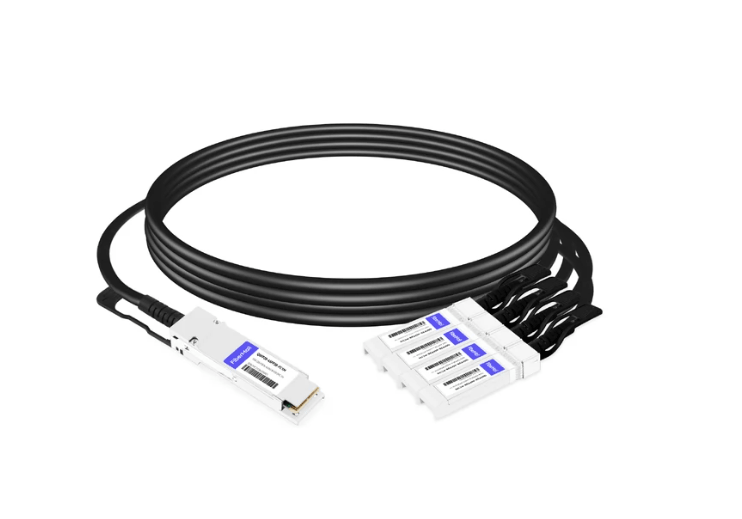
That’s also why SFP28 and QSFP28 aren’t interchangeable. QSFP28 bundles four 25G lanes into a wider module for 100 Gbps. If you want to connect a QSFP28 spine port down to four 25G servers, you use a breakout cable: one 100G port feeding four SFP28 links. That’s a standard leaf-spine pairing, and it’s the reason 25G gets called the building block of 100G.
Common SFP28 Module Types: SR, LR, and Beyond
Most SFP28 deployments come down to two module types, and the choice is mostly about distance and fiber.
25GBASE-SR is the short-reach option. It uses an 850 nm VCSEL laser over multimode fiber and reaches roughly 100 meters on OM4, or 70 meters on OM3. SR is the default for in-rack and same-row connections, like server-to-switch uplinks in a data center.
25GBASE-LR is the long-reach option. It uses a 1310 nm DFB laser over single-mode fiber and reaches about 10 kilometers. LR is the choice when links leave the rack, cross a building, or span a campus.
There’s more variety beyond those two. BiDi modules send and receive over a single fiber, which can cut your fiber requirements in half. CWDM and DWDM variants put SFP28 channels onto specific wavelengths for WDM transport. And for very short runs, 25G DAC cables and AOC cables are common alternatives to optical modules altogether.
One mistake shows up often enough to be worth flagging. A campus network manager named Lena picked 25GBASE-SR modules for a 350-meter inter-building run, because she didn’t want to pay the LR premium.
The links trained at a low speed, then flapped whenever the building’s HVAC kicked in. She reordered LR modules, and the run has been stable since. The distance spec isn’t a suggestion. It’s the difference between a link that works and one that’s always borderline.
We cover all of these options in our guide to SFP28 module types, with a reach and wavelength table you can use as a selection reference.
What Is SFP28 Used For? 25G in the Real World
SFP28 shows up in four places more than anywhere else.
- Server uplinks and leaf switches. This is the big one. When a data center moves its server access layer from 10G to 25G, SFP28 is the module that makes it happen. It delivers 2.5 times the bandwidth per port in the same port count, which matters when rack space and switch ports are the scarce resources.
- AI and cloud clusters. Training clusters and cloud compute nodes need high-bandwidth, low-latency links from each server to the fabric. 25G SFP28 remains the workhorse access rate even as the spine moves to 100G, 200G, or higher.
- 5G fronthaul. The eCPRI links between baseband units and radio units often run at 25G, and ruggedized SFP28 modules handle the industrial temperature ranges these deployments demand.
- Enterprise and edge. Campus uplinks and edge sites that outgrew 10G find 25G a comfortable middle step, before any leap to 100G.
The demand picture is worth putting numbers on. The global 25G SFP28 optical module market was around 1.06 billion in 2025 and is projected to reach roughly 1.4 billion by 2032. Data centers accounted for about 45% of SFP28 module revenue in 2024, the largest single segment.
And 25G/50G SFP module shipments grew more than 28% year over year in 2025, now making up over half of all SFP-family revenue. The 10G-to-25G migration is still the primary driver.
Elena, a network architect planning a new lab, learned this lesson the cheap way. She priced both a 25G access layer and a straight-to-100G design. The 25G option with QSFP28 spines and 4x25G breakout cables came in at roughly half the cost per served port, because it reused the switch generation she already ran. She deployed 25G for server access and reserved 100G for the spine, and her capacity plan now scales port by port instead of all at once.
Common Questions About SFP28
Is SFP28 the same as SFP+?
No. SFP28 runs at 25 Gbps, SFP+ at 10 Gbps. They share the same physical form factor and port, but SFP28 uses a faster electrical interface defined by IEEE 802.3by, and it often needs RS-FEC that SFP+ didn’t.
Can I plug an SFP28 module into an SFP+ port?
Only if the host port supports dual-rate 25G operation, which most 10G ports do not. The module may physically fit, but the port won’t negotiate 25G. Check the switch model before you order.
Does SFP28 work in a QSFP28 port?
Not directly. A QSFP28 port is built for 100G four-lane modules. To reach four 25G SFP28 links from one QSFP28 port, you use a QSFP28-to-4xSFP28 breakout cable or a fan-out AOC.
What fiber does SFP28 use?
It depends on the module. 25GBASE-SR runs over multimode fiber (OM3/OM4) with duplex LC connectors. 25GBASE-LR runs over single-mode fiber (OS2) and reaches about 10 km.
Is SFP28 outdated in 2026?
Not at all. 25G SFP28 is still the default server access rate, and it remains the building block of 100G QSFP28. It’s mature, stable, and the most cost-effective 25G option per port.
Before you buy, our SFP28 compatibility guide for Cisco, Arista, Juniper, and other platforms can help you confirm the modules will actually talk to your switches.
What’s Next: Deeper SFP28 Knowledge
By now you should have a clear picture. SFP28 is a 25G optical transceiver in the familiar SFP form factor, named after its roughly 28 Gbps signaling rate, and it’s the foundation of modern 25G server access and 100G spine links.
The main takeaways:
- The “28” means roughly 28 Gbps of signaling, with 25 Gbps of usable Ethernet after encoding overhead.
- SFP28 shares the SFP shell and port, so backward compatibility with SFP+ and SFP is possible, but the host must support the 25G rate.
- SR covers about 100 meters on OM4; LR reaches about 10 km on single-mode.
- SFP28 is the single-lane building block of 100G QSFP28, connected via 4x25G breakout cables.
- In 2026, SFP28 is still the data center workhorse for server access, and the 10G-to-25G migration keeps driving demand.
If you’re planning a 25G rollout, start with our complete SFP28 transceiver guide for the full engineering picture. Then use the module types guide when you’re ready to pick SR or LR, and check the compatibility guide before you commit so the modules actually work in your switches. For the 100G side of the story, our QSFP28 guide covers the spine end of the leaf-spine pairing.
And if you’re sourcing modules and want to confirm compatibility with your specific switches before you order, our networking engineers can review your setup. Request a quote or contact the FiberMall team, and we’ll help you validate the right SFP28 modules for your network.
Related Products:
-
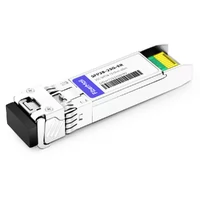
 SFP28-25G-SR 25G SFP28 SR 850nm 100m LC MMF DDM Transceiver Module
$25.00
-
SFP28-25G-ESR 25G SFP28 ESR 850nm OM3 200m/OM4 300m LC MMF DDM Transceiver Module
$35.00
-
SFP28-25G32-BX10 25G BX BIDI SFP28 TX1330nm/RX1270nm 10km LC SMF DDM Transceiver Module
$42.00
-
SFP28-25G23-BX10 25G BX BIDI SFP28 TX1270nm/RX1330nm 10km LC SMF DDM Transceiver Module
$42.00
-
SFP28-25G-LR 25G SFP28 LR 1310nm 10km LC SMF DDM Transceiver Module
$45.00
-
SFP28-25G32-BX10I 25G BX BIDI SFP28 TX1330nm/RX1270nm 10km LC SMF DDM Industrial Transceiver Module
$50.00
-
SFP28-25G23-BX10I 25G BX BIDI SFP28 TX1270nm/RX1330nm 10km LC SMF DDM Industrial Transceiver Module
$50.00
-
SFP28-25G32-BX03C 25G BX BIDI SFP28 TX1330nm/RX1270nm 300m LC SMF DDM Transceiver Module
$58.00
-
SFP28-25G23-BX03C 25G BX BIDI SFP28 TX1270nm/RX1330nm 300m LC SMF DDM Transceiver Module
$58.00
-
SFP28-25G-ER 25G SFP28 ER 1310nm 40km LC SMF DDM Transceiver Module
$125.00
-
SFP28-25G32-BX40 25GBASE SFP28 BIDI ER TX1310nm/RX1270nm 40km LC SMF DDM Optical Transceiver Module
$180.00
-
SFP28-25G23-BX40 25GBASE SFP28 BIDI ER TX1270nm/RX1310nm 40km LC SMF DDM Optical Transceiver Module
$180.00