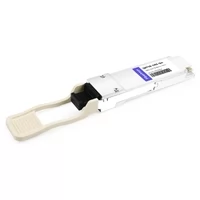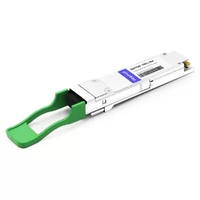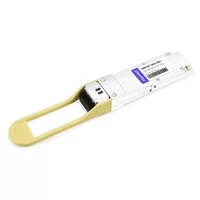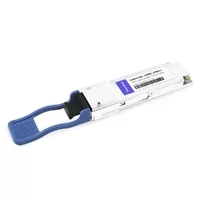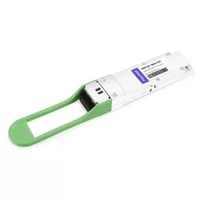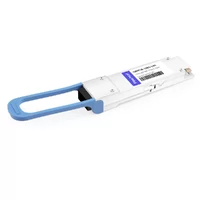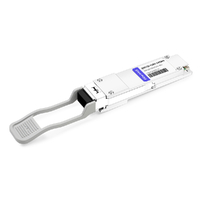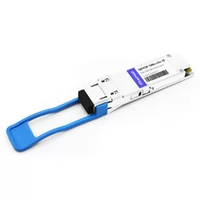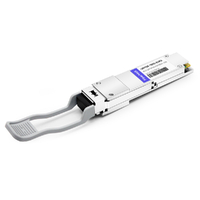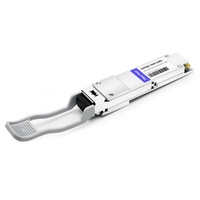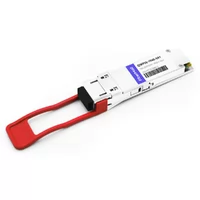

Sandra’s procurement team had a $200,000 annual budget for optical transceivers. Her first purchase order went to the usual OEM vendor: 400 QSFP28 LR4 modules at a discounted enterprise price of $780 per module. The total came to $312,000 — 56% over budget before shipping, customs duties, spare inventory, and cabling were even included.
That afternoon, a colleague sent her a quote from a compatible optics supplier. The modules met the same QSFP28 LR4 optical specification, supported the same 10km single-mode fiber reach, and were coded for the same switch platform. Price: $280 each. The same 400 modules would have cost $112,000.
Sandra could have stayed under budget and still had room for spares, cabling, and validation testing.
Sandra’s story is not unique. The QSFP28 pricing market is one of the most confusing areas in networking hardware procurement. OEM list prices can reach several thousand dollars per module. Compatible third-party alternatives can start as low as $35 for common short-reach models. In many cases, the biggest differences are not optical performance, but branding, EEPROM coding, warranty process, and vendor support structure.
This guide provides practical QSFP28 pricing benchmarks for 2026. It does not require vendor calls or custom quotes to understand the baseline numbers. It also covers the hidden costs that many procurement teams overlook when building a real deployment budget.
For the complete picture on QSFP28 module selection, see our QSFP28 transceiver complete guide.

QSFP28 Price by Module Type in 2026
Here is what QSFP28 modules typically cost in 2026. These are practical market ranges based on common third-party supplier pricing and publicly available OEM-style pricing references, not marketing estimates.
Third-Party / Compatible Module Pricing
| Module | Reach | Third-Party Price | OEM List Price | OEM Street Price | Savings vs OEM Street |
| SR4 | 100m MMF | $35-80 | $2,500-3,500 | $800-1,200 | 85-93% |
| CWDM4 | 2km SMF | $80-195 | $3,000-4,000 | $700-1,100 | 75-88% |
| LR4 | 10km SMF | $50-280 | $4,140 | $889-1,500 | 70-81% |
| ER4 | 40km SMF | $150-500 | $5,000-7,000 | $1,200-1,800 | 75-87% |
| ZR4 | 80km SMF | $2,500-2,800 | $10,000-15,000 | $2,500-4,000 | 0-30% |
| FR1 (single-lambda) | 2km SMF | $80-200 | $1,800-2,500 | $600-900 | 70-87% |
| LR1 (single-lambda) | 10km SMF | $120-280 | $2,500-3,500 | $800-1,200 | 75-85% |
Three points stand out immediately.
First, third-party SR4 modules can cost less than an upscale dinner, even though they deliver 100G connectivity.
Second, ZR4 modules show much smaller savings because long-reach optical components account for a larger share of the actual hardware cost.
Third, the strongest savings zone is in the middle of the market: CWDM4, LR4, FR1, and LR1. These are mature, widely available optics with multiple suppliers, broad platform support, and highly competitive pricing.
For these module types, many third-party suppliers build products to the same MSA or IEEE optical and electrical specifications as OEM-branded versions. The hardware may be similar, and in some cases may come from overlapping supply chains, but buyers should not assume that every component is identical. The real differences often include EEPROM coding, DOM/DDM calibration, quality-control process, warranty handling, and platform-specific compatibility testing.
Cost Per Gigabit: The Real Metric
Smart buyers do not look at module price alone. They look at cost per gigabit.
A $35 QSFP28 SR4 module delivers 100G, which equals $0.35 per Gbps. A $20 SFP+ module delivers 10G, which equals $2.00 per Gbps. Even though the QSFP28 module has a higher upfront price, it delivers much lower bandwidth cost.
| Form Factor | Speed | Typical Price | Cost per Gbps |
| SFP+ | 10G | $15-30 | $1.50-3.00 |
| SFP28 | 25G | $25-50 | $1.00-2.00 |
| QSFP+ | 40G | $60-120 | $1.50-3.00 |
| QSFP28 | 100G | $35-280 | $0.35-2.80 |
| QSFP-DD | 400G | $300-800 | $0.75-2.00 |
At volume, QSFP28 SR4 can reach approximately $0.35 per Gbps. That makes it one of the best value points in optical networking today.

OEM vs Third-Party: The Real Cost Gap
Why does an OEM QSFP28 LR4 module cost so much more than a compatible third-party LR4 module?
The answer usually has less to do with optical performance and more to do with branding, support, procurement policy, and platform coding.
Optical Specification
Both OEM and third-party modules may be designed to meet the same QSFP28 electrical interface requirements and the same optical standards, such as 100GBASE-SR4, 100GBASE-LR4, CWDM4, ER4, or ZR4.
A qualified third-party LR4 module should support the same 10km single-mode fiber reach, the same duplex LC interface, and the same 100G data rate as its OEM equivalent.
However, “same specification” does not always mean “same product.” Component sourcing, firmware behavior, EEPROM data, DOM calibration, manufacturing test depth, and thermal performance can differ by supplier. This is why vendor qualification and sample testing matter before large-scale deployment.
EEPROM Coding
The EEPROM is one of the biggest commercial differences between OEM and compatible optics.
OEM modules contain vendor-specific identification data that tells the switch, “This is a genuine module.” Third-party modules may use generic MSA coding or platform-specific coding designed to be recognized by Cisco, Juniper, Arista, HPE, Dell, NVIDIA/Mellanox, or other switch platforms.
Most open or semi-open platforms accept properly coded third-party optics without issue. Some locked platforms may enforce stricter vendor checks or encrypted EEPROM signatures, which makes supplier qualification especially important.
Support and Warranty
OEM modules typically come with support through the switch vendor’s authorized support process. That may include simplified RMA handling, direct compatibility responsibility, and fewer questions during troubleshooting.
Third-party suppliers usually provide their own warranty, commonly ranging from one to three years or longer depending on the supplier. RMA handling goes through the optics supplier instead of the switch vendor.
Some buyers choose OEM optics for mission-critical links because internal policy or compliance rules require full OEM support. Others use third-party optics for access, aggregation, data center interconnect, lab, storage, backup, and general production links where the cost savings are too large to ignore.
Compatibility Guarantees
OEM vendors guarantee that their own optics will work with their own switches.
Third-party suppliers guarantee compatibility from their side, but the switch vendor may not provide full support if a link issue occurs with non-OEM optics installed. This is the main operational trade-off.
In real deployments, properly coded MSA-compliant third-party modules from established suppliers have a high success rate. The key is to test them on your actual switch models, operating system versions, and link environments before making a volume purchase.
The $1,536,000 Decision
A financial services firm needed 800 QSFP28 LR4 modules for a trading floor upgrade. The OEM quoted $2,200 per module, resulting in a total optics cost of $1,760,000.
A third-party supplier offered compatible LR4 modules at $280 per module, with the same 10km optical reach, platform-specific coding, and a three-year warranty. The total module cost was $224,000.
The network architect ran a 30-day pilot using 24 third-party modules across six different switch platforms. The modules passed link stability, DDM monitoring, traffic, reboot, and interoperability tests.
The procurement team approved the order.
The savings were $1,536,000 — enough budget to fund a second data center project, additional switching capacity, or a major spare inventory program.
Not every organization can change optics sourcing easily. Some companies have strict vendor-approved procurement procedures. Others rely on OEM support contracts to satisfy compliance or audit requirements.
But for many data center operators, qualified third-party QSFP28 modules can deliver equivalent link performance at 70–90% lower acquisition cost.
Volume Discount Tiers
QSFP28 pricing is not fixed. It moves with quantity, timing, inventory position, coding requirements, and negotiating power.
Here is what volume pricing typically looks like in 2026.
Third-Party Volume Pricing (SR4 Example)
| Quantity | Price per Unit | Discount vs 1-Unit |
| 1-10 | $80 | — |
| 11-50 | $72 | 10% |
| 51-100 | $65 | 19% |
| 101-500 | $55 | 31% |
| 501-1,000 | $48 | 40% |
| 1,000+ | $42 | 48% |
OEM Volume Pricing (Cisco LR4 Example)
| Quantity | Street Price per Unit | Discount vs List |
| 1-10 | $1,500 | 64% |
| 11-50 | $1,200 | 71% |
| 51-100 | $1,000 | 76% |
| 101-500 | $900 | 78% |
| 500+ | $800-850 | 79-81% |
OEM discounts often flatten out faster. Third-party discounts can continue improving up to 1,000+ units, especially when the order includes standard models such as SR4, CWDM4, LR4, and DAC/AOC products.
At hyperscale quantities, such as 10,000+ units, third-party SR4 pricing can fall below $35 depending on market timing, coding requirements, and delivery schedule.
Negotiation tips:
· Bundle different module types on one purchase order. Suppliers often provide better blended discounts.
· Ask about annual commitment pricing. A forecast commitment can beat spot pricing.
· Request evaluation units before volume orders. Many suppliers provide two to five samples for testing.
· Factor in lead time. OEM modules may take 4–12 weeks. Third-party suppliers with stock can often ship in 1–2 weeks.
· Confirm switch platform, OS version, EEPROM coding, temperature grade, and DOM/DDM requirements before ordering.
Hidden Costs Buyers Forget
Module price is just the visible part of the iceberg. Here are the costs that don’t show up on the initial quote.
Cabling Costs
QSFP28 modules require the correct fiber or cable infrastructure.
SR4 modules use MPO/MTP multimode fiber. Typical reach is up to 70m on OM3 and 100m on OM4. CWDM4 and LR4 modules use duplex LC single-mode fiber. CWDM4 typically supports 2km, while LR4 supports 10km.
The patch cable itself is only part of the total cabling cost. A full deployment may also require trunk cables, patch panels, adapters, cassettes, cable trays, labels, and cross-connect capacity.
For a structured fiber plant supporting 200 QSFP28 ports, cabling expenses can easily reach $15,000–$30,000 depending on fiber type, building layout, patching architecture, and labor cost.
DAC cables avoid much of this infrastructure cost. A 1-meter passive QSFP28 DAC may cost $25–$40 and requires no optical transceivers or fiber plant. For rack-internal or adjacent-rack connections, DACs are often the most cost-effective option.
Power and Cooling
Each QSFP28 optical module typically consumes around 3.5W–4.5W depending on reach, temperature grade, and optical design.
A 32-port switch fully populated with QSFP28 optics can draw approximately 112W–144W just from optical modules. Over three years, at $0.12 per kWh, that equals approximately $353–$453 per switch in electricity cost before cooling overhead.
Cooling can increase the effective cost by roughly 50%. At 50 switches, the combined three-year power and cooling expense can reach approximately $26,000–$34,000.
QSFP28 optics are still far more efficient than older CFP-generation optics. Compared with older CFP modules that could draw around 24W per port, QSFP28 optics at roughly 3.5W–4.5W reduce optical power consumption by more than 80%. That difference becomes significant at scale.
Testing and Validation
Third-party modules should be validated before deployment.
Testing usually requires two to four hours of engineering time per switch platform. The engineer should verify compatibility, DDM/DOM reporting accuracy, link stability, port error counters, warm reboot behavior, cold reboot behavior, and traffic performance.
At $150 per hour for a network engineer, validation costs approximately $300–$600 per platform. If your environment includes four switch platforms, testing may add $1,200–$2,400 to the project budget.
Some suppliers provide pre-tested and pre-coded modules for specific switch platforms. This can reduce validation effort but may add 10–15% to the module price.
Spare Inventory
Many teams use either N+1 sparing for small deployments or 5–10% spare inventory for larger deployments.
For a 200-port LR4 deployment, a 10% spare policy means 20 spare modules. At $280 per LR4 module, that adds $5,600 to the budget.
Procurement teams often forget this line item entirely. That creates problems later when a failed module turns into an emergency shipment instead of a quick replacement from local stock.
Shipping, Customs, and Lead Times
International orders can add 5–15% in shipping, import duties, customs processing, and tax-related costs.
Express air freight for urgent orders may add $200–$500 per shipment. That is not normally a per-module cost, but for small urgent orders it can significantly increase the effective cost per unit.
A $280 module can become much more expensive if it must arrive tomorrow. Procurement schedules should be planned early enough to avoid emergency freight.
Hidden Costs Summary
| Cost Category | Typical Amount | % of Module Cost |
| Cabling (structured fiber) | $75-150 per port | 15-30% |
| Power (3-year, per port) | $15-20 | 3-5% |
| Cooling (3-year, per port) | $8-12 | 2-3% |
| Testing/validation | $300-600 per platform | One-time |
| Spare inventory | 10% of module spend | 10% |
| Shipping/customs | 5-15% of order | 5-15% |
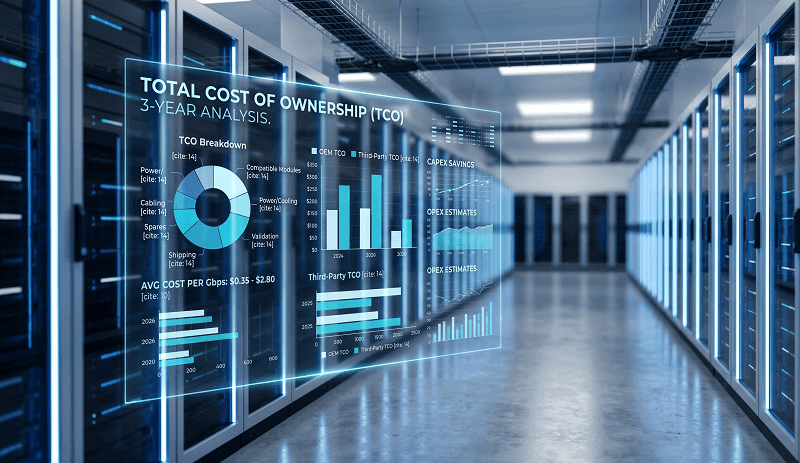
TCO Analysis: 3-Year Cost Modeling
Let’s put everything together.
Below are three practical three-year total cost of ownership models for QSFP28 deployments of different sizes.
Scenario 1: Small Deployment (50 ports, CWDM4)
| Cost Item | Calculation | Total |
| Modules (50 × $140) | $7,000 | $7,000 |
| Cabling | $5,000 | $5,000 |
| Power/cooling (3yr) | $1,150 | $1,150 |
| Testing (2 platforms) | $900 | $900 |
| Spares (10%) | $700 | $700 |
| Shipping | $500 | $500 |
| 3-Year TCO | $15,250 |
Scenario 2: Medium Deployment (200 ports, mixed SR4/LR4)
| Cost Item | Calculation | Total |
| Modules (150 SR4 × 60+50 LR4×60+50 LR4×280) | $23,000 | $23,000 |
| Cabling | $18,000 | $18,000 |
| Power/cooling (3yr) | $4,600 | $4,600 |
| Testing (4 platforms) | $1,800 | $1,800 |
| Spares (10%) | $2,300 | $2,300 |
| Shipping | $2,000 | $2,000 |
| 3-Year TCO | $51,700 |
In this scenario, the module cost is only part of the project. Cabling is almost as important as the optics themselves.
Scenario 3: Large Deployment (1,000 ports, LR4)
| Cost Item | Third-Party | OEM |
| Modules | $280,000 | $889,000 |
| Cabling | $85,000 | $85,000 |
| Power/cooling (3 years) | $23,000 | $23,000 |
| Testing | $3,600 | $1,200 (included) |
| Spares | $28,000 | $88,900 |
| Shipping | $15,000 | $25,000 |
| 3-Year TCO | $434,600 | $1,112,100 |
At 1,000 ports, the OEM premium is $677,500 over three years.
That is not a rounding error. That is enough budget for additional switches, cabling, servers, or a second data center expansion project.
In third-party deployments, module cost may represent roughly 45–65% of total three-year TCO depending on deployment size and cabling requirements. In OEM-heavy deployments, the module cost share can be much higher.
Price Trends & Market Dynamics
QSFP28 pricing does not stand still. Understanding the market trend helps buyers decide when to purchase.
Annual price erosion: 8-12%. Mature 100G optics continue to follow a predictable price-decline curve. SR4 modules that cost around $120 in 2022 can now be found in the $35–$60 range. LR4 modules that previously cost several hundred dollars more are now commonly available around $280 from competitive third-party suppliers.
This trend is driven by manufacturing scale, broader supplier availability, component maturity, and stronger competition.
Single-lambda disruption. The newest shift in 100G optics is single-lambda PAM4 technology, including FR1 and LR1 modules.
Traditional CWDM4 and LR4 modules use four optical lanes. Single-lambda modules use one optical lane, which can reduce optical complexity and lower cost. In many cases, FR1 and LR1 modules cost 30–40% less than comparable four-lambda alternatives.
Adoption depends on switch compatibility, network architecture, interoperability requirements, and available supplier ecosystem. For new 100G deployments, single-lambda optics should be included in the sourcing discussion whenever the switch platform supports them.
When to buy vs. when to wait. Buy now if your module requirement is within the next 90 days. The 8–12% annual price decline is usually not enough to justify project delays, especially if waiting creates emergency shipping costs or missed deployment windows.
If your deployment is planned for Q4, check pricing monthly. Suppliers often run quarterly promotions that can provide an additional 5–10% savings.
OEM discount pressure. Cisco, Arista, Juniper, and other OEM vendors have increased optics discounting in response to third-party competition. OEM street prices have moved down in many accounts over the past several years.
The gap has narrowed in some product categories, but compatible third-party suppliers still often maintain a 70–80% cost advantage on common QSFP28 module types such as SR4, CWDM4, and LR4.
FAQ
How much does a QSFP28 module cost?
The price of a QSFP28 module depends on the module type, reach, coding, temperature grade, warranty, order quantity, and supplier.
Compatible QSFP28 SR4 modules can start around $35. Compatible LR4 modules commonly range from about $50 to $280 depending on coding, specification, and volume. OEM modules can cost several times more, with street pricing often ranging from hundreds to more than one thousand dollars per module depending on vendor and discount level.
What makes OEM QSFP28 modules cost so much?
OEM pricing includes more than the optical hardware. Buyers are also paying for brand premium, vendor support, certified compatibility, authorized RMA process, procurement convenience, and platform-specific EEPROM recognition.
The optical specifications may be the same as third-party alternatives, but the commercial support model is different.
What quantity purchase is necessary to obtain QSFP28 price reductions?
Most third-party suppliers offer discounts starting around 10–50 units. More meaningful discounts usually begin around 100 units, where savings can exceed 15%.
OEM volume discounts often become more attractive at higher quantities, especially above several hundred units. However, OEM discounts usually flatten out earlier than third-party volume pricing.
Are third-party QSFP28 modules reliable?
Third-party QSFP28 modules from established suppliers can be reliable when they are MSA-compliant, properly coded, and tested on the target switch platform.
Which hidden expenses should I include in my financial plan?
Budget for more than the modules themselves.
Include cabling at roughly $75–$150 per port for structured fiber deployments, power and cooling at roughly $20–$30 per port over three years, validation at $300–$600 per switch platform, spare inventory at 5–10% of module spend, and shipping/customs at 5–15% of order value.
Should I choose OEM products or third-party products to maintain my crucial operational links?
For core backbone links where downtime costs exceed $10,000 per minute, OEM optics may be justified because of vendor support, simplified escalation, and internal compliance requirements.
For standard data center links, aggregation connections, lab environments, storage networks, backup links, and many DCI deployments, qualified third-party modules often provide the best balance of performance and cost.
Conclusion
QSFP28 pricing doesn’t have to be a black box. The numbers are clear:
· Third-party modules can save 70–90% compared with OEM optics while delivering equivalent link performance when properly qualified.
· Volume discounts matter. At 1,000 units, the per-module price can be roughly half the small-order price.
· Module cost is not the whole TCO. Cabling, power, testing, spare inventory, shipping, and customs can add 35–55% on top of the module spend in many third-party deployments.
· Prices decline over time, but do not over-wait. QSFP28 prices may drop 8–12% annually, but project delays and emergency shipping can erase those savings.
· Single-lambda optics are becoming more important. FR1 and LR1 modules can reduce cost compared with traditional four-lambda designs when the switch platform supports them.
Contact FiberMall’s engineering team with your port count, module types, switch platforms, distance requirements, and cabling plan. We can provide a full total cost of ownership breakdown covering modules, cables, spare inventory, compatibility coding, and estimated power costs.
Related Products:
-
 QSFP28-100G-SR4 100G QSFP28 SR4 850nm 100m MTP/MPO MMF DDM Transceiver Module
$40.00
QSFP28-100G-SR4 100G QSFP28 SR4 850nm 100m MTP/MPO MMF DDM Transceiver Module
$40.00
-
QSFP28-100G-IR4 100G QSFP28 IR4 1310nm (CWDM4) 2km LC SMF DDM Transceiver Module
$110.00
-
QSFP28-100G-DR1 100G QSFP28 Single Lambda DR 1310nm 500m LC SMF with FEC DDM Optical Transceiver
$180.00
-
QSFP28-100G-PSM4 100G QSFP28 PSM4 1310nm 500m MTP/MPO SMF DDM Transceiver Module
$180.00
-
QSFP28-100G-FR1 100G QSFP28 Single Lambda FR 1310nm 2km LC SMF with FEC DDM Optical Transceiver
$215.00
-
Arista Networks QSFP-100G-LRL4 Compatible 100G QSFP28 LRL4 1310nm (LWDM4) 2km LC SMF DDM Transceiver Module
$245.00
-
QSFP28-100G-LR1 100G QSFP28 Single Lambda LR 1310nm 10km LC SMF with FEC DDM Optical Transceiver
$265.00
-
QSFP28-100G-SR1.2 Single Rate 100G QSFP28 BIDI 850nm & 900nm 100m LC MMF DDM Optical Transceiver
$280.00
-
QSFP28-100G-LR4 100G QSFP28 LR4 1310nm (LAN WDM) 10km LC SMF DDM Transceiver Module
$285.00
-
QSFP28-100G-SWDM4 100G QSFP28 SWDM4 850nm-940nm 100m LC MMF DDM Optical Transceiver
$300.00
-
QSFP28-100G-LR4-20 100G QSFP28 LR4 1310nm LWDM4 20km LC SMF DDM Transceiver Module
$300.00
-
QSFP28-100G-BDRX 100G QSFP28 BIDI 850nm & 900nm Only Receiver 100m LC MMF Optical Transceiver
$379.00
-
QSFP28-100G-SRBD Dual Rate 40G/100G QSFP28 BIDI 850nm & 900nm 100m LC MMF DDM Optical Transceiver
$449.00
-
QSFP28-100G-ER1 100G QSFP28 ER1 Single Lambda 1310nm 40km PAM4 LC SMF DDM Transceiver Module
$1250.00