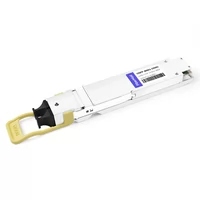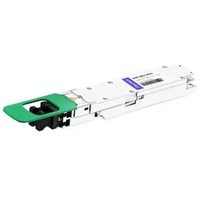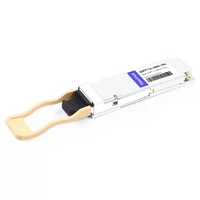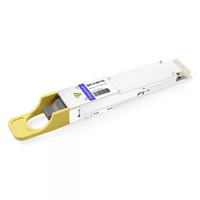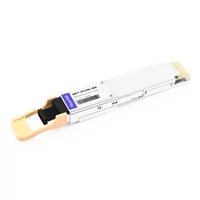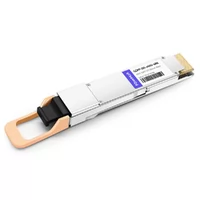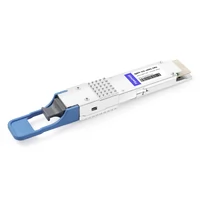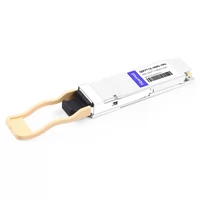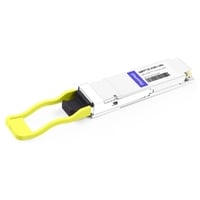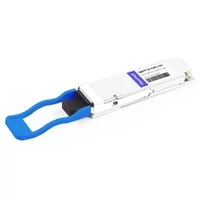

This situation occurs too frequently: a network team requests 400G optical modules, which they install into their new switches, but the transceivers either do not fit or the switch firmware fails to detect them. This has resulted in one costly error.
OSFP, QSFP-DD, and QSFP112 all support 400G networking. But they cannot be used as substitutes for one another. These products feature distinct physical measurements, their electrical systems use separate configurations, their power requirements differ, and their compatibility with other systems is completely different. The wrong choice made during deployment will force users to restart their entire process.
The guide explains all technical distinctions between the three different form factors, shows which vendors provide support for each form factor, and establishes a particular decision-making process that separates two deployment scenarios: existing enterprise data center upgrades and new AI GPU cluster construction. FiberMall carries all three form factor types if you need to compare specific models while reading.
According to Cignal AI, the optical transceiver market achieved 22.5 million shipments in 2024 for both 400G and 800G systems, while 2025 projections show 34.5 million shipments will occur. This decision has become important for everyone now.
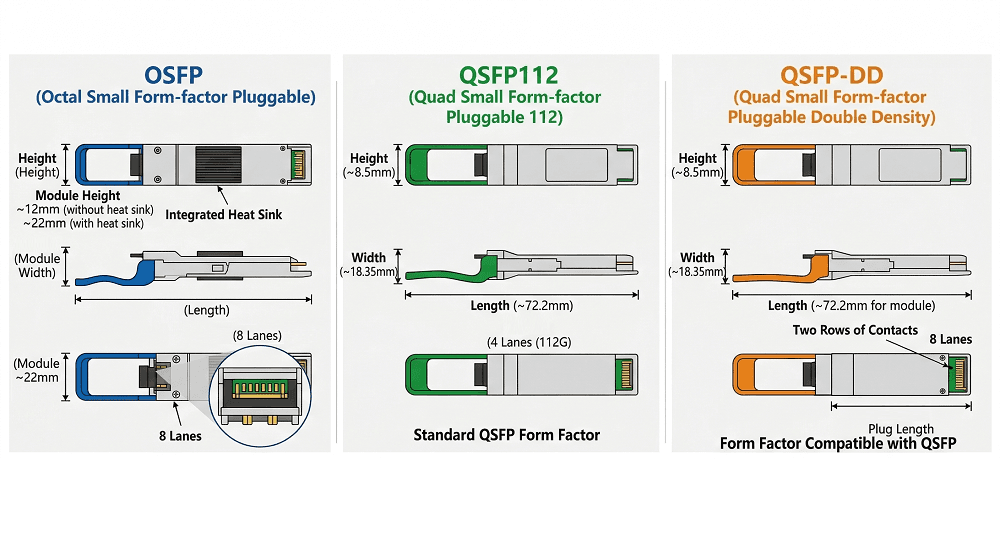
Quick Comparison: OSFP vs QSFP-DD vs QSFP112
Before the full breakdown, here’s the summary:
| QSFP-DD | QSFP112 | OSFP | |
| Electrical Lanes | 8 × 50G PAM4 | 4 × 112G PAM4 | 8 × 50G or 100G PAM4 |
| Max Speed | 400G / 800G | 400G | 400G / 800G / 1.6T roadmap |
| Dimensions (W×D×H) | 18.35 × 89.4 × 8.5 mm | 18.4 × 89.4 × 8.5 mm | 22.58 × 107.8 × 13.0 mm |
| Typical Power | 10–14W | 8–12W | 12–16W |
| Backward Compatible | Yes (QSFP28, QSFP56) | Yes (QSFP28, QSFP56)* | No |
| Best For | DC upgrades, density | Power-efficient 400G | AI/HPC, 800G+, new builds |
*QSFP112 requires switch-side 112G electrical interface support — physical fit doesn’t guarantee electrical compatibility.
What Is QSFP-DD?
QSFP-DD means Quad Small Form-Factor Pluggable Double Density. The “Double Density” part is the key. Engineers took the familiar QSFP footprint and added a second row of electrical contacts, which created eight lanes that operate through the system’s eight lanes. The system achieves 400G total throughput through its eight lanes, which operate at 50G PAM4. When you operate all eight lanes at 100G PAM4, the system produces 800G.
The physical dimensions of the module match those of QSFP28. The second row of contacts sits behind the first row on the connector, which is why QSFP28 modules can still plug into QSFP-DD slots — the front row connects normally, the back row just isn’t used.
The primary benefit of QSFP-DD is backward compatibility. A 400G switch with QSFP-DD ports runs 100G QSFP28 modules in the same slots during a phased migration without needing adapter hardware. The QSFP-DD format became the primary 400G standard for enterprise and cloud data centers because teams can upgrade switches without needing to replace all their 100G optics.
The 800G market now includes QSFP-DD800 modules, which operate at 8×100G PAM4 and have begun shipping in large quantities. All major vendors provide these products. The current scope of QSFP-DD extends beyond its previous 400G focus because articles that only describe it as 400G hardware fail to present crucial content.
The power draw for each module typically ranges from 10 to 14 watts based on the specific module type and reach distance. Port density reaches 36 to 40 ports per one unit switch based on the specific ASIC and chassis design of the switch.
What Is OSFP?
OSFP stands for Octal Small Form-Factor Pluggable. The electrical lane count of both “Octal” (8) and “QSFP-DD” (Double Density, also 8 lanes) matches between the two systems, but their operational capacity and physical design of the module differ.
The dimensions of OSFP are larger: 22.58 mm width, 107.8 mm length, and 13.0 mm height. The width exceeds QSFP-DD by 23%, and its height exceeds it by 53%. The additional space requirements must be fulfilled because of operational needs. OSFP transceivers include an integrated heatsink and handle power envelopes of 20–25 W or more, which meet the actual needs of coherent optical modules and high-power silicon photonics designs.
The real-world context: NVIDIA chose OSFP for its InfiniBand NDR switches (Quantum-2 and beyond). Engineers need OSFP, which provides thermal headroom and 800G capability to build GPU clusters for AI training, because a single DGX H100 rack needs 4.8 Tbps bandwidth. The NVIDIA Quantum-2 NDR switch contains 64 OSFP ports, which operate at 400G OSFP each to create a total switching capacity of 25.6 Tbps.
QSFP28 and QSFP-DD do not work with OSFP because OSFP lacks backward compatibility. OSFP slots will not accept QSFP modules because designers intentionally made this design decision. The system operates well in greenfield deployments, which require the complete implementation of new systems. Existing 100G infrastructure in brownfield areas creates operational limits for the system.
The forward-looking part: the OSFP form factor is already on a path to 1.6T through OSFP-XD, a next-generation variant that extends the OSFP electrical interface for 1.6T operation. The QSFP-DD system does not provide a matching development plan that reaches that transmission rate.
What Is QSFP112?
QSFP112 is the form factor most engineers overlook. This is often a mistake.
The “112” in QSFP112 refers to 112 Gbps per electrical lane. The QSFP-DD standard uses eight lanes with 50G capacity to transmit 400G data, while QSFP112 reaches its 400G output through four lanes operating at 112G PAM4. The module has a physical appearance that matches QSFP28 dimensions of 18.4 mm width, 89.4 mm length, and 8.5 mm height. The two systems maintain identical chassis cutouts and cage designs with matching locking systems.
Engineers need to identify this important aspect because QSFP112 employs a distinct electrical signaling standard that differs from QSFP-DD. The two devices have identical physical dimensions, yet users must not attempt to connect a QSFP112 module to a QSFP-DD slot because it will not function. The switch-side electrical interface needs to support 112G PAM4 signaling — that requires specific switch ASICs and firmware.
The power efficiency of QSFP112 represents its strongest performance area. Typical power consumption for each module falls between 8 and 12 watts, which results in 2 to 4 watts lower power usage compared to QSFP-DD variants that operate at similar distances. The 32-port switch system will save between 64 and 128 watts of power through optical components, which becomes important for large data center operations because they face high power and cooling expenses.
QSFP112 ports are compatible with both NVIDIA’s ConnectX-7 adapters and Quantum-2 NDR 400G switches. The 7500R3 series from Arista includes QSFP112 modules as part of its product range. The Supermicro SSE-T8196SR switch comes equipped with 64 QSFP112 ports. The ecosystem provides less coverage than QSFP-DD, but it works well for AI and HPC applications, which already use ConnectX-7.
QSFP112 operates up to a maximum capacity of 400G. The 8-lane design, which would enable 800G transmission, does not exist. If you need 800G in two years, QSFP-DD or OSFP are the better long-term bets.
Side-by-Side: Power, Thermal, and Port Density
The spec tables tell part of the story. The thermal math tells the rest.
Power consumption per port:
| Module Type | Typical Range | Low-Power Variant |
| QSFP28 (100G) | 3.5–4.5W | ~2.5W |
| QSFP112 (400G) | 8–12W | ~6–8W (LPO) |
| QSFP-DD (400G) | 10–14W | ~8W (SR8) |
| OSFP (400G) | 12–16W | ~10W |
| OSFP (800G) | 15–20W | — |
The switch requires numerical analysis at its full operational capacity. The 32-port 400G QSFP-DD switch needs 448W for its optics, which operate with 14W modules. The switch power requirement decreases to 320W when switching to QSFP112, which has a 10W power consumption, and its cooling requirement for each switch drops by 128W. The cooling system requirements in the 10-row, 20-switch deployment will decrease by 2.56 kW.
OSFP’s larger body and integrated heatsink actually make it better at dissipating heat per module, even though its power draw is higher. The form factor was designed to support modules that run hot. The QSFP-DD system depends on external cage heatsinks, which restrict its ability to handle high-power coherent optical systems.
Port density per 1RU:
| Form Factor | Typical 1RU Port Count | Total Bandwidth (400G) |
| QSFP-DD | 36–40 ports | 14.4–16 Tbps |
| QSFP112 | 32–64 ports | 12.8–25.6 Tbps |
| OSFP | 32–36 ports | 12.8–14.4 Tbps |
QSFP-DD and QSFP112 have similar density since they share the same physical footprint. OSFP’s larger body means fewer ports per rack unit — typically 32–36 at 400G.
Backward and Forward Compatibility
This is where engineers make expensive mistakes. The short version:
QSFP-DD: Accepts QSFP28 (100G) and QSFP56 (200G) modules in the same physical slot. The second row of contacts simply isn’t engaged. This makes QSFP-DD the cleanest upgrade path for organizations with existing 100G QSFP28 infrastructure. You buy 400G QSFP-DD switches, run your existing 100G optics in them, and upgrade the optic population gradually.
QSFP112: The module physically fits in any QSFP28-sized cage — but the switch must support 112G electrical signaling on that port. Most QSFP28 switches do NOT support 112G. So while QSFP112 is backward-compatible in terms of physical form factor, it requires switch-side hardware support that older 100G gear typically won’t have. Check your switch datasheet carefully.
OSFP: No backward compatibility. OSFP ports only accept OSFP modules. Full stop. For greenfield builds this isn’t a problem, but it means OSFP deployments can’t reuse any existing QSFP optic investment.
Breakout cables as a migration strategy: One approach that works well regardless of form factor is using breakout cables — a single 400G port split into 4×100G connections. A 400G QSFP-DD switch can connect to 4 existing 100G servers using a single QSFP-DD to 4×QSFP28 breakout cable. This lets teams deploy 400G spine switches while keeping existing 100G server NICs, extending the useful life of that hardware.
Vendor Support Matrix
Before committing to a form factor, check that your switch and NIC vendors actually support it:
| Vendor | QSFP-DD | QSFP112 | OSFP |
| NVIDIA (InfiniBand/Networking) | ✅ Spectrum-4 switches | ✅ ConnectX-7, Quantum-2 NDR | ✅ Quantum-2 NDR, BlueField-3 |
| Cisco | ✅ Nexus 9000 series, ASR | Limited | Limited — specific models |
| Arista | ✅ 7500/7800 series | ✅ 7500R3 series | ✅ 7800R3 series |
| Juniper | ✅ QFX5220, QFX10003 | Limited | Limited |
| Broadcom ASICs | ✅ Tomahawk 5, Jericho 3 | ✅ Trident 4C | ✅ Tomahawk 5 |
| Supermicro | ✅ SSE-G3748B series | ✅ SSE-T8196SR | Limited |
Enterprise teams standardizing on Cisco or Juniper will find QSFP-DD has the broadest support across both. NVIDIA InfiniBand deployments almost always use OSFP or QSFP112. Arista supports all three, which gives data centers more flexibility.
Which Form Factor Should You Choose?
The right answer depends on what you’re building and what already exists in your racks.
Choose QSFP-DD when:
- You’re upgrading from existing QSFP28 or QSFP56 infrastructure (“brownfield” deployment)
- Backward compatibility during migration is a priority
- Maximum port density per rack unit matters
- You need both 400G and 800G from the same form factor (QSFP-DD800)
- Your primary vendors are Cisco, Juniper, or enterprise-focused Arista
Choose OSFP when:
- You’re building a new AI or HPC cluster from scratch (“greenfield”)
- NVIDIA InfiniBand NDR is in your stack
- High-power coherent optical modules (ZR/ZR+) are required
- You’re planning for 800G OSFP now and 1.6T within 2–3 years
- Thermal headroom per module is more critical than port density
Choose QSFP112 when:
- Power efficiency is a top priority and you’re running large scale deployments
- Your switches support 112G PAM4 electrical signaling (check before ordering)
- NVIDIA ConnectX-7 NICs are your primary server-side interface
- You need 400G — not 800G — and want the lowest possible power per port
- An Arista 7500R3 or similar QSFP112-supporting platform is already in your procurement plan
A practical decision table:
| Deployment Scenario | Recommended |
| Enterprise DC upgrade from 100G | QSFP-DD |
| New hyperscale AI training cluster | OSFP |
| Cloud DCI (data center interconnect) | QSFP-DD or OSFP |
| NVIDIA GPU cluster w/ ConnectX-7 | QSFP112 or OSFP |
| Need 800G today | OSFP (or QSFP-DD800) |
| Planning 1.6T in 2–3 years | OSFP |
| Power-constrained 400G deployment | QSFP112 |
| Mixed 100G + 400G environment | QSFP-DD |
Frequently Asked Questions
Can I plug a QSFP112 module into a QSFP-DD port?
No. While QSFP112 and QSFP-DD share the same physical form factor, their electrical interfaces are different. QSFP-DD uses 8 lanes at 50G PAM4; QSFP112 uses 4 lanes at 112G PAM4. They are electrically incompatible.
Does QSFP-DD support 800G?
Yes. QSFP-DD800 modules running 8 lanes at 100G PAM4 deliver 800G. Many 400G QSFP-DD switches cannot run these at 800G (the switch ASIC limits them), but dedicated 800G QSFP-DD switches are shipping from all major vendors.
Is OSFP backward compatible with QSFP28?
No. OSFP ports only accept OSFP modules. There is no adapter that makes OSFP backward-compatible with QSFP28 or QSFP-DD in a production setting.
What speed does QSFP112 support?
QSFP112 supports 400G using 4 lanes at 112G PAM4. It does not support 800G. For 800G capability, use QSFP-DD or OSFP.
Which has the best power efficiency for 400G?
QSFP112 typically draws 8–12W per module compared to 10–14W for QSFP-DD and 12–16W for OSFP at the same reach. For large-scale 400G deployments where power costs are significant, QSFP112 has a real efficiency advantage.
Conclusion
Three form factors. All supporting 400G. Very different situations where each makes sense.
Most enterprise and cloud deployments should use QSFP-DD because it provides safe operation through its extensive vendor support and its ability to work with QSFP28 and its future development to 800G through QSFP-DD800. Organizations should select OSFP for their AI and HPC infrastructure requirements, which use NVIDIA InfiniBand and need immediate 800G capacity but plan to upgrade to 1.6T in the future. The 112G electrical interface support of their switch platform makes QSFP112 the best solution for organizations that need power-efficient deployment options.
The key takeaways:
- QSFP-DD: backward-compatible upgrade path, 400G + 800G, best enterprise ecosystem
- OSFP: purpose-built for 800G+, AI/HPC, best thermal headroom, 1.6T roadmap
- QSFP112: same physical footprint as QSFP28, lowest power 400G option, narrower vendor support
- Never assume physical fit means electrical compatibility — verify the switch-side interface specification before ordering
Related Products:
-
 NVIDIA MMA4Z00-NS Compatible 800GBASE 2 x SR4/SR8 OSFP PAM4 850nm 100m DOM Dual MPO-12 MMF Optical Transceiver Module
$550.00
NVIDIA MMA4Z00-NS Compatible 800GBASE 2 x SR4/SR8 OSFP PAM4 850nm 100m DOM Dual MPO-12 MMF Optical Transceiver Module
$550.00
-
NVIDIA MMS4X00-NM Compatible 800GBASE 2 x DR4/DR8 OSFP IHS/Closed Finned Top PAM4 1310nm 500m DOM Dual MTP/MPO-12 SMF Optical Transceiver Module
$600.00
-
NVIDIA MMS4X50-NM Compatible 800G 2x FR4 OSFP IHS/Closed Finned Top PAM4 1310nm 2km DOM Dual Duplex LC SMF InfiniBand NDR Optical Transceiver Module
$1000.00
-
NVIDIA MMA4Z00-NS400 Compatible 400G OSFP SR4 Flat Top PAM4 850nm 30m on OM3/50m on OM4 MTP/MPO-12 Multimode FEC Optical Transceiver Module
$400.00
-
NVIDIA MMS4X00-NS400 Compatible 400G OSFP DR4 Flat Top PAM4 1310nm MTP/MPO-12 500m SMF FEC Optical Transceiver Module
$450.00
-
NVIDIA MMA1Z00-NS400 Compatible 400G QSFP112 VR4 PAM4 850nm 50m MTP/MPO-12 OM4 FEC Optical Transceiver Module
$385.00
-
QSFP-DD-800G-DR8 800G-DR8 QSFP-DD PAM4 1310nm 500m DOM MTP/MPO-16 SMF Optical Transceiver Module
$1000.00
-
QSFP-DD-800G-SR8 800G SR8 QSFP-DD 850nm 100m OM4 MMF MPO-16 Optical Transceiver Module
$750.00
-
QSFP-DD-400G-SR8 400G QSFP-DD SR8 PAM4 850nm 100m MTP/MPO OM3 FEC Optical Transceiver Module
$149.00
-
QSFP-DD-400G-DR4 400G QSFP-DD DR4 PAM4 1310nm 500m MTP/MPO SMF FEC Optical Transceiver Module
$400.00
-
QSFP112-400G-SR4 400G QSFP112 SR4 PAM4 850nm 100m MTP/MPO-12 OM3 FEC Optical Transceiver Module
$400.00
-
FiberMall QSFP112-400G-VR4 Compatible 400G QSFP112 VR4 PAM4 850nm 50m MTP/MPO-12 OM4 FEC Optical Transceiver Module
$385.00
-
QSFP112-400G-DR4 400G QSFP112 DR4 PAM4 1310nm 500m MTP/MPO-12 with KP4 FEC Optical Transceiver Module
$500.00
-
QSFP112-400G-FR1 4x100G QSFP112 FR1 PAM4 1310nm 2km MTP/MPO-12 SMF FEC Optical Transceiver Module
$800.00