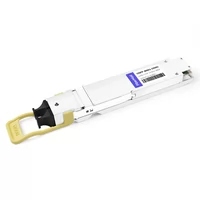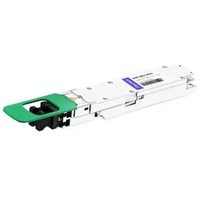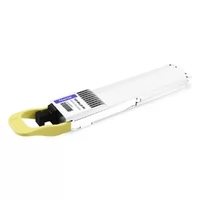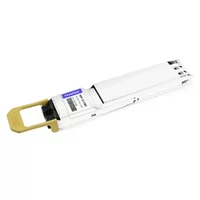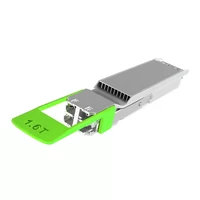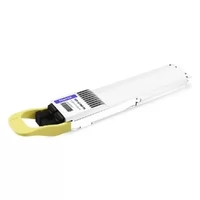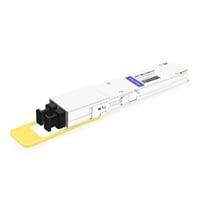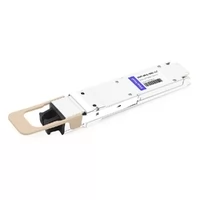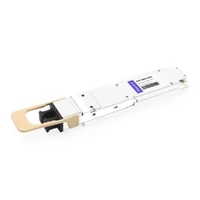

Introduction
The question of when your data center should upgrade to 800G remains a difficult decision that network architects must face.
The demand for bandwidth has now reached a point where it requires more than the existing 400G networks can accommodate. The OSFP form factor has emerged as the leading solution for next-generation deployments, but timing the transition matters.
This guide gives you the complete picture. Our study of OSFP transceiver technology will begin with basic concepts and continue until we reach advanced technical applications. You will learn about OSFP applications through module thermal management solutions, which apply to devices operating between 15-20W, while discovering the rapid growth of AI/ML workload adoption.
FiberMall has deployed OSFP solutions across hyperscale data centers worldwide. Our engineers have seen what works—and what doesn’t. This guide shares that expertise so you can make informed decisions about your optical networking infrastructure.
What is OSFP? Understanding the Form Factor
The abbreviation OSFP represents Octal Small Form-factor Pluggable. The explanation appears simple to understand. However, it shows a deeper meaning that extends beyond its first impression.
The OSFP MSA (Multi-Source Agreement) group developed this form factor to solve thermal and density problems that earlier designs could not manage. The device measures 22mm in width, which makes it bigger than QSFP-DD. The additional space improves thermal performance, which enables 800G and 1.6T speeds to function effectively.
The industry has taken notice. OSFP is becoming the standard for 800G deployments, particularly in new data center builds where thermal design can be optimized from the ground up.

Key OSFP Characteristics
Eight-Lane Electrical Interface
The “octal” designation refers to eight electrical lanes. Each runs at 50G PAM4 modulation, giving you 400G total bandwidth. For 800G, those lanes double to 100G each. At 1.6T, you’re looking at 200G per lane.
This 8-lane architecture offers signal integrity advantages. Fewer lanes mean less crosstalk and simpler channel equalization. The result is more reliable high-speed connections.
Enhanced Thermal Management
OSFP excels particularly in this area of technology. The 22mm x 107mm dimension of the OSFP design offers better heat dissipation capacity than the 18.35mm QSFP-DD design.
In actual use, OSFP modules demonstrate power consumption between 8W and 12W, while advanced models reach 15W. The actual power consumption of some 800G modules used in high-density installations approaches 20W. The thermal design supports this requirement without creating any problems for system reliability.
Future-Proof by Design
OSFP wasn’t just built for today’s speeds. The form factor accommodates future evolution to 3.2T and beyond. When you’re planning infrastructure with a 5-10 year horizon, that matters.
OSFP vs. Previous Generations
| Feature | QSFP-DD | OSFP |
| Electrical Lanes | 8 | 8 |
| Maximum Bandwidth | 400G (800G supported) | 400G+ (up to 1.6T now) |
| Thermal Performance | Good | Excellent |
| Power Handling | Up to 12W | Up to 15W+ |
| Form Factor Size | 18.35mm | 22mm |
| Best For | Upgrades, compatibility | New builds, high power |
OSFP vs QSFP-DD: Making the Right Choice
The form factor decision isn’t just technical—it’s strategic.
Here’s what we’ve learned from hundreds of deployments: new data center builds almost always choose OSFP, while upgrades tend to stick with QSFP-DD for backward compatibility.
That pattern makes sense when you dig into the trade-offs.
When OSFP Wins
Building fresh? OSFP gives you several advantages:
- Superior thermal headroom for high-power 800G and 1.6T modules
- Future scalability to 3.2T without changing form factors
- Better signal integrity at the highest speeds
- Growing ecosystem with major switch vendors
The larger size actually helps in thermal design. More surface area means heat spreads more effectively. In dense deployments with hundreds of modules, that thermal advantage compounds.
When QSFP-DD Makes Sense
Upgrading existing infrastructure? QSFP-DD offers compelling benefits:
- Backward compatibility with your existing QSFP28 and QSFP56 modules
- Higher port density (smaller size means more ports per switch)
- Lower power consumption for 400G applications
- Mature ecosystem with widespread vendor support
If you’ve already invested in QSFP-DD switches and cables, the migration cost to OSFP might outweigh the benefits. That’s a legitimate business decision.
The Decision Framework
| Scenario | Recommendation |
| New hyperscale data center | OSFP |
| AI/ML training cluster | OSFP (thermal requirements) |
| 400G upgrade of existing DC | QSFP-DD (compatibility) |
| Mixed 400G/800G deployment | OSFP (future-proofing) |
| Cost-sensitive 400G only | QSFP-DD (lower cost) |
The bottom line: If you’re building for 800G+ and have flexibility in infrastructure design, OSFP is probably your best bet. If you’re maximizing compatibility with existing gear, QSFP-DD remains viable.
OSFP Speed Evolution: 400G, 800G, and 1.6T
OSFP isn’t a single specification—it’s a family of solutions spanning multiple speed grades. Understanding the evolution helps you plan infrastructure that won’t become obsolete.
400G OSFP (The Foundation)
400G OSFP modules were the first to market, establishing the form factor’s credibility.
Common module types:
- SR8: Multi-mode fiber, 100m reach, cost-effective for intra-data center
- DR4: Single-mode, 500m reach, data center interconnects
- FR4: Single-mode, 2km reach, campus and edge applications
- LR4: Single-mode, 10km reach, metropolitan networks
Most 400G OSFP deployments use PAM4 modulation at 50G per lane. Power consumption typically runs 8-12W, making thermal management straightforward in modern data centers.
800G OSFP (The Current Sweet Spot)
Here’s where things get interesting. 800G OSFP is rapidly approaching price parity with 400G on a per-Gbps basis. That economic shift is accelerating adoption.
Why 800G now?
AI/ML clusters need massive bandwidth between GPU servers. Traditional 400G links create bottlenecks in distributed training workloads. 800G OSFP solves that problem.
Module variants:
- 2xFR4: Two 400G FR4 lanes, single-mode, 2km reach
- 2xDR4: Two 400G DR4 lanes, single-mode, 500m reach
- SR8: Multi-mode options for short-reach applications

Power consumption jumps to 12-15W typical, with some modules hitting 20W in dense configurations. That’s manageable, but a cooling design becomes critical.
Real deployment insight: Hyperscalers are driving 800G adoption. When Google, Amazon, and Microsoft standardize on a technology, the supply chain follows. Costs drop. Availability improves. That’s exactly what’s happening with 800G OSFP right now.
1.6T OSFP (The Cutting Edge)
1.6T OSFP represents the current state of the art. These modules push 200G per lane using advanced PAM4 signaling and DSP technology.
Key applications:
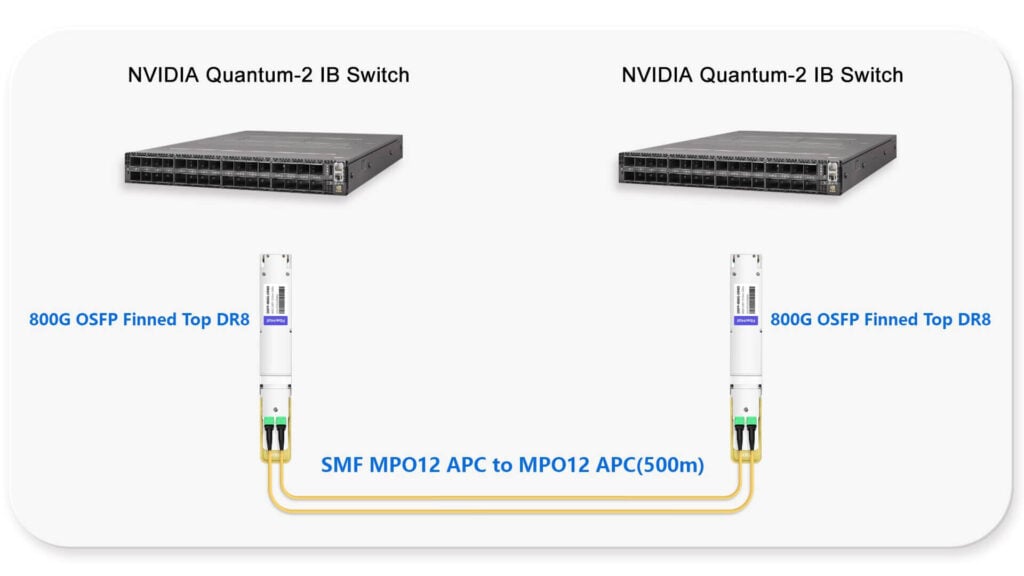
- AI training clusters (NVIDIA Quantum-2 InfiniBand)
- Exascale computing systems
- High-frequency trading infrastructure
- Next-generation cloud backbones
InfiniBand XDR compatibility makes 1.6T OSFP particularly valuable for HPC environments. The modules maintain low latency while delivering massive bandwidth.
Power reality: 1.6T modules typically consume 15-18W. Some configurations approach 20W. That’s why the OSFP form factor’s thermal advantages matter so much at this speed grade.
FiberMall’s 800G OSFP InfiniBand modules support NVIDIA Quantum-2 switches, providing the connectivity backbone for modern AI infrastructure.
Speed Selection Guidance
| Speed | Best For | Power Range | Maturity |
| 400G | General data center, cost-sensitive | 8-12W | Mature |
| 800G | AI/ML clusters, high-performance | 12-15W | Rapid adoption |
| 1.6T | Ultra-HPC, InfiniBand XDR | 15-20W | Emerging |
OSFP Technical Specifications Deep Dive
Understanding the technical details helps you design networks that actually work. Let’s get specific.
Electrical Interface
Lane Configuration:
- 8 differential pairs for high-speed data
- Each lane: 50G PAM4 (400G), 100G PAM4 (800G), or 200G PAM4 (1.6T)
- Total aggregated bandwidth as specified
Signal Integrity Parameters:
- Differential impedance: 100Ω ±10%
- Rise/fall time: <15ps for 400G, <10ps for 800G+
- Insertion loss budget: Varies by reach specification
The 8-lane architecture simplifies signal processing compared to 16-lane alternatives. Fewer lanes mean less crosstalk, simpler equalization, and better overall signal integrity.
Optical Specifications
Wavelength Options:
- 850nm (multi-mode SR applications)
- 1310nm (single-mode DR/FR applications)
- CWDM/DWDM (long-reach and WDM applications)
Transmission Distances:
| Module Type | Fiber Type | Distance | Typical Use |
| SR8 | MMF (OM4) | 100m | Intra-DC |
| DR8 | SMF | 500m | DC interconnects |
| FR8 | SMF | 2km | Campus/edge |
| LR8 | SMF | 10km | Metro networks |
Connector Types:
- MPO-16 (parallel optics, 8 transmit + 8 receive)
- Duplex LC (duplex applications)
- CS/SN (emerging high-density OSFP connectors)
Power and Thermal Specifications
Power Consumption by Speed:
- 400G: 8-12W typical, 12W max
- 800G: 12-15W typical, 15-18W max
- 1.6T: 15-18W typical, 20W max
Thermal Requirements:
- Operating temperature: 0°C to 70°C (commercial)
- Industrial variants: -40°C to 85°C
- Thermal resistance: Designed for 2-3 m/s airflow
The numbers matter for infrastructure planning. A switch with 32 OSFP ports running 800G modules might dissipate 480-640W just from the optics. That’s before counting the switch ASIC itself.
Digital Diagnostics (DOM)
OSFP modules include comprehensive monitoring:
- Real-time temperature sensing
- Supply voltage monitoring
- Laser bias current tracking
- RX/TX optical power measurement
- Module status and alarms
This data proves invaluable for OSFP troubleshooting and predictive maintenance. See our OSFP troubleshooting Guide.
Thermal Management: The Critical Challenge
Here’s something vendor datasheets don’t emphasize enough: thermal management can make or break your OSFP deployment.
Reddit discussions among OSFP data center engineers consistently highlight cooling as the #1 challenge with 800G and 1.6T OSFP modules. Real deployments show power consumption hitting 15-20W per module—significantly higher than the 12-15W typically cited in specifications. See our OSFP Data Center Deployment Guide.
Understanding the Thermal Load
Let’s run the numbers. A typical 32-port 800G switch:
- 32 ports × 15W average = 480W from optics alone
- Switch ASIC: 300-400W
- Total: 780-880W per switch
That’s nearly a kilowatt in a 1RU or 2RU package. Without proper airflow, temperatures spike and reliability suffers.
Cooling Strategies That Work
Airflow Optimization:
Standard hot aisle/cold aisle design works, but OSFP deployments need attention to detail:
- Airflow velocity: 3-4 m/s through the switch
- Intake temperature: Keep below 25°C if possible
- Rack spacing: Adequate front and rear clearance (minimum 6 inches)
- Blanking panels: Fill empty rack spaces to prevent recirculation
Riding Heat Sink (RHS) vs Integrated Heat Sink (IHS):
- OSFP-RHS: Uses the switch’s heat sink design. Better for high-power applications.
- OSFP-IHS: Self-contained thermal solution. More flexible but slightly less efficient.
For 800G+ deployments, RHS typically provides better thermal performance. But verify your switch vendor’s specific implementation.
When to Consider Liquid Cooling:
If you’re deploying 1.6T OSFP at density, air cooling might not suffice. Liquid cooling options include:
- Cold plate cooling for high-density switches
- Immersion cooling for extreme deployments
- Rear door heat exchangers for rack-level cooling
Most data centers won’t need liquid cooling for OSFP. But if you’re building AI training clusters with thousands of 1.6T links, it’s worth evaluating.
Thermal Monitoring Best Practices
Don’t wait for failures. Proactive monitoring catches problems early:
- Set temperature thresholds: Alert at 65°C, alarm at 70°C
- Track trends: Gradual temperature increases indicate airflow degradation
- Monitor DOM data: Most OSFP modules report internal temperature
- Correlate with load: Higher traffic = higher power = more heat
Real-World Thermal Design
One hyperscale deployment we supported used these specifications: · Cold aisle: 18°C intake temperature · Airflow: 4 m/s through switches · Rack power density: 15kW per rack · Result: OSFP module temperatures stable at 45-55°C
That design provides headroom for growth and handles peak loads without thermal throttling.
OSFP Applications and Use Cases
OSFP isn’t just for generic “high-speed networking.” Specific applications drive the adoption.
AI and Machine Learning Clusters
This is the big one. AI training workloads need massive bandwidth between GPU servers.
Why OSFP for AI?
- Bandwidth density: 800G or 1.6T per port keeps GPU data pipelines full
- Low latency: InfiniBand compatibility with OSFP enables sub-microsecond latency
- Scalability: Support for thousands of nodes in distributed training clusters
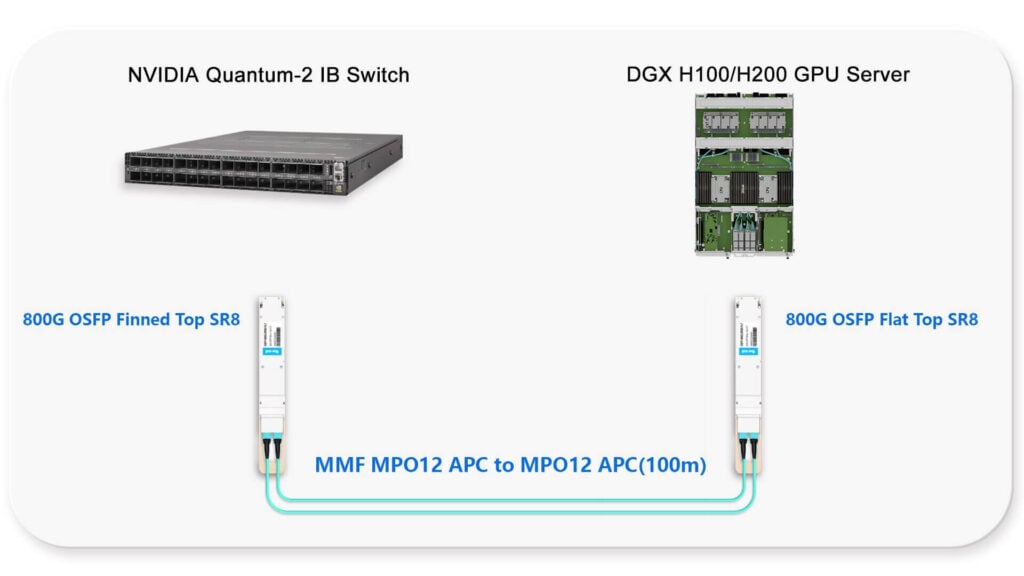
NVIDIA’s DGX systems and similar AI infrastructure use OSFP almost exclusively for 800G+ connections. The thermal performance matters when you’re packing 8-16 GPUs per server, each pushing massive data volumes.
Real deployment: A major AI lab we worked with deployed 1,200 800G OSFP links for their training cluster. The alternative—400G QSFP-DD—would have required twice as many cables and switch ports.
High-Performance Computing (HPC)
Scientific computing has always pushed networking boundaries.
Typical HPC applications:
- Weather and climate modeling
- Molecular dynamics simulations
- Computational fluid dynamics
- Genomic research
HPC environments value the reliability and deterministic performance OSFP provides. When a simulation runs for weeks on thousands of nodes, network stability isn’t optional.
Hyperscale Data Centers
The cloud providers—AWS, Azure, Google Cloud—are driving OSFP adoption at scale.
Their requirements:
- Massive bandwidth between compute and storage
- Cost efficiency at scale
- Future-proof infrastructure
- Operational reliability
When hyperscalers standardize on a technology, the supply chain follows. That’s why 800G OSFP pricing is approaching parity with 400G on a per-Gbps basis.
Financial Services and Trading
Low latency matters in high-frequency trading. A microsecond advantage can mean millions in profit.
OSFP advantages for trading:
- Deterministic latency (no variability)
- Reliable performance under load
- High bandwidth for market data feeds
These deployments typically use shorter-reach modules (SR8 or DR8) within data centers, prioritizing latency over distance.
Content Delivery Networks (CDN)
Video streaming, gaming, and software distribution all need massive bandwidth.
CDN providers use OSFP for:
- Origin to edge connectivity
- Cache server interconnects
- Peering and transit connections
The bandwidth density helps them serve more content from fewer rack units.
Module Types: SR8, DR8, FR8, and Beyond
Selecting the right module type matters as much as choosing the form factor.
SR8 (Short Reach 8)
The basics: Multi-mode fiber, 850nm VCSELs, up to 100m reach
When to use SR8:
- Intra-data center connections
- Top-of-rack to spine switch links
- Anywhere fiber runs stay under 100m
Technical details: SR8 uses 8 VCSEL lasers (vertical-cavity surface-emitting) emitting at 850nm. MMF (OM4 or OM5) carries the signal. MPO-16 connectors handle the 8 transmit + 8 receive fibers.
Cost advantage: Multi-mode fiber and VCSELs cost significantly less than single-mode alternatives. For short reach, SR8 is the economical choice.
DR8 (Datacenter Reach 8)
The basics: Single-mode fiber, 1310nm silicon photonics, 500m reach
When to use DR8:
- Data center interconnects
- Campus networks
- Any link between 100m and 500m
Technical details: DR8 switches to silicon photonics at 1310nm. Single-mode fiber eliminates modal dispersion, enabling longer distances. The same MPO-16 connector handles the parallel optics.
Real advantage: 500m covers most data center scenarios. DR8 gives you flexibility without the cost of longer-reach modules.
FR8 (Framing Reach 8)
The basics: Single-mode fiber, 1310nm, 2km reach
When to use FR8:
- Campus backbone connections
- Edge computing sites
- Metro access networks
FR8 uses the same fundamental technology as DR8 but with higher-power lasers and better receiver sensitivity. The 2km reach handles most enterprise campus requirements.
LR8 and Beyond (Long Reach)
The basics: Single-mode, various wavelengths, 10km+ reach
Options include:
- LR8: 10km reach for metro networks
- ER8: 40km reach for regional networks
- ZR: 80km+ with coherent optics
These modules cost significantly more due to advanced lasers and DSP. Use them only when distance requirements demand it.
Selection Quick Reference
| Distance | Module | Fiber Type | Cost |
| 0-100m | SR8 | MMF | Low |
| 100-500m | DR8 | SMF | Medium |
| 500m-2km | FR8 | SMF | Medium-High |
| 2km-10km | LR8 | SMF | High |
| 10km+ | ER8/ZR | SMF | Very High |
Deployment Best Practices
Getting OSFP deployed the first time correctly saves headaches later.
Pre-Deployment Checklist
Compatibility verification:
- Switch OS supports OSFP modules
- Firmware version handles target speed (400G/800G/1.6T)
- Cable infrastructure matches module requirements
- Power budget accommodates module consumption
- Cooling capacity verified for thermal load
Physical infrastructure:
- MPO-16 or LC connectors are properly installed
- Fiber testing complete (OTDR traces)
- Rack airflow verified
- Cable management planned
Installation Guidelines
Handling OSFP modules:
- Use ESD protection—static kills optics
- Remove dust caps only when ready to insert
- Align the connector properly (forced insertion damages pins)
- Push firmly until the latch clicks
- Verify seating by a gentle tug test
Cable management:
- Maintain minimum bend radius (30mm for patch cables)
- Secure cables to prevent strain on connectors
- Label both ends clearly
- Plan for future moves/adds/changes
Testing and Validation
Initial link verification:
- Check DOM readings (temperature, voltage, optical power)
- Verify link up at target speed
- Run PRBS or a similar bit error rate test
- Monitor for errors over a 24-hour burn-in
Performance benchmarks:
- Latency: Should match specification (<1μs for most modules)
- Throughput: Wire-rate at target packet sizes
- Error rate: <1×10^-12 BER
Troubleshooting Common Issues
Link won’t come up:
- Verify module seating
- Check fiber polarity (MPO-16 has specific polarity requirements)
- Confirm switch port configuration
- Try a known-good module/cable
High error rates:
- Check optical power levels (TX and RX)
- Verify fiber cleanliness
- Confirm the cable isn’t damaged
- Check for temperature issues
Intermittent connectivity:
- Usually temperature-related—check cooling
- Loose connectors—reseat modules and cables
- Marginal optical power—measure and compare to specs
FAQ
What is an OSFP transceiver?
The OSFP standard creates a high-speed optical transceiver form factor that enables data transmission at 400G, 800G, and 1.6T speeds. The system operates through eight electrical lanes, which deliver better thermal management features than older design standards.
When should I choose OSFP over QSFP-DD?
Data center construction, AI/ML cluster installation, and 800G+ deployment projects should use OSFP because these projects need effective thermal solutions. Existing QSFP infrastructure upgrades should use QSFP-DD to maintain compatibility.
What power consumption exists for OSFP modules in actual use?
Actual measurements show 400G modules use 8-12W of power, 800G modules use 12-15W, and 1.6T modules use 15-20W of power. Dense 800G+ deployments need thermal design allocation up to 20W per module.
What cooling system is necessary to operate 800G OSFP devices?
Design your system to maintain 3-4 m/s airflow through switches with intake temperatures that stay under 25°C. A 32-port 800G switch can dissipate between 600 and 800 watts of heat. You need to test if your cooling system can manage the operational demand.
Is 800G OSFP mature enough for production?
Yes. Major hyperscalers have deployed 800G OSFP at scale. The ecosystem is ready for production with switches from major vendors and modules from multiple suppliers.
What are the main applications for OSFP?
Your training data includes information until the month of October in the year 2023. The current primary driver for adopting AI infrastructure stands as the main adoption force for AI systems.
What distinguishes SR8 from DR8 and FR8?
SR8 uses multi-mode fiber for reaches up to 100m. DR8 uses single-mode fiber for 500m. FR8 extends single-mode reach to 2km. Choose based on your distance requirements.
Can I use OSFP modules in QSFP-DD ports?
No, because OSFP modules and QSFP-DD ports have different physical sizes, and their electrical components do not work together. You need switches with native OSFP ports to use OSFP modules.
What speed should I deploy—400G, 800G, or 1.6T?
New AI/ML infrastructure and high-performance applications require the deployment of 800G. Use 400G for general data center connectivity where cost matters. The 1.6T capacity should be kept exclusively for situations that need extreme performance.
Related Products:
-
 NVIDIA MMA4Z00-NS Compatible 800GBASE 2 x SR4/SR8 OSFP PAM4 850nm 100m DOM Dual MPO-12 MMF Optical Transceiver Module
$550.00
NVIDIA MMA4Z00-NS Compatible 800GBASE 2 x SR4/SR8 OSFP PAM4 850nm 100m DOM Dual MPO-12 MMF Optical Transceiver Module
$550.00
-
NVIDIA MMA4Z00-NS-FLT Compatible 800GBASE 2 x SR4/SR8 OSFP RHS/Flat Top PAM4 850nm 100m DOM Dual MPO-12 MMF Optical Transceiver Module
$600.00
-
NVIDIA MMS4X00-NM Compatible 800GBASE 2 x DR4/DR8 OSFP IHS/Closed Finned Top PAM4 1310nm 500m DOM Dual MTP/MPO-12 SMF Optical Transceiver Module
$600.00
-
NVIDIA MMS4X00-NM-FLT Compatible 800GBASE 2 x DR4/DR8 OSFP Flat Top PAM4 1310nm 500m DOM Dual MTP/MPO-12 SMF Optical Transceiver Module
$650.00
-
NVIDIA MMS4X50-NM Compatible 800G 2x FR4 OSFP IHS/Closed Finned Top PAM4 1310nm 2km DOM Dual Duplex LC SMF InfiniBand NDR Optical Transceiver Module
$1000.00
-
NVIDIA MMS4A20-XM800 Compatible 800G DR4 OSFP224 4x200G-PAM4 1311nm 500m RHS/Flat Top DOM MTP/MPO-12 APC InfiniBand XDR Transceiver Module
$1300.00
-
NVIDIA MMS4A00 (980-9IAH1-00XM00) Compatible 1.6T 2 x DR4/DR8 OSFP224 PAM4 1311nm 500m IHS/Finned Top Dual MPO-12 SMF Optical Transceiver Module
$1500.00
-
NVIDIA MMS4X50-NM Compatible 1.6T 2xFR4/FR8 OSFP224 PAM4 1310nm 2km IHS/Finned Top Dual Duplex LC SMF Optical Transceiver Module
$1800.00
-
NVIDIA MMS4A00-RHS Compatible 1.6T 2xDR4/DR8 OSFP224 PAM4 1311nm 500m RHS/Flat Top Dual MPO-12/APC InfiniBand XDR SMF Optical Transceiver Module
$2000.00
-
OSFP-800G-DR8D-FLT Compatible 800GBASE 2 x DR4/DR8 OSFP Flat Top PAM4 1310nm 500m DOM Dual MTP/MPO-12 SMF Optical Transceiver Module
$650.00
-
OSFP-800G-SR8D-FLT Compatible 800G 2 x SR4/SR8 OSFP RHS/Flat Top PAM4 850nm 100m DOM Dual MPO-12 MMF Optical Transceiver Module
$600.00
-
OSFP-800G-SR8D Compatible 800GBASE 2 x SR4/SR8 OSFP PAM4 850nm 100m DOM Dual MPO-12 MMF Optical Transceiver Module
$550.00
-
OSFP-800G-2FR4L 800G 2 x FR4 OSFP IHS/Closed Finned Top PAM4 1310nm 2km DOM Dual Duplex LC SMF InfiniBand NDR Optical Transceiver Module
$1000.00
-
OSFP-800G-DR8D Compatible 800GBASE 2 x DR4/DR8 OSFP PAM4 1310nm 500m DOM Dual MTP/MPO-12 SMF Optical Transceiver Module
$550.00