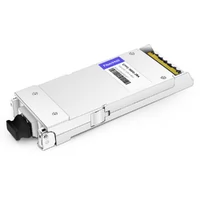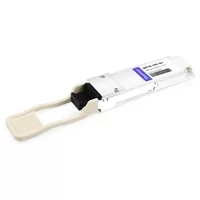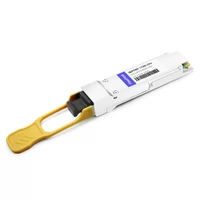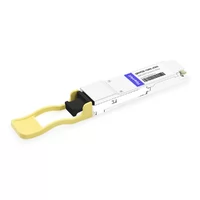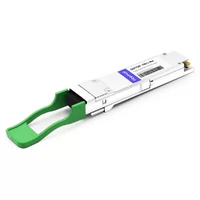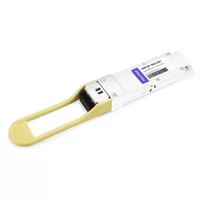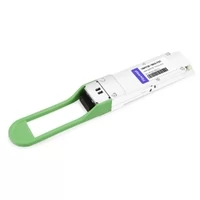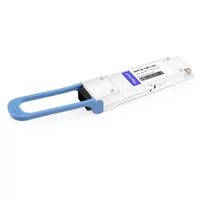

Elena, a network architect in Amsterdam, stared at two 100G line-card options for her new metro router. One slot took a CFP2 module. The other took a QSFP28. Both promised 100 Gbps. The CFP2 faceplate looked enormous next to the QSFP28 cage. She needed the same bandwidth, but she also needed twelve ports per line card, not two. That’s the moment the real qsfp vs cfp question hit home.
If you’re sizing a 100G deployment, you’ve probably asked the same thing. Should you use CFP, CFP2, CFP4, or QSFP28? The answer depends on reach, power, density, and what your switch hardware actually accepts. This guide breaks down every major 100G form factor so you can pick the right pluggable for the job.
Need 100G transceivers for your next deployment? Explore FiberMall’s optical transceiver solutions or contact our networking experts for a form-factor review.
Quick Verdict
If you just need the bottom line, here it is:
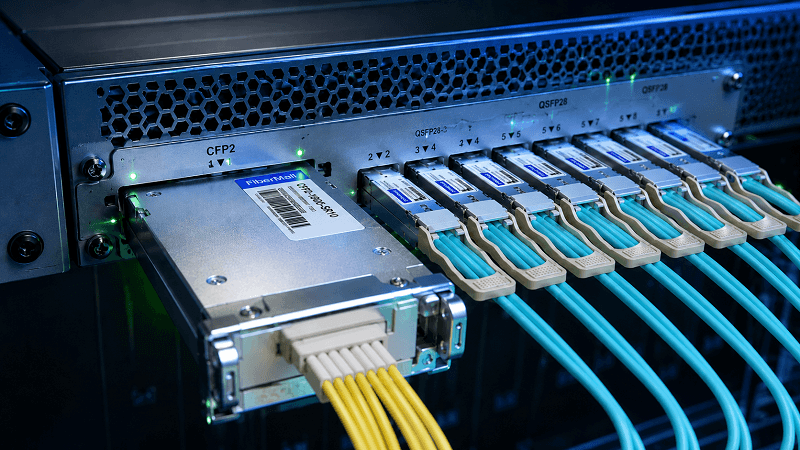
- For data center / cloud 100G: Choose QSFP28. It’s the smallest, coolest, and most widely supported option.
- For metro or long-haul DWDM: Choose CFP2-DCO or CFP4-DCO for integrated coherent reach.
- For legacy CFP hardware: Use CFP4 as the smallest backward-compatible refresh.
- For a 400G/800G roadmap: Start with QSFP28 and move to QSFP-DD on the same switch family.
The CFP Form Factor Family: CFP, CFP2, and CFP4
CFP stands for “C Form-factor Pluggable.” The CFP MSA family was designed to carry 100G Ethernet and OTU4 traffic in a hot-pluggable module. Each generation shrinks the package and cuts power.
CFP (Gen 1): The Original 100G Workhorse
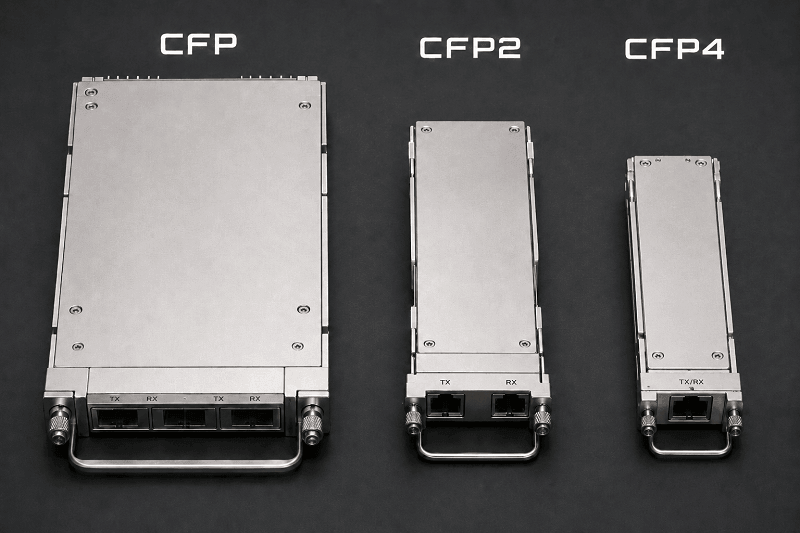
The first-generation CFP is big. Really big. Typical dimensions run about 144.75 × 82 × 13.6 mm. It was built early in the 100G era, when optics and DSPs needed more board area and more thermal headroom.
CFP supports 100G through 10 × 10 Gbps electrical lanes or 4 × 25 Gbps lanes. Power consumption can reach 24 W, and sometimes higher in early coherent variants. That size and power made CFP popular in telecom backbones and metro networks where reach mattered more than port count.
Today, CFP is largely legacy. You’ll still see it in carrier transport gear, but most new data center hardware has moved on.
CFP2: Half the Size, Still Built for Reach
CFP2 cuts the first-generation footprint roughly in half, down to about 107.5 × 41.5 × 12.4 mm. Power drops to a typical 12 W, though high-performance coherent CFP2-DCO modules can climb toward 18–24 W.
The module keeps the long-haul and metro focus. It supports 4 × 25 Gbps or 8 × 25 Gbps electrical interfaces, and it’s the form factor of choice for many coherent 100G deployments. CFP2-ACO and CFP2-DCO variants integrate the optics and DSP needed for DWDM transport.
For a deep dive into the QSFP side of the same 100G conversation, see FiberMall’s QSFP28 transceiver guide.
CFP4: The Data Center-Friendly CFP
CFP4 shrinks again to roughly 92 × 21.5 × 9.5 mm, about one-quarter the size of the original CFP. Typical power falls to around 6 W, making it the most efficient member of the CFP family.
It uses 4 × 25 Gbps lanes, just like QSFP28. That makes CFP4 attractive for high-density data center interconnect and operator networks that still need a CFP-style ecosystem. Still, a CFP4 module is roughly 66% larger than a QSFP28. Port density favors QSFP28.
What About CFP8?
CFP8 is the 400G member of the family. It’s larger than CFP4 again, roughly 107.5 × 41.5 × 12.4 mm, and it draws 15–20 W. CFP8 carries 16×25G or 8×50G electrical lanes.
It never achieved the same traction as QSFP-DD or OSFP in data centers, but you may still see it in some carrier transport platforms. For new 400G builds, QSFP-DD is almost always the better fit.
QSFP and QSFP28: The Density Play
QSFP stands for Quad Small Form-factor Pluggable. The “quad” refers to four transmit/receive channels.
QSFP+ carries 40G over four 10 Gbps lanes. QSFP28 carries 100G over four 25 Gbps lanes. A QSFP28 module measures roughly 72.5 × 18.35 × 8.5 mm and typically draws 3.5 W. Switches can pack 36 QSFP28 ports into a single 1RU device.
That’s why QSFP28 became the default 100G form factor for data centers, cloud networks, and AI clusters. It also keeps a path forward through QSFP-DD for 400G and 800G. FiberMall covers that migration in the QSFP-DD vs QSFP28 vs OSFP comparison.
QSFP vs CFP: Side-by-Side Specifications
| Form Factor | Typical Dimensions (L × W × H) | Electrical Lanes | Typical Power | Pin Count | Best Use Case |
| CFP | ~144.8 × 82 × 13.6 mm | 10×10G or 4×25G | up to ~24 W | 148 | Legacy long-haul / metro |
| CFP2 | ~107.5 × 41.5 × 12.4 mm | 4×25G, 8×25G, 8×50G | ~12 W | 104 | Metro / coherent 100G |
| CFP4 | ~92 × 21.5 × 9.5 mm | 4×25G | ~6 W | 56 | High-density DCI / operator |
| QSFP28 | ~72.5 × 18.35 × 8.5 mm | 4×25G | ~3.5 W | 38 | Data center / cloud 100G |
The table tells the story. Each CFP generation gets smaller and more efficient. QSFP28 is smaller and more efficient still.
Power, Density, and Rack Space in the QSFP vs CFP Debate
The 100G CFP vs QSFP28 power story is easiest to see in a real rack.
Tom, a data center engineer in Dallas, had to double fabric capacity in the same rack. His existing switches used QSFP28. A rival proposal suggested CFP2-based gear for “better optics.” Tom ran the numbers.
A 36-port QSFP28 switch drew roughly 126 W in optics at 3.5 W per module. A 12-port CFP2 switch drew 144 W in optics at 12 W per module. The QSFP28 option delivered three times the bandwidth in the same rack space and used less total power. The CFP2 proposal never made it past the whiteboard.
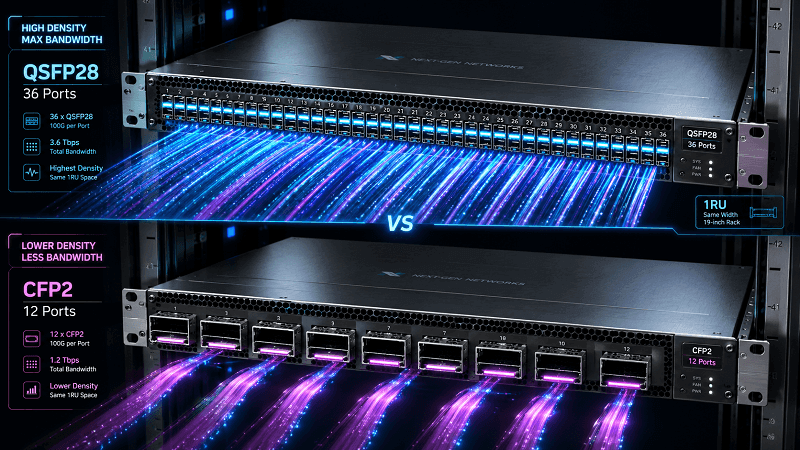
That example isn’t a knock on CFP2. It’s simply a different tool. CFP2-DCO coherent modules can reach thousands of kilometers. QSFP28 can’t do that without specialized DWDM or ZR variants. Density and reach are the real trade-offs in the qsfp vs cfp debate.
For more on power efficiency across form factors, read FiberMall’s QSFP power consumption per gigabit guide.
Switch Port and Backward Compatibility
Form-factor choice isn’t only about specs. It’s also about what your hardware already accepts. A QSFP28 module won’t fit a CFP2 cage, and a CFP4 module won’t mate with a CFP slot. Before you order, check these points:
- Cage/keying: Each form factor has a unique mechanical key and latch position. CFP and CFP2 use a wider, two-piece housing. CFP4 and QSFP28 look similar from the front but have different width and latch geometry.
- Electrical interface: CFP Gen 1 supports 10×10G or 4×25G. CFP2 adds 8×25G and 8×50G options. QSFP28 is strictly 4×25G. Make sure your host ASIC lane map matches the module.
- Power budget: A 24 W CFP2-DCO may exceed the capability of a switch designed for standard 12 W CFP2 modules. Check per-port power limits in the hardware datasheet.
- Management interface: CFP modules use MDIO-based management. QSFP28 uses the two-wire serial interface defined by SFF-8436/SFF-8636. See FiberMall’s QSFP pinout and MSA electrical interface guide for the exact pinout. Your switch firmware must speak the right protocol.
- Thermal design: Denser modules need better airflow. A 1RU switch filled with 24 W CFP2-DCO modules has very different cooling needs than one filled with 3.5 W QSFP28 modules.
If you’re refreshing existing gear, the fastest path is usually to match the form factor already in the chassis. If you’re designing a new rack, QSFP28 gives you the widest choice of switches.
Reach and Application Fit
Data Center and DCI: QSFP28 Dominates
Inside the data center, links are short. Top-of-rack to leaf, leaf to spine, and spine to core rarely exceed 10 km. QSFP28 SR4, LR4, and CWDM4 variants cover these distances at low power and high density.
Cloud providers and AI clusters also prefer QSFP28 because the same switch family scales to QSFP-DD for 400G. Consistent form-factor roadmaps reduce hardware churn.
Metro and Long-Haul: CFP2 and CFP4 Still Matter
When traffic leaves the data center and rides a DWDM network, coherent optics become necessary. CFP2-DCO and CFP4 modules integrate the DSP and tunable laser needed for 80 km, 200 km, and even transcontinental links.
CFP2-DCO modules typically draw 15–25 W. That sounds high compared with QSFP28, but they replace much larger transport cards. A single CFP2-DCO can do the work of a line card that once consumed hundreds of watts.
Coherent CFP2-DCO vs QSFP28 DWDM
QSFP28 does have DWDM options. O-band DWDM QSFP28 modules can run under 5.5 W for 25 km. ZR and ZR+ QSFP28 coherent variants can reach 80 km or more, but power climbs toward 15 W. PrecisionOT explains the long-haul breakthrough of CFP2 DCO pluggable coherent modules in more detail.
The cfp2 vs qsfp28 choice isn’t always binary. Sometimes it’s both: QSFP28 for high-density short reach, CFP2-DCO for the long-haul handoff.

Cost and TCO Considerations
Module cost is only one line item. Total cost of ownership includes switch port cost, power, cooling, and rack space.
A QSFP28 module often costs less than a CFP4 module and far less than a CFP2-DCO. More importantly, a QSFP28 switch delivers more ports per rack unit. That lowers the per-Gbps cost of the switch itself.
CFP2 and CFP4 still justify their price when reach is the constraint. A coherent CFP2-DCO may cost more per module than a QSFP28 LR4, but it can replace a separate DWDM transponder and muxponder. The system-level savings can be significant.
Decision Matrix: When to Choose Which Form Factor
| Your Requirement | Best Choice | Why |
| High-density 100G inside a data center | QSFP28 | Lowest power, smallest size, biggest ecosystem |
| 100G DCI up to 10–40 km | QSFP28 LR4 / ER4 / CWDM4 | Low power, proven optics |
| Metro DWDM / coherent 100G | CFP2-DCO or CFP4-DCO | Integrated DSP, long reach |
| Legacy CFP hardware refresh | CFP4 | Smallest CFP footprint, backward ecosystem |
| 400G/800G roadmap | QSFP28 → QSFP-DD | Same switch family scales forward |
The matrix isn’t absolute. Vendor support, existing hardware, and reach requirements all matter. But for new high-density builds in 2026, QSFP28 is the default.
Quick Recap: QSFP vs CFP Family Trade-Offs
| Comparison Point | CFP Family | QSFP28 |
| Size trend | Shrinks with each generation; still larger than QSFP28 | Smallest 100G pluggable |
| Power trend | Drops from ~24 W to ~6 W | ~3.5 W typical |
| Reach | Metro to long-haul with coherent variants | Short-reach to medium-reach; ZR for longer |
| Ecosystem | Telecom and carrier focused | Data center and cloud dominant |
| Migration path | CFP4 within CFP hardware | QSFP-DD and OSFP for 400G/800G |
This table restates the core trade-off. QSFP28 wins on density and power. CFP2 and CFP4 win when coherent reach is the priority.
2026 Market Outlook
CFP is legacy. CFP2 hangs on in coherent transport. CFP4 serves niche high-density roles where a CFP hardware ecosystem already exists. QSFP28 and its QSFP-DD successor dominate data center and cloud deployments.
- Legacy CFP: Found only in carrier transport gear that hasn’t been refreshed. Replacement is usually CFP4 or QSFP28, depending on the chassis.
- CFP2: Still the go-to for coherent 100G metro and long-haul DWDM where ZR+ QSFP28 isn’t yet approved.
- CFP4: Used by operators who need a smaller CFP footprint without replacing switches.
- QSFP28: Default for new 100G builds in data centers, AI clusters, and cloud fabrics.
- QSFP-DD/OSFP: The forward path for 400G and 800G, often in the same switch family as QSFP28.
Asterfusion’s 100G packaging guide makes the same point: QSFP28 and CXP fit short-reach data-center links, while CFP/CFP2/CFP4 remain relevant for long-distance and carrier networks.
The practical takeaway: if you’re buying new switch hardware today, choose QSFP28 or QSFP-DD. Keep CFP2 in mind only when coherent long-haul is part of the design.
FAQ
What is the difference between QSFP and CFP4?
QSFP28 and CFP4 both deliver 100G over four 25 Gbps lanes. The qsfp28 vs cfp4 comparison comes down to size and ecosystem: QSFP28 is smaller, uses less power, and has broader switch support. CFP4 is part of the CFP ecosystem and is used in hardware designed for that family.
Is CFP4 smaller than QSFP28?
No. CFP4 is roughly 92 × 21.5 mm. QSFP28 is roughly 72.5 × 18.35 mm. QSFP28 is the denser package.
Does CFP use more power than QSFP28?
Yes. First-generation CFP modules can draw up to 24 W. CFP2 draws around 12 W. CFP4 draws around 6 W. QSFP28 typically draws 3.5 W.
When would I still choose CFP2?
Choose CFP2-DCO for coherent 100G metro or long-haul DWDM where reach exceeds what standard QSFP28 can support in the cfp vs qsfp lineup.
Can I plug a CFP4 module into a CFP2 port?
No. CFP2 and CFP4 are mechanically and electrically different. They aren’t interchangeable.
Conclusion
The qsfp vs cfp decision really comes down to density versus reach. QSFP28 is smaller, cooler, cheaper per bit, and backed by the largest 100G ecosystem. CFP, CFP2, and CFP4 still earn their keep in coherent transport and legacy hardware where long-haul performance matters more than port count.
Start with your reach requirement. Then check your switch hardware. If everything points to short-reach data center or DCI, QSFP28 is almost certainly the right call. If you need coherent DWDM, CFP2-DCO remains a strong option.
If you’re sourcing 100G modules across QSFP28, CFP4, or CFP2 form factors, explore FiberMall 100G QSFP28 and CFP optical transceiver solutions or contact our networking experts before your next upgrade.
Related Products:
-
 CFP-100G-ER4 100G CFP ER4 1310nm 40km LC SMF DDM Transceiver Module
$2650.00
-
CFP2-100G-ER4 100G CFP2 ER4 1310nm 40km LC SMF DDM Transceiver Module
$2650.00
-
100G CFP2 ZR4 1310nm 80km LC SMF DDM Transceiver Module
$3000.00
-
CFP-100G-ZR4 100G CFP ZR4 LWMD4 80km LC SMF DDM Transceiver Module
$3000.00
-
QSFP28-100G-SR4 100G QSFP28 SR4 850nm 100m MTP/MPO MMF DDM Transceiver Module
$40.00
-
QSFP28-112G-SR4 112G OTU4 QSFP28 SR4 850nm 100m MTP/MPO MMF DDM Transceiver Module
$50.00
-
H3C QSFP-100G-eSR4-MM850 Compatible 100G QSFP28 eSR4 850nm 200m on OM3/300m on OM4 MTP/MPO MMF DDM Transceiver Module
$75.00
-
QSFP28-100G-IR4 100G QSFP28 IR4 1310nm (CWDM4) 2km LC SMF DDM Transceiver Module
$110.00
-
QSFP28-100G-DR1 100G QSFP28 Single Lambda DR 1310nm 500m LC SMF with FEC DDM Optical Transceiver
$180.00
-
QSFP28-100G-PSM4 100G QSFP28 PSM4 1310nm 500m MTP/MPO SMF DDM Transceiver Module
$180.00
-
Huawei QSFP-100G-eCWDM4 Compatible 100G QSFP28 eCWDM4 1310nm 10km LC SMF DDM Transceiver Module
$200.00
-
QSFP28-100G-FR1 100G QSFP28 Single Lambda FR 1310nm 2km LC SMF with FEC DDM Optical Transceiver
$215.00
-
Arista Networks QSFP-100G-LRL4 Compatible 100G QSFP28 LRL4 1310nm (LWDM4) 2km LC SMF DDM Transceiver Module
$245.00
-
QSFP28-100G-LR1 100G QSFP28 Single Lambda LR 1310nm 10km LC SMF with FEC DDM Optical Transceiver
$265.00
-
QSFP28-100G-SR1.2 Single Rate 100G QSFP28 BIDI 850nm & 900nm 100m LC MMF DDM Optical Transceiver
$280.00
-
QSFP28-100G-LR4 100G QSFP28 LR4 1310nm (LAN WDM) 10km LC SMF DDM Transceiver Module
$285.00