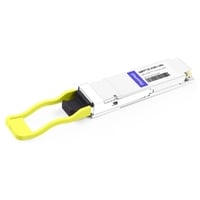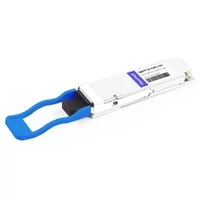

The same 400G DR4 optic can sell for around $500 from a factory-direct supplier and more than $1,400 from some vendor list price channels. Four price points, one standard, and four identical 500-meter links.
That spread is the challenge when searching for a QSFP112 price. Google returns a long list of product pages, each showing a different number without much context, leaving buyers to determine which price actually reflects the market.
You probably already have a rough idea of what 400G optics cost. The difficult part is understanding why prices vary so widely and which factors actually affect the final budget.
This guide puts the numbers side by side. You’ll find a 2026 price table by module type, the real pricing gap between OEM and factory-direct modules, the cost per port and per gigabit calculations used in procurement planning, and a checklist to review before sending an RFQ.
Prices below are based on market listings and supplier references available on September 23, 2026. They should be used as planning guidance rather than a binding quotation.
If you need technical background first, our complete QSFP112 400G guide covers the standard, form factor, electrical interface, and reach options before comparing pricing.
How Much Does a QSFP112 Cost in 2026?
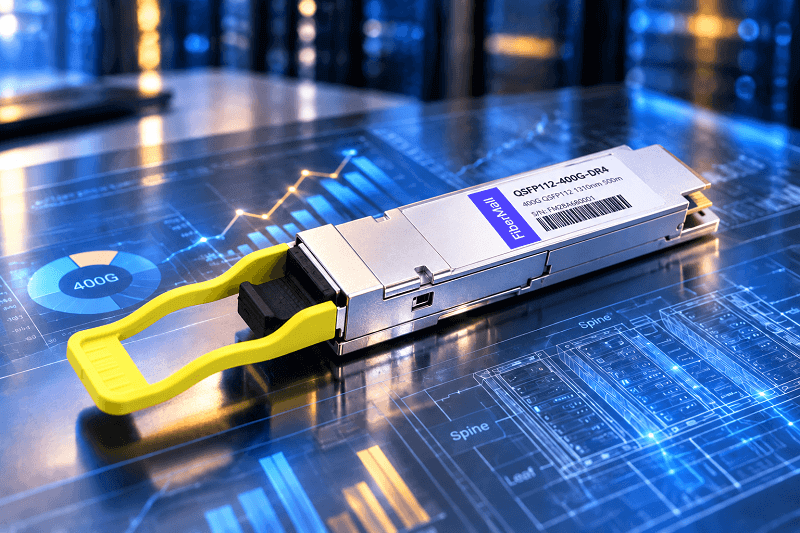
Short answer: a QSFP112 400G optical module typically ranges from about $385 to $1,000 from factory-direct suppliers, depending on reach and optical architecture.
VR4 and SR4 are generally the lowest-cost options at around $385–$400. DR4 typically falls near $500. FR4 is around $600, while LR4 10km modules are usually closer to $1,000.
OEM-branded and distributor-supplied versions of equivalent optics may range from approximately $1,300 to $2,700 depending on vendor support, warranty coverage, and supply channel.
Here’s the detailed breakdown.
400G QSFP112 Price by Module Type (2026)
| Variant | Reach | Connector | Factory-direct | OEM / distributor list |
| VR4 | 50 m | MPO-12 | ~$385 | Not listed |
| SR4 | 100 m | MPO-12 | ~$400 | ~$1,400 |
| DR4 | 500 m | MPO-12 | ~$500 | ~$1,400–$1,900 |
| FR1 (4x100G) | 2 km | Duplex LC / breakout variants | ~$800 | Not listed |
| FR4 | 2 km | Duplex LC | ~$600 | ~$1,600 |
| LR4 | 10 km | Duplex LC | ~$1,000 | ~$1,800+ |
These factory-direct figures represent FiberMall catalog pricing references as of September 23, 2026. OEM and distributor pricing varies depending on supplier, service package, warranty terms, and procurement channel.
Want to compare the full product range? Explore the 400G QSFP112 transceiver range to review different variants and reach options side by side.
What Actually Moves the Number
Four major factors influence QSFP112 pricing: optical reach, coding requirements, DSP or LPO architecture, and purchase volume.
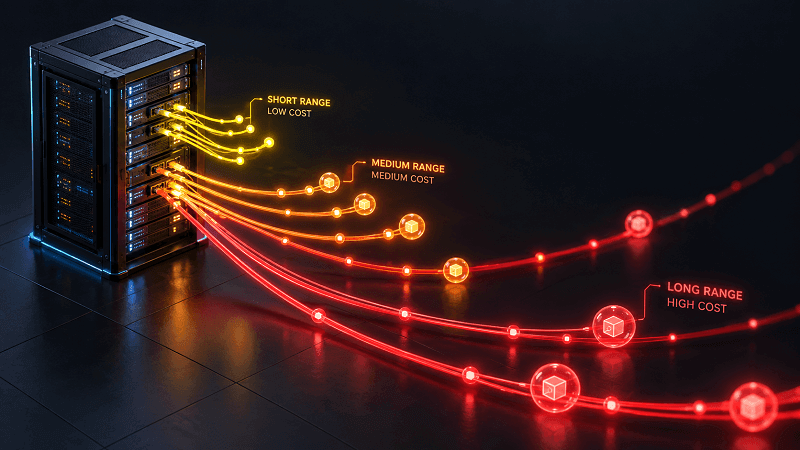
Reach is usually the biggest factor. Short-reach modules use mature multimode optical components, while longer-reach solutions require more advanced single-mode optics, wavelength management, and stricter optical testing.
Coding requirements can also affect pricing in some supply channels. However, compatible modules from suppliers such as FiberMall may maintain consistent pricing between generic and vendor-coded versions.
The final factor is volume. Large project quantities typically receive better pricing, although optical component costs limit how much discounts can scale.
Let’s take them in order.
Why QSFP112 Prices Vary So Widely
A 7x price difference for the same 400G interface may sound unusual until you understand where the cost comes from. In most cases, the optical components contribute more to the overall module cost than the electrical components.
Reach and Optics
Short-reach modules are typically the most affordable because they use mature and cost-effective optical components.
VR4 and SR4 modules use 850nm VCSEL-based optical engines designed for multimode fiber applications. These solutions are widely deployed for short-distance connections and benefit from high-volume manufacturing.
Longer-reach modules require more advanced single-mode optical technology.
DR4 uses four 1310nm optical channels transmitted over parallel single-mode fiber to support distances up to 500 meters. FR4 integrates wavelength multiplexing technology, allowing four optical channels to be transmitted over a duplex LC interface for 2km links. LR4 extends the reach to 10km by using four wavelength channels around the 1310nm band with a tighter optical power budget and more demanding testing requirements.
The practical takeaway: don’t pay for reach you don’t need. A 10 km LR4 on a 150-meter rack-to-rack run is money left on the table. Our QSFP112 module types comparison walks through each variant if you’re not sure which one your fiber plant calls for.
Coding: Generic Versus Vendor-Coded
Here’s something many price comparisons overlook. Vendor coding refers to the EEPROM identification information programmed into a transceiver, allowing a module to be recognized as a specific vendor-compatible optic, such as Cisco, Arista, or H3C.
On some platforms, vendor coding is required for proper recognition and support. In other environments, generic or multi-vendor coded modules may work successfully if they comply with the required optical and electrical specifications.
At FiberMall, vendor-coded and generic QSFP112 modules may be offered at the same price depending on the product line. A Cisco-coded QSFP112 DR4 and a generic version can share the same pricing structure, which helps eliminate unnecessary coding premiums in compatible applications.
Always confirm compatibility with your switch platform before selecting generic or vendor-coded optics.
DSP Versus LPO
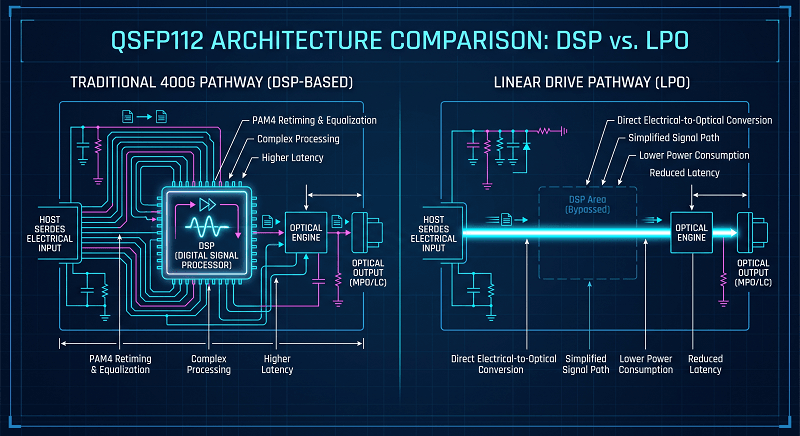
A standard QSFP112 400G optical module typically uses a DSP to process PAM4 signals and compensate for channel impairments between the host SerDes and the optical engine.
Linear-drive pluggable optics (LPO) remove the DSP and rely on the host switch ASIC’s SerDes capabilities to directly drive the optical components.
Removing the DSP can reduce power consumption and potentially lower the bill of materials. However, current market pricing does not always reflect the theoretical cost advantage.
I’ll return to this topic in the pricing trends section because LPO represents one of the most interesting developments in the current 400G optical market.
OEM vs Factory-Direct: The Real QSFP112 Price Gap
Let’s put the two pricing models side by side. This is the comparison procurement teams should review during budget planning.
| Variant | Factory-direct (Sep 2026) | Distributor list | Multiple |
| SR4 | ~$400 | ~$1,400 | ~3.4x |
| DR4 | ~$500 | ~$1,400 | ~2.8x |
| FR4 | ~$600 | ~$1,600 | ~2.7x |
The technical specifications are based on the same 400G Ethernet optical standards. The additional premium in OEM channels generally comes from brand support, vendor warranty programs, validated interoperability, and enterprise service agreements.
It does not mean the optical transmission technology is fundamentally different.
Now consider the scale.
A 64-port leaf switch fully populated with DR4 modules requires approximately 64 optical modules. At around $500 per module from a factory-direct supplier, the optical cost is about $32,000.
Using OEM-channel pricing at around $1,400 per module, the same deployment could approach $89,600.
That creates a difference of roughly $57,000 on a single switch, and a large AI infrastructure deployment with multiple switches can multiply that gap significantly.
When is OEM worth the premium?
There are situations where first-party optics may be preferred, including end-to-end vendor validation, integrated warranty coverage, support requirements, firmware certification policies, or compliance requirements such as TAA.
When is factory-direct the right choice?
For standard leaf-spine networks, AI cluster east-west traffic, and data center interconnect applications, MSA-compliant modules that have been validated on the target platform can provide a cost-effective alternative.
The key is verifying compatibility, testing history, and support requirements before making a purchasing decision.
QSFP112 Cost Per Port and Cost Per Gigabit
Because QSFP112 is a single-port 400G optical interface, each module provides one 400G connection. Therefore, the optical module price directly represents the optical cost per port.
| Variant | Price | Cost per 400G port | Cost per Gbps |
| VR4 | ~$385 | ~$385 | ~$0.96 |
| SR4 | ~$400 | ~$400 | ~$1.00 |
| DR4 | ~$500 | ~$500 | ~$1.25 |
| FR4 | ~$600 | ~$600 | ~$1.50 |
| FR1 | ~$800 | ~$800 | ~$2.00 |
| LR4 | ~$1,000 | ~$1,000 | ~$2.50 |
At around $1 per gigabit for SR4, 400G QSFP112 provides significantly better bandwidth economics compared with earlier 100G optical generations.
The improvement comes from 112G PAM4 electrical signaling, where four lanes operating at approximately 100Gb/s each enable a 400G interface with higher port density and improved bandwidth efficiency.
What the Sticker Price Misses
Module price is only one part of the total deployment cost. Three additional factors are often overlooked in budget planning.
The cable choice matters.
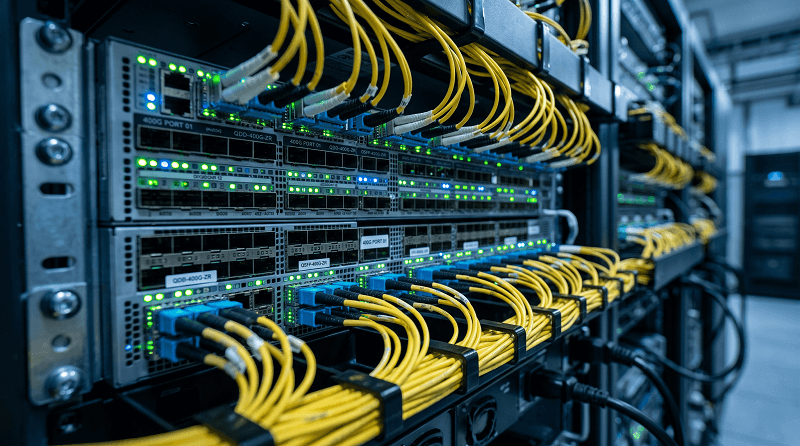
For very short connections inside a rack, QSFP112 DAC or ACC cables are usually much more economical than optical modules. For medium-distance connections within a row, active optical cables can provide a balance between cost and reach. Full optical modules are typically selected for longer leaf-spine links and higher-density structured cabling environments.
The switch port cost is another factor.
A 400G switch port or line card represents a significant infrastructure investment. The optical module is only one component of the total cost associated with deploying each high-speed connection.
Power consumption is also important.
QSFP112 modules typically consume around 8 to 12 watts depending on optical architecture and implementation, while QSFP-DD 400G/800G solutions may have different thermal and power requirements. Across thousands of ports, even small differences can affect operational expenses.
For accurate planning, power consumption should be included as part of the total cost analysis rather than treated as an insignificant factor.
QSFP112 Price Trends: Which Way Are Prices Moving?
The overall direction is downward.
400G optical modules have been experiencing continuous cost reductions as 112G PAM4 technology moves into higher-volume production and more suppliers enter the market. Factory-direct pricing has become increasingly competitive compared with earlier OEM and distributor benchmarks.
However, pricing should always be evaluated with proper market context. Different channels, volumes, specifications, and qualification requirements can create significant price differences.
Some industry discussions reference very low historical 400G pricing levels. These figures may represent specific high-volume agreements, component-level pricing, or simplified cost calculations rather than standard market prices.
For procurement planning, buyers should compare current quotations based on complete specifications, including optical reach, connector type, coding requirements, testing coverage, and warranty terms.
The more interesting development is LPO.
In some current supplier catalogs, LPO modules are priced above equivalent DSP-based modules:
| Variant | DSP-based | LPO |
| SR4 | ~$400 | ~$800 |
| DR4 | ~$500 | ~$1,200 |
| FR4 | ~$600 | ~$1,350 |
This appears counterintuitive because LPO removes the DSP, which can reduce component cost and power consumption.
The reason is early-stage market economics. LPO products currently have lower production volumes, additional host compatibility validation requirements, and more engineering effort for signal tuning and system integration.
Treat current LPO pricing as an early-market premium. As LPO adoption increases and manufacturing scales, pricing may become more competitive and better reflect its simpler architecture.
Another trend worth watching is the transition toward 800G and higher-speed networking.
As 800G optical solutions become more widely deployed, 400G QSFP112 products are expected to move further into mainstream data center applications, creating additional cost pressure and improving price competitiveness for buyers.
Volume Discounts and Bulk QSFP112 Pricing
Quantity always affects pricing, although the discount is usually not as large as buyers expect.
For 400G optical modules, market discounts often depend heavily on supplier relationships, order commitment, product configuration, and qualification requirements.
Large-volume projects may receive meaningful reductions compared with single-unit pricing. However, optical components such as lasers, optical engines, and DSPs represent a significant portion of the bill of materials, limiting how aggressively prices can decrease.
A realistic project quotation should consider:
- Module quantity
- Optical variant
- Cable length and connector requirements
- Vendor coding requirements
- Required testing and validation
- Delivery schedule
FiberMall’s catalog displays standard product pricing, while project pricing is typically quoted according to specific customer requirements.
This means the final price depends on the complete configuration rather than quantity alone.
It is also worth understanding why optical discounts are often smaller than passive cabling discounts.
Fiber optic cables contain more passive components, which usually provide greater manufacturing flexibility and pricing room. Optical transceiver pricing is more closely tied to semiconductor and optical component costs, which do not decrease as quickly with volume.
How to Get the Best QSFP112 Price: Procurement Checklist
Run through this checklist before sending an RFQ. It helps ensure that different quotations are actually comparing the same product requirements.
- Confirm the optical variant matches your required transmission distance and fiber infrastructure. Avoid selecting LR4 for applications that only require short-distance connectivity.
- Confirm the required coding option, including generic compatibility or vendor-specific coding.
- Evaluate DSP versus LPO based on your switch platform, signal requirements, power budget, and deployment environment.
- Select the appropriate connectivity option:
- DAC or ACC for very short-distance connections
- AOC for medium-distance in-row applications
- Optical modules for longer leaf-spine and data center links
- Request project pricing based on actual quantities rather than relying only on single-unit prices.
- Request the supplier’s validation information, including supported platforms, testing procedures, and interoperability results.
- Confirm lead time, minimum order quantity, warranty coverage, and after-sales support.
- Verify compliance requirements such as TAA or NDAA if applicable to your organization.
- Confirm the supported firmware version and switch NOS requirements before shipment.
- Be cautious of any supplier quoting an undated “average market price” without explaining the product specification or source.
If you need accurate budgeting information, request a project quotation together with the platform compatibility matrix. A complete technical and commercial review provides more value than comparing a single list price.
Frequently Asked Questions
How much does a QSFP112 module cost in 2026?
Factory-direct pricing typically ranges from approximately $385 for VR4, $400 for SR4, $500 for DR4, $600 for FR4, and around $1,000 for LR4.
OEM and distributor pricing can be significantly higher depending on vendor support, warranty coverage, and supply channel.
Why are OEM QSFP112 modules so much more expensive?
The optical specifications are generally based on the same industry standards.
The additional cost usually comes from vendor branding, warranty programs, validated interoperability, technical support, firmware certification, and enterprise procurement requirements.
For some products, OEM pricing can be several times higher than compatible alternatives.
What is the cost per port of 400G QSFP112?
A QSFP112 module provides one 400G optical interface, so the module price represents the optical cost per port.
Typical examples:
- DR4: around $500 per 400G port
- LR4: around $1,000 per 400G port
Is QSFP112 cheaper than QSFP-DD?
The answer depends on the application.
QSFP112 is designed around four 100G-class PAM4 lanes to deliver 400G, while QSFP-DD supports higher lane density and is widely used for both 400G and 800G applications.
Cost differences depend on module type, optical technology, power requirements, and deployment scale.
Are LPO QSFP112 modules cheaper than DSP-based ones?
Not currently in many supplier catalogs.
Although LPO removes the DSP component, current LPO pricing can remain higher because of lower production volume, engineering requirements, and system-level validation costs.
As adoption increases, pricing may become more competitive.
Will QSFP112 prices keep falling?
The general trend has been downward as 400G technology moves into higher-volume production.
Future pricing will depend on supply chain conditions, 800G adoption, component costs, and overall data center demand.
How do I get bulk QSFP112 pricing?
For project deployments, request a quotation based on:
- Required quantity
- Module type
- Fiber infrastructure
- Coding requirements
- Compatibility requirements
- Delivery schedule
Large projects are typically priced according to the complete deployment scenario rather than quantity alone.
The Bottom Line on QSFP112 Pricing
QSFP112 pricing is mainly influenced by four factors: optical reach, coding requirements, DSP versus LPO architecture, and purchasing volume.
The form factor itself is not the main cost driver. The largest differences come from optical components, signal processing requirements, manufacturing scale, and supply channel.
Three points are worth remembering:
First, factory-direct QSFP112 pricing generally ranges from several hundred dollars for short-reach modules to around $1,000 for long-reach solutions, while OEM-channel pricing can be significantly higher.
Second, module price is only one part of the total deployment cost. Cabling, switch infrastructure, power consumption, and operational requirements should also be considered.
Third, LPO represents an important future direction for optical networking. Although current pricing may include an early-market premium, its simpler architecture could provide long-term cost and power advantages as adoption increases.
If you’re planning a 400G deployment and need pricing based on your exact configuration, review the QSFP112 transceiver range, including generic and vendor-coded options. A platform compatibility review and technical validation report can help ensure the selected optics meet your network requirements.
You can also compare different form factors through our QSFP-DD vs QSFP112 decision guide or explore the QSFP112 vs OSFP comparison if you are evaluating different 400G and 800G architectures.
Related Products:
-
 QSFP112-400G-SR4 400G QSFP112 SR4 PAM4 850nm 100m MTP/MPO-12 OM3 FEC Optical Transceiver Module
$400.00
QSFP112-400G-SR4 400G QSFP112 SR4 PAM4 850nm 100m MTP/MPO-12 OM3 FEC Optical Transceiver Module
$400.00
-
QSFP112-400G-DR4 400G QSFP112 DR4 PAM4 1310nm 500m MTP/MPO-12 with KP4 FEC Optical Transceiver Module
$500.00
-
QSFP112-400G-FR1 4x100G QSFP112 FR1 PAM4 1310nm 2km MTP/MPO-12 SMF FEC Optical Transceiver Module
$800.00
-
QSFP112-400G-FR4 400G QSFP112 FR4 PAM4 CWDM 2km Duplex LC SMF FEC Optical Transceiver Module
$600.00
-
QSFP112-400G-LR4 400G QSFP112 LR4 PAM4 CWDM 10km Duplex LC SMF FEC Optical Transceiver Module
$1000.00
-
FiberMall QSFP112-400G-VR4 Compatible 400G QSFP112 VR4 PAM4 850nm 50m MTP/MPO-12 OM4 FEC Optical Transceiver Module
$385.00