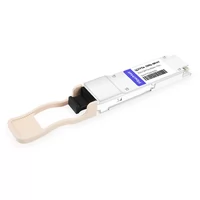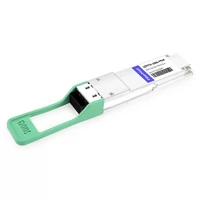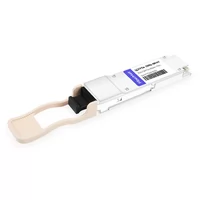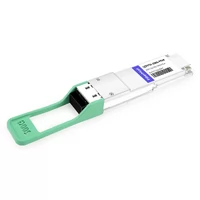

Maya Chen’s procurement team sent back the 200G upgrade requisition with one red box on the form: “Unit cost?” It was blank. She knew the technical specs: PAM4 signaling, four 50G lanes, and 200G total bandwidth. But when finance asked what a QSFP56 module actually cost, she had three browser tabs open and no solid answer.
That is normal. QSFP56 pricing is difficult to compare because OEM list prices, reseller discounts, and third-party volume quotes are presented differently. The same 200G module can be listed at around $118, quoted at $300, or sold for more than $1,000 depending on whose logo is on the label, how it is coded, and what support terms are attached.
This guide fixes that. We have compiled realistic 2026 market pricing from public vendor listings, OEM price references, and common deployment budget ranges. You will get per-module cost ranges for major QSFP56 types, a cost-per-gigabit comparison against 100G and 400G options, volume discount expectations, and the hidden expenses that can turn a low-cost module into a much higher total deployment cost.
Need exact pricing for your switch platform? Request a QSFP56 quote with your module types and quantities.

What Drives QSFP56 Price
QSFP56 modules all deliver 200G-class bandwidth, but the bill of materials changes dramatically by module type. Three factors control what you pay.
Optical complexity. SR4 uses 850nm VCSEL arrays over multimode fiber. The technology is mature, yields are high, and the optics are relatively cost-effective. ER4, by contrast, is designed for 40km transmission over single-mode fiber and requires more advanced optical components, tighter wavelength control, stronger receiver design, and more demanding thermal management.
Reach distance. Every extra kilometer of reliable transmission adds cost. A 100m SR4 module is built for short-reach data center links. A 40km ER4 module is built for metro or long-reach single-mode links. The DSP and electrical interface may look similar, but the optical engine becomes much more complex as reach increases.
Power and thermal design. Higher-power modules need better heat dissipation, more robust driver circuits, and tighter thermal packaging. An SR4 module around 4W is much easier to cool than an LR4 or ER4 module operating in the 6–8W range. That packaging and thermal design add cost.
The result is simple: same form factor, same 200G class, very different prices. A data center team buying SR4 for leaf-to-spine links within the same row is paying for simplicity. A telecom engineer buying ER4 for a 35km metro link is paying for optical precision.
QSFP56 Price by Module Type (2026)
The table below shows realistic third-party market ranges for common QSFP56 products in 2026. OEM prices from Cisco, Arista, Juniper, NVIDIA, and other major switch vendors typically run several times higher, depending on list price, contract discount, support terms, and region.
| Module | Distance | Fiber | Third-Party Price | OEM Price Range | |
| QSFP56 DAC | ≤5m | Copper | $80–$250 | $250–$700 | |
| QSFP56 AOC | ≤100m | MMF | $150–$300 | $400–$800 | |
| QSFP56 SR4 | 100m (OM4) | MMF | $150–$400 | $700–$3,000+ | |
| QSFP56 DR4 | 500m | SMF | $300–$700 | $1,000–$2,500 | |
| QSFP56 FR4 | 2km | SMF | $350–$900 | $1,500–$3,500 | |
| QSFP56 LR4 | 10km | SMF | $500–$1,200 | $2,000–$4,500 | |
| QSFP56 ER4 | 40km | SMF | $900–$1,800 | $3,000–$6,000 |
Prices are indicative market ranges, not guaranteed quotes. Final pricing depends on switch coding, warranty, temperature grade, lead time, vendor qualification, and order quantity.
The SR4 spread is wide for a reason. Some promotional or volume listings can appear around $118–$149, while higher-margin vendors may list similar 200G SR4 modules in the $250–$400 range. OEM-branded SR4 optics can be much higher because the price includes qualification, branding, distribution, warranty, and support-policy value.
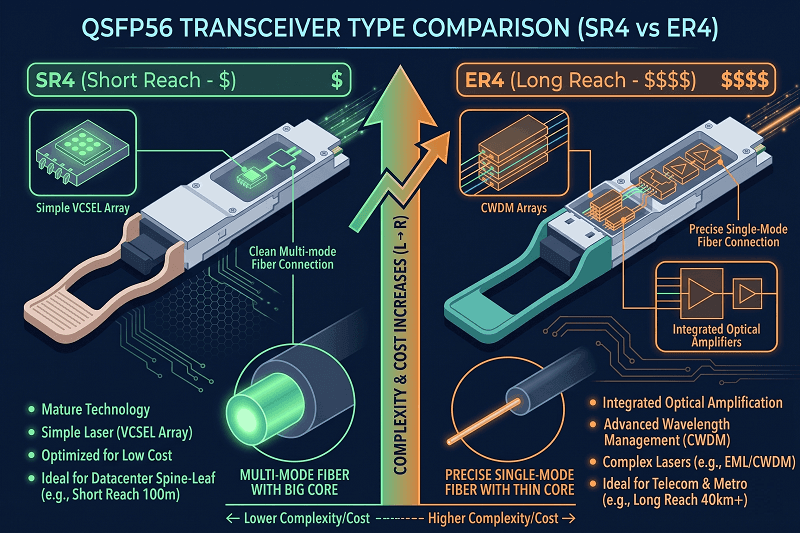
The jump from SR4 to DR4 roughly doubles the module cost while increasing reach from 100m to 500m. That looks favorable until you factor in the fiber plant. SR4 uses multimode MPO-12 cabling, while DR4 uses single-mode MPO-12 cabling. If you are retrofitting a multimode plant, the module savings can disappear into fiber installation costs.
FR4 hits a practical sweet spot for campus and short DCI deployments. At around $350–$900 from third-party vendors, it supports 2km transmission over duplex LC single-mode fiber. We have seen teams over-specify LR4 for 1.5km links and pay significantly more than necessary.
Want configured pricing for your module mix? Request a QSFP56 quote with distance and quantity requirements.
Cost Per Gigabit: QSFP56 vs QSFP28 vs QSFP-DD
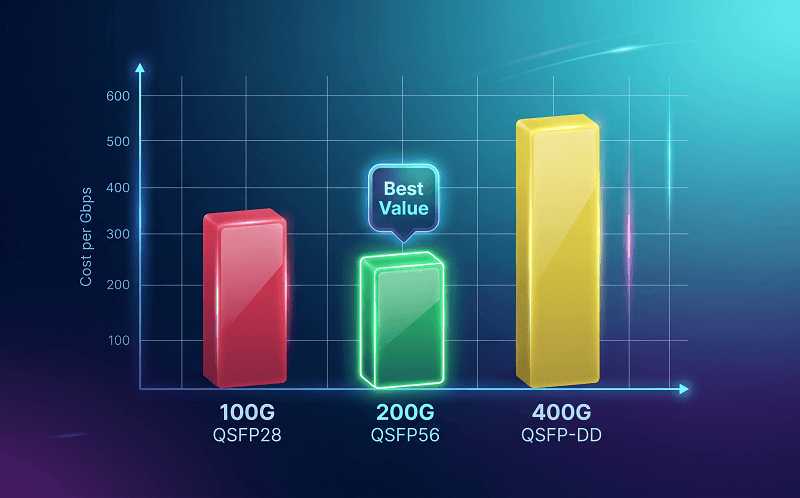
Raw module price doesn’t tell the full story. Cost per gigabit, what you pay for each Gbps of capacity, reveals which technology gives the best value.
| Technology | Module Speed | Typical Module Price | Best For | |
| QSFP28 LR4 | 100G | $500–$900 | Existing 100G single-mode plants | |
| QSFP56 SR4 | 200G | $200–$400 | New 200G data center deployments | |
| QSFP56 FR4 | 200G | $400–$700 | Campus and short DCI links | |
| QSFP-DD SR8 | 400G | $600–$1,200 | Higher-density 400G deployments |
QSFP56 is currently one of the strongest cost-per-gigabit options for 200G networks. At $1.00–$2.00 per Gbps for SR4, it undercuts many 100G QSFP28 optics on a capacity basis while still using familiar MPO-12 multimode infrastructure.
Here is the upgrade math. If you are running 100G QSFP28 SR4 at $250 per module, replacing it with 200G QSFP56 SR4 at $300 per module doubles the bandwidth for a 20% increase in module cost. Your cost per gigabit drops from $2.50/Gbps to $1.50/Gbps, or roughly 40%.
The catch: QSFP56 requires PAM4-capable switch ASICs. If your switches only support NRZ signaling, you can’t plug in QSFP56 modules and expect 200G. Check our QSFP56 compatibility guide for switch requirements.
400G doesn’t beat QSFP56 on cost per gigabit yet. QSFP-DD at 400G runs about 1.50–1.50–3.00 per Gbps. For networks that don’t need 400G spine capacity today, QSFP56 is the economical choice.
OEM vs Third-Party: The Real Savings
This is where budgets get emotional, and where the biggest misconception lives.
Many buyers assume OEM modules cost more because they are always technically superior. That is not always the case.
Most OEM-branded optics are sourced through specialized optical module supply chains rather than manufactured entirely in-house by the switch vendor. The higher OEM price usually reflects qualification, firmware coding, branding, distribution, warranty, and support coverage — not only raw component cost.
The price gap is about the business model. OEM optics help support the broader switch ecosystem, including validation, logistics, reseller channels, and technical support.
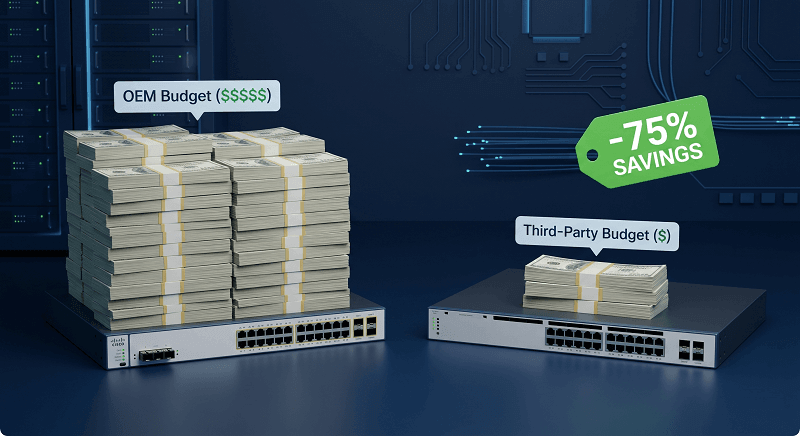
For QSFP56, the math is significant. An OEM 200G SR4 module can list from over $1,000 to several thousand dollars depending on the SKU and contract. A quality third-party equivalent may run $250–$350 at common project quantities.
For a 128-leaf fabric with dual-homed 200G uplinks, assume 256 modules. At an average OEM price of $1,200, the optics line item is about $307,200. At $250–$350 for third-party optics, the same deployment costs about $64,000–$89,600. The delta can exceed $200,000, and in some cases it may be larger than the cost of additional switching hardware.
OEM modules make sense when:
- Your TAC or SmartNet contract requires OEM optics for full support
- You’re in healthcare, finance, or another liability-sensitive environment
- Procurement policy mandates OEM sourcing
Third-party modules make sense when:
- You’re operating at scale
- You can verify compatibility in staging
- Your switch vendor doesn’t enforce optical lock-in
- Budget constraints are real
The real lock-in isn’t hardware quality. It’s the support contract. Read it carefully.
Explore MSA-compliant QSFP56 modules compatible with Cisco, Arista, Juniper, and NVIDIA.
Volume Pricing: What Quantity Actually Saves
Module pricing doesn’t scale linearly. The discount curve steepens at specific breakpoints.
| Quantity Tier | Discount vs Single Unit | Example SR4 Price |
| 1–9 units | Baseline | $350 |
| 10–49 units | 10–15% | $300 |
| 50–199 units | 20–25% | $265 |
| 200–499 units | 30–35% | $230 |
| 500–999 units | 35–40% | $210 |
| 1,000+ units | 40–50% | $175 |
At 1,000 units, SR4 drops to roughly $0.88 per Gbps. That’s nearly half the cost per gigabit of a single QSFP28 SR4 at list price.
The steepest part of the curve is between 50 and 200 units. A 64-leaf deployment with 8×200G uplinks per leaf needs 512 modules. That hits the 35–40% discount tier. A 48-leaf deployment needs 384 modules, still in the 30–35% range.
One practical tip: consolidate your orders. Buying 200 SR4 modules and 50 FR4 modules as separate POs means two separate baseline negotiations. A single PO for 250 mixed modules usually gets better blended pricing.
Hidden Costs That Blow Up QSFP56 Budgets
Module price is just the headline. Four hidden costs routinely catch teams off guard.
Power and cooling. QSFP56 modules typically draw around 4–8W depending on type and reach. A 32-port switch fully loaded with QSFP56 optics can pull around 130–250W from optics alone.
In a 128-leaf fabric with 256 modules, that is roughly 1.0–2.0kW of optical power. At $0.10/kWh, assuming 24/7 operation, that is about $900–$1,750 per year in electricity for optics alone. Over five years, power adds roughly $4,500–$8,750 to your TCO before cooling overhead is considered.
Sparing inventory. Most teams keep 5–10% spare modules. For 512 deployed modules, that means 26–51 spares. At an average cost of $300, sparing adds $7,800–$15,300 to your initial purchase.
Compatibility testing. A reputable third-party vendor will pre-code modules for your switch platform, but you should still budget time and hardware for validation. A two-week staging test with two switches and a small module sample set costs far less than discovering a compatibility issue in production.
Fiber plant surprises. Moving from 100G QSFP28 SR4 to 200G QSFP56 SR4 may allow you to reuse the same MPO-12 OM4 multimode cabling, provided the link budget and fiber quality are suitable. Moving to DR4, FR4, LR4, or ER4 may require single-mode fiber, different connectors, or fiber testing. Re-terminating or repairing fiber can cost $2,000–$5,000 per event, depending on site conditions.
Factor these into your 200G network design from the start.
When QSFP56 Price Makes Sense vs Alternatives
Use this framework for upgrade decisions.
| Scenario | Best Choice | Why |
| New 200G spine, budget constrained | Third-party QSFP56 | Lowest cost per gigabit, proven technology |
| The existing 100G spine needs more bandwidth | QSFP56 over QSFP28 | Double bandwidth, same fiber, better oversubscription |
| Planning for 400G in 12–18 months | QSFP-DD switches with QSFP56 today | Forward compatibility protects investment |
| Metro DCI, 10–40km | QSFP56 LR4/ER4 | Simpler than DWDM for single 200G waves |
| Multi-tenant data center, strict SLA | OEM QSFP56 | Support contract compliance |
For most modern data centers, third-party QSFP56 hits the sweet spot. It’s mature enough that compatibility issues are rare. It’s cheap enough that the cost per gigabit beats 100G. And it’s forward-compatible enough that QSFP-DD switches accept QSFP56 modules today.
Mini-Story: The $340,000 Surprise
In late 2024, a mid-size cloud provider planned a 96-leaf spine-leaf upgrade. Their budget assumed OEM QSFP56 SR4 pricing at $1,100 per module. With 768 modules needed, they allocated about $845,000 for optics.
During procurement, a network architect suggested testing third-party modules in staging. The test passed. Compatibility was clean. FEC negotiation worked. The team re-ran the budget with third-party pricing at $280 per module.
New optics total: about $215,000. Estimated savings: roughly $630,000.
The catch? Their Cisco support contract included a clause that TAC could limit support for links using non-Cisco optics. They negotiated a hybrid approach: third-party modules for standard leaf-to-spine links and OEM modules for critical DCI connections. Final savings: about $480,000, enough to fund an additional spine switch.
The lesson: always test third-party modules in your actual hardware before committing, and read your support contracts carefully.
FAQ
Why are OEM QSFP56 modules so expensive?
OEMs like Cisco and Arista don’t manufacture optics themselves. They source from the same ODMs as third-party vendors, then add branding, distribution, support ecosystem margins, and reseller markup. The hardware is often identical; the price reflects the business model, not superior components.
How much can I save with third-party QSFP56?
Typical savings range from 50% to 90%, depending on module type and quantity. At volume, third-party SR4 modules can cost 70–85% less than OEM equivalents.
What is the cheapest QSFP56 module?
For very short links, QSFP56 DAC or active copper assemblies are usually the cheapest option, commonly starting around $80–$150. Among optical modules, QSFP56 SR4 multimode modules are usually the lowest-cost choice, with some promotional listings around $118–$149 and more common project pricing in the $150–$400 range.
Do third-party QSFP56 modules work in Cisco switches?
Yes, if properly coded. Reputable third-party vendors pre-program EEPROMs for Cisco, Arista, Juniper, NVIDIA, and other platforms. Always verify compatibility with your specific switch model and OS version before deployment.
How much does a 200G QSFP56 cost at volume?
At 1,000+ units, third-party QSFP56 SR4 modules may drop to around $175–$280 per module, depending on supplier, warranty, and coding requirements. That equals roughly $0.88–$1.40 per Gbps. Promotional pricing may be lower, but it should be validated for quality, lead time, and compatibility.
Conclusion: Build Your QSFP56 Budget With Real Numbers
QSFP56 pricing in 2026 ranges from roughly $80 for short copper assemblies to $1,800 or more for long-reach ER4 optical modules from quality third-party vendors. Among optical modules, promotional SR4 pricing can start near $118–$149, while mainstream third-party SR4 project pricing is more commonly in the $150–$400 range. OEM pricing can multiply those numbers several times depending on SKU, support contract, and discount level.
On a cost-per-gigabit basis, QSFP56 remains one of the most economical pluggable options for 200G deployment, especially for SR4 links in data center environments. At volume, QSFP56 SR4 commonly lands around $1.00–$2.00 per Gbps, and sometimes lower.
Here’s your budgeting checklist:
- Count your ports and module types by distance tier
- Apply volume discounts based on total quantity across mixed SKUs
- Add 5–10% sparing inventory to your initial purchase
- Budget 4–6.5W per module for power and cooling
- Verify fiber plant compatibility before ordering
- Test third-party modules in your hardware if support contracts allow
The teams that budget accurately are the ones that know their QSFP56 price before finance asks. Getting the module cost right upfront prevents the awkward mid-project revision where the optics line item doubles.
Ready to get exact pricing for your deployment? Request a QSFP56 quote with your module types, quantities, and switch platforms.
Related Products:
-
 QSFP56-200G-SR4M 200G QSFP56 SR4 PAM4 850nm 100m MTP/MPO APC OM3 FEC Optical Transceiver Module
$139.00
-
QSFP56-200G-FR4S 200G QSFP56 FR4 PAM4 CWDM4 2km LC SMF FEC Optical Transceiver Module
$650.00
-
NVIDIA(Mellanox) MMA1T00-HS Compatible 200G Infiniband HDR QSFP56 SR4 850nm 100m MPO-12 APC OM3/OM4 FEC PAM4 Optical Transceiver Module
$139.00
-
NVIDIA(Mellanox) MMS1W50-HM Compatible 200G InfiniBand HDR QSFP56 FR4 PAM4 CWDM4 2km LC SMF FEC Optical Transceiver Module
$650.00
-
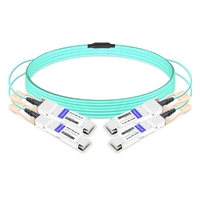
NVIDIA MFS1S90-H003E Compatible 3m (10ft) 2x200G QSFP56 to 2x200G QSFP56 PAM4 Breakout Active Optical Cable
$800.00
-
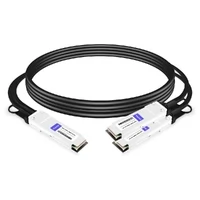
NVIDIA(Mellanox) MCP7H50-H001R30 Compatible 1m (3ft) Infiniband HDR 200G QSFP56 to 2x100G QSFP56 PAM4 Passive Breakout Direct Attach Copper Cable
$55.00
-
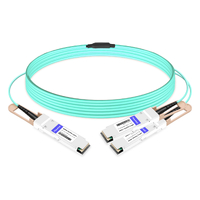
NVIDIA(Mellanox) MFS1S50-H003E Compatible 3m (10ft) 200G HDR QSFP56 to 2x100G QSFP56 PAM4 Breakout Active Optical Cable
$480.00
-
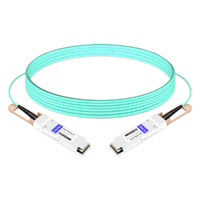
NVIDIA(Mellanox) MFS1S00-H003E Compatible 3m (10ft) 200G HDR QSFP56 to QSFP56 Active Optical Cable
$350.00