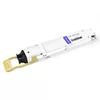
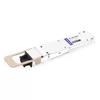
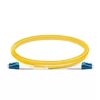
200G HDR InfiniBand: Revolutionizing High-Speed Networking
High-performance computing demands unparalleled speed and efficiency. 200G HDR InfiniBand, a cutting-edge technology, is redefining data transmission, connectivity, and scalability in modern infrastructure.
Introduction to 200G HDR InfiniBand Technology
In today’s time, when there are only data-oriented working systems and practical machines, 200G HDR InfiniBand has been developed for high-capacity networking. The said technology provides for high bandwidth per port of 200 gigabits per second, which makes heavy data transfer per port easy to achieve and low latency as well. The 200g hdr infiniband technology enhances the efficiency of an enterprise by facilitating faster development and better result achievement.
Overview of InfiniBand as a high-performance interconnect standard
InfiniBand is one of the most HPC-oriented and AI-friendly interconnect standards. This standard can provide tremendous bandwidth, and currently, its 200g HDR configuration has been able to scale up better. There, however, it can manage thousands of nodes. In this technology, instead of the usual way of data transmission through a CPU, it has been integrated with Remote Direct Memory Access (RDMA), which reduces the overhead of the CPU and increases the effectiveness of transmitting data, thus improving the efficiency of performing certain tasks, particularly within sophisticated systems.
Key features of HDR (High Data Rate) InfiniBand
Unmatched Throughput: 200G HDR InfiniBand offers per-port alignment usage of 200 Gb per second, which allows rapid acceleration of data transferring applications. This per-port enhancement has raised all modern applications and AI, ML components, and any merger of large-scale scientific computational demands.
Minimum Latency: With improved end-to-end processing speeds that are fast in HDR InfiniBand, latency has been greatly minimized to less than one microsecond. This is important to maintain the least delays and enhance the best performance, which is very important since most of the operations done in supercomputers are time-sensitive and even critical.
Greater Scalability: Graphical representation of some of the features of HDR InfiniBand, enabling highly scalable architectures, allowing tens of thousands of nodes to interconnect in simple and effective mechanisms. It offers higher throughput and adequate congestion control, which are critical in data centers and high-performance computing systems involving multiple servers.
Higher Levels of Data Protection: Error-detecting and Error-Correcting (EC) Codes have higher throughput due to the minimized data errors, therefore improving the reliability and the operation of the installed system.
Backward Compatibility: When developing HDR InfiniBand, it was important to ensure it coexists with older InfiniBand versions because updates should be implemented without radically changing everything, thus saving such hardware costs.
Low Power Consumption: Using the HDR InfiniBand, energy efficiency is enhanced while doing so, which makes it the most common choice amongst modern IT arch
Benefits of moving to 200G HDR in modern data centers
Bandwidth Gains and Strengthened Capacity: The switch over to a 200g hdr infiniband device allows data centers to achieve unimaginable bandwidth through a seamless escalation of workloads to cope with the increasing need for data.
Better Application and Latency Levels: HDR comes with an ultra-low latency, which is perfect for any application which shall require low latency issues admirably AI/ML workloads, HPC, which is the High-Performance Computing, and even some real-time analytics.
Energy and Expenditure Economies: 200g hdr has high energy efficiency, which helps minimize the total energy of data transmission, thus reducing operational expenditure. Furthermore, by centralizing the entire system, the pool of available resources can be utilized, and the cost of such efforts may be reduced.
Infrastructure That Can Withstand The Test Of Time: The implementation of 200G HDR simplifies the installation of an advanced, future-proof infrastructure in the data centers that can incorporate the new technologies.
Reliability increases, and error correction increases: 200G HDR provides highly efficient error checking and error correcting capabilities, thus maintaining the data correctness and minimizing the chances of errors during transmission.
How 200G HDR InfiniBand Enhances Data Center Performance
Extreme Properties Unoccupied Bandwidth and Latency: The ellowprd 200g hdr infiniband offers unmatched bandwidth, enabling the data centers to effectively run a big load at any one instance. The architecture with almost no delay enhances the speed of data transfer, enabling the execution of tasks that require high-speed data transfer mechanisms, which are required in many applications such as artificial intelligence, machine learning, and real-time processing.
Scaling and Capacity: 200G HDR allows the data centers to scale more than expected, as it strives to satisfy the changes in demand. Its optimally designed architecture helps to maximize the available energy, minimizing any wastage of resource hence an analysis from the most economical point of view may be done.
Reliability of the Network is Improved: The 200G HDR has inherent support for mechanisms such as enhanced error correction protocols and congestion control measures that are all together utilize to minimize the effect of data packet loss.
Achieving low latency and high bandwidth
To reduce latency and increase bandwidth in network infrastructure design, a combination of advanced technological components (including hardware and software) and meticulous network planning is required. Some recent improvements are based on high-speed connections, such as 200G HDR InfiniBand, which prevents transmission latency by reducing the transmission distance and time between nodes. Furthermore, techniques such as network segmentation and prioritizing high-traffic data streams can also reduce latency, thereby preventing disruption to critical data flows.
The Architecture of 200G HDR InfiniBand
200G HDR InfiniBand is an evolved high-capacity forwarding domain designed for high-performance computing and future artificial intelligence. Specifically, 200G HDR features bidirectional transmission capability of 200 Gbps per port and employs efficient signaling technology to reduce response time.
Detailed analysis of its network topology
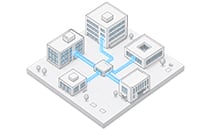
The structure of a 200g hdr infiniband network is carefully crafted so as to optimize the transmission of data, lower delays, and make it more robust. In its simplest form, the architecture is usually represented by a fat tree or a Dragonfly, both of which are popular due to their scalability and high density of connections. In adaptive routing, the routes are selected dynamically depending on the current state of the network, thereby overcoming clogging. Also, Quality of Service (QoS) helps to implement the most critical packets first, ensuring that time-bound operations like the execution of AI training and simulation do not delay. Director-class multi-tier switches are used that further boost scalability as they can grow to tens of thousands of nodes, yet still perform satisfactorily.
Explanation of how HDR achieves a throughput of 200Gb/s
200g hdr infiniband uses the advanced signal processing technique with less overhead and multiple data lanes to offer 200Gb/s speed. Using a specific example, the technology uses four lanes, operating at 50Gb/s each, as the greater efficiency of each lane results from Pulse Amplitude Modulation 4 (PAM4) instead of the conventional Non-Return-to-Zero (NRZ) signaling, which enhances the capacity of the previous lane by two times.
Comparison to previous InfiniBand generations
200g HDR InfiniBand architecture is an improvement over the architecture of the FDR, which stands for Fourteen Data Rate, and EDR, which stands for enhanced data rate. InfiniBand. Whereas FDR Infiniband’s bandwidth reaches 56 gigabits per second, EDR Infiniband breaks the 100 gigabit per second barrier, reaching 100 gigabits per second. However, HDR has achieved 200gbps throughput with a single port, demonstrating it’s a technological advancement.
Key Benefits of Upgrading to 200G HDR InfiniBand
Enhanced Data Transmission Rates and Throughput: The 200g hdr infiniband that has transmission rates twice those of previous generations, doubles the data throughput and speed, is used in applications in the cloud.
Low Packet Latency on Critical Workloads: Incredibly low latency is one of the key features of HDR InfiniBand, and this is essential for such latency-demanding applications as real-time analytics and many simulations or high-performance computer workloads.
Better Systems Growing Functionality: An increase in the interconnect density allows supporting bigger node setups involving more distributed fabrics, which is why it is perfect for the enlargement of supercomputing clusters as well as data centers.
Enhanced Data Integrity and Resource Utilization: Reliability in data delivery is achieved in HDR using sophisticated error corrections and load balancing by the use of adequate amounts of bandwidth and queues.
Improved network reliability and resilience
Among several other advantages, 200G HDR InfiniBand substantially increases the network efficiency as well as reliability and robustness by employing extensive cross-checking and automatic corrections. There are limited chances of losing any packets by this protocol due to sequential challenges for integrity and re-routing of data at different levels of the network architecture in times of crisis. Furthermore, the provision of redundancy provides relief in terms of networks’ ability to redirect the flow of traffic if any system hardware or links are out, thereby ensuring seamless operations.
Comparison of 200G HDR InfiniBand with Competing Interconnect Technologies
The Delay: 200G HDR InfiniBand has been proven to be fast reacting in terms of latency when compared to other interconnect technologies. The latency-sensitive design of the connection is a major achievement, as it allows data to be sent in the shortest time intervals without any delays prohibiting high-performance computing or even real time application.
Transmission: HDR InfiniBand boasts unparalleled transmission rates up to 200 Gbps on each port. This is because such transmission rates are especially suitable for knowledge-intensive tasks such as artificial intelligence, machine learning, and even large-scale simulations.
Option To Extend The System: 200 G HDR InfiniBand is an out-of-the Tti box scalable solution that allows the contents of thousands of nodes within a large network to be maintained at a high level of communication. The installations are adaptive, and the congestion is o-optimally ocontghed i the expansion of the network.
Reliability: HDR InfiniBand features state of the art error correcting and package integrity routines to ensure transactional communication even in the most stressful of conditions. Conversely, although some other interconnects, like Ethernet, provide error correction, it is at a very basic level due to the existence of higher layers that deal with such errors, which introduce extra latency and also reduce efficiency.
Cost considerations and technology adoption trends
HDR InfiniBand and Ethernet come with dissimilar costs, making a comparative analysis necessary as far as factors such as hardware, implementation, and operation are concerned. The Initial expense of HDR InfiniBand is usually high compared to other systems. This is mainly because of the availability of its sophisticated features dedicated to use in the most demanding, low-latency, and high-throughput application hardware. But then again, if there is a direct correlation between performance and revenue, the development cost is justified. Even though Ethernet is costly, it is easier to understand because most of the existing infrastructure can be utilized, thereby reducing the cost of implementation.
Frequently Asked Questions (FAQs)
Q1: What are the benefits of 200G HDR InfiniBand?
A1: With its low latency and high throughput attributes, 200G HDR InfiniBand is perfectly designed for use in AI, ML, HPC propos and many other applications where performance and scalability are required. It also has capacities for intelligent traffic management features such as adaptive routing and congestion control, among others.
Q2: In terms of performance, how does 200G HDR InfiniBand stack up against Ethernet?
A2: 200G HDR InfiniBand far surpasses Ethernet regarding improved latency and bandwidth, which are the most vital parameters towards the efficient, fast data or real-time applications. Ethernet can perform standard functions, while InfiniBand is specifically designed to serve such specialized systems.
Q3: How do I build infrastructure to employ 200 G HDR InfiniBand?
A3. There is a need to have other supporting elements like switches, host channel adapters (HCAs), as well as cable infrastructure, in addition to the InfiniBand HDR 200G. For the installation to operate well, compatibility is also crucial in this kind of architecture.
Q4. Is it possible to incorporate 200G HDR InfiniBand with hybrid IT settings?
A4. 200G HDR Infiniband does integrate with hybrid IT settings, frequently in combination with Ethernet. It means it is possible to implement Infiniband in tasks with high-demand procedures while implementing Ethernet for other types of networking.