Every long-haul DWDM link eventually hits the same wall: chromatic dispersion. As a high-speed signal travels over standard G.652 fiber, its optical pulse spreads until the receiver can no longer resolve it. A Dispersion Compensation Module (DCM) fixes this by inserting negative dispersion that re-compresses the pulse — requiring no electrical regeneration and adding no latency.
The Cost of Getting Dispersion Compensation Wrong
A DCM looks simple on paper, but selecting the wrong one quietly degrades a link. The failure modes are predictable:
· Under-compensation leaves residual dispersion that collapses the eye diagram and forces the receiver into errors.
· Over-compensation pushes the signal past the receiver's tolerance on the opposite end of the spectrum, which is equally damaging.
· Excess insertion loss consumes the critical link budget that the rest of the span — including your EDFA stage — depends on.
Engineers routinely see the results of poor compensation: channels that fail intermittently at high data rates, links that cannot be extended without a total redesign, and modules that arrive lacking the specification details necessary to confirm they were sized correctly.
DCMs Matched to Your Span
FiberMall DCMs are passive, protocol-transparent devices built using dispersion-compensating fiber (DCF). DCF inherently carries a negative chromatic dispersion value across the 1525–1565 nm C-band, effectively canceling the positive dispersion your G.652 span accumulates.
Key Benefits:
· Extend reach without regeneration: Push direct-detect 100G DWDM channels past 100 km using passive compensation instead of relying on costly optical-electrical-optical (OEO) regeneration.
· Low, flat insertion loss: Scaling from just 2.6 dB at 10 km to 11.5 dB at 120 km, these modules preserve your link budget through the compensation stage.
· Low PMD (1.0 ps) and low PDL (0.5 dB): Meets the narrow tolerances that high-speed direct-detect channels require.
· 100% slope compensation in the C-band: Perfectly matched to standard G.652 fiber, with G.655 support also available.
· Protocol transparent: Operates seamlessly with SDH/SONET, OTN, DWDM, and CATV without altering the underlying data rate.
Specifications
Every FiberMall DCM is Telcordia GR-2854-CORE qualified and RoHS compliant. Rather than taking a one-size-fits-all approach, these modules are categorized by typical compensation distances of 10, 20, 30, 40, 60, 80, 100, and 120 km. Depending on the chosen distance, the module provides a dispersion value ranging from −165 to −2090 ps/nm at 1545 nm. Insertion loss directly scales with this distance, ranging between 2.6 dB and 11.5 dB.
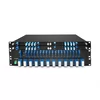
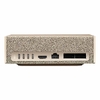
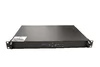
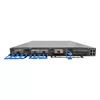
The modules operate over the standard C-band wavelength range (1525–1565 nm) with a center wavelength of 1550.12 nm. They maintain excellent signal integrity, featuring a Polarization Mode Dispersion (PMD) of ≤ 1.0 ps and a Polarization Dependent Loss (PDL) of ≤ 0.5 dB. Designed to withstand operating temperatures from −5°C to 70°C, the units can be deployed either as an LGX box module or within a 2-slot 1U rack chassis. For physical connections, customers can specify LC, SC, or FC connectors finished in either UPC or APC polishes.
DCM Selection and Installation
Choosing the right DCM starts with calculating your span's accumulated dispersion. Three questions resolve most selections:
1. How long is the span? Standard G.652 fiber accumulates roughly 17 ps/nm·km at 1545 nm. A 40 km span produces about 680 ps/nm of dispersion; an 80 km span produces about 1,360 ps/nm.
2. Which compensation distance matches? Select the module whose dispersion range brackets that calculated value. A 40 km span requires a 40 km module (−660 to −700 ps/nm); an 80 km span takes an 80 km module (−1320 to −1360 ps/nm).
3. Which connector and form factor do you need? LC/UPC is the most common default, but SC and FC options in both UPC and APC polishes are available, housed in either an LGX module or a 1U rack form factor.
Applications
100G DWDM Trunk Links
A DCM extends direct-detect DWDM channels well beyond their physical dispersion limits — roughly 5–6 km for 100G QSFP28 PAM4 DWDM — without requiring active regeneration. Paired with a FiberMall EDFA and a passive DWDM MUX, it supports point-to-point 100G links stretching beyond 100 km.
OTN / SDH / SONET Backbones
Protocol-transparent compensation keeps legacy and modern transport infrastructure within strict dispersion tolerances as network rates and distances grow, all without touching the data path.
CATV & HFC Long-Haul
Ensures clean, dispersion-managed signal delivery over extended fiber runs for cable and Hybrid Fiber-Coaxial (HFC) plants.
Metro & Regional Networks
Provides cost-effective optical compensation for 40–120 km interconnects where building dedicated active regeneration sites is simply too expensive to justify.
Frequently Asked Questions
What is a DCM optical module?
A Dispersion Compensation Module (DCM) is a passive device that corrects chromatic dispersion in long fiber spans. Built on dispersion-compensating fiber (DCF), it inserts negative dispersion to re-compress the optical pulse so a DWDM or OTN link can transmit reliably beyond standard dispersion limits.
What compensation distance do I need for my span?
Multiply your span length by your fiber's dispersion coefficient — about 17 ps/nm·km for G.652 at 1545 nm — then select the module whose dispersion range brackets that exact value. For example, a 40 km span needs roughly −680 ps/nm, which is perfectly matched by a 40 km module.
What is the insertion loss of this module?
Insertion loss scales with compensation distance, ranging from roughly 2.6 dB at 10 km up to 11.5 dB at 120 km. You must include this figure in your overall link budget, as the optical compensation stage sits inline with the signal path.
Is this DCM DCF-based or tunable?
FiberMall DCMs are fixed, DCF-based passive modules — making them the lowest-loss, lowest-cost option for spans of a known, static length. For dynamic networks where span lengths frequently change, a tunable dispersion compensator may be a better fit. FiberMall engineers can advise you on the best approach.
Which connectors and form factors are available?
The modules are available as standalone LGX box modules or housed within a 2-slot 1U rack chassis. Connector options include LC, SC, and FC types, equipped with either UPC or APC polishes.