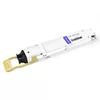
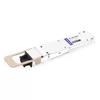
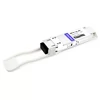
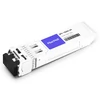
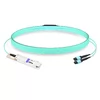
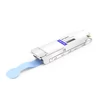
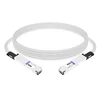
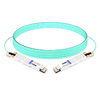
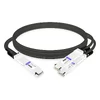
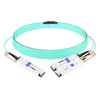
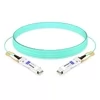
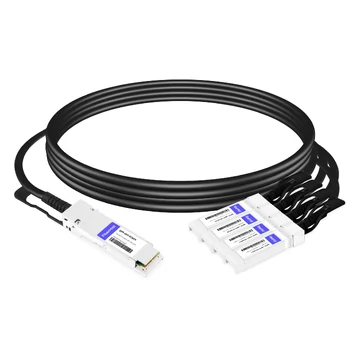
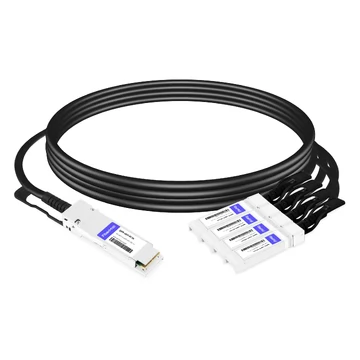
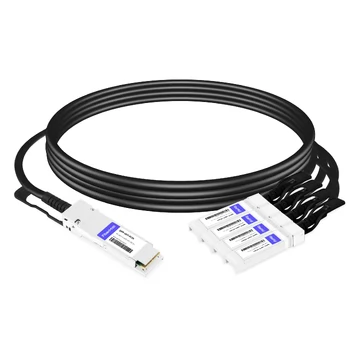
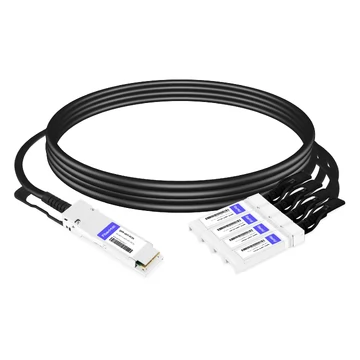
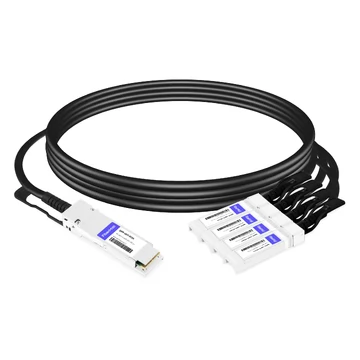
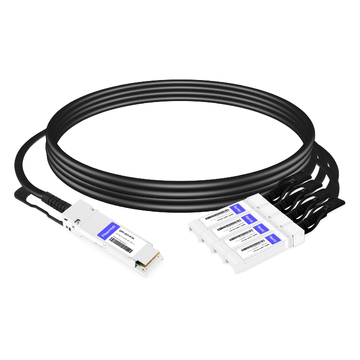
Connect one 40G QSFP+ switch port to four 10G SFP+ devices with a single, factory-direct breakout DAC cable. FiberMall's QSFP-4SFP-PCxM passive copper cables deliver 40G aggregate bandwidth over four independent 10G lanes, eliminating the cost and complexity of separate transceivers and fiber patch cords.
The Challenge: Bridging 40G and 10G Without Wasting Budget
Data centers rarely upgrade every switch and server at the same time. One rack may run 40G QSFP+ uplinks while adjacent racks still rely on 10G SFP+ servers, storage arrays, or access switches. Buying four separate 10G transceivers plus fiber patch cords for every 40G port is expensive, adds failure points, and turns cable management into a nightmare.
A 40G QSFP+ to 4× SFP+ breakout DAC cable solves this by splitting the four 10G electrical lanes inside a QSFP+ port into four separate SFP+ connections. One cable. One 40G port. Four 10G links. No transceivers. No fiber. No surprises.
But not all breakout cables are equal. Network engineers face three common problems:
• Compatibility uncertainty — Will the switch recognize a third-party DAC?
• Quality inconsistency — Cheap cables can cause CRC errors, link flapping, or premature failure.
• Limited support — Most vendors sell the cable and leave the configuration to you.
Key Specifications
• Connector A: 1× QSFP+ (40G, SFF-8436 compliant)
• Connector B: 4× SFP+ (10G each, SFF-8431 compliant)
• Aggregate Data Rate: 40 Gbps (4 × 10 Gbps lanes)
• Data Rate per Lane: Up to 10.3125 Gbps
• Cable Type: Passive Twinax copper DAC
• Impedance: 100 Ω
• Lengths Available: 0.5m, 1m, 2m, 3m, 5m, 7m
• Wire Gauge: 30 AWG (0.5–3m), 26 AWG (5m), 24 AWG (7m)
• Supply Voltage: 3.135 – 3.465 V
• Power Consumption: ≤ 0.1 W (EEPROM only)
• Operating Temperature: 0°C to +70°C (commercial)
• Storage Temperature: -40°C to +125°C
• Standards: QSFP+ MSA, SFP+ MSA, IEEE 802.3ba, RoHS
• Protocols Supported: 40GbE, 10GbE, 1GbE, QDR InfiniBand, SAS, Fibre Channel
Each length is optimized with the correct wire gauge and bend radius, ensuring reliable signal performance whether the cable spans half a meter inside a rack or seven meters across adjacent racks.
Multi-Vendor Compatibility
The biggest question when buying a third-party DAC is also the simplest: Will it work with my switch?
FiberMall QSFP-4SFP-PCxM cables are pre-coded to match the EEPROM signatures of major OEM part numbers. The physical interface is identical across platforms—QSFP+ on one end and four SFP+ connectors on the other—and the cable meets the same QSFP+ MSA and IEEE 802.3ba standards as OEM cables.
Compatible platforms include:
• Cisco: Nexus 3000/5000/6000/7000/9000, Catalyst 6500/4500/3850/9300/9500 series
• Arista: 7000 series switches using CAB-Q-S breakout cables
• Juniper: EX and QFX series using QFX-QSFP-DACBO breakout cables
• Mellanox / NVIDIA: Spectrum and ConnectX platforms
• Others: HPE, Dell, Huawei, H3C, Extreme, Fortinet, F5, and many more.
Breakout DAC vs. AOC: Which One Do You Need?
FiberMall offers both passive copper breakout DACs and active optical breakout AOCs. Choosing the right type depends on distance, environment, and budget constraints.
• Typical Reach: DACs cover short runs from 0.5m up to 7m, whereas AOCs are designed for distances ranging from 1m up to 100m or more.
• Power Consumption: A passive DAC is extremely energy efficient, drawing less than 0.1W overall. In contrast, an AOC consumes around 1–2W per end.
• Latency: DACs provide the lowest possible latency. AOCs introduce slightly higher latency due to the necessary electrical-to-optical (E/O) conversion.
• Cable Bulk: Copper DACs are thicker and heavier, while AOCs use thin, lightweight fiber that is easier to route.
• EMI Immunity: DACs offer good immunity with proper shielding, but AOCs provide excellent, total immunity to electromagnetic interference because they use optical fibers.
• Cost: DACs offer the lowest cost point, whereas AOCs require a higher investment.
• Best For: DACs are ideal for same-rack or adjacent-rack links. AOCs are the better choice for longer runs or environments with dense cable paths.
Rule of thumb: If the connection stays within the same rack or an adjacent rack and is 7 meters or shorter, a passive DAC is almost always the right choice. It costs less, consumes less power, and introduces less latency than an AOC. For longer distances or environments with heavy electromagnetic interference, choose an Active Optical Cable (AOC).
Common Use Cases
Top-of-Rack Switch Fan-Out
A 40G QSFP+ spine or ToR switch connects to four 10G servers or storage hosts without consuming four separate switch ports or requiring the purchase of four SFP+ optics.
Mixed-Speed Data Center Migrations
Upgrade aggregation switches to 40G while keeping existing 10G servers in service. Breakout cables let you stage the migration instead of replacing everything at once.
Storage Area Networks (SAN) and NAS
Connect 40G storage controllers to multiple 10G host bus adapters (HBAs) with a single, low-latency copper cable.
High-Performance Computing (HPC)
Passive DACs keep latency to an absolute minimum for HPC clusters, financial trading systems, and AI training environments where microseconds matter.
Test Labs and Staging Environments
Quickly reconfigure 40G-to-10G topologies without stocking multiple transceiver types.
How to Configure QSFP+ Breakout Mode
Most switches recognize a breakout DAC automatically, but some platforms require you to configure the QSFP+ port for 4×10G operation. Here are the general steps:
• Verify port support — Confirm your switch model and firmware support 40G → 4×10G breakout on the target port.
• Insert the cable — Connect the QSFP+ end to the switch and the four SFP+ ends to your 10G devices.
• Enable breakout mode — On platforms like Cisco Nexus or Arista EOS, configure the interface for four 10G lanes. Interface naming typically changes from Eth1/1 to Eth1/1/1 through Eth1/1/4.
• Set speed and link parameters — Ensure each lane is hardcoded to 10G full-duplex. While auto-negotiation works on some platforms, statically setting the speed prevents link flapping.
• Verify link status — Check each of the four interfaces for an up/up status and inspect error counters.
Frequently Asked Questions
What is the maximum length for a passive 40G QSFP+ breakout DAC?
Passive DACs are generally reliable up to 7 meters. Beyond that, signal attenuation increases, and an active optical cable (AOC) is recommended. FiberMall offers passive breakout DACs up to 7m and AOCs for longer distances.
Can I use a 40G QSFP+ breakout cable without configuring the switch?
Some switches auto-detect breakout cables, but many require you to enable 4×10G breakout mode on the QSFP+ port. Check your switch documentation or contact FiberMall engineering for platform-specific guidance.
Is this cable compatible with Cisco QSFP-4SFP10G-CU?
Yes. FiberMall QSFP-4SFP-PCxM cables are fully compatible with Cisco QSFP-4SFP10G-CUxM passive breakout DACs and work seamlessly with the same Cisco switch platforms.
What is the difference between a breakout DAC and a breakout AOC?
A breakout DAC uses copper twinax cable with no active electronics, making it lower-cost, highly energy-efficient (virtually zero power draw), and lower-latency for short distances. A breakout AOC uses fiber with active electronics, enabling longer reach and perfect EMI immunity, but at a higher cost and power footprint.
Do passive DAC cables work with all QSFP+ ports?
No. The port must support 40G → 4×10G breakout mode, and the switch must accept the cable's EEPROM coding. FiberMall verifies compatibility for 200+ platforms and can provide custom coding if needed.
What AWG cable should I choose for my length?
FiberMall optimizes the wire gauge by length: 30 AWG for 0.5–3m, 26 AWG for 5m, and 24 AWG for 7m. A thicker gauge (lower AWG number) reduces attenuation for longer runs.
Does FiberMall offer custom lengths or OEM branding?
Yes. We provide custom lengths, private labeling, custom packaging, and firmware coding for OEM/ODM customers. Visit our OEM/ODM solutions page for details.