What Is a Universal Programmer for Optical Transceivers?
Picture this: a network engineer at a mid-sized data center plugs a brand-new QSFP28 module into a Cisco Nexus switch, and the port immediately throws a "transceiver not recognized" alarm. The module is technically compatible with the wire protocol, but its vendor code does not match what the switch expects. The fix is not a new module. The fix is a universal programmer.
Network teams already know that optical hardware works. The challenge is that switch vendors lock their ports to specific transceiver codes, and a perfectly good module can sit unused for the wrong reason. This guide explains exactly what a universal programmer does, how it interacts with SFP and QSFP optical modules, and how to select the right tool for production networks. By the end, you will know which features matter for compatibility, which standards drive the process, and where FiberMall fits into your transceiver supply chain.
What Is a Universal Programmer?
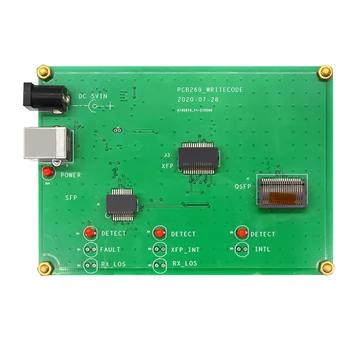
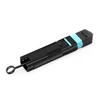
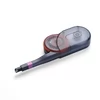
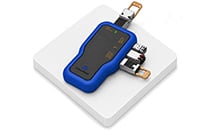
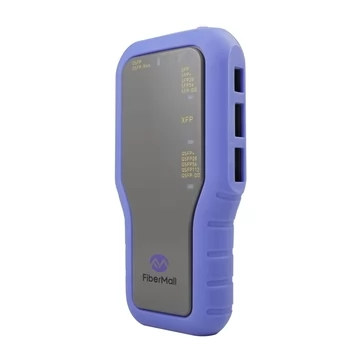
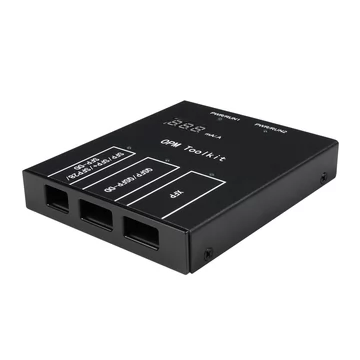
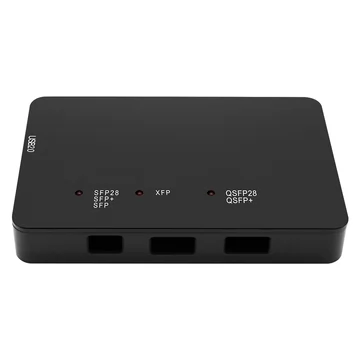
A universal programmer is a hardware tool that reads and writes the EEPROM data inside an optical transceiver module, allowing engineers to update vendor codes, wavelength settings, and diagnostic parameters. It supports multiple form factors such as SFP, SFP+, SFP28, QSFP+, QSFP28, QSFP-DD, and OSFP. The device makes one module compatible with switches from different vendors.
The term "universal" describes two things. First, the programmer supports many form factors through interchangeable adapter sockets. Second, it follows industry-standard memory maps defined by Multi-Source Agreement (MSA) specifications. A true universal programmer is not locked to one manufacturer's product line, which is what separates professional tools from limited OEM coding boxes.
Need on-brand programming for an upcoming deployment? Talk to our optical networking engineers about transceiver coding services before you finalize your hardware order.
How a Universal Optical Transceiver Programmer Works
A universal programmer connects to an optical module through an I2C bus exposed by the host edge connector. Once seated in the correct adapter socket, the programmer reads the EEPROM at memory addresses A0h and A2h. These addresses store vendor information, supported protocols, transmission distance, and digital diagnostic monitoring (DDM) data.
The EEPROM Read and Write Workflow
The standard workflow follows four steps. The engineer reads the existing EEPROM contents, modifies the vendor name and part number fields, recalculates the checksum, and writes the updated image back to the module. Most universal programmers automate the checksum step, which prevents the module from failing port validation.
Memory Maps and Industry Standards
Three MSA documents define the memory structures the programmer must respect:
- SFF-8472 governs SFP, SFP+, and SFP28 modules
- SFF-8636 covers QSFP+ and QSFP28 modules
- CMIS (Common Management Interface Specification) applies to QSFP-DD, OSFP, and other high-speed pluggables
A programmer that supports all three standards can handle the full range of modern optical hardware, from 1G SFP to 800G OSFP. Tools that only implement SFF-8472 cannot reliably code QSFP-DD or OSFP modules used in next-generation data center networks.
Password Protection and Write Locks
Many branded transceivers ship with password-protected EEPROM regions. Premium universal programmers like REVELPROG-IS and SFPTotal include password databases and brute-force routines for legacy modules. Budget tools cannot bypass write protection, so they fail on locked OEM hardware.
Form Factors and Standards a Universal Programmer Should Support
A universal programmer is only as valuable as the form factors it covers. The table below summarizes the modules a modern programming tool must handle to remain useful across enterprise, data center, and telecom deployments.
A programmer that covers SFP through OSFP supports virtually every optical transceiver deployed in commercial networks today. Engineers who plan to upgrade from 100G to 400G should select tools with confirmed QSFP-DD and OSFP support to avoid replacing the programmer after a hardware refresh.
Top Universal Programmer Tools for SFP and QSFP Modules
Several commercial programmers dominate the optical transceiver coding market. Each tool occupies a different position on the price-versus-capability spectrum, and the right choice depends on the volume and complexity of your work.
REVELPROG-IS by Reveltronics
The REVELPROG-IS is a modular serial programmer paired with adapter boards for SFP, QSFP, XFP, OSFP, and QSFP-DD. It supports all major MSA standards and CMIS, includes password brute-force capability, and runs scriptable I2C sessions. The toolset suits repair labs and integrators that handle protected modules from multiple OEMs.
SFPTotal Plus
SFPTotal is a coding board designed specifically for optical modules. It supports SFP, SFP+, SFP28, XFP, QSFP+, and QSFP28 form factors, and ships with roughly 300 vendor unlock scripts. SFPTotal is the right tool for shops that frequently recode write-protected branded transceivers.
Pro Coder by Pro Optix
Pro Coder targets transcoding and DWDM wavelength tuning. It supports SFP, SFP+, SFP28, XFP, QSFP+, QSFP28, and QSFP-DD. The software relies on an online database of tested codes, which simplifies routine vendor changes but limits offline operation.
IICHIB-X2
The IICHIB-X2 is a budget alternative that supports the widest range of form factors at roughly one tenth the price of premium options. It handles SFP, CSFP, SFP+, SFP28, SFP-DD, XFP, QSFP, QSFP28, QSFP56, QSFP112, QSFP-DD, and OSFP. Engineers running batch coding for unprotected OEM modules often choose IICHIB for its throughput.
When Marcus, a network integrator in Frankfurt, evaluated his programming budget last quarter, he started with the $50 IICHIB-X2 because his orders involved 200 unprotected generic SFP+ modules per week. After his contract expanded to include password-locked Cisco-coded QSFP28 units for a colocation customer, he added a REVELPROG-IS to the bench. The two-tool combination cut his recoding time by 64% versus outsourcing to a third-party programmer service.
Ready to streamline your transceiver supply chain? Explore the FiberMall optical transceiver portfolio to see modules that arrive pre-coded for your target switch platforms.
How to Choose the Right Universal Programmer for Your Network
Selecting a universal programmer is a multi-factor decision that depends on the chips you handle, the volume you process, and the level of password protection you face. The following framework helps engineering and procurement teams narrow the field.
Step 1: Inventory Your Form Factors
List every optical module type currently in your network and on your roadmap. Teams running 10G SFP+ at the access layer with 100G QSFP28 on the spine need a programmer that covers both standards without swapping units.
Step 2: Assess Password Protection Exposure
Audit how many of your modules ship with locked EEPROM regions. If more than 20% of your inventory comes from password-protected OEM brands, prioritize tools with confirmed unlock libraries such as REVELPROG-IS or SFPTotal.
Step 3: Match Volume to Throughput
A single-socket programmer handles two to five modules per minute. High-volume shops processing more than 500 modules per day should evaluate batch-capable tools or production gang programmers that code multiple units in parallel.
Step 4: Factor In Software Updates
EEPROM standards evolve as new form factors enter the market. Manufacturers like Reveltronics release firmware updates that add support for new modules. A programmer without an active update path becomes obsolete within two years of an industry transition such as the shift from QSFP28 to QSFP-DD.
Step 5: Validate Compatibility with Your Switches
Before purchasing, confirm that the programmer correctly codes modules for the specific switch families in your network. Cisco IOS XE, Arista EOS, Juniper Junos, and Huawei VRP each enforce vendor checks differently. A programmer that codes flawlessly for Cisco may still fail Arista validation if the OUI bytes are not handled correctly.
Common Use Cases for Optical Transceiver Programming
Optical transceiver programming serves several practical scenarios across enterprise networks, hyperscale data centers, and telecom infrastructure. The use cases below illustrate where a universal programmer adds the most operational value.
Vendor Compatibility Recoding
A network architect named Priya managed a refresh project for a regional bank with 12 data center sites. The bank had standardized on Arista 7050X3 switches, but their previous supplier shipped 800 QSFP28 modules coded for Cisco Nexus. Priya used a REVELPROG-IS with the appropriate Arista vendor table to recode all 800 modules over two weeks. The bank avoided a $240,000 module repurchase and stayed on its deployment timeline.
DWDM Channel Tuning
DWDM tunable transceivers support 80 or more wavelength channels. A universal programmer with DWDM tuning support allows engineers to set the operating wavelength in the field rather than ordering modules pre-tuned to specific channels. This flexibility reduces spare inventory across long-haul network operations.
Diagnostic Data Reset
Modules with corrupted Digital Diagnostic Monitoring data can report false alarms for temperature, voltage, or optical power. A universal programmer can rewrite the A2h memory region to restore valid diagnostic baselines without replacing the module.
OEM Custom Coding for Distributors
Optical module distributors often need to ship modules pre-coded for specific customer environments. FiberMall supports OEM and ODM programming as part of our manufacturing flow, which removes the burden of in-house coding for downstream resellers. Compatibility with switches from Cisco, Juniper, Arista, and Huawei is built into the production process, not bolted on afterward.
Best Practices and Common Pitfalls
Universal programmers are powerful tools, but they introduce risks when used without proper procedure. The recommendations below come from field experience across thousands of transceiver coding sessions.
Always Read Before You Write
The first action on any module should be a full EEPROM read and save to disk. This backup allows engineers to restore the original configuration if a coding session fails. Modules with no backup and a failed write are often unrecoverable.
Verify Checksums Automatically
MSA-compliant modules require valid checksums at multiple memory offsets. Generic EEPROM programmers without checksum automation produce modules that fail port validation. Confirm that your tool calculates SFF-8472 and SFF-8636 checksums automatically before purchasing.
Avoid Mixing Hardware Generations
A QSFP+ programmer designed for SFF-8636 should not be forced onto a QSFP-DD socket. Pin layouts differ, and incorrect voltage on the wrong pin can permanently damage the optical module. Always use the adapter board designed for the specific form factor.
Document Every Coding Change
Maintain a coding log that records the original vendor code, new vendor code, target switch model, and date for every module. This documentation prevents support confusion when a recoded module moves between sites.
Plan for Firmware Updates
Set a quarterly schedule to update programmer firmware. New module types enter the market regularly, and outdated firmware blocks support for current hardware. A four-year-old programmer with no updates cannot reliably code 400G QSFP-DD modules.
Looking for transceivers that arrive ready for your switch fabric? Request a quote for OEM-coded optical modules → and our engineering team will configure compatibility before shipment.
Conclusion
A universal programmer bridges the gap between off-the-shelf optical transceivers and the vendor-locked ports inside production networks. By reading and writing EEPROM data across SFP, QSFP, QSFP-DD, and OSFP form factors, the tool gives engineers a fast path to compatibility, DWDM tuning, and diagnostic recovery without replacing hardware.
Five takeaways guide a smart purchase decision. First, prioritize MSA and CMIS standard support to cover every form factor in modern networks. Second, audit password protection exposure before choosing a budget or premium tool. Third, match programmer throughput to your weekly coding volume. Fourth, demand automated checksum calculation to prevent port validation failures. Fifth, validate the programmer against the exact switch families in your environment.
For networks that depend on stable, scalable optical connectivity, pairing the right universal programmer with pre-coded modules from a trusted manufacturer eliminates compatibility headaches before they start. Explore FiberMall optical transceiver solutions or contact our engineers to discuss OEM coding for your next deployment.