BlueField-3 DPU Optics Guide: Choosing the Right QSFP112 Transceivers, Cables, and Configuration
A BlueField-3 DPU is a significant infrastructure investment designed to offload networking, storage, security, and management workloads from the host CPU. However, the adapter itself is only one part of the deployment. The dual QSFP112 ports require compatible 200G or 400G optics, DACs, AOCs, or AEC cables — and choosing the right connectivity solution is often where deployment challenges begin.
Buying the DPU from one supplier and the optical modules from another can turn compatibility verification into an additional integration task. The optical interface, link speed, Ethernet or InfiniBand mode, firmware support, and module coding all need to be considered before deployment.
A BlueField-3 DPU Is Only Half the Link
Many vendors sell BlueField-3 adapters as standalone products and leave the optical connectivity decision to the customer. This can create unnecessary complexity because QSFP112 interfaces used in 200G and 400G deployments require careful matching between the adapter, transceiver, cable type, and network architecture.
The “Which BlueField-3 Model Do I Need?” Confusion
“BlueField-3” refers to a family of NVIDIA infrastructure acceleration platforms rather than a single product model. The family includes different configurations optimized for DPU workloads, AI networking, and storage acceleration.
The differences between models can include:
· Arm processor resources
· Memory capacity
· Networking capability
· Crypto feature availability
· Target workload optimization
Selecting the wrong variant can result in insufficient resources for the intended application or unnecessary cost for features that are not required.
The Form-Factor and Interface Compatibility Issue
BlueField-3 adapters with QSFP112 ports require QSFP112-compatible optical modules, DACs, AOCs, or AEC cables.
QSFP112 is designed for high-speed 112G-per-lane electrical signaling and is not interchangeable with earlier QSFP form factors.
For example:
· QSFP56 modules use a different electrical interface.
· QSFP-DD modules are mechanically and electrically different from QSFP112.
· OSFP modules use a completely different cage and connector design.
Using an incompatible module type will prevent the link from establishing. In addition, optical module coding and firmware compatibility should be verified when connecting the adapter to third-party switches or networking platforms.
The Ethernet vs. InfiniBand Decision
BlueField-3 supports both Ethernet-based and InfiniBand-based networking environments depending on the specific configuration.
It can be deployed in:
· Ethernet fabrics using RoCEv2 RDMA
· NVIDIA InfiniBand environments using NDR-class connectivity
· AI and HPC clusters requiring low-latency communication
The correct optical solution depends on the selected network architecture. For example, an Ethernet-based AI cluster may require 400G Ethernet optics, while an InfiniBand deployment may require InfiniBand-qualified transceivers and cables.
Crypto-Enabled vs. Crypto-Restricted Configurations
BlueField-3 products are available with different ordering configurations, and some SKUs may have different cryptographic feature availability depending on product region and configuration.
Customers should verify the exact NVIDIA part number and required security features before ordering.
If the workload requires hardware-accelerated encryption, secure networking functions, or specific security capabilities, selecting the correct SKU is essential.
The NVIDIA BlueField-3 B3220 P-Series: What You Are Buying
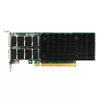
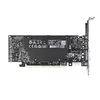
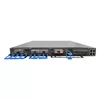
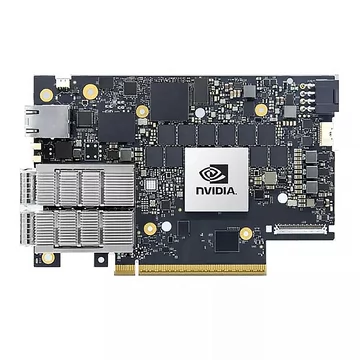
FiberMall provides BlueField-3 B3220 P-Series solutions together with compatible optical connectivity options, including QSFP112 transceivers, DAC cables, AOCs, and related fiber solutions.
The B3220 P-Series is a full DPU platform designed for infrastructure acceleration rather than a standard network adapter.
Key specifications include:
Product Model
NVIDIA BlueField-3 B3220 P-Series
Networking Capability
Dual-port high-speed Ethernet or InfiniBand connectivity depending on configuration
Ports
Dual QSFP112 ports
Host Interface
PCIe Gen5 x16 interface
Processor
16 Arm Cortex-A78AE processor cores
Memory
32GB onboard DDR5 memory with ECC support
Management
Integrated management controller for lifecycle management and provisioning
Form Factor
Full-height half-length (FHHL) single-slot adapter
Software Support
NVIDIA DOCA SDK, including networking, storage, security, and infrastructure acceleration frameworks
The BlueField-3 architecture combines NVIDIA networking technology with an integrated Arm processor subsystem and dedicated acceleration engines.
Unlike a traditional SmartNIC, a DPU includes its own processing resources, memory, and software environment. This allows infrastructure services such as networking, storage, and security functions to run independently from the host CPU.
The result is improved CPU efficiency because application servers can focus more resources on application workloads instead of infrastructure processing tasks.
Why the Integrated Management Capability Matters
BlueField-3 includes integrated management capabilities that enable remote provisioning, lifecycle management, and secure operation.
Administrators can manage the DPU independently from the host operating system, which is especially valuable in large-scale data centers where automated deployment, security policies, and infrastructure consistency are critical.
DPU vs. SuperNIC vs. Storage-Optimized BlueField-3 Variants: Which One Do You Need?
One of the most common questions during BlueField-3 deployment is choosing the correct platform variant.
The right choice depends on the workload.
BlueField-3 B3220 P-Series DPU
Type: Full infrastructure DPU
Processor Resources: 16 Arm Cortex-A78AE cores
Memory: 32GB DDR5
Best For:
· Network infrastructure offload
· Storage acceleration
· Security processing
· Zero-trust architecture
· Cloud and enterprise infrastructure workloads
The B3220 P-Series is designed for customers who need a complete infrastructure acceleration platform rather than only network acceleration.
BlueField-3 SuperNIC Variants
Type: AI and GPU cluster networking accelerator
Best For:
· AI training clusters
· GPU-to-GPU communication
· RDMA acceleration
· High-performance Ethernet networking
SuperNIC configurations focus on maximizing network performance for AI workloads while reducing unnecessary infrastructure overhead.
Storage-Optimized BlueField-3 Variants
Type: Storage acceleration platform
Best For:
· NVMe-over-Fabrics environments
· Software-defined storage
· Storage data-path acceleration
These configurations provide additional resources optimized for storage-intensive applications.
The Short Rule
If you need to offload multiple infrastructure services — including networking, storage, security, and management — choose a full BlueField-3 DPU.
If your primary requirement is AI cluster networking and RDMA acceleration, a SuperNIC-focused configuration may be more suitable.
If storage acceleration is the main objective, a storage-optimized BlueField-3 platform may provide the best balance of resources.
What a BlueField-3 DPU Actually Offloads
The value of a DPU comes from the infrastructure workloads that no longer consume host CPU resources.
Instead of using server processors for networking, storage, and security operations, BlueField-3 moves these tasks onto dedicated acceleration hardware and Arm processing resources integrated into the adapter.
The main workload areas include:
AI and HPC Networking
BlueField-3 supports high-performance networking technologies including:
· RoCEv2 RDMA over Ethernet
· InfiniBand networking
· Hardware-based packet processing
· Congestion management acceleration
In AI and HPC environments, RDMA enables direct memory communication between GPUs, servers, and network resources while reducing CPU involvement.
This makes BlueField-3 suitable for large-scale GPU clusters where predictable latency, high bandwidth, and efficient east-west traffic handling are critical.
Storage Acceleration
BlueField-3 can accelerate storage infrastructure functions such as:
· NVMe-over-Fabrics deployments
· Storage protocol processing
· Data-path acceleration
· Software-defined storage workloads
By moving storage-related processing away from the host CPU, the server can dedicate more compute resources to applications, AI workloads, and virtualized environments.
Zero-Trust Security and Infrastructure Protection
Modern data centers increasingly require security functions to operate independently from application workloads.
BlueField-3 can accelerate infrastructure security functions including:
· Network isolation
· Microsegmentation
· Encryption processing
· Secure workload separation
Running these functions on the DPU reduces host CPU overhead and helps establish a stronger infrastructure security model.
Edge Computing and Telco Applications
BlueField-3 is also used in edge computing and telecommunications environments where network functions need dedicated processing resources.
Typical applications include:
· Cloud-native network functions
· 5G edge infrastructure
· Virtualized networking gateways
· Distributed cloud services
The DPU provides an isolated infrastructure layer that allows application workloads and network services to operate independently.
The common goal across these applications is simple:
A DPU separates infrastructure processing from application computing, allowing servers to dedicate more CPU and GPU resources to business workloads.
Connecting the Dual QSFP112 Ports: Optics, DACs, AOCs, and AECs
The dual QSFP112 ports on BlueField-3 adapters require matching high-speed connectivity solutions.
Choosing the correct cable or optical module depends on:
· Link speed
· Distance
· Fiber type
· Ethernet or InfiniBand deployment
· Switch-side interface
· Power and latency requirements
FiberMall provides compatible optical transceivers and cables designed for high-speed AI and data center networking environments.
400G QSFP112 Optical and Cable Options
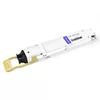
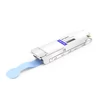
400G QSFP112 DR4 Optical Transceiver
Reach:
Up to 500 meters over single-mode fiber
Typical Applications:
· Data center fabric connections
· Row-to-row server networking
· AI cluster interconnects
The DR4 design uses four 100G-PAM4 optical lanes over parallel single-mode fiber.
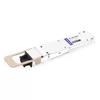
400G QSFP112 SR4 Optical Transceiver
Reach:
Up to 100 meters over OM4 multimode fiber
Typical Applications:
· Intra-rack connections
· Short-reach data center links
· High-density server deployments
SR4 is optimized for short-distance parallel multimode fiber connections.
200G QSFP112 Optical Transceiver
Reach:
Depending on the optical type, from short-reach data center links to extended campus connections
Typical Applications:
· 200GbE deployments
· AI cluster networking
· Enterprise data center upgrades
200G QSFP112 solutions provide a practical migration path for environments that do not immediately require 400G bandwidth.
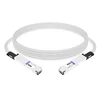
400G QSFP112 DAC Cable
Reach:
Typically up to 3 meters
Typical Applications:
· Same-rack connections
· Short-distance server-to-switch links
· Cost-sensitive deployments
Direct Attach Copper (DAC) cables provide the lowest-cost solution for short-distance connections with low power consumption.
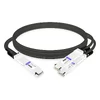
400G QSFP112 AEC Cable
Reach:
Typically longer than passive DAC solutions, depending on cable design
Typical Applications:
· Rack-to-rack connections
· Short-to-medium distance data center links
Active Electrical Cables (AECs) include signal conditioning electronics to extend reach while maintaining electrical signaling performance.
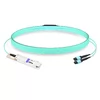
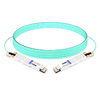
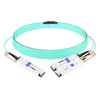
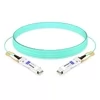
400G QSFP112 AOC Cable
Reach:
Typically up to 100 meters
Typical Applications:
· Multi-rack AI clusters
· High-density data center fabrics
· Longer optical interconnects
Active Optical Cables (AOCs) integrate optical engines into the cable assembly, providing longer reach with lower weight compared with traditional optical transceiver plus fiber solutions.
Choosing the Right BlueField-3 Connectivity Solution
A practical selection guide:
For same-rack connections:
Use:
· 400G QSFP112 DAC
· 400G QSFP112 AEC
Advantages:
· Lowest cost
· Lowest power consumption
· Simple installation
For short-distance data center links:
Use:
· 400G QSFP112 SR4
Advantages:
· Supports multimode fiber infrastructure
· Suitable for high-density deployments
For longer data center connections:
Use:
· 400G QSFP112 DR4
· 400G QSFP112 AOC
Advantages:
· Longer reach
· Better scalability for AI clusters
For InfiniBand deployments:
Verify:
· Transceiver qualification
· Firmware compatibility
· Cable type
· Switch-side interface requirements
InfiniBand environments require validated components to maintain reliable link operation and performance.
Why Compatibility Testing Matters
At 200G and 400G speeds, optical connectivity is not simply a matter of matching connector types.
Successful deployment requires verification of:
· Electrical interface compatibility
· Module firmware
· Optical specifications
· Link protocol
· Switch interoperability
· Cable performance
A complete solution including the adapter, optical module, and cable reduces deployment risk and simplifies troubleshooting.
FiberMall provides BlueField-3 connectivity solutions that combine:
· NVIDIA BlueField-3 adapter options
· QSFP112 optical transceivers
· DAC cables
· AOC solutions
· Fiber connectivity products
This allows customers to deploy high-speed infrastructure with fewer compatibility concerns and a simplified procurement process.
NVIDIA BlueField-3 DPU FAQ
What is the difference between a DPU and a SmartNIC?
A SmartNIC accelerates network tasks like packet filtering and encryption but still leans on the host for control-plane work. A DPU is effectively a small server on a PCIe card — its own Arm cores, memory, OS, and security capabilities — that offloads the entire infrastructure plane. The BlueField-3 pairs ConnectX-7 networking with a 16-core Arm SoC to run networking, storage, security, and management independently of the host CPU.
What is the difference between the BlueField-3 DPU and the BlueField-3 SuperNIC?
The DPU (B3220 P-Series) is a general infrastructure offload engine with 16 Arm cores and 32GB of memory, built to run networking, storage, and security together. The SuperNIC (B3220L E-Series) is a leaner, 8-core card focused specifically on accelerating AI-cluster networking and RDMA. Choose the DPU for full offload; choose the SuperNIC when GPU-to-GPU networking is the only job.
How many Arm cores does the BlueField-3 B3220 have?
The B3220 P-Series has 16 Arm Neoverse cores with 32GB of onboard DDR5. The E-Series variants differ: the SuperNIC (B3220L) has 8 cores and 16GB, while the Storage Controller (B3220SH) has 16 cores and 48GB.
Does the BlueField-3 support both Ethernet and InfiniBand?
Yes. The B3220 P-Series runs 200GbE Ethernet by default and NDR200 InfiniBand, with RoCEv2 RDMA over converged Ethernet. That gives you a single card that can serve either a standard Ethernet fabric or a low-latency InfiniBand fabric.
What optics or cables do I need for the dual QSFP112 ports?
QSFP112 optics, DACs, AECs, or AOCs. QSFP56, QSFP-DD, and OSFP modules will not seat in a QSFP112 cage. For 400G, use QSFP112 DR4 (500 m singlemode) or SR4 (100 m multimode); for short same-rack runs, a QSFP112 DAC or AEC; for multi-rack, a QSFP112 AOC. FiberMall codes and tests the module against the card before shipping.
What is the difference between crypto-enabled and crypto-disabled part numbers?
The same B3220 card ships under several NVIDIA ordering codes. The 00CV-AA0 SKU ships with crypto enabled, while the 00SV-AA0 SKU (the one FiberMall carries) ships with crypto disabled. If your workload requires hardware-accelerated encryption at the DPU, specify the crypto-enabled SKU; otherwise, the crypto-disabled SKU delivers the same networking and offload at a lower price. Our engineers will confirm which part number matches your requirements.
Do you sell the DPU and the QSFP112 optics as a tested kit?
Yes. That is FiberMall's core differentiator. We manufacture our own QSFP112 transceivers and DAC/AOC cables, so we ship the BlueField-3 B3220, the optics, and the fiber patch as one tested, guaranteed-compatible order. One purchase order, one shipment, one warranty.