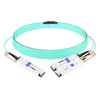
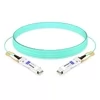
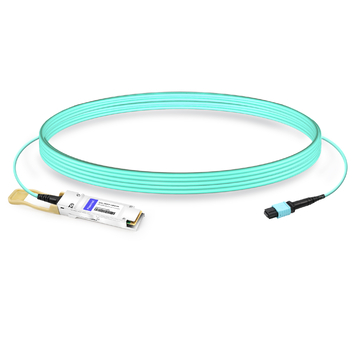
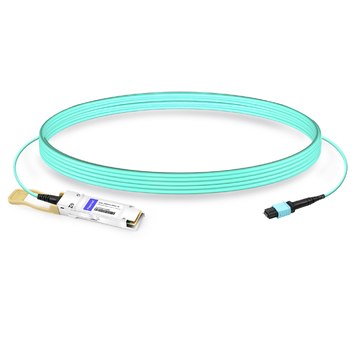
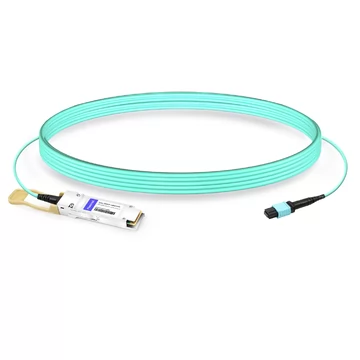
200G QSFP56 With Liquid Cooling: Breaking Speed Limits
High-speed data transmission demands are increasing, pushing the limits of traditional networking solutions. In steps the 200G QSFP56 Liquid-Cooled—a next-gen data center-ready cool technology. It not only provides the much-unprecedented speed and throughput, but also mitigates the critical issues of power efficiency and thermal management.
Introduction to 200G QSFP56 Liquid Cooling Technology
Overview of QSFP56 Modules
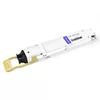
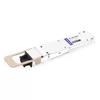
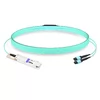
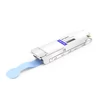
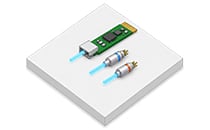
As adoption of next-class networking solutions gradually rises, the delivery of QSFP56 (Quad Small Form-Factor Pluggable 56) modules starts. They are sort of championing the cause of the already hungry cloud computing in high-performance computing environments. Each of the modules contains 50Gbps distributed parallelism over the PAM4 (Pulse Amplitude Modulation) codes across four channels.
Modules with QSFP56 in identical small form-factor used for previous QSFP modules are meant to offer backward compatibility while simplifying the task of integration of modules into current systems. The devices favor energy efficiency, using power in the range of 3.5 to 5 watts, and hence are appropriate for high-density applications. At the same time, to say the least, some of the varieties are multi-reach capable, a feature that essentially makes it fully configurable for all networking scenario applications.
Advantages of Cooling 200G QSFP56 using Liquid
Superior thermal management
In the process of liquid cooling, the objective is to envelop and protect high-speed hot spots that are directly engaged in the heat rejection by the liquid. Utilizing the liquid cooling can substantially improve the cooling performance of a data center by an order of magnitude compared to traditional, air-cooled systems. The temperature of the liquid is left with the job of heat transport. Consequently, the heat transfer itself was greatly improved. From the results of traditional air cooling, the heat transfer capability of liquid cooling may vary by several orders of magnitude-saving a top-of-the-high-performing 200G QSFP56 modules from failing under a heavy burden of work.
Optimal energy efficiency
A power-efficient data center can possibly harness liquid cooling through 200G QSFP56 modules. By increasing liquid cooling initiatives, three-fourths-to-one-half of the input is passive. A liquid cooling solution would therefore dramatically turn this around by improving the efficiency of the cooling plant and the atmospheric pressure by deflating the PUE values below 1.1 against the world average close-to-PUE of above 1.5.
Higher Density Deployments
Because of the immense flexibility this means that while two demand points of workload density would be marginally high, the liquid cooling could be enabled to optimize the power draw of these new-born HPC workers by effectively using 200G QSFP56 modules and the AI trainees as well as pocket-sized data centers starving huge bandwidths coupled with scarcity of room.
How 200G QSFP56 Liquid Cooling Enhances Data Center Efficiency
Challenges in Traditional Cooling Methods
Air cooling has been used for several years in data centers for handling the thermal loads but the lack of capability these technically older methods have to adjust to greater computing/density demands remains a pertinent matter. Huge data centers contributing to virulent waste on energy are ineffective. It is in the 2023 Nanotechnology Trends report that cooling accounts for 30-40% of the data centers' total energy consumption. This enormous energy cost influences the carbon footprint as well as operation cost and simplifies inefficiency.
Above 10 kW per the rack rise in heat can be experienced by air cooling. This may lead to sporadic distribution of hot spots in the servers, reducing the server reliability and augmenting the chances of hardware failure. The conventional method supports high peak loads that leave most of the methodical resource idling during regular operations.
Energy Efficiency of Liquid Cooling
Liquid cooling proves effective in reducing the power consumption of a data center. Unlike conventional air cooling, where the transfer of heat is achieved by air directly cooling the data center, liquid cooling involves some type of liquid or water circulating around the electronics and carrying the heated fluids away from the parts where the line transfers the heat. Hence liquid cooling is largely effectual; liquid, being the medium, has higher thermal conductivity compared to the air, allowing for quick removal of heat.
Recent studies estimate big savings from the liquid cooling technology. For instance, the US Department of Energy report mentioned how data centers might save as much as 40% of the power used in cooling by making use of liquid cooling, as opposed to ordinary air cooling systems. By providing a continuous thermal management system in a time of ever more increased computer heat, liquid cooling technology becomes a good enabler for prime HPC and/or AI workflow consolidation.
Top Features of 200G QSFP56 Liquid Cooling Modules
Compatibility with Existing Systems
Quad Small Form Factor Pluggables of 200 Gbps each with suit shelf-water or heat-exchange cooling are built for different types of applications in metro and access (telcom) area. Module backward-compatibility is enabled with QSFP56, but in all actuality, to some degree they make the current systems through technological advancements.
In parallel with IEEE 802.3cd standards and ITU-T Recommendations, the very new LC modules flaunt well erected set-up platforms and equipment standards for a unification of tech offerings as an advantage. Such deployment allows for (re) cheap and scalable growth of existing networks of up to 200G without removing lay-down items from the field, fault mode, or total suspension.
Performance Metrics and Reliability in Immersion Environments
The immersion cooling is a new technique to cool high-performance computation and servers hardware. This requires the immersion of hardware directly into a dielectric liquid thermally conductive, which obsolesces traditional heat sinks and fans and makes the process very high on energy efficiency and reliability.
It is confirmed that the electricity consumption of immersion cooling solution is less, up to 90%, than with normal air cooling solutions. Quite often, the enhancement of server performance is currently derived from dealing with uniform heat that can allow these devices to run and boost frequencies full-tilt without having to be throttled. Experimental evidence shows that the average CPU temperature under full workload is raised by about 50% using liquid-immersion systems, bestowing upon the servers a longer useful life.
Applications of 200G QSFP56 Liquid Cooling in Modern Networks
Use Cases in Cloud Computing and AI Workloads
With an increase in the number of AI applications, cloud computing, and the likes, liquid-cooled 200G QSFP56 is garnering attention with the utmost urgency. The wants for accelerated performance and scalability need to be catered to fulfil these two areas. Liquid cooling in the data center template allows for exactly such an opening, depending on the current level of industrial computing.
But obviously, one of the main reasons though liquid cooling will be put forward would be reduced energy consumption as compared to conventional air cooling. Ultimately, liquid cooling is expected to have a power usage effectiveness (PUE) as low as 1.1, a major expected improvement from the 1.5 PUE of an air-cooled counterpart. As an efficiency measure, such an improvement would be very useful in the case of cloud hosts who are faced with the additional challenge of low-return workloads such as data storage, virtual machines, and real-time collaboration tools.
Deployment in Hyperscale Data Centers
In the quest for greater performance, hyperscale sites are evolving and developing the infrastructure for addressing the escalating demand. Hyperscale data centers have been given greater competitive positions relative to traditional data center designs as a result. Hyperscale data centers are taking on a more competitive level of demand with the advent of liquid cooling systems that can better address the thermal-growth issues from server racks on increasing densities. Vocated by some cloud providers and other major entities with large workloads, these sites seem to dash with advantages over the tired designs of traditional data centers.
Recent reports suggest that liquid cooling could cut that, that data-center cooling energy consumption by up to 40%, eventually impacting the PUE ratio. Furthermore, very high bandwidth solutions are critical for the development of next-generation data centers, and the implementation of 200G QSFP56 networking hardware especially supports high data speeds for modern workloads in real time, including AI model training, machine learning, and analytics.
Comparing 200G QSFP56 Liquid Cooling with Traditional Cooling Solutions
Key Differences in Design and Functionality
Cooling Efficiency
Liquid cooling presents better efficiencies compared to air cooling. The reports lately showed liquid cooling to have a good 1000 times over air-cooling because of the exceptional temperature conductivity in a fluids phase. Further, liquid-cooled 200G QSFP56 transceivers are able to accomplish an efficient performance to run for a longer lifespan at a narrower temperature profile despite exceeding warm operating conditions. On the contrary, air circulation problems stop our silicon chips from functioning at their best.
Space Optimization
Traditional air cooling systems may rely on larger and more complicated fans, as well as air path, taking up additional space. Liquid cooling, on the other hand, can be extremely space efficient. Liquids can extract ambient heat and transport it away from the heat source thereby freeing up space for denser layouts in data centers exploited for some business purposes or the other.
Long-term Sustainability and Environmental Impact
Utilization of one of the liquid-cooling technologies helps much in sustainability in the long-term. According to estimates by some in the U. S., traditional air-cooling consumes 40% of the total data center bill for energy. Liquid-cooling can save at least 30% of air-cooling's power consumption. It offers a more complete manner of heat dissipation for high-density servers.
In addition to proportional energy savings, liquid cooling reduces dividends in the realms of water usage for cooling structures. The United States Environmental Protection Agency (USEPA) specifies that for the purpose of cooling, around 5th of the total amount of water an average data center consumes goes down annually for evaporative cooling systems. In this context, closed-loop strategies for liquid cooling technologies are likely to stretch their energy savings further to greatly contain the acute environmental effect.
Frequently Asked Questions (FAQs)
What is 200G QSFP56 Liquid Cooling and Why is it Important?
200G QSFP56 Liquid Cooling means cooling utilizing the liquid medium to handle the heat output from 200G QSFP56 optical transceivers. These modules have been made for high-speed data transmission in data centers and networking environments. This type of cooling can be seen as advantageous because of better thermal management compared to traditional air cooling, thereby assuring the desired performance execution, energy efficiency, and higher reliability in highly dense environments like hyperscale data centers.
How Does Liquid-Based Cooling Add Value to the Performance of 200G QSFP56 Optical Transceivers?
Liquid cooling can intensify the viability of the modern 200G QSFP56 modules by ably extracting heat from its very source. Once the temperature starts rising due to the block out of the dissipation effect, this would substantially negatively affect the resolving patterns, not to mention their very lives. Liquid cooling can assure consistent work and higher data transfer rates, rendering it comprehensively perfect for all tough applications spanning the domain of heavy workloads, including AI-based jobs and cloud computing in the contemporary data center.
How Liquid Cooling is More Sustainable for 200G QSFP56 Modules Than Air Cooling?
Liquid cooling results in lower power consumption compared to air cooling; this is because liquid cooling cools at the source, reducing the need for power-hungry fans and air conditioning systems. These reduced operating costs translate into lower carbon footprints for data centers. That liquid cooling systems may also be equipped to recycle and reapply cooling fluids contributes to more environmental benefits.
What Are the Environmental Implications of 200G QSFP56 Liquid Cooling?
Using 200G QSFP56 liquid cooling leads to diminished power consumption from an environmental point of view. While air cooling relies on power-hungry fans and HVAC systems working pompously on target, liquid cooling evacuates the unwanted heat directly from the source itself and so reduces power consumption. Besides, many liquid cooling systems are designed to recycle and reuse cooling fluids, thereby minimizing waste and environmental impact. This makes liquid cooling an out-and-out eco-friendlier choice for the 21st-century data center.