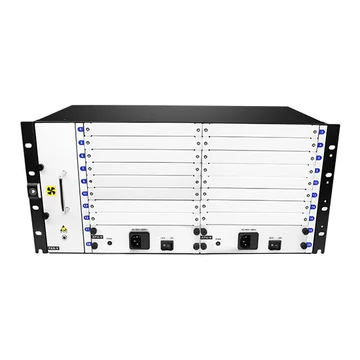
Managing a dozen standalone media converters means a dozen power bricks, a dozen points of failure, and no single view of your links. A rack-mount media converter chassis collapses that into one managed unit — but only if it's built with the redundancy and central management your network actually needs.
FiberMall's 16-slot media converter chassis does exactly that: 16 hot-swappable converter slots, dual redundant power, and SNMP/WEB/TELNET/CONSOLE management that scales to four cascaded chassis from a single interface.
Stop Managing Converters One at a Time
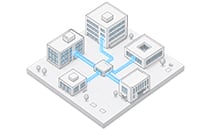
Point-to-point fiber links multiply fast. A growing ISP, a multi-building campus, or an enterprise riser can quickly reach 20, 40, or more individual fiber connections — each one running through its own standalone media converter.
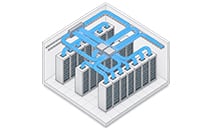
That model works until it doesn't. Standalone converters each need their own power supply, their own mounting point, and their own physical inspection. When a link drops at 2 a.m., the engineer on call has to walk the rack, find the right device, and check its LEDs by hand. There is no aggregated view, no remote reboot, and no single place to see voltage, temperature, or fan health across the entire fleet.
A rack-mount chassis solves the physical problem — density and shared power — but many chassis still stop there. They consolidate the hardware without consolidating the management. You end up with 16 cards in a box you still have to monitor individually.
The chassis you choose matters most when the network is already up and something is going wrong. That's where redundant power and centralized management stop being nice-to-haves and become the reason you chose the chassis in the first place.
A Chassis Built for Density, Redundancy, and Manageability
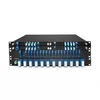
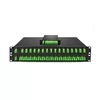
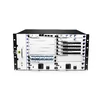
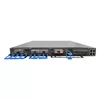
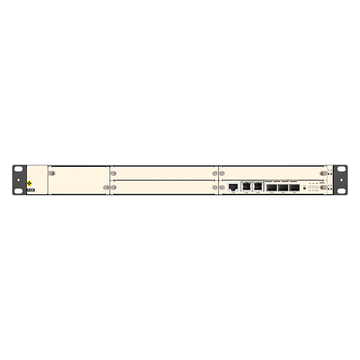
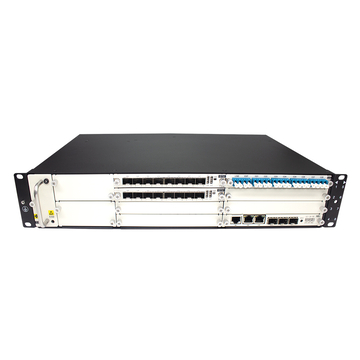
FiberMall's main chassis is a 19-inch rack-mount enclosure designed to turn a cabinet full of standalone converters into a single, centrally managed system.
Key benefits:
· Centralized management — Monitor and control every card in up to four cascaded chassis from one SNMP, WEB, TELNET, or CONSOLE interface, with real-time voltage, temperature, and fan status.
· Dual redundant power — Two hot-swappable power supplies keep every link up if one supply fails; the chassis reports power status and working state per supply.
· Hot-swappable everything — Media converter cards and the management card insert or swap without powering down the chassis or dropping neighboring links.
· Factory-direct supply — Chassis, manageable converter cards, and SFP modules sourced together from FiberMall at competitive pricing, with global shipping.
Features That Keep Your Links Up and Visible
16 Hot-Swap Converter Slots
The chassis houses up to 16 manageable media converter cards in one 19-inch rack unit. Because the cards are hot-swappable, adding capacity or replacing a failed card happens in seconds without disturbing the other links on the chassis.
Dual Redundant Power Supply
Redundancy is the point of a chassis, and power is where it matters most. The main chassis supports two power supplies — AC or DC depending on your deployment — so a single supply failure never takes down your links. The management interface reports supply type, power, and working status in real time.
Centralized Multi-Chassis Management
This is where the FiberMall chassis separates itself. A master-and-slave architecture with a management card lets you cascade up to four chassis and manage them all from one interface. SNMP Trap alarming with MIB files integrates with existing NMS platforms like HP OpenView and SNMPc, while the top-tree view groups multiple chassis into a single pane of glass.
Real-Time Environmental Monitoring
The chassis continuously reports voltage, temperature, and fan operating status. Remote power-off alarming and flow statistics give your NOC visibility it simply doesn't get from a rack full of standalone converters.
Complete Rack Solution from One Supplier
FiberMall manufactures the chassis, the manageable converter cards, and the SFP modules they take. That means one quote, one supplier, and cards that are guaranteed to fit — no mixing vendors or matching form factors yourself. Support for SFP, CWDM SFP, and DWDM SFP with DDM display covers single-fiber and dual-fiber links alike.
What FiberMall chassis deployments deliver:
· One rack unit replacing up to 16 standalone converter power supplies and mounting points
· Centralized SNMP/WEB monitoring across up to 64 converters (four cascaded chassis)
· Redundant power and hot-swap cards for maintenance without downtime
· Factory-direct pricing on MSA/IEEE-compliant hardware
How It Works
1. Configure your chassis — Choose 16-slot capacity and AC or DC power.
2. Add converter cards and SFP modules — Select the manageable media converter cards, management card, and SFP (or CWDM/DWDM SFP) modules for your fiber type, distance, and speed.
3. Deploy and manage centrally — Rack the chassis, insert the cards, and monitor voltage, temperature, fan status, and link health from one SNMP or WEB interface.
Frequently Asked Questions
What is a media converter chassis used for?
A media converter chassis is a rack-mount enclosure that houses, powers, and manages multiple media converter cards in one 19-inch unit. It replaces many standalone converters and their individual power supplies with a single managed system.
What is the difference between a chassis and a standalone media converter?
A standalone converter is a single device for one link, with its own power supply. A chassis consolidates up to 16 converters into one rack unit with shared, redundant power and centralized SNMP/WEB management — the better choice when you run many point-to-point fiber links in one location.
How many media converters fit in a chassis?
The FiberMall main chassis holds up to 16 hot-swappable media converter cards plus a management card. For larger deployments, up to four chassis can be cascaded and managed from one interface.
Do I need a managed or unmanaged chassis?
If you need remote visibility — link status, voltage, temperature, fan health, and remote reboot — choose a managed chassis with SNMP/WEB/console support. An unmanaged chassis only consolidates power and mounting; it gives you no aggregated monitoring or control.
What is redundant power in a media converter chassis?
Redundant power means the chassis holds two power supplies, so a failure in one does not take down your links. The working supply carries the load, and the management interface reports the status of each supply for proactive replacement.
Can I hot-swap media converter cards?
Yes. Cards and the management card are hot-swappable, so you can add capacity or replace a failed card without powering down the chassis or disrupting the other links it carries.
Will my converter cards fit this chassis?
FiberMall's chassis is designed for FiberMall manageable media converter cards. Because FiberMall supplies the chassis, the cards, and the SFP modules together, compatibility is guaranteed within the ecosystem — no cross-vendor form-factor matching required.