When a Fixed DCM Isn't Enough
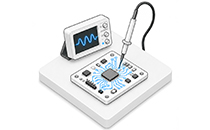
When chromatic dispersion tightens with every step up in line rate, a fixed dispersion compensation module stops being a guarantee and starts being a guess. At 40G, 100G, and 400G direct-detect (such as PAM4) rates, even a few ps/nm of residual dispersion raises bit-error rates enough to fail a link. A tunable dispersion compensation module (TDCM) removes that guesswork — it adjusts to your span in milliseconds, remotely, without dispatching a technician.
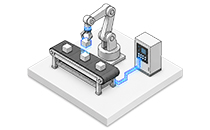
A passive, DCF-based dispersion compensation module is the right tool for a stable span: fixed length, fixed channel plan, and a line rate that tolerates a few ps/nm of error. It needs no power and costs less. But those advantages disappear the moment your network changes.
Three conditions push a network past what a fixed DCM can reliably handle:
· Higher line rates. 10G systems tolerate meaningful residual dispersion. However, 40G, 100G, and 400G direct-detect systems do not — they require dispersion to be held to sub-ps/nm accuracy that a fixed module's ±5 ps/nm tolerance simply cannot guarantee.
· Reconfigurable or dynamic routes. In metro and elastic optical networks, path length and channel assignment change with traffic. A fixed compensation value becomes incorrect the instant the path changes.
· Temperature and span drift. Dispersion shifts with ambient temperature and aging fiber. A fixed module cannot adapt to this, whereas a tunable module can.
If any of these describe your network, you are not looking for a cheaper fixed DCM — you are looking for adjustable, remotely controlled dispersion compensation.
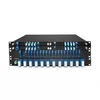
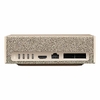
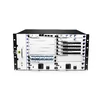
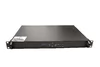
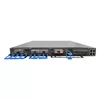
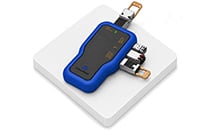
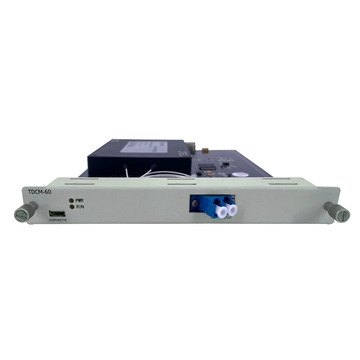
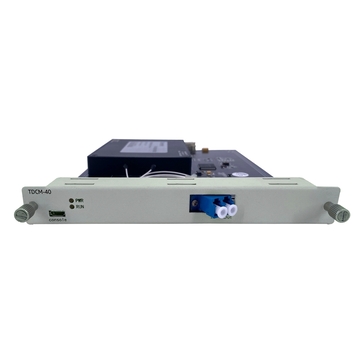
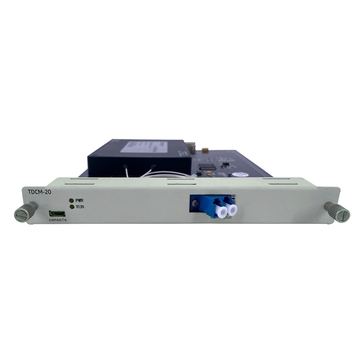
FiberMall Tunable Dispersion Compensation Module (TDCM)
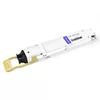
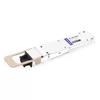
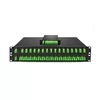
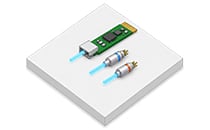
The FiberMall TDCM provides tunable chromatic dispersion compensation across the C-band for DWDM systems, engineered for high-speed 40G, 100G, and 400G direct-detect transmission. It integrates seamlessly with FiberMall EDFA amplifiers, passive DWDM multiplexers, and 100G QSFP28 DWDM PAM4 optics to form a complete extended-reach transport kit.
Key Specifications:
The module operates across the C-band wavelength range (1525–1565 nm) on a 100 GHz channel grid, with 50 GHz supported where applicable. It provides a highly flexible dispersion range of −20 to +20 km (±400 ps/nm). The setting resolution is precise at 10 ps/nm, delivering an overall accuracy of ±0.5 ps/nm. Performance is strictly controlled, featuring an insertion loss of less than 6 dB and PMD/PDL levels maintained at or below 1 ps and 0.5 dB, respectively. For network integration, it utilizes SNMP, I2C, and web management control interfaces with an ultra-low latency of under 25 ns. The module is equipped with LC/UPC connectors and is rated for an operating temperature range of −5 to 65 °C.
Key Benefits:
· Precision: Sub-ps/nm accuracy keeps high-speed direct-detect links within their exceptionally tight dispersion tolerance.
· Remote tunability: Adjust compensation over SNMP or a web management interface without requiring a site visit.
· Speed: Millisecond-scale tuning easily keeps pace with network reconfiguration and dynamic routing.
· Low latency: FBG- or etalon-based compensation adds significantly less latency than traditional dispersion-compensating fiber.
· Slope matching: G.652 slope-matched compensation corrects dispersion uniformly across all C-band channels.
Fixed DCM vs. Tunable TDCM: Which One Do You Need?
This is the decision most buyers get wrong in one of two directions — overpaying for tunability they do not need, or under-specifying a fixed module for a link that demands precision.
When comparing the two, a Fixed DCM (DCF) has a lower initial cost because it is fully passive and requires no power. However, its adjustability is limited to the fixed value chosen at purchase, and its accuracy is roughly ±5 ps/nm. This makes it best suited for stable 10G or legacy spans and budget-sensitive links.
Conversely, a Tunable DCM (TDCM) carries a higher initial cost—which is easily justified at high line rates—and draws a low amount of power (typically 4–10 W). In return, it offers millisecond-scale, remote tunability and a high precision of approximately ±0.5 ps/nm. This makes it the ideal choice for 40G, 100G, and 400G direct-detect deployments, as well as dynamic or reconfigurable networks.
Choose a fixed DCM when your span is stable, your line rate is 10G or a legacy mix, and your system's dispersion tolerance is high.
Choose a TDCM when you run 40G or faster direct-detect systems, your routes change, or you need dispersion held precisely and adjusted remotely. For 25G-and-above DWDM PAM4 links, the tighter dispersion tolerance makes a tunable module the undisputed engineering choice.
Why Engineers Choose Tunable Dispersion Compensation
Tighter control over high-speed links. Advanced direct-detect modulation formats, such as PAM4, operate within extremely narrow dispersion windows. A tunable module holds residual dispersion to ±0.5 ps/nm, effectively protecting the link margin at 100G and 400G.
Remote re-tuning without a truck roll. Field visits are the hidden cost of dispersion changes. Remote SNMP control allows operators to re-tune directly from the NOC, in milliseconds, as routes shift — significantly reducing OpEx and mean-time-to-repair.
Lower added latency than DCF. Dispersion-compensating fiber adds physical length and, consequently, latency. FBG- and etalon-based tunable modules compensate in a compact form factor with dramatically less added delay, which is critical for latency-sensitive transport.
Future-proofed for flex-grid and higher speeds. As networks transition toward elastic, flex-grid operation with dynamic channel spacing, fixed compensation values become a liability. A tunable module adapts in place, safeguarding your infrastructure investment.
Applications
· Metro and regional DWDM (40G/100G). Dynamic path selection and temperature drift make tunable compensation the reliable, stable choice for metro and regional rings.
· Extended-reach transport (100G/400G). In extended-reach builds, the TDCM sits alongside a FiberMall EDFA optical amplifier and passive DWDM multiplexer to push high-speed direct-detect links far beyond standard distances while keeping dispersion perfectly controlled.
· Data center interconnect (DCI) and legacy upgrades. Tunable modules support DCI and mixed-protocol environments where compensation requirements vary based on the specific path and format.
Frequently Asked Questions
What is the difference between a fixed DCM and a tunable DCM (TDCM)?
A fixed dispersion compensation module provides a single, preset amount of compensation and is fully passive. A tunable dispersion compensation module (TDCM) provides adjustable compensation — typically with ±0.5 ps/nm accuracy, tunable in milliseconds over a set range — and is actively controlled, usually remotely.
When should I use a tunable DCM instead of a fixed DCM?
Use a tunable DCM when your line rate is 40G or higher utilizing direct-detect optics, your routes are reconfigurable or dynamic, or temperature and span drift heavily affect your dispersion. Use a fixed DCM for stable, budget-sensitive, lower-speed spans where dispersion tolerance is broad.
What dispersion range and resolution does this TDCM provide?
The module operates across a tuning range of −20 to +20 km (±400 ps/nm) in precise 10 ps/nm steps, ensuring a strict accuracy of ±0.5 ps/nm.
Does it support 40G, 100G, and 400G DWDM?
Yes. The module is explicitly designed for high-speed direct-detect (such as PAM4) DWDM systems where tight, uncompromising dispersion control is required.
What control interface does it use?
The module is fully supported by SNMP, I2C, and web management interfaces. Remote management allows network administrators to execute rapid re-tuning without ever needing a site visit.
What is the price and lead time?
Pricing is quote-based and depends on your specific dispersion range and network configuration. Contact FiberMall for a customized quote — we typically respond within 24 hours with accurate pricing and lead times.