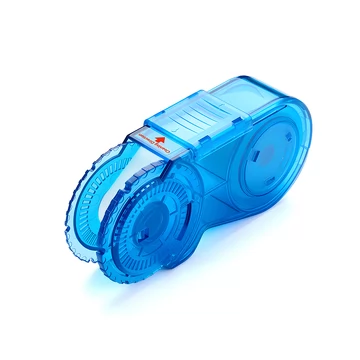
Fiber Optic Cleaning Cassette: Complete Guide to Connector Cleaning and Maintenance
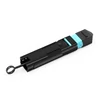
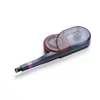
The fiber optic cleaning cassette is designed to clean a wide range of fiber optic connectors, including LC, SC, FC, ST, MU, and compatible MPO/MTP types. It supports both single-mode and multimode fiber connectors, provided the appropriate cleaning cassette is selected. Featuring an integrated precision cleaning tape, the cassette effectively removes dust, oil, and other contaminants from exposed connector end-faces, helping reduce insertion loss, maintain connection stability, and support reliable optical network transmission. It is widely used for installation, inspection, and maintenance in data centers, telecommunications facilities, and FTTH (Fiber-to-the-Home) deployments.
The Problem: Contamination Is the Failure Nobody Looks For
When a fiber optic link degrades, the instinct is often to blame the transceiver, the cable, or the switch. Yet one of the simplest and most frequently overlooked causes is a contaminated connector. Dust, fingerprint oils, and residue on a fiber end-face can obstruct or scatter optical signals, increase insertion loss, affect return loss, and contribute to transmission errors that resemble hardware faults.
Industry experience consistently identifies connector contamination as a significant contributor to fiber optic connection problems. Contaminated end-faces can cause otherwise functional transceivers or cables to be incorrectly diagnosed as defective, leading to unnecessary replacements, repeated troubleshooting, and avoidable maintenance costs.
This makes proper connector cleaning one of the simplest and most cost-effective preventive maintenance practices. A small investment in the right cleaning tools can help reduce unnecessary RMA cycles, shorten troubleshooting time, and prevent deployment delays caused by contaminated connections.
Most cleaning cassettes are sold as commodity accessories, identified only by a part number and price, with little guidance on connector compatibility, disposable versus replaceable-core designs, or the importance of end-face inspection. FiberMall treats the cleaning cassette as an essential maintenance tool that supports reliable fiber optic connectivity.
Which Fiber Optic Cleaning Cassette Do I Need?
A cleaning cassette is effective only when its cleaning tape and contact surface are compatible with the connector end-face being cleaned. Selection depends primarily on the connector type, ferrule configuration, and whether the cassette is designed for single-fiber or multi-fiber connectors.
- 2.5 mm ferrules: FC, SC, and ST. These traditional single-fiber connectors are commonly found in telecommunications, CATV systems, and legacy enterprise networks. A compatible cassette can clean their exposed connector end-faces. Cleaning connectors located inside adapters requires an appropriate in-adapter cleaning tool.
- 1.25 mm ferrules: LC and MU. These compact connectors are widely used in modern optical networks, including SFP, SFP+, and SFP28 transceiver connections and high-density patch panels. A compatible cassette cleans the exposed connector ferrule, while recessed interfaces generally require a dedicated click-type or stick-type cleaning tool.
- D4 and DIN connectors. These older connector formats remain in use in some broadcast and legacy telecommunications equipment. Certain cleaning cassette models support D4 and DIN connector end-faces, but compatibility should be verified against the cassette manufacturer's specifications rather than assumed solely from ferrule diameter.
- MPO, MT, and MTRJ. These multi-fiber connector types are used in high-density and parallel-optics applications, including 40G, 100G, 400G, and higher-speed optical networks. They require a cleaning cassette designed for rectangular multi-fiber ferrules. Male connectors with alignment pins may require a specially configured cleaning surface to accommodate the pins without damaging the ferrule or obstructing the cleaning process.
Important: Not every cleaning cassette supports every connector type. Always verify compatibility with the specific connector geometry, particularly for MPO/MTP connectors with guide pins.
Disposable or Replaceable-Core? How to Choose
FiberMall offers disposable and replaceable-core cleaning cassette options to support different installation and maintenance requirements.
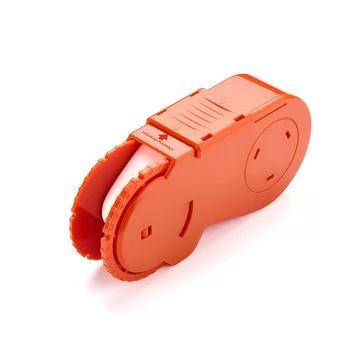
- Disposable cassette (Orange). The entire cassette is replaced when its cleaning tape is exhausted. This design is suitable for field technicians, occasional maintenance, and one-time installation projects where convenience, portability, and minimal handling are priorities. It generally offers a lower initial purchase cost and eliminates the need to manage replacement reels.
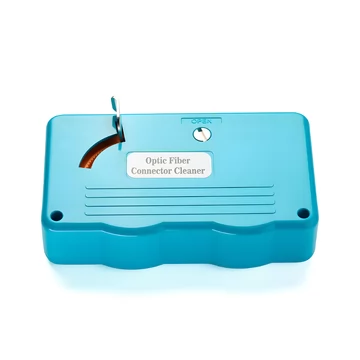
- Replaceable-core cassette (Blue). The cassette housing can be reused, while the cleaning tape cartridge or reel is replaced when depleted. This design is particularly suitable for high-volume cleaning in laboratories, manufacturing facilities, and maintenance workshops. Replaceable cores can reduce the long-term cost per cleaning and minimize plastic waste compared with replacing the entire cassette.
Both designs use dry, alcohol-free cleaning tape to remove contaminants from compatible connector end-faces. Depending on the model and tape capacity, cleaning cassettes may provide approximately 400–500 or more cleaning operations per reel. The exact cleaning capacity should be confirmed from the individual product specifications.
Fiber Optic Cleaning Cassette Specifications
A fiber optic cleaning cassette is a precision maintenance tool. Its cleaning mechanism, tape material, connector compatibility, and service life directly affect cleaning effectiveness and operational convenience.
FiberMall provides the following key specifications to help users select the appropriate cleaning solution.
- Cleaning Mechanism: Manual cassette-style cleaning using a precision reel-tape system. A lever, button, or sliding mechanism exposes or advances fresh cleaning tape, depending on the cassette design.
- Cleaning Tape: Dry, alcohol-free precision cleaning fabric designed to capture dust, oils, and other contaminants without introducing liquid cleaning agents or requiring solvent drying time.
- Cleaning Capacity: Typically approximately 400–500 or more cleaning operations per cassette or replacement reel, depending on the specific model and usable tape length.
- Core Options: Disposable cassette (Orange) and replaceable-core cassette (Blue), offering flexibility for occasional maintenance and high-volume cleaning applications.
- Connector Compatibility: Selected models support 1.25 mm ferrule connectors (LC/MU), 2.5 mm ferrule connectors (SC/FC/ST), certain legacy connector types (D4/DIN), and rectangular multi-fiber connectors (MPO/MTP, MT, and MTRJ). Compatibility with male and female multi-fiber connectors must be verified for each model.
- Cleaning Targets: Exposed connector ferrule end-faces, including compatible single-fiber and multi-fiber connectors. Recessed connectors inside adapters, equipment ports, and transceivers generally require dedicated in-adapter cleaning tools.
- Certifications and Compliance: Applicable environmental and product compliance documentation, such as RoHS declarations, should be verified for each model. ISO 9001 certification relates to an organization's quality management system, while CE and FCC requirements depend on the product's regulatory scope and should not be assumed to apply to passive mechanical cleaning tools.
- Standards Alignment: Supports connector cleaning as part of the inspect–clean–re-inspect maintenance process associated with IEC 61300-3-35:2022. This standard establishes visual inspection and assessment criteria for fiber optic connector end-faces rather than certification requirements for cleaning cassettes themselves.
Why dry, alcohol-free cleaning matters. The cassette's precision cleaning tape captures and removes contaminants without introducing liquid solvent residue. This makes dry cleaning a practical first-line method for many routine connector maintenance tasks. However, stubborn oil, grease, or bonded contamination may require an approved wet-dry cleaning procedure using a fiber-compatible cleaning solution, followed by dry cleaning and re-inspection. Any solvent should be used according to the connector and cleaning-tool manufacturers' recommendations.
The Inspect–Clean–Re-Inspect Workflow
A cleaning cassette is one part of a systematic fiber optic connector maintenance process. The inspect–clean–re-inspect approach helps identify contamination, verify cleaning effectiveness, and reduce the risk of introducing contaminants into optical connections.
1. Inspect first. Use a suitable fiber optic inspection microscope or inspection probe to examine the connector end-face before cleaning. Even brand-new connectors with protective dust caps may contain contamination. Inspect the ferrule surface for particles, residue, scratches, and other visible defects, using the applicable IEC 61300-3-35 criteria.
2. Clean with a compatible cassette. If contamination is present, expose a fresh section of the cassette's cleaning tape and wipe the connector end-face using the motion specified by the manufacturer. Depending on the cassette design, this may involve pressing, sliding, or drawing the ferrule across the cleaning surface. Apply only the recommended contact pressure. For connectors inside adapters or transceiver ports, use an appropriate click-type or other in-adapter cleaning tool instead of a standard reel cassette.
3. Re-inspect to verify. After cleaning, inspect the connector end-face again to confirm that contamination has been removed and that the appropriate IEC 61300-3-35 cleanliness and defect criteria are satisfied. If contamination remains, repeat the cleaning process using a fresh section of tape or an appropriate alternative cleaning method. If persistent defects or damage are identified, further assessment or connector replacement may be necessary.
Both mating connector end-faces should be inspected and cleaned as necessary before connection. A clean connector can become contaminated when mated with a dirty counterpart, potentially degrading optical performance.
Always disconnect the connector and follow appropriate optical safety procedures before inspection or cleaning. Never look directly into an active optical fiber or transceiver.
Important: Visual inspection helps assess end-face cleanliness and surface condition, but it does not replace optical performance testing, such as insertion loss and return loss measurements, when those tests are required.
Fiber Optic Cleaning Cassette FAQ
How do I clean a fiber optic connector?
First, inspect the connector end-face using a suitable fiber optic inspection microscope. If contamination is detected, clean the exposed ferrule with a compatible dry cleaning cassette according to the manufacturer's instructions. Re-inspect the end-face to verify cleanliness against the applicable IEC 61300-3-35 criteria. Inspect and clean the mating connector as necessary before reconnecting the fiber.
Which fiber cleaning cassette do I need: 1.25 mm, 2.5 mm, or MPO/MTP?
Choose a cassette based on the connector type and ferrule configuration. LC and MU connectors typically use 1.25 mm ferrules, while SC, FC, and ST connectors use 2.5 mm ferrules. MPO/MTP, MT, and MTRJ connectors require cleaning tools compatible with rectangular multi-fiber ferrules. Male multi-fiber connectors with alignment pins may need a dedicated cassette design. Always verify the manufacturer's compatibility specifications.
What is the difference between a disposable and a replaceable-core cleaning cassette?
A disposable cassette is replaced entirely when the cleaning tape is exhausted, making it convenient for field maintenance and occasional installation work. A replaceable-core cassette retains the outer housing while allowing the cleaning tape reel or cartridge to be replaced. This makes it more economical and potentially less wasteful for frequent cleaning applications. Cleaning capacity varies by model and tape design.
How many cleanings does a fiber optic cleaning cassette last?
Many fiber optic cleaning cassettes provide approximately 400–500 or more cleaning operations per reel, depending on the model. A fresh section of cleaning tape is used for each operation to help prevent previously collected contaminants from being transferred to another connector. Check the specific product documentation for the rated cleaning capacity.
How does a one-push fiber cleaning cassette work?
In a cassette equipped with a one-push or lever-operated mechanism, activating the control exposes or advances a fresh section of dry cleaning tape. The connector ferrule is then wiped against the designated cleaning surface to remove dust, oil, and other contaminants. Some cassette designs use a sliding or manual wiping action rather than a fully automated push-to-clean mechanism. The correct operating procedure depends on the cassette model.
Do I need a different cassette for MPO/MTP vs. single-fiber connectors?
Not necessarily. Some cleaning cassette models support both single-fiber connectors, such as LC, SC, FC, ST, and MU, and certain multi-fiber connectors, including female MPO/MTP types. However, male MPO/MTP connectors with alignment pins may require a specially designed cleaning cassette. Always confirm that the cassette supports the specific connector and pin configuration before use.
Do I need to clean brand-new connectors?
Brand-new connectors should always be inspected before installation, even when supplied with protective dust caps. Manufacturing residue, handling, packaging, or storage conditions can introduce contamination. If the end-face passes the applicable inspection criteria, cleaning may not be necessary. If contamination is detected, clean the connector using an appropriate method and re-inspect it before mating.