10G SFP+ Liquid Cooling: The Future of Thermal Management in Networking
The pace at which network technology is developed is remarkable, generating a lot of heat, along with the challenge of cooling for all high-performance gear. This brought forth the 10G SFP+ liquid cooling, which is an innovative means of thermal management in network structures. In addition to addressing the heat problems linked to the faster transfer of data, the model further enhances system reliability and energy efficiency.
Introduction to 10G SFP+ Modules
The Importance of 10G SFP+ in Modern Networking
The 10G SFP+ transceiver is a must-have element in modern networking, as gigantic quantities of data have to travel at fast speeds across long distances. This is why they are touted for speed and dependability. Climbing up to the 10G network speeds has never been as hectic as it is now because we have lots of bandwidth-hungry applications, such as cloud computing, video streaming, and big data analytics, that are occupying a stunning amount of bandwidth in these burgeoning industries.
The 10G SFP+ module and its 10Gbps host controller are very good hot-swappable interfaces that permit so many possible connections for fiber and copper networks by industry. 10G SFP+ boasts a high-speed throughput, lower-based latency, and consumes next to no power compared to the slightly younger SFP models, meaning that there is a world in terms of why 10G SFP+ became so famous in IT exploits.
Understanding Thermal Challenges
The thermal design is the single most crucial piece of 10G SFP+ modules that could help overcome the challenges in modern data centers and networking environments. These modules are running at high speeds. Naturally, heat is the byproduct. Otherwise, it is likely that components will degrade or equipment will fail.
A major thermal problem is increasing equipment density. Into small spaces right now, hundreds or thousands of modules are often pushed, resulting in highly localized heat. Findings from some recent studies show that 10G SFP+ optics typically require around 0.8 to 1.5 W per module or so much power. Getting this kind of power from one unit may be fine, but taking into account the domino effects like a fully populated rack, actual watts may go up to 500, obviously necessitating heavy cooling requirements.
The Rise of Liquid Cooling
Limitations of Traditional Air Cooling
Indeed, the cooling techniques that are currently acceptable arelessly effective in the face of highads of high-density power, in particular with modern high-performance systems , such as the 10G SFP+ modules. In particular, the inability of such cooling systems to handle higher heat loads created by higher power densities draw through the equipment constitutes a quintessential feature, whether in an emergency fault situation or single power event situation. It also shows that air/once cooling material above 300 W/inch in power density is ineffective; this inefficiency further aids moderate to maximum thermal hot spots and then correlates to the decline in overall system reliability and performance.
Another issue that is significantly focused is the great power consumption of sophisticated air cooling systems. Forty percent of the energy consumed in state-of-the-art data centers, using traditional air cooling technique, goes just to the cooling infrastructure. Hence, the consumption of energy has caused a lot in the name of operational costs, and at the same time, the adverse negative effect is environmental, hence all the following negative ramifications, especially greenhouse gas emission masses.
Benefits of Liquid Cooling in High-Density Deployments
Maximum Heat Transfer Efficiency
The superiority of liquid cooling over air cooling is very clear in the domain of heat transfer. The liquid coolant, whether water or any other form of cooling liquid, carries much higher thermal conductivity than air. This property makes it possible to seize heat and quickly release it into the heat sink. Based on various case studies being carried out to ascertain the advantage of liquid cooling, it is presumed that liquid cooling could be almost 3 to 4 times more effective in comparison to the way the ambient cooling used to be, thus ensuring consistent functionality at peak load.
Scalability for Increased Power Density
The craze for high-density and compact servers has moved from mega clusters to a handful of dense server configurations and downsized hardware programmatically. Now, the challenge is the haphazard intrinsic aura of a solution arranger. The operative scale is the key that electrically brings higher power densities around 30+ kW per rack without any constraints to normal endeavor beyond 10-15 kW.
Reduced Energy Consumption
According to the Uptime Institute, approximately 30-40% of data center energy is allocated for cooling purposes. This percentage could be considerably undervalued via a Liquid Cooling System that nullifies the first level of thermal generation at the processor chip. For example, the direct-to-chip liquid cooling system may reduce the total cooling capacity up to 50%, giving a significant push to the overall energy efficiency and sustainable development objective.
Technical Deep Dive: Liquid Cooling Methods
Immersion Cooling vs. Direct-to-Chip Cooling
Immersion Cooling:
Immersion cooling is all about the immersion of a full or partial server in a di-electric liquid that is thermally conductive. The heat generated by the electronic components is absorbed directly into the liquid. It likewise can help to be channeled off and cooled to ground temperature. The cooling principle is better and more efficient than in the forced air cooling scenario. In some studies, energy savings up to 95% happened with an immersion cooling system compared to an air-cooled data center.
Direct-to-Chip Cooling:
Direct-to-chip cooling operates with a cold plate that is designed to interface the processor and other heat generating components, so as to mount directly on them. An efficient removal of heat is achieved through the transfer of coolant through the cold plate. With the systems under discussion, calibrated temperature control is promised, requiring fewer infrastructure modifications when compared to immersion cooling.
Support for 10G SFP+ Transceivers
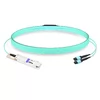
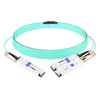
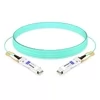
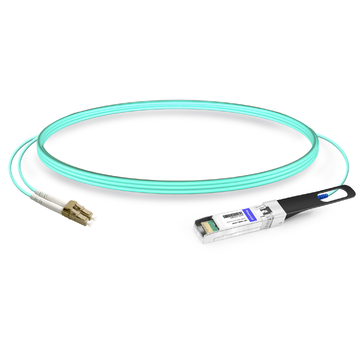
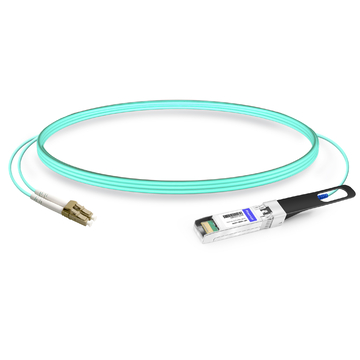
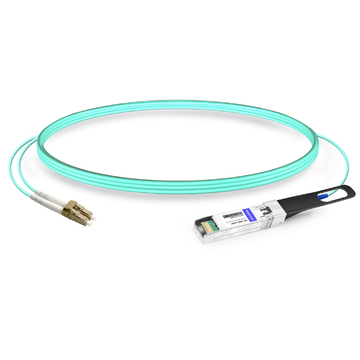
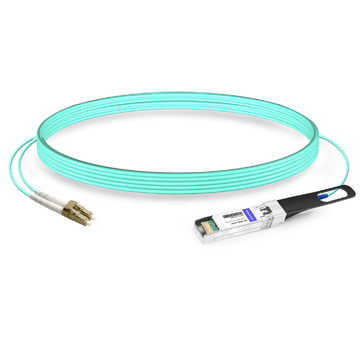
Most interest has been paid to the integration with liquid cooling systems in 10G SFP+ transceivers, as these represent vital components for high speed data transmission in data centers. These Active Optical Cables (AOCs) and respective 10G SFP+ teams have areas and functionalities designed to accommodate such cooling systems in their engineering at different working temperatures and stress loads.
According to data recently received, the wide temperature variants for standard and industrial-grade types of the 10G SFP+ are supposed to range from 0°C to 70°C to a cold -40°C to 85°C. Different liquid cooling styles can somewhat reduce extreme heat waste, which translates into unnecessary power consumption by the server equipment and increases lifecycle of the device. Best performance that may also reduce packet loss and slow transmission speed shall be attained by using liquid cooling together with the 10G SFP+.
Key Benefits of Liquid Cooling
Enhancing Hardware Longevity
Liquid cooling systems are exceptionally important to keep hardware alive, as they can keep the operating temperatures just right for computer parts. If these parts are left at elevated temperatures, they may be worn beyond their lifetimes fairly rapidly. In today's data center world, however, liquid cooling, which is fairly adept at changing temperature gradients, is the only solution for so efficiently dissipating heat as to cause the harsh thermal stress-one of the significant wear-and-tear contributors in the first place.
Evidence indicates improvements in CPU failure and GPU failure rates, up to 30% for some, attributable to liquid cooling in data centers. So, temperature management comes to mind as cooling down chips working under operating temps, while preventing auditive removal of heat. Good bye to air-cooling almost on its own; get to love the cost-advantageous liquid-cooling, lubricating the pipeline systems and heatsinks to run vibrations that could otherwise endanger the integrity of your data center.
Power Usage Effectiveness (PUE)
The Power Usage Effectiveness (PUE) is a crucial measure to determine the efficiency of a data center. Improved PUE figures mean improved effectiveness, where more energy is directed correctly to the use up in the operations-cost function rather than to the many things dependent on energy for any type of auxiliary operations, such as cooling being on the higher end of this chain. Implementation of liquid cooling options helps to push the PUE value further upward due to the capacity of handling huge thermal loads.
The advancement in cost is credited to certain innovative cooling technologies including liquid cooling: they take up much less power and transfer heat more efficiently. Liquid cooling contributes also an increase in processors and graphics processors working within AI/ML workloads, thanks to the steady establishment of the best thermal conditions. Liquid cooling units of appliances use far less power for cooling electronics than air cooling systems, achieving little power loss instead in the process.
Implementation Challenges
Cost Considerations for Liquid Cooling Systems
A key point is that cost aspects that are substantial in liquid cooling would be upfront costs as well as long-running costs. The upfront cost can be attributed to the need for particular equipment, such as pumps, heat exchangers, and the liquid feed system, which are more expensive than the entire cost of a traditional air system. For example, industry estimates show an additional cost of 10-20% for liquid cooling infrastructure compared to air-cooled systems.
Machines can save much more electricity and electrodes operated by refrigerants and massive fans-which will actually save whole data centers through about 30 days of energy. From this research, we can deduce that the PUE of just about any data center would technically reach 1.1 or higher, taking into consideration the benefits of liquid cooling and the IT gear power load could not be factored.
Frequently Asked Questions (FAQs)
Is aoc cable suitable for 10g sfp+ immersion liquid cooling deployment?
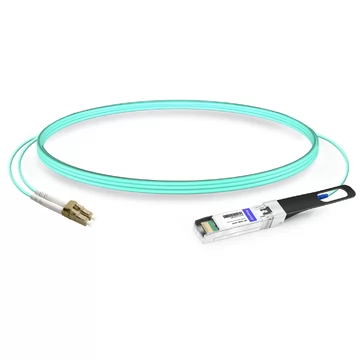
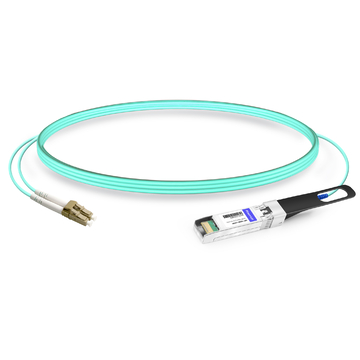
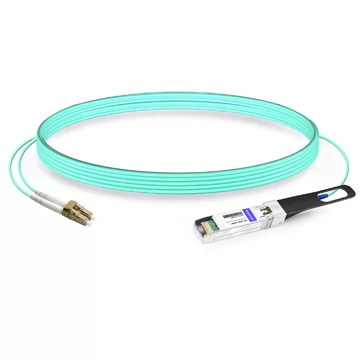
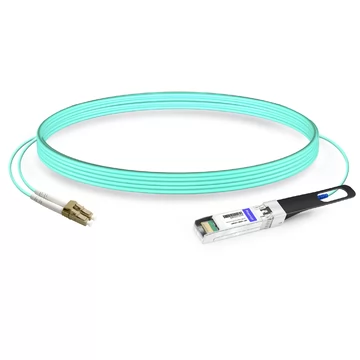
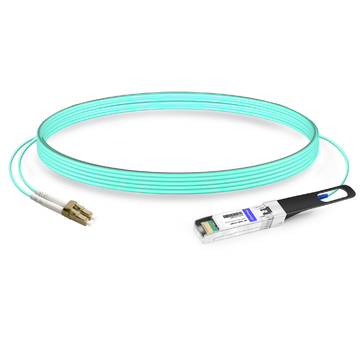
Yes. A lot of active optical cable (AOC) products are going to work with 10g SFP+ and immersion liquid cooling types. Nowadays, many companies are producing AOC cables and optic modules that are compatible with a liquid immersion and cooling active optical setup. Since most likely AOC cables fit for the 10 gigabit Ethernet link enterprise standards to be used in connection along a distance up to 150 meters over multimode fiber, the company should be crosswise with the interface that other vendor equipment is prearranged to support.
In what way is Active Optical Cabling (AOC) for liquid different from a traditional DAC or QSFP28 array?
Immersed optical cables use optical fiber and integrated transceivers instead of copper so that they exhibit very little to almost zero power losses possible in DACs, all while providing many meters of transmission (possessed). Fun fact, AOC is less complex and lighter in weight while allowing you to use an OSER VCSEL, those less stringent about temperature ventilator standards.
What should I read while buying Safe aoc and Active Optical Components that are can be compatible with my Switch?
Recheck the compatibility of the active optical cables and optical transceivers with your switch vendor, ensuring the required electrical interface and compatibility with both SFP+ and QSFP ports. Check for the supported link speeds (e.g., in the case of a 10g SFP), the standards, digital diagnostics functionality (DDM), and any vendor compatibility lists.
Are there emerging active cooling optical solutions for high-density 10g SFP environments?
Yes. The innovation of combining immersion cooling with active optical cable integration is designed to bypass hot-spot electronics and enhance thermal performance. With immersion techniques, electronics and optics can be cooled; a few optical modules and some AOC cables are designed to go under immersion, thus doing away with the need for large air-cooling systems, thereby enabling a much higher port density relative to today's architectures of switches and servers.