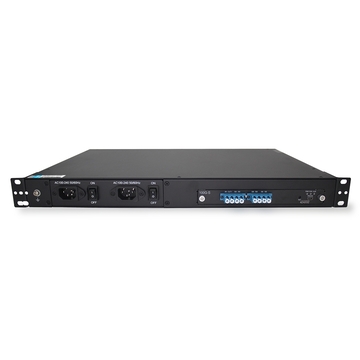
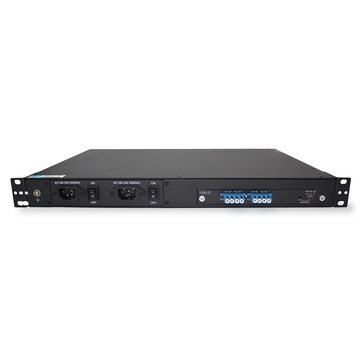
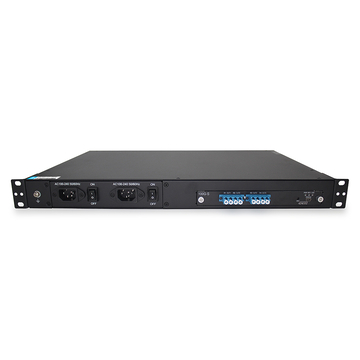
Every optical link eventually runs out of its power budget. The critical question is how to restore it. A semiconductor optical amplifier (SOA) boosts a signal within a compact package, featuring response times measured in picoseconds. Furthermore, it reaches wavelengths that a fiber amplifier cannot cover—most notably the O-band at 1310 nm, where an Erbium-Doped Fiber Amplifier (EDFA) simply cannot operate.
The Cost of Choosing the Wrong Amplifier
Amplifiers may look interchangeable on a datasheet, but the wrong choice can quietly undermine a system. The failure modes are predictable and expensive:
· Wrong wavelength coverage means the amplifier sits outside your signal band. An EDFA cannot touch the 1310 nm O-band, so an engineer who assumes "any optical amplifier works" will be left with a dead link.
· Ignoring polarization produces inconsistent gain. A polarization-dependent Booster Optical Amplifier (BOA) inserted into a system where the input polarization varies will deliver uneven output, while a polarization-insensitive SOA can handle any polarization state.
· Excessive noise figures compound over cascaded stages, eating away at the reach of a 40–80 km link with every additional device.
Engineers are often left to deal with the results: signals that fade under load, links that cannot be extended without a complete redesign, and hardware that arrives without the documentation needed to support it.
The most common mistake is treating an SOA as a generic commodity. It is not. The wavelength, polarization requirements, and package type must all perfectly match the application—and your supplier must possess the expertise to recommend the right fit.
SOA Amplifiers Matched to the Application
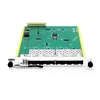
FiberMall's SOA amplifiers cover the exact wavelength ranges and package form factors used in real-world systems, ranging from O-band telecom to C-band sensing.
Key Benefits:
· Compact, integrable gain: This semiconductor-based amplifier has a small footprint, allowing it to fit into spaces where a bulky fiber coil cannot.
· Fast response for switching and processing: With ultrafast response times in the picosecond range, the SOA can be utilized as an optical gate or for all-optical signal processing, going far beyond standard steady-state amplification.
· Broad wavelength reach: These amplifiers offer expansive coverage across the O-band, C-band, and beyond, crucially including the 1310 nm range where erbium-doped amplifiers cannot function.
The result is an amplifier that does exactly what the link or experiment requires—no more, no less—and ships with comprehensive documentation to back it up.
Specifications
The standard specifications for these SOA models cover a wide range of operational needs:
· Operating Wavelength: Standard options include the O-band (1290–1330 nm) and C-band (1528–1565 nm). Wavelengths of 1060 nm, 1450 nm, and 1600 nm are available upon request.
· Small-Signal Gain: Ranges from 15 to 40 dB, depending on the specific model.
· Saturation Output Power: Typically falls between 8.5 and 13 dBm, with high-power models capable of reaching ~18–20 dBm.
· 3 dB Gain Bandwidth: Spans from 40 to 110 nm, model dependent.
· Noise Figure: Generally sits between 6.5 and 9 dB.
· Polarization-Dependent Gain (PDG): Limited to 1–3 dB on polarization-insensitive SOA models.
· Package Types: Available as a 14-pin butterfly package (featuring an integrated TEC and thermistor), a module, or a bare chip.
· Fiber Type: Compatible with SMF-28e or PM Panda fibers.
· Connectors: Comes standard with FC/APC, though SC and LC are available on request.
· Control Modes: Supports both ACC and APC control modes.
SOA vs. EDFA vs. BOA: Which Do You Need?
FiberMall supplies both EDFA and SOA amplifiers, allowing for an honest comparison of the trade-offs rather than pushing you toward whatever happens to be in stock.
SOA vs. EDFA
An SOA amplifies light via current injection in a semiconductor material (such as InGaAsP/InP), functioning much like a laser with anti-reflection-coated facets. In contrast, an EDFA amplifies light traveling through a length of erbium-doped fiber. These fundamental structural differences dictate where each should be used.
Regarding operating bands, SOAs offer a remarkably broad range (~800–1600 nm) that easily covers the 1310 nm O-band. EDFAs are strictly limited to the C-band (1528–1565 nm) and L-band (1570–1610 nm).
When comparing noise figures, EDFAs are superior, typically offering a low noise figure of roughly 4 dB, while SOAs generally measure higher at 6.5–9 dB.
For response time, SOAs operate on a ~1 picosecond scale, allowing them to gate and switch light. EDFAs have a slow response time and are limited to steady-state gain.
Physically, the footprint and integration vary greatly: SOAs are highly compact and easily integrable, whereas EDFAs require a considerably larger fiber coil.
Ultimately, SOAs are best suited for O-band/DCI environments, in-line amplification, signal processing, and sensing. EDFAs remain the gold standard for long-haul C-band and L-band WDM applications.
In short: choose an EDFA for low-noise, polarization-independent amplification in the C/L telecom bands over long distances. Choose an SOA for compact, ultrafast, broadband gain that reaches wavelengths an EDFA cannot.
SOA vs. BOA
A Booster Optical Amplifier (BOA) is a polarization-dependent, single-pass amplifier designed to amplify only a specific polarization state. An SOA, however, is polarization-independent and amplifies all states.
The trade-off is straightforward: because creating a polarization-insensitive design requires engineering compromises, a BOA typically offers superior gain, a lower noise figure, broader bandwidth, and higher saturation power compared to an SOA.
· Choose an SOA when the input polarization is unknown or continuously varies, making it the ideal choice for in-line amplification and most standard telecom links.
· Choose a BOA when the input polarization is strictly known and maintained, and achieving maximum output power is the priority—such as in LiDAR, Optical Coherence Tomography (OCT), and transmitter boosting.
Three questions resolve most selection dilemmas:
1. Which wavelength? Match the amplifier directly to the signal band. The 1310 nm O-band mandates an SOA. The C-band allows for either an SOA or an EDFA, depending on your noise requirements and reach.
2. In-line or booster? Points with unknown polarization require a polarization-insensitive SOA. A known, stable polarization state permits the use of a higher-power BOA.
3. What gain, output power, and noise figure are required? These metrics are dictated entirely by your link budget. The required gain closes your span-loss gap, while the noise figure determines how far the overall link can cascade.
Applications
Telecom & Datacom (O-Band)
SOAs serve as highly effective preamplifiers in 100G CFP/CFP2 ER4 transceivers, extending 1310 nm reach to distances of 40–80 km without the need for signal regeneration. Within Data Center Interconnects (DCIs), they are increasingly replacing EDFAs wherever size and cost are the dominating factors.
LiDAR
High-power SOA and BOA devices are utilized to boost O-band sources for long-range LiDAR systems. Here, a compact, high-gain amplifier can dramatically raise transmit power without requiring a large hardware form factor.
OCT & Seed Lasers
Operating at 1060 nm, SOA and BOA devices successfully amplify OCT sources and seed lasers. They deliver the precise gain that swept or broadened sources require to achieve optimal imaging depth and resolution.
Sensing & Quantum
SOAs act as dynamic gain media in optical sensing systems and single-photon sources for quantum key distribution. In these cutting-edge fields, fast response times and compact integration are the deciding factors.
Frequently Asked Questions
What is the difference between an SOA and an EDFA?
An SOA is a semiconductor-based device that amplifies light through current injection. It covers a broad wavelength range (including the 1310 nm O-band) and features picosecond response times. An EDFA relies on an erbium-doped fiber coil and works strictly in the C- and L-bands, but it offers a significantly lower noise figure and polarization-independent gain suited for long-haul WDM. Always choose based on your specific band and noise requirements.
What is the difference between an SOA and a BOA?
An SOA is polarization-independent, amplifying all polarization states equally, which is ideal for in-line usage where polarization states are unknown or fluctuating. A BOA is polarization-dependent and amplifies one specific state. As a result, a BOA typically provides higher gain and output power, suiting applications like LiDAR, OCT, and transmitter boosting where input polarization is strictly controlled.
What wavelength, gain, and output power does this SOA provide?
FiberMall SOA amplifiers are available across the O-band (1290–1330 nm) and C-band (1528–1565 nm). Depending on the specific model, they offer small-signal gain ranging from roughly 15 to 40 dB and saturation output powers from about 8.5 to 13 dBm. Always confirm the exact performance values for your chosen model against its official datasheet.
What package and fiber type is it?
The standard form factor is a 14-pin butterfly package featuring an integrated TEC and thermistor. Standard configurations use either SMF-28e or PM Panda fiber and come equipped with FC/APC connectors. Module configurations and bare-chip options are available upon request.
What is the noise figure and polarization-dependent gain (PDG)?
The typical noise figure is 6.5–9 dB. While this is higher than that of an EDFA, it remains perfectly acceptable for the vast majority of O-band and sensing applications. The PDG typically registers at 1–3 dB on standard polarization-insensitive SOA models.
What is the lead time and MOQ?
FiberMall ships globally with a Minimum Order Quantity (MOQ) of 1 unit. Simply submit your requirements, and you will typically receive customized specifications and a quote within one business day.