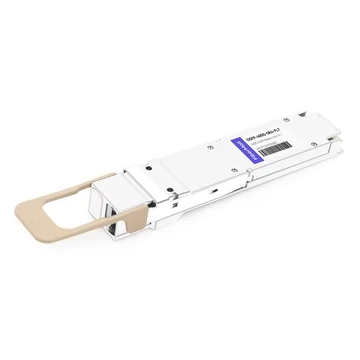
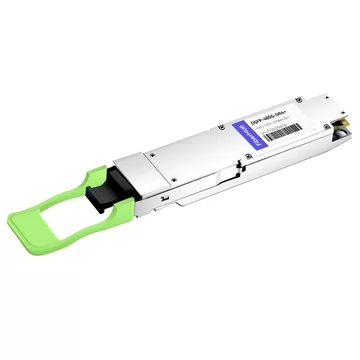
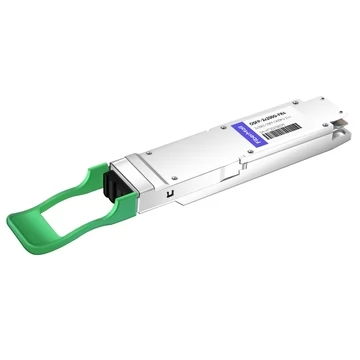
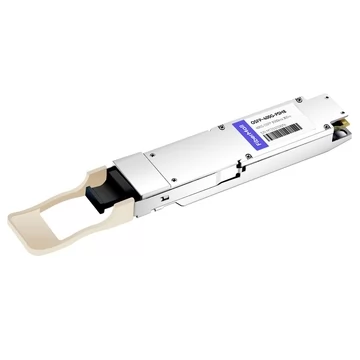
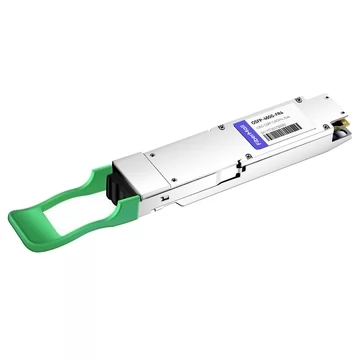
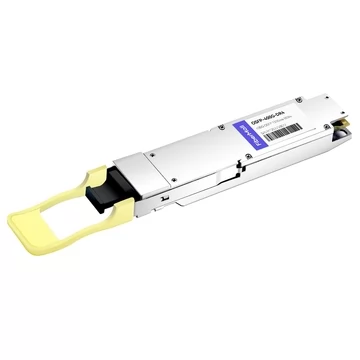
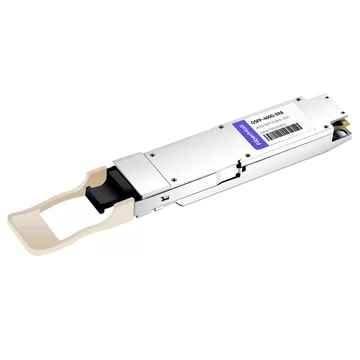
Understanding 400G OSFP: Technology, Performance, and Applications
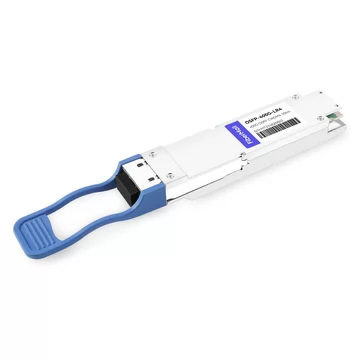
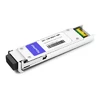
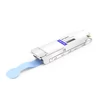
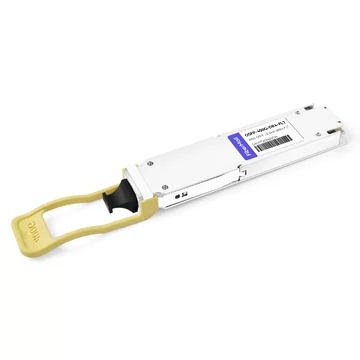
Data-heavy applications, cloud computing, and streaming services are rapidly expanding the need for faster and more efficient network infrastructures. Then enter 400G OSFP optical transceiver , which is a fully-equipped advanced solution to meet the very high requirements of the parallel data centers of today.
Introduction to 400G OSFP
Importance of 400G OSFP in Modern Networking
The 400G OSFP (Octal Small Form Factor Pluggable) module has almost become a crucial element in modern networking as a result of two factors: the exponential growth in data traffic and the increasing demand for high-speed, low-latency communication. Network infrastructure needs to adapt themselves with the growing agility in cloud computing and streaming services and 5G adoption because they are seeing rapid growth, leading to new data transmission requirements. A 400G OSFP solution allows for data transmission reaching 400 gigabits per second, therefore making it critical for high-speed networking purposes.
The 400G OSFP module fulfills a good mix of being small and better heat management. It offers 8 electrical lanes at the speed of 50 Gbps and runs NRZ and PAM4 signaling, providing solid performance of the system. Because of this design, it can be easily assimilated into dense data centers where utilizing space and maximizing performance are crucial.
Full Overview on Optical Transceivers
Optical transceivers represent vital components of the network infrastructure these days that serve to connect optical fibers and electronic devices. They create media for transmitting and receiving data signals in the form of light for data centers, telecommunications networks, and enterprise networks for high-speed long-distance communication. Optical transceivers have matured into taking care of reliability issues under the pressure of increasing bandwidth demands on their development.
The main standards which exist as of today are SFP, QSFP, CFP, and OSFP. The latest standards for QSFP-DD and Two-SFP transceivers provide for data rates of 400Gbps and higher. QSFP-DD means Quad Small Form Factor Pluggable Double Density and has a maximum bandwidth of 400Gbps across its eight lanes running at 50Gbps for high-performance computing, as well as in large-scale data center environments. OSFP transceivers are intended for 400Gbps transmission.
Technical Specifications of 400G OSFP
Understanding PAM4 Technology
PAM4 softens the concept of data transmission in optical networks. The main reasons are the use of four different amplitude levels to represent different data when compared to two levels under the traditional NRZ modulation for binary data transmission. PAM4 then depends on the four-level amplitude.
The PAM4 approach has its benefits as it enables a data rate alignment in a network of PAM4-based greater than that of the current network infrastructure. The data rates associated with two bits per symbol and PAM4 are lower than that of NRZ (one bit for each symbol), resulting in less consumption of bandwidth requirements. Every common unified structure for error correction and equalization algorithms is provided in the case of PAM4 with respect to the baseline.
Wavelength Characteristics- 1310 nm
Since it is more useful to transport data with special optical signal properties on the 1310nm window, therefore, the operation range of 15501450nm wavelengths can go as high as 1500nm, the result of which is lower dispersion and maximum value when it goes beyond 15501551nm, as defined by its limit curve. Where longer-haul high-data-rate WDM links are required, the conventional 1310nm optical spectrum is confined to the Hp concepts and performs better when working under short-medium-haul high-data transfer broad spectral window application links without hitting any additional upper limit.
The 1310nm wavelength functions within a telecom window where the attenuation rate is very low, with a common value of 0.35 dB/km, as per the position of standard single-mode fibers. Since the signal losses that are low have the capacity to be transmitted over long distances, this means that it can be quite well useful for metro-area network (MAN) and enterprise network, among others.
Comparison with Other Modules
Performance Metrics of 400G OSFP Modules
OSFP 400G modules are enhancing performance demands for modern High-speed Data centers and optic networks. These modules are all set right for CMOS PAM4 and push up to 400G bandwidth, doubling the data rate in comparison with NRZ systems, but still in a productive and reliable setup. Nevertheless, OSFP modules allow a higher port density of up to possibly 36 OSFP ports per 1U switch, ultimately suggesting a potential aggregate bandwidth of 14.4T per switch.
One more important throughput metric is the latency, which these 400G OSFP modules are famous for. These have been intended for providing sub-microsecond latency. Workloads like AI training and real-time analytics have also been prospering as the AI has quickly become hot field yet another market for the OSFP modules to feature 400G. Power usage fluctuates with each manufacturer but is usually between 10W and 15W per module. This is salvation for an idea as energy-efficient design should be taken into consideration at such lofty heights.
Use Cases for 400G OSFP in Data Centers
Spine-Leaf Architectures:
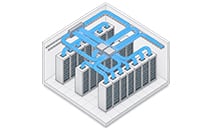
The 400G CFP possibility provides easy scalability, lower latency, and better bandwidth than earlier spindle navel technologies. For instance, implementing a PL200G solution from leaf to spine and meeting spindles in the Megacenters-a big positive result would have to be easier interconnection and fewer ports for the native priest between leaf and squeak.
High-Performance Computing (HPC):
Working at 400G OSIP would allow one to implement connections between virtually instantaneously creating conditions for program and model performances in the high delivered environment. This will offer lower jitter for extreme bandwidth with maximum data distribution across datainters. Presented with some researchers, an experiment has supported the evidence against an HPC subfield, where approximately 33% increased over record data handling with 100G systems backed by the 400G gene.
Cloud Service Providers:
Today, the emergent cloud services call for data center networks of vast capacity and scalability in serving billions of clients. Major cloud operators like Google Cloud, Microsoft Azure, and AWS use a 400G OSFP technology as core technology to connect them. These big weapons are potent for rapid scale-out in storage, compute, and network resources, requiring the corresponding explosion in the growth of virtual machines and applications yet another time.
Compatibility and Integration
LC Connector and SMF Optical Transceiver Compatibility
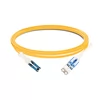
LC connectors and bracket accessories were specially designed for network service. These are some of the most essential components of the whole optical network structure. Being attached to the single-mode fiber-based optical transceiver, they will serve the facility requirement of an efficient and fast transmission to meet the necessities of long-haul distances. The SMF works mostly at 1310nm with some use at 1550nm, a wave that benefits applications requiring little signal loss and low dispersion.
For 400G networks, LC connectors are utilized on SMF in choosing a high-bandwidth, low-latency connection over long distances. Such optical interfaces support up to 10km data traffic, relying on the type of transceiver module utilized, like 400GBASE-LR4 or 400GBASE-FR4. For very high 400-Gbps rates with ultra-low power consumption, consider a 400G OSFP module with LC connectors for signal integrity in a very dense data ambiance.
Working around existing infrastructures
Besides backward compatibility, modern transceivers can currently bridge the gap between the already installed setups and new investments in the coming days. Such integrations offer data centers running in the LDPE setup a way to seek accommodation of compatible infrastructures that shall retain profits from the existing investment. All along, some major data centers are known to be operating in a setup with LDPE over OM3/OM4 multimode fibers or SMF media. Like the Kingston QSFP-DD and 100GbE QSFP series, which provide highly advanced optics may carry old operations on the new systems back to 400G QSFP formulations.
According to recent reports, soaring such solutions are moving towards the 5G market. The global optical transceiver market is forecast to skyrocket by nearly 15% between 2023 and 2028, driven by data conglomerates and inaugural IoT applications. A remarkable commendation is needed for the LC-type connector, the unified wiring of which allows the total deployment time to be shortened by up to 30%, whereas requiring high investment in carbon-neutral capability.
Future Outlook for 400G OSFP
Transitioning to 800G Networks
The spike in demand for more bandwidth and quicker data rates, which keep escalating due to their varying uses to AI workloads, 5G expansion, and growth of IoT devices, is expected with 400G to advance towards 800G. The new network management and strategy of 800G networking in the said life-factored leap from a doubled 400 G will be able to outpace the suffering exponential data growth needed by the vendor and support low latency for some machine learning and real-time analytical workloads.
Success of 800G technology in high-speed performance comes from using advanced optical modules, such as PAM4 modulation and coherent optics. Industry reports state that 800G adoption should offer up to 100% spectral efficiency gains over 400G systems. As new Ethernet standards, including 800GBASE, innovate in the OSFP and QSFP-DD800 transceiver modules, network infrastructure will be energy-efficient even at increased speeds.
400G OSFP Long-haul Infrastructure Plan
The 400G QSFP-DD technology has gained fast momentum over the last few years and now offers high density, high efficiency, and scalability. 400G technology is energy and cost-efficient; ideal for hyperscale data centers and for the enterprise sector, allowing businesses to scale networks without ever having to worry about overwhelming power or space limitations.
The 400G optical transceivers market in the global market is expected to grow at a compound annual growth rate of 25% between 2023 and 2030. Such a growth is greatly backed by the demand for a variety of high-bandwidth applications like video streaming, AI-driven companies, and IoT devices that require very fast data transfer speeds. On top of that, the 400G OSFP modules witness the compatibility enhancement with existing networks, connect with QSFP uniform DD, and guarantee future deployments.
Frequently Asked Questions (FAQs)
How do OSF PPC4 optical modules operate at high speed with 8x50G PAM4 and PAM4 1310nm options?
OSFP PAM4 modules use pulse amplitude modulation, wherein each symbol carries 2 bits, to achieve 8x50G PAM4 or 4X100G PAM4 lanes or a similar PAM4 configuration, such as PAM4 1310nm to aggregate 400G data rate. For medium-reach communication, a 1310nm wavelength is commonly seen, with maximum data rate and select sharing choices (lane count, modulation, and wavelength) under data rate contemplation and reach design.
What is the difference between OSFP Dr4, Fr4, Lr4, and OSFP-400G-LR4?
OSFP has different versions that aim for different accessibility. OSFP DR4 and SR4 cater to short-reach multimode/single-mode links (e.g., 30m or 500m over OM4 multimode or up to 500m over SMF, depending on optics). OSFP FR4 and OSFP-400G-FR4 generally support up to ~2km or 500m over SMF distances with flat top or CWDM techniques. Lastly, OSFP-400G-LR4 and OSFP-LR4 are favored for rather long distances, like 10km.
Which connector types are used with the 400G OSFP modules — the MPO-12 or the LC SMF, and under what conditions?
The 400G OSFP modules can use MPO-12 in case of parallel multimode or parallel single-mode interfaces (used mostly for SR4/DR4) and LC SMF for duplex single-mode interfaces used by LR4 or CWDM4 designs. The MPO-12 is standard for short-reach multimode (multimode SR4) links, which is a maximum of 30 meters for both scenarios or 500m, while LC-SMF is used for the longer single-mode lines like the 2km or 10km LR4 deployments.
Do OSFP 400G modules meet the criteria of OSFP MSA, CMIS, and are the warranties offered by the vendors, or do they guarantee a warranty for life?
Well-known OSFP 400G modules are programmed to meet the OSFP MSA and collect the CMIS management interfaces required for multi-rate operation. Multiple OEMs and third-party manufacturers render various warranties, with a few offering an extended or lifetime warranty guarantee. It is important to ascertain their compliance and warranty terms, as a lifetime warranty or a robust warranty guarantees confidence in the reliability of products and the quality of photonics.