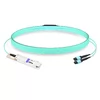
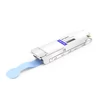
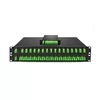
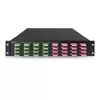
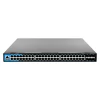
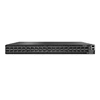
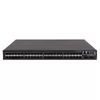
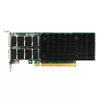
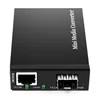
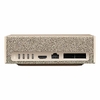
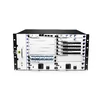
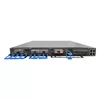
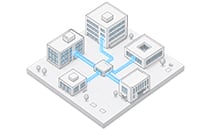
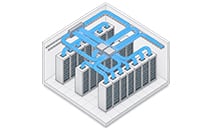
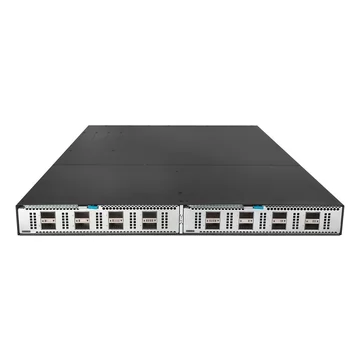
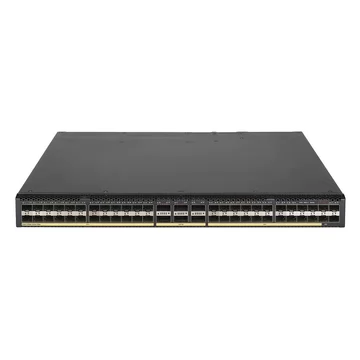
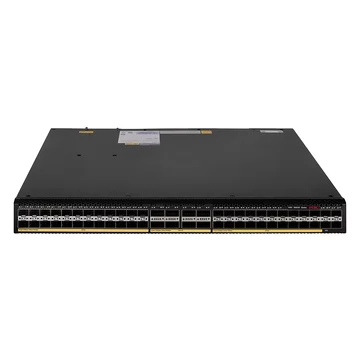
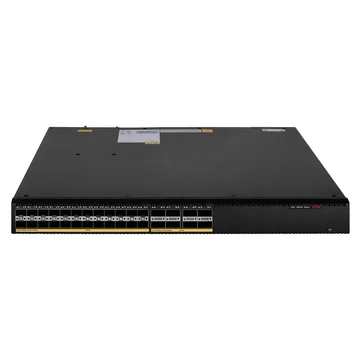
From 1GbE to 800GbE, Ethernet switches are reshaping the interconnection architecture of global data centers through rapid increases in port bandwidth. Today, switch systems are designed not only for higher port density and better power efficiency, but also for interoperability with a wide range of validated optical transceivers and cables. These connectivity options cover short-, medium-, and long-reach interfaces such as SR, DR, FR, and LR, enabling deployments ranging from enterprise access networks to data center leaf-spine fabrics and backbone interconnects. Selecting switches and validated optics together can reduce interoperability risks and simplify network upgrades as bandwidth requirements evolve.
Find the Right Ethernet Switch: Speed, Port Count, and Deployment Type
Selecting an Ethernet switch starts with three questions: how much bandwidth do you need per port, how many ports are required, and what environment will the switch operate in?
By Port Speed
1GbE — Enterprise access, branch offices, and management networks
Typical applications include enterprise access, branch-office connectivity, and out-of-band management networks. Representative switches include the H3C S5560X and NVIDIA SN2201, along with other Gigabit Ethernet enterprise switches. The SN2201 is particularly well suited to out-of-band and management networks, combining 1GbE RJ45 ports with higher-speed QSFP28 uplinks.
10GbE — Campus aggregation, enterprise top-of-rack, and SMB core
10GbE remains widely used for campus aggregation, enterprise server connectivity, and data center access networks. Representative products include the H3C S6520X and H3C S6805. The S6805-54HF, for example, provides 48 × 10G SFP+ ports and 6 × 100G QSFP28 ports.
25GbE — Server access, storage front-end, and cloud data center leaf
25GbE is widely deployed for server-facing data center connections because it provides a natural migration path from 10GbE while using a single 25G electrical lane. Representative solutions include the H3C S6850 and NVIDIA platforms that support 25GbE through native SFP28 ports or QSFP28 breakout. For example, the NVIDIA SN2201's 100GbE QSFP28 ports can be configured as 4 × 25GbE breakout interfaces.
40GbE — Legacy data center spine and enterprise core
40GbE remains common in legacy data center spine and enterprise core networks. Representative switches include the NVIDIA SN2700 and H3C S6800 series. On the SN2700, QSFP28 ports support lower-speed operating modes including 40GbE; breakout is not required simply to operate a port at 40GbE.
100GbE — Data center leaf-spine, cloud fabrics, and storage back-end
100GbE is widely used for leaf-spine interconnects, cloud fabrics, and high-performance storage networks. Representative platforms include the NVIDIA MSN4600-CS2FC and H3C S9850. The NVIDIA MSN3700-CS2RC also supports 100GbE but is now a legacy EOL part number and should be treated accordingly in new designs.
200GbE — AI/ML clusters and data center spine networks
200GbE has been deployed in AI/ML, HPC, and high-performance data center environments. Examples include the NVIDIA MSN4600-VS2FC and MSN3700-VS2RC. Both are technically capable 200GbE platforms, but NVIDIA currently lists these legacy OPNs as End of Life, so they are better suited to installed-base expansion, replacement, or projects where legacy hardware is specifically required.
400GbE — Hyperscale spine, AI fabric, and large-scale cloud
400GbE is widely used in hyperscale networks, modern AI fabrics, and high-capacity leaf-spine architectures. Representative NVIDIA platforms include the SN5400 and MSN4700-WS2FC.
800GbE — AI back-end fabrics and GPU cluster interconnects
800GbE has become an important port speed for large AI back-end networks and GPU clusters. The NVIDIA SN5600 family is designed for high-density 800GbE networking and supports multiple breakout modes for lower-speed endpoints.
By Management Type
Unmanaged Switches — Plug-and-play switches that require little or no configuration. They are best suited to simple network segments, small-office connectivity, and environments where traffic patterns are predictable and advanced segmentation or monitoring is unnecessary.
Smart / Web-Managed Switches — Provide basic features such as VLANs, QoS, link aggregation, and monitoring through a web-based interface. They offer a practical middle ground for SMBs and branch offices that need traffic segmentation and prioritization without the complexity of a full command-line management environment.
Fully Managed Switches — Provide advanced Layer 2 and Layer 3 functions, CLI management, SNMP, APIs, redundancy mechanisms, security controls, and telemetry. Depending on the network operating system, they can be integrated with automation frameworks such as Ansible and Python-based tooling through APIs, CLI automation, NETCONF, REST, or other management interfaces. Fully managed switches are commonly used in data center leaf-spine fabrics, enterprise campus cores, and other environments with dynamic workloads, redundancy, and automation requirements.
Open Networking Switches — Managed switches that support an open network operating model, often using ONIE as the installation environment. Depending on the hardware platform and compatibility matrix, operators may deploy NVIDIA Cumulus Linux, SONiC, or another supported NOS. These switches are particularly useful for cloud-native, hyperscale, and AI infrastructure teams that require greater software control over the network fabric.
By Environment
Enterprise / Data Center — Typically use 19-inch rackmount form factors, front-to-back or back-to-front airflow, and redundant hot-swappable power supplies and fans. They are designed for conditioned spaces with controlled temperature and humidity.
Industrial — Often use DIN-rail or wall-mount designs, rugged metal housings, extended operating-temperature ranges, and enhanced shock and vibration resistance. Some industrial switches support operating ranges around -40°C to +75°C and IP30/IP40-class enclosures, although exact environmental specifications vary by model. They are commonly deployed on factory floors, in outdoor cabinets, transportation systems, and utility substations where standard enterprise switches may not be suitable.
Ethernet Switch Brands Available at FiberMall
NVIDIA Spectrum Ethernet Switches — AI, Cloud, and Enterprise Fabrics
FiberMall is an NVIDIA Elite Partner for networking products. FiberMall has publicly described itself as an Elite Partner for NVIDIA networking solutions.
The NVIDIA Spectrum Ethernet portfolio covers management, enterprise, cloud, and high-performance data center networking, with platforms extending to 800GbE-class AI fabrics. Depending on the platform and configuration, NVIDIA Spectrum switches are available with network operating systems such as NVIDIA Cumulus Linux and SONiC.
Why Spectrum for data center and AI: NVIDIA Spectrum platforms combine advanced congestion management, telemetry, adaptive routing, and Ethernet-based fabric technologies designed to improve effective network utilization under demanding AI workloads. Spectrum-X extends this architecture into an AI-optimized Ethernet platform that combines Spectrum switches with NVIDIA networking adapters such as BlueField-3 SuperNIC, ConnectX-7 NIC, and ConnectX-8 SuperNIC families to provide high-bandwidth RoCE connectivity for GPU-to-GPU compute networks.
Spectrum-3 and Spectrum-2 platforms continue to provide open Ethernet networking options for enterprise, cloud, storage, and existing data center deployments, although some older OPNs have reached EOL and should be checked before specifying them for new projects.
H3C Ethernet Switches — Enterprise, Campus, and Data Center
H3C switches cover campus access and aggregation, enterprise networks, top-of-rack deployments, and data center leaf-spine architectures across a wide range of Ethernet speeds. FiberMall supplies H3C switches together with compatible SFP+, SFP28, QSFP28, QSFP-DD, and other optical transceivers that can be validated for the required switch model.
Key series include:
• S6520X — Primarily a high-density 10GE campus aggregation and access family, with higher-speed uplink or expansion capabilities depending on the exact model. The family should not be described simply as a native high-density 25G platform.
• S6805 — High-density 10G data center top-of-rack switching. The S6805-54HF provides 48 × 10G SFP+ ports and 6 × 100G QSFP28 ports, with selected QSFP28 ports supporting breakout into 10G or 25G interfaces.
• S5560X — Gigabit Ethernet campus and enterprise switching with higher-speed uplink capabilities, depending on the model.
• S5590 — Gigabit and multi-gigabit campus switching options, with PoE capabilities available on selected models.
• S6850 — High-density data center switching with 25G server-facing interfaces and 100G uplinks. The S6850-56HF, for example, provides 48 × SFP28 and 8 × QSFP28 ports.
• S9850 — High-capacity data center aggregation and spine switching. S9850 models support dense 100GbE connectivity, while 400GbE support applies to specific newer variants such as the S9850-G series rather than every S9850 model.
GE Enterprise Switches — Cost-Effective Gigabit and 10G Switching
For SMBs, branch offices, and enterprise access layers where budget is a major consideration, GE enterprise switches provide cost-effective Layer 2 and Layer 3 switching. Managed and smart-managed configurations are available, with PoE options on selected models for devices such as wireless access points, IP phones, and cameras.
The Compatible Optics Advantage: Why Network Engineers Source Switches from FiberMall
FiberMall is not just a switch distributor. We design, manufacture, supply, and test optical transceivers, DAC, ACC/AEC, and AOC connectivity products. FiberMall's product pages state that compatible optical modules and cables are programmed and tested against corresponding switch platforms before shipment.
The Procurement Math
Consider a 32-port 100G data center leaf deployment in which all 32 ports are connected through optical links.
If optics are required at both ends of all 32 links, a fully populated deployment normally requires:
• One 32-port 100G switch
• 32 switch-side QSFP28 transceivers
• 32 remote-side QSFP28 transceivers
• 32 duplex fiber patch cords
That means 64 transceivers and 32 fiber patch cords for 32 complete point-to-point optical links. If the remote-side optics are already installed or supplied separately, only the 32 switch-side transceivers need to be included in the switch-side BOM.
Sourcing the switch from one vendor, optics from another, and cabling from a third can create multiple purchase orders, shipments, support contacts, and compatibility responsibilities.
With a traditional multi-vendor approach, you may have three purchase orders and three shipments to track. Compatibility verification may fall on your engineering team, transceiver testing practices can differ among vendors, fault isolation may involve several suppliers, and warranty terms are managed separately for each product.
With a FiberMall single-source approach, the switch, transceivers, and cabling can be consolidated into one purchase order and shipment. Compatible optics can be validated before shipment, and customers have a single point of contact for troubleshooting and support coordination. Warranty periods still depend on the specific product category and manufacturer rather than becoming one identical warranty for every component.
The time saved on logistics, interoperability validation, and troubleshooting can be significant, especially for multi-site and international deployments.
Complete Your Ethernet Switching Infrastructure
Every high-speed pluggable switch port requires an appropriate transceiver, DAC, AEC/ACC, AOC, or other supported interconnect before it can form a network link. FiberMall supplies the connectivity components required to build complete Ethernet switching infrastructures.
Optical Transceivers by Form Factor
The form factor of a transceiver does not by itself determine its transmission distance. Reach depends on the optical specification, wavelength, fiber type, connector, lane architecture, and Ethernet PMD. Similarly, newer generations of a form factor may support more than one Ethernet speed.
SFP — Commonly 1GbE
SFP modules are widely used in Gigabit Ethernet access networks. Depending on the optical specification, common reaches range from approximately 550 meters over multimode fiber to tens of kilometers over single-mode fiber, with some extended-reach products reaching around 80 km.
SFP+ — Commonly 10GbE
SFP+ is the standard pluggable form factor for 10GbE. Typical applications include 10G switch ports, server links, and uplinks. Short-reach multimode optics generally cover a few hundred meters, while LR, ER, and extended-reach single-mode products can cover 10 km, 40 km, or longer depending on the module.
SFP28 — Commonly 25GbE
SFP28 is widely used for 25GbE server access and uplinks. Common optical options include short-reach multimode links around 70–100 meters, 10 km LR links, and longer-reach single-mode solutions depending on the transceiver design.
QSFP+ — Commonly 40GbE
QSFP+ is primarily associated with 40GbE and remains common in legacy data center networks. Depending on the PMD, deployments can range from short-reach parallel multimode links to 10 km LR4 and longer single-mode connections.
QSFP28 — Commonly 100GbE
QSFP28 is widely deployed for 100GbE leaf-spine and data center interconnects. Optical variants include short-reach multimode, 500-meter-class DR/PSM solutions, 2 km CWDM4-class solutions, 10 km LR4, and longer-reach products.
QSFP56 — Commonly 200GbE
QSFP56 typically supports 200GbE using higher-speed PAM4 electrical lanes. Typical applications include 200G data center links, with optical reaches ranging from short-reach multimode solutions to DR, FR, and LR single-mode interfaces.
QSFP-DD — Commonly 400GbE and 800GbE
QSFP-DD uses eight high-speed electrical lanes and is widely deployed for 400GbE. Newer QSFP-DD generations also support 800GbE, and the current QSFP-DD MSA roadmap extends the form factor to 1.6T. Although this article focuses on Ethernet switching up to 800GbE, describing QSFP-DD as having a maximum speed of only 400GbE is no longer technically correct.
Typical optical reaches depend on the PMD and may include approximately 100-meter SR-class links, 500-meter DR-class links, 2 km FR-class links, and 10 km LR-class links.
OSFP — Commonly 400GbE, 800GbE, and increasingly 1.6T
OSFP uses eight high-speed electrical lanes and supports 400GbE and 800GbE generations, while current OSFP specifications also support 1.6Tbps through 8 × 200G electrical lanes.
OSFP should therefore not be described as an 800GbE-only form factor. Optical reach is determined by the module rather than the OSFP mechanical package; current products include short-reach multimode, 500-meter DR, 2 km FR, and 10 km-class LR solutions. NVIDIA, for example, lists high-speed optical products covering SR, DR, FR, and 10 km LR applications.
DAC, ACC, AEC, and AOC Cables
Direct Attach Copper (DAC) — Passive copper cable assemblies provide a low-cost, low-power interconnect for very short links. They are ideal for same-rack switch-to-server and switch-to-switch connections. Maximum practical length depends strongly on the data rate, cable gauge, host signal-integrity budget, and implementation, so a fixed 5-meter limit should not be applied to every Ethernet speed.
Active Copper Cables (ACC) — ACCs incorporate active signal conditioning such as equalization or amplification to compensate for losses that would be too high for a passive DAC. They can extend copper connectivity beyond the practical reach of passive DACs, but supported lengths depend on the data rate and cable design.
Active Electrical Cables (AEC) — AECs use active electronics, typically including retiming and advanced signal conditioning, to provide more robust high-speed electrical connectivity over longer copper reaches. They are increasingly used in 400G and 800G AI and data center environments where passive copper cannot meet the required electrical budget but an optical link is not yet necessary.
Active Optical Cables (AOC) — AOCs use optical fiber with permanently integrated optical transceivers at both ends. They provide longer reach and lower cable weight than copper and are immune to electromagnetic interference. Depending on the speed and product design, AOCs can support links of tens of meters to around 100 meters or more and are commonly used for adjacent-rack and cross-rack connections.
Breakout Cables — Breakout connectivity allows one high-speed switch port to connect to multiple lower-speed endpoints, provided that both the switch and the cable/transceiver architecture support the required breakout mode.
Common examples include:
• QSFP28 to 4 × SFP28 for 100G to 4 × 25G
• QSFP-DD to 2 × QSFP56 for 400G to 2 × 200G, where supported
• 800G OSFP to 2 × 400G endpoints
• 800G OSFP to 4 × 200G QSFP112 or OSFP endpoints
NVIDIA documents OSFP-based 800G systems supporting 800G, 2 × 400G, 4 × 200G, and, with appropriate split-fiber configurations, 8 × 100G operating modes. An 800G-to-8×100G configuration should not be described as “OSFP to 8 × SFP28,” because SFP28 is a 25G-class form factor rather than a 100G endpoint.
Fiber Patch Cables
• MPO/MTP trunks and harnesses are commonly used with parallel-optics QSFP, QSFP-DD, and OSFP transceivers that require multiple fibers.
• LC duplex patch cables are used with duplex optical transceivers across multiple form factors, including SFP, SFP+, SFP28, QSFP28, QSFP-DD, and OSFP, depending on the module's optical interface.
• Single-mode OS2 is widely used for DR, FR, LR, ER, ZR, and other single-mode applications, while OM3, OM4, and OM5 multimode fibers are used for supported SR-class links.
Ethernet Switch Buying FAQ
What type of Ethernet switch do I need for my network?
Start with three parameters: port speed, port count, and management requirements.
For simple office connectivity where advanced traffic segmentation and monitoring are unnecessary, an unmanaged Gigabit Ethernet switch may be sufficient.
For data center top-of-rack applications, managed 10G or 25G switches with SFP+ or SFP28 server-facing interfaces and high-speed uplinks are common.
For modern AI fabrics, 400G and 800G Ethernet switches are increasingly used for leaf, spine, and back-end GPU networking. Open networking platforms using supported NOS options such as Cumulus Linux or SONiC are also common in large-scale deployments.
If you are unsure, provide the engineering team with your topology, port count, server/NIC specifications, required throughput, cable distances, and redundancy requirements so the switch and optical architecture can be selected together.
How do I know which transceivers are compatible with my Ethernet switch?
Transceiver compatibility depends on more than just the mechanical form factor and nominal Ethernet speed.
Important factors include:
• Host port form factor
• Host electrical lane rate and lane configuration
• Ethernet data rate
• Optical PMD and modulation architecture
• Wavelength
• Fiber type
• Connector type
• FEC requirements
• Breakout mode
• Module power class and thermal limits
• CMIS or EEPROM implementation
• Switch NOS and firmware support
• Vendor-specific coding or validation requirements, where applicable
FiberMall optical transceivers can be programmed for compatibility with major switch platforms including NVIDIA, H3C, Cisco, Arista, Juniper, and others. FiberMall also states that modules are coded and tested on corresponding switch platforms before shipment.
Purchasing switches and optics together therefore makes it easier to validate both the host-side electrical interface and the optical link before deployment.
What is the difference between managed and unmanaged Ethernet switches?
Unmanaged switches primarily provide basic Layer 2 forwarding using fixed or minimal configuration. They are plug-and-play devices suited to relatively simple and static network segments.
Managed switches provide control over features such as VLAN segmentation, Quality of Service, link aggregation, Spanning Tree Protocol, access control lists, SNMP monitoring, routing, telemetry, and automation through CLI or APIs.
A managed switch is generally the appropriate choice when a network requires segmentation, security policies, redundancy, high availability, centralized monitoring, or automation. Network size alone should not be used as a strict threshold for determining whether a managed switch is required.
Can I buy Ethernet switches and compatible optics from the same vendor?
Yes. This is one of FiberMall's key advantages as an optical networking supplier.
In addition to network switches, FiberMall supplies optical transceivers, DAC, ACC/AEC, AOC, and fiber cabling. When switches and connectivity products are purchased together, the required optics and cables can be selected and validated against the intended host platform before deployment.
This consolidates procurement and gives customers one point of contact for switch, optical-module, and cabling interoperability issues rather than requiring separate troubleshooting with multiple suppliers.
Do you offer volume pricing for enterprise and data center switch deployments?
Yes. Volume pricing is available for multi-switch deployments and cluster-scale projects. The engineering team can provide complete bill-of-materials pricing covering switches, transceivers, cables, and patch cords, with quotations for standard configurations typically available quickly.
Multi-site and phased-deployment pricing is also available. Customers can submit their target switch models, port speeds, link distances, fiber types, and required quantities to receive a complete deployment quotation.
What warranty coverage comes with Ethernet switches purchased from FiberMall?
Warranty coverage depends on the product category.
Ethernet switches are covered according to the applicable manufacturer's or supplier's warranty terms, with FiberMall assisting with support where applicable.
FiberMall's current published warranty policy lists a 3-year warranty for standard-stock fiber-optic transceivers. DAC and AOC cables have separate warranty terms, so warranty coverage should not be described as identical across all switch, transceiver, and cable products.
For eligible standard-stock products, FiberMall's current return policy provides a 30-day return, refund, or replacement window, subject to the conditions defined in the policy.
For customized or non-stock products, maintenance and return conditions differ, so customers should refer to the current Warranty Policy and Return Policy pages for the exact terms rather than assuming a universal five-year maintenance period.
How do I choose between Ethernet and InfiniBand for my AI cluster?
Ethernet provides a broad, standards-based ecosystem and integrates easily with existing data center, cloud, storage, and IP networking environments. Modern AI-focused Ethernet platforms such as NVIDIA Spectrum-X combine high-speed Spectrum switches with NVIDIA SuperNIC/NIC technology and RoCE to provide high-bandwidth, low-loss networking for GPU clusters.
InfiniBand is purpose-built for high-performance computing and AI fabrics and provides native RDMA, advanced congestion-management capabilities, and NVIDIA SHARP in-network computing. NVIDIA's current Quantum platforms are designed specifically for large-scale AI and scientific-computing workloads.
For mixed-workload AI clouds, inference environments, multi-tenant infrastructure, and organizations that want close integration with existing Ethernet networks, Ethernet is often an attractive choice.
For tightly coupled, large-scale distributed GPU training and HPC workloads where collective communication latency and network efficiency are critical, InfiniBand may provide advantages.
The best choice depends on workload characteristics, GPU scale, server adapters, topology, operational expertise, software environment, and total infrastructure cost. FiberMall supplies connectivity products for both Ethernet and InfiniBand architectures, allowing the fabric to be selected according to the actual workload rather than relying on a one-size-fits-all recommendation.