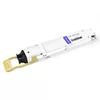
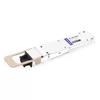
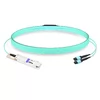
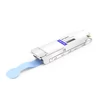
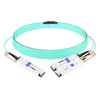
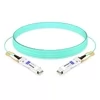
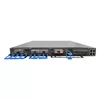
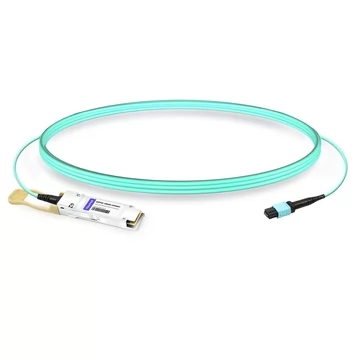
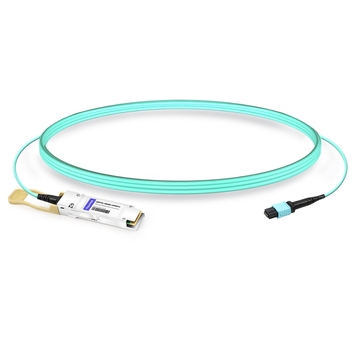
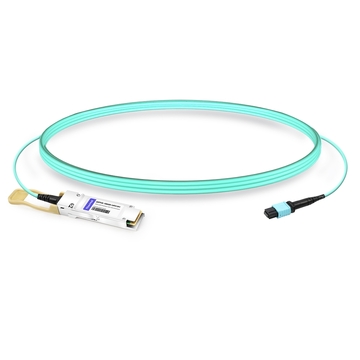
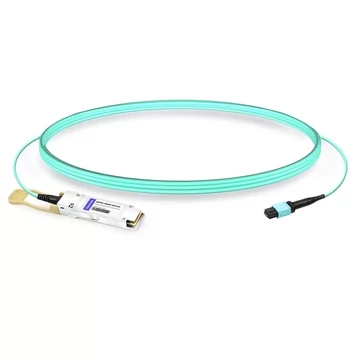
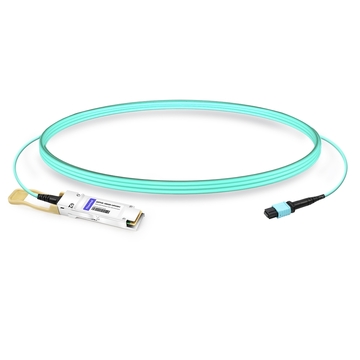
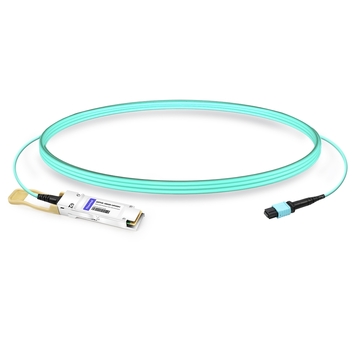
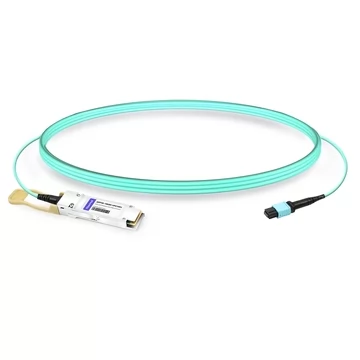
100G QSFP28 Optical Transceiver for Liquid Cooling
High-performance data centers employ advanced technologies, such as integrating liquid cooling into 100G QSFP28 optical transceivers, to achieve superior heat dissipation performance. In other words, these transceivers can improve performance and extend their lifespan. Whether the 100G QSFP28 liquid-cooled design is suitable for dedicated cooling systems in high-performance network infrastructure is a key consideration.
Introduction to 100G QSFP28 Optical Transceivers
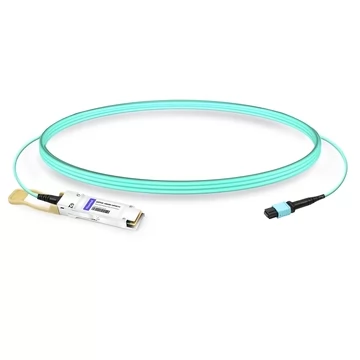
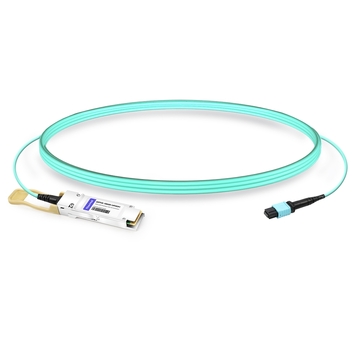
Miniaturized modules called 100G QSFP28 compatible optical transceivers are designed to provide 100GbE interfaces. They lay the groundwork for transporting more than one gigabit of traffic over multi-mode and single-mode fiber. These types of optical transceivers align with constantly advancing data centers. They achieve low power consumption and high port density and respond to the need for increasing network capacity. Due to their dynamic features, the 100 Gigabit QSFP28 transceivers can be used with almost any non-proprietary equipment supporting such a solution.
Overview of QSFP28 technology
QSFP28 (Quad Small Form-factor Pluggable 28) is a powerful advancement in the high-speed networking field, designed to realize data rates of up to 100 Gbps. QSFP28 supports several optical options, including SR4, LR4, PSM4, and CWDM4, providing short and long reach capabilities for various application needs in data centers and telecommunication networks. Each of its 4 lanes delivers 25 Gbps of user data, using advanced modulation formats such as NRZ.
Advantages of Liquid-Cooled 100G QSFP28 Transceivers
Better Thermal Control: Liquid cooling absorbs heat better than air cooling, especially for transceivers under heavy loads. These components can operate at optimal temperatures without overheating. This helps maintain signal quality without performance degradation, hence efficient energy utilization without risking burnout.
Reduction of Power Consumption: Removing the need for ambient air cooling minimizes power consumption within the system, which ultimately helps save power in the data center.
Support in Dense Deployments: Liquid-cooled transceivers enable higher network densities without restrictions related to cooling limitations. Hence, they are best suited for high-capacity growth scenarios.
Long Lasting Devices: Thermal management limits the possibility of heating issues in bonded cables, the foremost degradation factor of the transceivers, leading to lower replacement rates than expected.
Advanced Cooling Capability: By using effective thermal management strategies, high-fidelity system performance is achieved in infrastructure where liquid-cooled systems are employed; hence, network downtime is reduced significantly, enhancing continuous operation of the data center.
Enhanced thermal performance and energy efficiency
Exhaust cooling systems or conventional fans are less efficient when it comes to cooling the sensitive parts of a system. In their place, liquid cooling systems offer better fluid mechanics since they make it possible to evacuate heat using 100G QSFP28 liquid cooling. Here, scalable operating temperatures enable further optimization of power requirements, whereby fewer fans and cooling systems will be needed. This is because, within a given area, such cooling systems allow for increased server density. Besides, liquid cooling supports scalability for many users due to increased volumes of data, without additional energy or footprint usage.
How Does Liquid Cooling Work for QSFP28 Modules?
In the case of 100G QSFP28 liquid cooling, the cooling arrangement uses a liquid working medium for heat dissipation by contacting the inner surface of the module. Usually, it is an enclosed system, where the heat generated by the module is removed by a medium such as water or heat transfer fluids in the form of micro-channels or a manifold on the cold plate attached to the module and drawn to the outside. The liquid medium helps carry away the generated heat from the module and transfer it to another medium, such as air, outside the heat exchanger for cooling or dissipation. It works better than circulated airflow because circulation impedes heat conduction and prevents any heat blockage, which contributes to the device overheating or burning out, even in intensely packed and powered setups.
Explanation of liquid cooling mechanisms
Implementation of cooling systems based on pumped liquid contains heat flux transfer in the liquid medium. A heat source, for instance, a powerful electronic component, releases heat energy into an attached heat sink or a cold plate; this is the first step. This is accomplished by circulating a fluid, typically water or an advanced thermally efficient agent, along channels in the cold plate. Thereafter, the hot liquid is pumped into a heat exchanging system, such as a radiator, which releases the heat energy to the environment through convection with the help of fans or without.
Applications of Liquid-Cooled 100G QSFP28 Transceivers
Due to the heat dissipation challenges inherent in densely deployed network infrastructure, most 100G QSFP28 transceivers are used in high-performance computing (HPC) data centers and the telecommunications industry, where temperature control is crucial. These transceivers contribute to effective heat dissipation, ensuring smooth operation even in highly dense network designs. They effectively mitigate overheating issues during high-bandwidth applications such as artificial intelligence, cloud computing, and large-scale digital transformation activities. Furthermore, liquid cooling technology reduces the frequency of overheating and the resulting downtime, thereby improving overall network performance and energy efficiency.
Utilization in high-performance computing (HPC)
Energy efficiency is a key performance indicator for high-performance computing (HPC) environments, as these environments require significant cooling. Internationally, liquid cooling technology is being widely adopted to meet the diverse needs of HPC. Liquid cooling manages heat more effectively because processors and GPUs can be directly cooled, preventing overheating and throttling even at high performance levels. This technology allows for applications with power consumption nearly identical to air-cooled applications, but with lower energy consumption due to the higher efficiency of liquid cooling. Reducing reliance on air conditioning lowers operating costs and reduces environmental pollution within an energy optimization framework.
Optimal Deployment Practices for Liquid-Cooled Transceivers
Planning and Design for Infrastructure: Designing the data center must capitalize on incorporating liquid cooling, as 100G QSFP28 liquid cooling equipment incorporates optimal fluid delivery systems (FDS) with the acknowledgment of leakage. The planners must design the layout of equipment in such a manner that allows the coolants to circulate efficiently while allowing access for maintenance.
Materials Combinations: Provide the components and materials that are chemically compatible with the existing coolant systems to avoid corrosion in the long term and for reliability purposes. Accurate material selection is essential to avoid system breakdowns and retain good performance over time.
Quality of Coolants Surveillance: Introduce an efficacious coolant surveillance system that could measure the temperature, pressure, and presence of contaminants. The replacement or cleaning of coolant contributes to preventing blockage and the associated aging.
Thermal Management in Interfaces: Thermal interface materials (TIMs) of high performance are applied between the components and the cold plates in order to improve heat transfer. The less the thermal resistance, the more effectively the cooling of the transceivers can be ensured.
Back-Up Systems and Safety Features: Use pumping systems with redundancies and safeguards where the processes will still function in the event of a failure in the system or loss of a coolant supply. Redundancy increases the dependability and availability of a system.
Environmental Issues: Use safe coolants as much as possible and provide facilities for the waste liquids for treatment or recycling. This practice helps in meeting the green targets as well as complying with the environmental regulations.
Best practices for maximizing performance and lifespan
Maintaining Efficient Cooling Systems: Liquid cooling systems need routine inspection and servicing to avoid the buildup that causes heat overloading. Fill the systems with appropriate and lockable coolant while keeping the possibility of leakage and pressure drop as part of the system.
Non-Negligent Environmental Expenses Monitoring: Introduce sophisticated equipment for rates and temperature, and water quality sensing devices near your existing systems. This is an indication that whenever there is any wear and tear on the components or equipment, the necessary steps are taken in advance, thus saving the facility from costly downtime.
Comply With Instructions: With the installation of liquid-cooled transceivers, all the manufacturers’ instructions in relation to cooler and coolant replacement and the maintenance schedule of parts shall be adhered to. This is because these components and consumables have passed the necessary tests and have been found compatible, further providing the best functioning of 100 G QSFP28 liquid cooling transceivers.
Cleaning and Replacing Parts often is a Routine Task: Heat exchangers, pumps, and any other working units require periodic cleaning because this is an essential condition for the efficiency of the system. Before system performance gets affected, plan to retire worn-out elements of the system in relevance to the concepts of predictive maintenance.
See that Ventilation to the System is Adequate: Despite the use of liquids, there is also a sufficient flow of air to the gadgets for any possibility of hot spots to arise in that case again. Also, maximize the arrangement of racks and airflow design of the data centers for enhanced heat evacuation.
Frequently Asked Questions (FAQs)
For 100G QSFP28 optical transceivers, what is the most important feature that liquid cooling provides?
100G QSFP28 optical transceivers are equipped with liquid cooling modules as one of their key components. The modules are meant to improve the performance of the coolant flow in these high-speed systems. This allows the device to remain within acceptable operating temperature boundaries, improving device reliability and lifespan.
How expedient is it to employ phase change cooling as proposed for traditional cooling in the data center?
A higher efficiency than air cooling is obtained with phase change cooling with water due to its very high thermal conductivity. This prevents overheating of systems in the data center, especially when workloads are high. With the aid of this, the reliability of the system is strengthened, as well as the permissible density of loading improved.
Liquid-cooled optical transceivers: what sort of maintenance does this require?
Part of routine maintenance is identifying any leaks, checking the coolant level, and checking for any obstructions in the cooling system. It also consists of checking the coolant's cleanliness and following the manufacturer’s maintenance schedules for servicing the system to maintain performance.
When you say ‘liquid cooling’, have you thought about the energy use in a data center?
Liquid cooling allows thermal management without the need for most of the conventional air conditioning systems, so energy consumption is significantly reduced. As such, apart from lowering the cost of operation, the energy efficiency ensures little environmental damage is caused, which is one of the many negative impacts associated with the use of data centers.