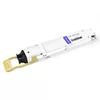
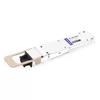
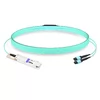
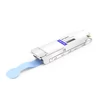
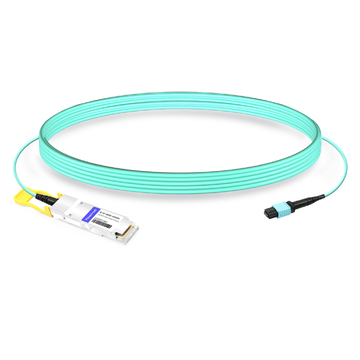
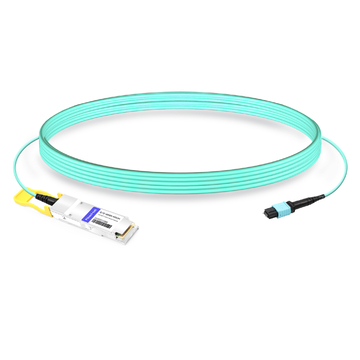
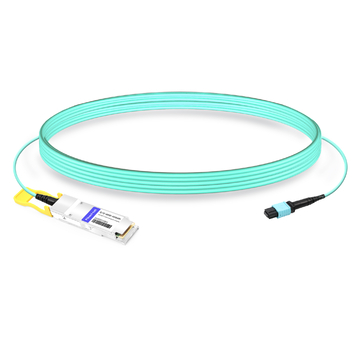
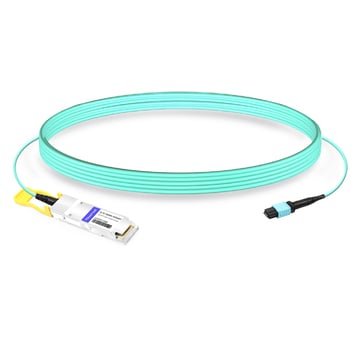
400G QSFP112 Liquid Cooling: The Future of Optical Transceivers
The rapid growth of data traffic in the digital age is pushing conventional optical transceiver technology to its limits. As the industry demands faster operation and lower power consumption, it seeks innovative solutions to these challenges. Enter the 400G QSFP112 liquid-cooled technology—an innovative approach designed to transform the world of optical transceivers.
Introduction to 400G QSFP112
The Shift Toward 400G Networking
The recent era of cloud-based AI, streaming platforms, and IoT devices has caused a sudden surge in global data traffic, accelerating the need for faster and more efficient networking technologies. 400G networking therefore steps forward among its predecessors, drastically increasing speed and capacity levels by several magnitudes for the decade ahead. Market research data suggests that global data center traffic will exceed 20 zettabytes by 2025; therefore, the urgency for systems like 400G will grow considerably.
400G networking provides additional lane bandwidth, which is 4x that of 100G, finally enabling data centers to handle fast data processing while maintaining minimal hardware complexity. This allows for higher port densities and better energy efficiency, which are critical factors in hyperscale data centers for efficient scalability. Google, Meta, Microsoft, and similar companies are at the forefront, adopting 400G to keep their infrastructure updated for the coming years and allowing their networks to grow and handle the huge volumes of data from modern applications.
Importance of Liquid Cooling for QSFP112
Liquid cooling technology plays the most significant role in enhancing the performance and efficiency of QSFP112 modules. In high-speed optical data transmission today, heat is an enormous challenge due to high power dissipation, creating severe thermal issues in high-density environments despite traditional air cooling efforts. Liquid cooling systems provide highly efficient thermal management by removing heat load from the transceivers, enabling them to maintain stable performance even under heavy load.
Official studies have revealed that liquid cooling can lower transceiver temperatures by 30 percent more than conventional air-cooled systems. In addition to being more energy efficient, these systems enhance the lifespan of modules and reduce lifetime operating costs. For example, once a data center integrates liquid-cooled QSFP112 devices, the Power Usage Effectiveness (PUE) may fall resourcefully below 1.1, representing a huge leap over conventional cooling strategies.
Technical Deep Dive into QSFP112
Thermal Challenges in High-Density Deployments
With the rise in adoption of high-power optical communication systems, thermal challenges are generated, and the stark heat from these systems is concentrated. Various modules, ranging from 10W to 15W per device, with a slew of systems squeezed into every rack, can raise enough heat to exceed critical thermal limits within moments. One avenue for addressing this is running acceptable performance standard testing for whatever product one intends to sell.
Ensuring sufficient airflow in a small area is one of the major challenges. Blocked airflow results in hot spots. A recent study has shown that average power densities for hot racks in data centers range from 8 to 15 kW per standard rack. In some instances, hot racks are reaching 20 kW densities. As power densities increase, thermal management problems become more complicated, with traditional air-cooled systems reaching heat dissipation limitations in these environments.
Introduction to VCSEL 850 nm Technology
VCSELs at 850 nm are regarded as the possible future of optical communication and sensing. They provide the added merit of high-speed data transfer suitable for compact integrated solutions. Compactness and low power draw are the primary benefits imparted by these VCSELs. The 850 nm wavelength works well against targets of performance and compatibility and is widely used and accepted in data centers, LiDAR systems, and consumer products.
The world’s biggest application for VCSEL 850 nm technology is high-speed optical networking. The recent achievement of 400 Gbps data rates communicated by VCSEL-based transceivers meets the bandwidth necessities of telco networks (quick transfers). A well-established technology of VCSELs on low-loss multi-mode media enables reduction in electrical energy footprint, thereby reducing the operational cost of data centers.
The Benefits of Liquid Cooling
Efficiency and Performance Advantages
High-energy efficiency, coupled with mighty power gains of the CPU, is boosted to an unprecedented degree through liquid cooling technology. Liquid cooling wrenches out 40 percent of energy as opposed to air cooling systems for such exceptional results. The LiqTech cooling system is an example of a complete solution to these overall issues. It is disconcertingly matched to airflow-cooling systems in the performance of particular CPU cooling fans, though the competition is indeed stiff.
Also, the liquid cooling system helps make failures less likely during high workloads. When using liquid cooling, servers have been seen to run right down to approximately 15–21°C while operating at 15–21°C, and as a result, their equipment ages attractively and staves off overheating. Bigger technology firms and hyperscale data centers are adopting this cooling technology for the latest applications like Machine Learning and Artificial Intelligence, thereby cutting down operational expenses. Liquid cooling has an upper hand in almost every enterprise between greater performance and minimum power consumption since they want a model that is feasible and supports increasingly aggressive computations.
Liquid Immersion Cooling Vs Air Cooling
Liquid immersion and traditional air cooling are two distinct approaches to cooling electronic devices, and as a consequence there are different advantages and disadvantages associated. Air cooling uses cool air flowing or circulating through heat fins to dissipate heat into the surrounding atmospheric air. The method is highly efficient and cost-saving, but only as long as the system produces less heat. In conclusion, the problem in current data centers surrounds mostly inefficient heat dispersion and too much energy use, with some 40 percent of total energy consumption going toward cooling systems.
Implementation & Compatibility
Integrating Liquid Cooling into Existing Data Centers
The adaptation of liquid immersion cooling technology into an existing data center is a fairly big task to plan properly, but it seems to be a potential field for high performance and scaling in the future. One is eager to know how the existing infrastructure could be altered to support the myriad new machinery layouts in liquid cooling system implementations. Items could include newly designed server racks, an extremely heavy liquid-cooling setup, a sealed circuit to avoid any leaking, heavy-duty pipes for liquid circulation, and so on.
400G QSFP112 and Compatibility with the Current Infrastructure
400G QSFP112 interoperates with existing network infrastructure very well by providing fast, energy-efficient data transfer for future applications. This module is considered a very elastic proposition for gradual stepwise network upgrade possibilities with backward compatibility for 100G and 200G technologies. Various IEEE standards and specifications (inclusive of the ruling over different Ethernet protocols) are supported by these QSFP112 modules to ensure perfect interfacial adaptability to drastically dissimilar situations.
Yet with the rise of innovative technology, these transceivers have been reshaped and re-engineered to bring requirements for ultra-low latency and high-density loads in data centers. They can accommodate LC, MPO, and duplex fiber connectors working in concert. This allows them to traverse across already established multimode and single-mode fiber networks without requiring an overhaul. Thus the transition to 400G speeds is made easier without a ponderous overhaul of cabling systems, thereby reducing deployment costs.
Future Outlook for Networking Technologies
Role of Liquid Cooling in 800G and 1.6T Networking
The rise in data-traffic rate demands of 800G and 1.6T has sparked the realization that thermal management for data centers and networking infrastructures would be a pivotal area of concern. Air-cooling mechanisms are an insufficient resolution to deal with high heat densities that emerge in today’s next-gen devices, while the liquid cooling method has stepped in as a newer solution due to its high cooling efficiencies and energy savings.
The technology behind liquid cooling, transferring heat back into water or similar fluids, is helpful to move heat out of high-power components within specific devices such as transceivers and processors. It has been reported that liquid cooling can boost system thermal efficiency by a factor of 4: this level of efficiency will ensure an operational data center maintains its temperature range, and higher power requirements are encouraged to breach 20 kW per rack.
Anticipated Disruption in Optical Module Characteristics
Future developments in optical modules can bring exciting possibilities to meet bandwidth-intensive networking needs for achieving higher data transfer speeds. By the year 2025, the optical transceiver industry is expected to grow to margins greater than USD 15 billion, driven by the increasing demand for more reliable and faster data transfer in hyperscale data centers and 5G network markets. This will make 800G and beyond the intended speed modules for any entity involved in the exponential increase in processing and transmission of information by 800G-spanning modules.
Co-packaging optics (CPO) remains a big avenue of innovation in need of addressing the challenge of strict demand for the integration of optics modules directly into the switch silicon. This move will provide data centers with savings of up to a 30% decrease in power consumption, which will be key to their mission of operational data efficiency already. The fiber optic race in silicon photonics is strongly influencing the much possibility creators must have to lower the cost of optical engines by speeding up fabrication and edition. This supports advantages of scalability and cost concerns.
Frequently Asked Questions (FAQs)
What is an optical transceiver and in what way is it associated with the 400G QSFP112 SR4?
An optical transceiver is a hot-pluggable solution that converts electricity to light (E/O function) and then back again (O/E function) necessary for 400G QSFP112 SR4 connections. The module has its origins within the subarea of optical communications which require a 100m reliable operation distance via multimode OM4 fiber using parallel lanes with VCSEL 850nm 100m optics.
What is the advantage of immersion liquid cooling in cooling optical modules in dense racks?
Liquid immersion cooling involves the process of immersing server boards and optics in dielectric liquid to extract heat from the components or cool optical modules like 400G QSFP112 and high-power liquid cooling modules. Liquid immersion reduces the airflow requirement and increases rack density among high-performance computing (HPC) and data center network deployment scenarios, as well as simplifying the integration of liquid-cooled optics such as 400G LPO QSFP112 in the optical module of the customer.
Does 400G QSFP112 SR4 work with active copper and AOC solutions like 400G QSFP112 AOC or DAC?
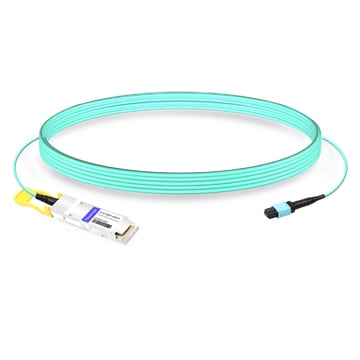
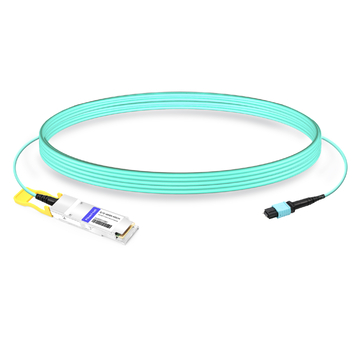
Yes—400G QSFP112 SR4 is a multimode optical option. For short copper connectivity system selection, choosing between 400G QSFP112 AOC or DAC remains an option. To meet different ecosystems, it is possible with 400G OSFP DAC, 400G QSFP56-DD DAC, or 400G OSFP AOC. The decision-making process depends on the reach, latency, power, and interconnection requirements in your data center or HPC environment.
Do immersion liquid cooling platforms necessitate specially designed liquid cooling-supporting optical components or modifications to the transceivers?
Yes, integration will need liquid cooling modules or modifications such as liquid cooling optical modules like 400G LPO QSFP112 designs for immersion or even specialized cold plates. Some vendors may also offer the LXFP or OSFP AOC/OSFP DAC options that are immersion rated or have specific liquid flow channels.