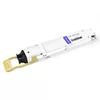
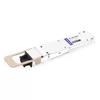
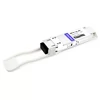
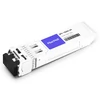
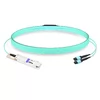
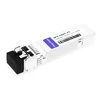
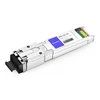
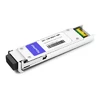
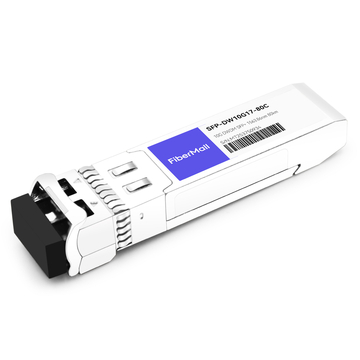
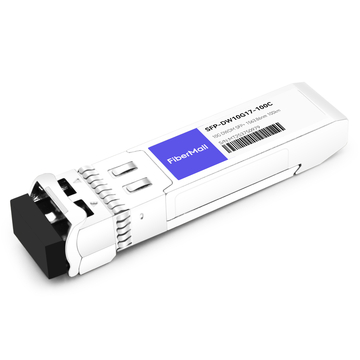
10G DWDM SFP+ Optical Transceiver Module
Nowadays, the 10G DWDM SFP+ is a must-have for most networks. It facilitates the transfer of information over a particular interval in a precise and reliable manner. Its unique features, as well as additional benefits, further contribute to the function of the device in increasing the distance of the network within an organization.
What is a 10G DWDM SFP+ Optical Transceiver Module?
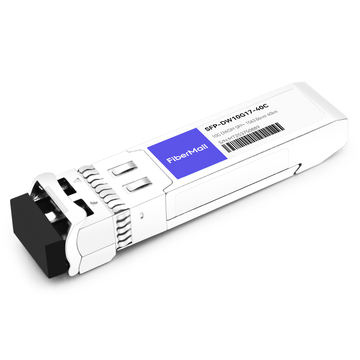
The 10G DWDM SFP+ Optics is a modern, small form-factor, hot-swappable device for use in DWDM systems and supports data rates up to 10 Gbps. It is a small and light device that is hot-pluggable. It is deployed utilizing the appropriate channels within the DWDM frequency, which allow for transmission over distances without loss.
Definition and Overview
Dense wavelength division multiplexing (DWDM) technology, similar to ordinary optical networks, can match different optical signals. Conceptually, each element of the composite signal consists of a frequency with a finite bandwidth, something no other technology can achieve. It eliminates interference from additional nodes in the optical spectrum. The DWDM architecture means that the infrastructure can support terabyte-level data processing capabilities far exceeding current service models, such as telecommunications, offices, and data centers. This technology is ideal for long-distance data transmission because it does not require dedicated transmission-line capacity; instead, it integrates components such as optical amplifiers (EDFAs) and built-in signal monitoring.
How Does a 10G DWDM SFP+ Work in Dense Wavelength Division Multiplexing Systems?
In a Dense Wavelength Division Multiplexing (DWDM) networking system, a 10G DWDM SFP+ module is utilized with its laser at the desired wavelength according to the ITU-T grid. This device provides the capability of propagating several optical channels over a single fiber and enhances the efficiency of the fiber by assigning a different wavelength to each optical channel. The 10G DWDM SFP+ enables communication at a maximum rate of 10 Gbps and offers capabilities such as DDM (Digital Diagnostics Monitoring), which allows for instant performance checking and assures the reliable operation over the temperature range. The devices equipped with multiplexers and demultiplexers enable the control of the wavelengths and, as a result, assist in data transmission over long spans without causing loss of signals. This capability is crucial to telecommunication networks with the demand for scalability and high capacity.
Role of SFP+ Transceivers in DWDM Networks
10G DWDM SFP+ modules are becoming ubiquitous due to the specific demands of transporting large volumes of information over long distances. They are used in large systems where wiring is laid out in fiber optics and the optical signal is received from each of the fiber ends. They use an electrical-to-optical conversion to convert the electrical signal into an optical signal. They comprise a metallic body and a black cube with a red plastic cap, which houses the components used for very demanding applications. 10G DWDM SFP+ making processes require the exclusion of many mechanical compromises, so they include assembling and bonding. So long haul and MAN networks require fitting these long haul high capacity systems, including, even though such systems take a lot of height, especially around their foundation point, and the base ring of the fcr-5 sits lower than the rest of the layers to avoid disrupting the load bearing posts through the floor.
Benefits of Using 10G DWDM SFP+ Modules
The 10G DWDM SFP+ technology holds many benefits in terms of optical networking. First, they enable long-distance transmission by employing DWDM to optimally use existing fiber. Additional fibers are not needed as the current ones can be reused. For this reason, they are excellent for extending systems and networks over the span of metros and longer distances. Second, they offer a high channel capacity. This is because they allow one to carry several channels on a single fiber while using the ITU-T G.694.1 grid, which is compatible and avoids interference between the channels. Lastly, DWDM SFP+ modules are economical as well as efficient in terms of power consumption, and they are hot pluggable, thus easing maintenance and enhancing upgrades. With the above provisions, 10G DWDM SFP+ equipment incorporates bandwidth expansion in network deployment and maintains network provision to specific services at a lower cost.
Key Specifications and Standards of 10G DWDM SFP+ Modules
Conformance with ITU-T G.694.1 Frequency Grid: In addition, channel spacing of 50GHz or 100GHz and broad C-band wavelength coverage is also ensured.
Transmission capacity: 80 kilometers or more – depending on the configuration of amplifiers and dispersion compensators.
Data transmission rate: 10Gbps, which makes them applicable for 10GE and SONET/SDH purposes.
Form Factor: Each unit comes in an SFP+ size, which is small and can be hot-plugged easily for faster installation.
Available Power: Usually, a very high optical link loss power budget is available and the values of optical power and sensitivity correspond to the various usages of the networks.
Supports Interfaces: 10GBASE-ER, 10GBASE-ZR, OTU2, and other relevant communication protocols.
Ambient Temperature: Constructed to allow operation in regular harsh external temperatures (for example, -5ºC to 70ºC for commercial products) to avoid failure associated with high or low temperature conditions.
Consumption: Power lower than 1.5W, leading to economy during operations.
For this reason, it is obligatory for a 10G DWDM SFP+ module to adhere to the given requirements concerning high capacity and wide area optical network.
Transmission Range and Wavelength Grid Details
The reach of 10G DWDM SFP+ modules is limited by the link budget of the system, limiting dispersion, and backward compatibility. More often than not, the maximum length of the transmission can be 80 kilometres for such modules, and this is possible with the application of external optical amplifiers, such as Erbium Doped Fiber Amplifiers (EDFA), and dispersion control modules (DCM). At these distances, the effects of dispersion are minimal and do not require integrated components for effective utilization.
In regard to the wavelength grid, the ITU-T G.694.1 standard, which is the basis of dense wavelength division multiplexing, provides the foundation for optical communication in the aspect of fixed channel spacing, versus tunable ones and those that are not. The standards among the commonly used grids are different and include, among other things, the spacing 100 GHz (roughly 0.8 nm), 50 GHz (roughly 0.4 nm), and ensure a high spectral performance in combinations of multiple channels per string of line, which can be enabled. This promises proper channel distribution without inter-channel interference, which would otherwise undermine the entire system, including the network’s dense mode of operation.
Benefits of 10G DWDM SFP+ Optical Modules in High-Capacity Networks
The major benefit of 10G DWDM SFP+ signals for high-capacity networks is in the optimization of the available fiber optics. These SFP+ modules enable channel densities that utilize the available bandwidth to the maximum without having the users add additional costly optical fibers. The lasers, which are tunable and conform to the ITU-T recommendations, hence offering full flexibility in wavelength usage and sufficient separation so as not to affect the performance of the system. Moreover, this lightweight feature combined with low power consumption is one of the most attractive aspects, in particular for networking expansions with low operational costs.
Scalability and Efficiency
Scalability and performance of modern networks, particularly within high-traffic environments, ultimately dictate how well those infrastructures perform. The costs of scaled transceiver modules, which aid high density and facilitate scalability, make secure network warehouse expansion possible without the demanding redundant infrastructural replacements. 10G DWDM SFP+ Technology allows carrying many data signals on a single fiber. This is to optimize the already available infrastructure and save expenditure on extra cables. In addition, the designed adaptive internal modulation brings ease in operating networks and simultaneously minimizes reconfiguration time and disruption.
Comparing 10G DWDM SFP+ with Other Optical Transceivers
When comparing other optical networking elements with 10G DWDM SFP+ modules, and what they can do, and how they are utilized in different functions. 10G DWDM SFP+ modules are distinguished from other typical transceivers by their capacity to carry vast amounts of data over longer distances without any amplification due to the highly precise division of wavelengths. This helps to address network overload that can often be present in WAN and MAN bandwidth circuiting structures. Also, the greater improvement of the modules is observed in the majority of CWDM optical systems, where the number of available wavelength channels is small. These transceivers, however, can be used in relatively short distances or when lower throughput is demanded, although regarding enhanced optical communication systems, the 10G DWDM SFP+ is required.
Differences Between DWDM and CWDM
The technical difference between DWDM, also called Dense Wavelength Division, and CWDM, e.g., Coarse Wavelength Division, is the number of channels in operation, geography, and cost of installation. Working in the exact opposite manner to CWDM, DWDM allows greater density of lasers, with the C-band comprising up to seventy lasers inclusive and aimed at lasers spaced out at increments of 0.8nm (100 GHz) or even 0.4 nm (50 GHz). The above scenario works best with long kilometers and higher capacities due to the fact that it allows good extension and efficiency. In contrast, CWDM, more broadly, makes channels with larger bandwidths of as many as 18 different channels, each spaced out by 20 nm; these have inherent disadvantages in the number of channels that can be created, but the simplicity of the system and costs are more favorable.
Advantages Over Traditional SFP or SFP+ Modules
Developments in optical multiplexing technology – for example, coarse and dense wavelength division multiplexing (DWDM) – have also greatly improved the capacity of networks by enhancing the performance of the conventional SFP or SFP+ modules. Mainly, the fiber capacity requirements for the expansion of networks have been drastically reduced, allowing multiple wavelengths to be carried on the same fiber, hence maximizing and scaling up network capacity. This becomes very essential in high-density data centers and also for carriers with large networks.
Frequently Asked Questions (FAQs)
What are the distinctive advantages of the 10G DWDM SFP+ interface?
Distinctive advantages such as adherence to SFP Plus MSA module advanced technical requirements, the ability to operate within most DWDM Standardized ITU-T wavelength, speed as high as 10 Gbits/s, as well as distances ranging between 40 and 80 kms. Furthermore, these devices have low power usage and outstanding performance in a network with high density.
Who would benefit from deploying 10 G DWDM SFP+ units?
The propagation of 10G DWDM SFP+ is known in tier one service provider networks, pointing to data centers, within metro networks, and also for other companies that have their own networks. Such devices are most welcome in large market networks that involve extended network distances, expansion capabilities, and maximum utilization of available fibers.
Why is a 10 G DWDM SFP+ distinct from a 10G SFP+ standard module?
Although it is correct that a 10G SFP+ module standard operates within a channel at 10G for the period, the 10G DWDM SFP+ applies Dense Wavelength Division Multiplexing Technology, which makes it capable of sending multiple channels inside a single strand of fiber. Moreover, these DWDM modules are for large distances and very long distances.