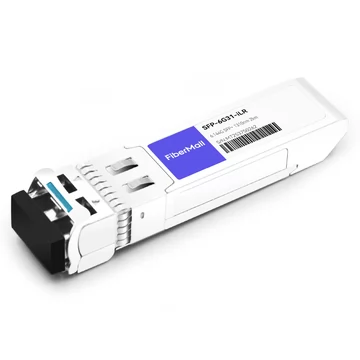
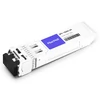
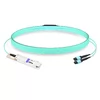
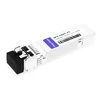
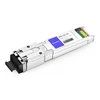
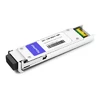
Customized SFP+ Modules: Tailored Solutions for Your Network
Reliable hardware is critical for building a seamless and scalable network environment. Among the essential components, SFP+ (Small Form-factor Pluggable Plus) modules play a pivotal role in optimizing high-speed data transfer. But what happens when standard off-the-shelf modules fall short of your specific architectural needs? This is where customized SFP+ modules become indispensable.
Introduction to Customized SFP+ Modules
The Need for Customized Transceivers in Modern Networking
Networking environments are evolving rapidly, driven by the demand for higher bandwidth, scalability, and versatility. Today, standard off-the-shelf transceivers often struggle to meet the nuanced requirements of complex network deployments. Customized SFP+ transceivers bridge this gap by offering tailored solutions for unique infrastructure challenges.
The most critical factor driving customization is compatibility. Modern networks rarely rely on a single vendor; they typically feature a mix of switches, routers, and servers from various manufacturers. Standard transceivers can introduce interoperability issues and vendor lock-in. Custom SFP+ modules, specifically coded for the host equipment, seamlessly integrate into multi-vendor environments, ensuring operational stability without the premium cost of OEM-branded optics.
Understanding the Role of SFP+ Modules in Network Devices
SFP+ modules are the workhorses of 10 Gigabit Ethernet (10GbE) networks. They provide a vital interface between network devices and fiber optic or copper cables. With recent advances in optical technology, these modules can cover a vast array of distances and environments.
Single-mode fiber (SMF) SFP+ modules are engineered for long-haul connections, typically supporting distances from 10 km up to 80 km (and even further with specialized amplification), making them ideal for Internet Service Providers (ISPs) and campus backbones. Conversely, Multi-mode fiber (MMF) SFP+ modules are optimized for short-reach applications, effectively covering distances up to 300 or 400 meters, which is perfectly suited for dense data centers and enterprise server rooms.
Technical Specifications of Customized SFP+ Modules
Understanding MSA and Compatibility Standards
The Multi-Source Agreement (MSA) is the foundational standard that ensures uniformity in the networking world. An MSA is a collaborative agreement among hardware manufacturers to standardize the physical form factor, electrical interface, and management protocols (such as DDM/DOM) of transceiver modules.
MSA-compliant 10G SFP+ transceivers are designed to operate across a broad spectrum of networking hardware. They support various protocols, including 10G Ethernet, 8G/16G Fibre Channel, and SONET/SDH. The primary advantage of MSA compliance is flexibility: it empowers network architects to select components based on performance and budget without being constrained by a single vendor's ecosystem.
Differences Between SMF and MMF SFP+ Modules
- ●Distance: SMF modules are designed for medium to long-range communications, supporting standard spans of 10 km (LR), 40 km (ER), and up to 80 km (ZR). MMF modules are intended for short distances, typically ranging from 33 m to 400 m, depending on the fiber grade (OM1 through OM4).
- ●Core Diameter and Wavelength: Multimode fibers feature a larger core diameter (50 or 62.5 µm), allowing the use of lower-cost light sources like VCSELs operating at a shorter wavelength of 850 nm. Single-mode fibers have a much smaller core (around 9 µm), requiring highly focused lasers operating at longer wavelengths—such as 1310 nm or 1550 nm—to maintain signal integrity over long distances without high attenuation.
- ●Cost-Effectiveness: For short-reach connectivity within a data center, MMF transceivers and cables are generally more cost-effective. However, for telecom operators bridging geographically dispersed locations, SMF is the necessary and superior investment.
Compatibility Benefits of Customized SFP+ Solutions
Multi-Vendor Support: Ensuring Seamless Integration
In contemporary network architectures, avoiding vendor lock-in is a priority. Custom-coded SFP+ modules provide the ultimate flexibility by ensuring compatibility across multiple OEM platforms. A customized module can be programmed with specific EEPROM data to flawlessly integrate with equipment from leading manufacturers such as Cisco, Juniper, Arista, Dell, and HP.
This interoperability is driving significant market growth. Organizations increasingly demand vendor-neutral optical modules to foster competitive purchasing, reduce CapEx, and rapidly adapt to emerging technologies.
Specialized Applications to Boost Performance
Beyond standard connectivity, custom SFP+ modules can be tuned for specialized environments. For example:
- ●Low-Latency: High-frequency trading and live broadcasting networks require transceivers optimized for sub-microsecond latency.
- ●Wavelength Multiplexing: Custom Dense Wavelength Division Multiplexing (DWDM) and Coarse Wavelength Division Multiplexing (CWDM) SFP+ modules allow network engineers to maximize spectrum utilization, significantly increasing data throughput over existing fiber infrastructure.
- ●BiDirectional (BiDi): Customized BiDi SFP+ modules transmit and receive data over a single fiber strand, effectively doubling the capacity of existing fiber runs.
Technical Deep-Dive: The Customization Process
Coding and Programming Customized Transceivers
The core of transceiver customization lies in EEPROM programming. By writing specific vendor codes (OUI) into the module's memory, the transceiver can identify itself to the host switch as a native, supported device. This process adheres strictly to industry standards like SFF-8472 (which defines Digital Diagnostic Monitoring).
While host devices (like switches) govern the operational data rate (e.g., auto-negotiating between 1G and 10G on dual-rate ports), custom programming ensures that vendor-specific features, power levels, and hardware recognition protocols are perfectly aligned with the target environment.
Rigorous Quality and Environmental Testing
- ●Functional Testing: During manufacturing, customized transceivers undergo extensive functional testing. This validates their data transmission integrity, traffic handling capabilities under heavy loads, and the accuracy of DDM (Digital Diagnostics Monitoring) parameters.
- ●Environmental Testing: Modules are subjected to extreme environmental stress to guarantee reliability. Depending on the deployment requirement, modules are certified for Commercial-grade (0°C to 70°C), Extended-grade (-20°C to 85°C), or harsh Industrial-grade (-40°C to +85°C) operating temperatures.
- ●Compatibility Testing: To guarantee seamless integration, the programmed SFP+ modules are physically tested in the target host devices (actual OEM switches and routers) to verify link stability and eliminate "unsupported transceiver" errors.
Buyer's Guide: Selecting a Provider for Customized SFP+ Modules
Key Factors to Consider When Choosing a Vendor
- ●Product Quality and Reliability: Partner with vendors that have a proven track record of rigorous Quality Assurance (QA). Look for suppliers who conduct localized stress testing, signal integrity checks, and real-world switch qualification to minimize defect rates.
- ●Standards Compliance: Ensure the vendor's products comply with overarching global standards (e.g., MSA, IEEE 802.3ae, RoHS, and ISO certifications).
- ●Customization Capabilities: Select a vendor capable of granular customization—whether you need specific DWDM wavelengths, industrial temperature ratings, or specialized multi-vendor coding on a single order.
Assessing Customer Reviews and Feedback
Industry reputation matters. Analyze the application experiences of other network architects and IT buyers. Trustworthy vendors usually feature high satisfaction rates regarding product performance, fast delivery times, and robust after-sales technical support on B2B platforms and networking forums.
Frequently Asked Questions (FAQs)
How does a customized 10G SFP+ module differ from a standard module?
While both share the same physical MSA form factor, a customized SFP+ module is explicitly programmed at the firmware level (EEPROM) to bypass vendor locks on specific host equipment (like a Cisco or Juniper switch). Customization can also include tailored hardware specifications, such as industrial temperature ratings, specific DWDM wavelengths, or BiDi functionality, backed by switch-specific compatibility reports.
Can customized SFP+ modules support specialized applications like DWDM or bidirectional (BiDi) links?
Absolutely. Customized SFP+ modules can be manufactured for CWDM/DWDM architectures or BiDi applications. You can specify the exact wavelength (e.g., standard 850 nm for MMF, 1310/1550 nm for SMF, or specific ITU grid channels for DWDM) and ensure it arrives pre-coded for your specific network hardware.
Why is the LC connector standard for customized SFP+ modules?
The LC (Lucent Connector) is the industry standard for SFP and SFP+ modules due to its small footprint, which allows for high-density port configurations on switches and patch panels. LC connectors provide highly reliable optical alignment and are used for both MMF (850 nm) and SMF (1310/1550 nm) 10G SFP+ transceivers.
How does a manufacturer guarantee that a customized SFP+ module will work in my switches?
Reputable manufacturers ensure compatibility by testing the exact customized configuration in a lab environment using the actual target switch model. They verify that the switch recognizes the module without error, that the optical/electrical parameters meet 10GbE standards, and that the DOM/DDM monitoring tools read accurately.