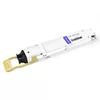
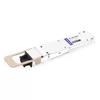
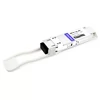
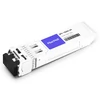
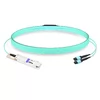
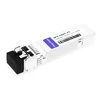
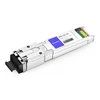
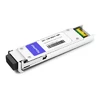
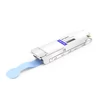
10G BiDi XFP Transceivers
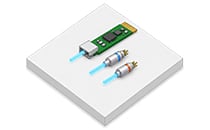
10G BiDi XFP transceiver modules are modern, efficient optical devices well-suited for today’s network demands. Unlike traditional transceivers that use separate fibers for transmit (TX) and receive (RX) signals, 10G BiDi XFP transceivers employ wavelength division multiplexing (WDM). This allows bidirectional data flow over a single optical fiber.
Introduction to 10G BiDi XFP Transceivers
10G BiDi XFP transceivers offer an advanced solution for optical networking, delivering better and more efficient high-speed connections. Traditional transceivers use two fibers for sending and receiving data. In contrast, a 10G BiDi XFP module uses a single fiber for both links. The technology relies on two different wavelengths—one for the transmitter and one for the receiver—to enable data transmission in both directions. This optimizes performance while reducing fiber requirements to a single strand, without compromising 10 Gbps speeds. These transceivers are commonly used in enterprise networks and data centers where fiber availability is limited.
What are 10G BiDi XFP Transceivers?
XFP BiDi 10G transceivers are specialized optical modules that enable bidirectional communication over a single fiber strand. Conventional transceivers require separate fibers for each transmission direction. BiDi transceivers, however, use WDM to combine both directions onto two distinct wavelengths, thereby reducing fiber infrastructure needs. This is especially valuable in high-density network environments. Designed for 10 Gbps data rates, they are widely deployed in enterprise, data center, and telecommunications networks focused on fiber optimization and capacity expansion.
How 10G BiDi XFP Transceivers Work
XFP BiDi transceivers enable bidirectional communication over a single fiber by using two different wavelengths for upstream and downstream links. Wavelength division multiplexing (WDM) separates the signals, eliminating the need for additional fiber optic cables. The transmitter and receiver operate on distinct wavelengths—typically 1270 nm for transmission and 1330 nm for reception, or vice versa—ensuring efficient high-speed data transfer with maintained signal quality.
Explanation of Bidirectional Communication Technology
Bidirectional networks allow simultaneous sending and receiving of data over a single optical fiber. This is achieved through technologies such as wavelength-division multiplexing (WDM) or time-division duplexing (TDD). WDM-based systems carry upstream and downstream traffic on different wavelengths, usually fixed pairs (for example, 1270 nm and 1330 nm) that comply with equipment standards to prevent signal interference. TDD, used in some wireless systems, divides transmission into time slots. Both approaches improve resource efficiency, reduce network congestion, and enhance scalability while preserving signal quality in fiber optic, wireless, and Ethernet networks.
Key Features of 10G BiDi XFP Transceivers
I. Data rates up to 10 Gbps for high performance and reliability.
II. BiDi capability: transmits and receives over a single fiber, reducing deployment costs.
III. Utilizes WDM technology with different wavelengths for forward and backward links.
IV. Hot-pluggable design: easy insertion and replacement without network interruption.
V. Reach up to 80 km, depending on model and fiber type.
VI. Interoperability: compatible with existing network equipment.
VII. High efficiency: lower energy consumption without sacrificing performance.
Compact Design for High-Density Applications
10G BiDi XFP transceivers feature a compact form factor. The simplex LC connector supports bidirectional transmission over a single fiber, eliminating the need for additional fiber pairs. This design increases the number of ports on switches and routers and reduces infrastructure requirements for service providers. The small size also simplifies installation in expanding data centers and telecommunications environments.
Benefits of Using 10G BiDi XFP Transceivers
XFP BiDi transceivers support high-speed bidirectional transmission over a single fiber core, simplifying cabling in modern networks. They reduce cable costs by maximizing existing fiber infrastructure. Their compact size allows integration into dense environments without extra equipment. They extend high-performance networks efficiently, making them the preferred choice for bandwidth expansion.
Cost Efficiency in Reducing Fiber Usage
Advanced transceiver technologies such as WDM and BiDi enable multiple data streams over a single fiber instead of multiple fibers. This lowers capital expenditure on new fiber deployment and reduces operational costs related to cable management and maintenance. The result is scalable network growth without major infrastructure investments while maintaining high-speed performance.
Applications of 10G BiDi XFP Transceivers
Bidirectional transmission over a single fiber strand has become standard for XFP BiDi modules, as it minimizes fiber usage in high-density areas such as data centers, enterprises, and metropolitan networks. These transceivers are ideal where additional fiber deployment is not feasible or cost-effective. They support scalable capacity building in 10 GbE networks.
Deployments in Data Centers and Telecom Networks
XFP BiDi 10G transceivers are widely used in modern data centers and telecommunications networks. They eliminate the need for fiber upgrades while providing high capacity. In data centers, they connect racks and devices over existing fiber for short to medium distances. In telecom, they enhance metropolitan and access networks using single-mode fiber. These modules support growing demands from cloud services, video, and high-usage applications without major re-cabling. 10G BiDi XFP transceivers have become an efficient and economical solution for bidirectional transmission and serve as a key component in future optical networks.
Frequently Asked Questions (FAQs)
What purpose do 10G BiDi XFP transceivers serve?
The main purpose of 10G BiDi XFP transceivers is to provide efficient high-speed bidirectional data transmission over a single optical fiber. They are ideal for data centers, metropolitan area networks (MAN), and telecommunications networks where fiber is scarce and density is high.
How does a 10G BiDi XFP transceiver compare to a conventional XFP transceiver?
Unlike conventional XFP transceivers, 10G BiDi XFP transceivers use only one fiber for both transmission and reception. They employ different wavelengths for uplink and downlink directions, eliminating the need for two separate fibers.
What are some well-known advantages of 10G BiDi XFP transceivers?
They significantly reduce fiber requirements, lower deployment costs, and optimize existing networking equipment. They support high-speed data transmission up to 10 Gbps, making them suitable for video streaming, cloud services, and other bandwidth-intensive applications.
Is there backward compatibility when utilizing a 10G BiDi XFP transceiver on older networks?
Most XFP BiDi transceivers follow the standard XFP form factor and fit a wide range of network equipment. Compatibility with specific manufacturers should be verified before deployment.