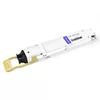
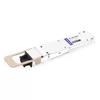
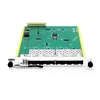
10G DWDM Tunable XFP
Dense WDM technology has brought a paradigm shift in modern optical networks, allowing data to be transmitted over long distances with utmost efficiency. The 10G DWDM Tunable XFP module is a key component in Dense Wavelength Division Multiplexing systems with wide applications.
What Is a 10G DWDM Tunable XFP Module?
The 10G DWDM Tunable XFP transceiver is a hot-pluggable optical module designed for high-speed data transmission over DWDM networks. Unlike fixed-wavelength modules, it allows the wavelength to be tuned across the DWDM grid. This flexibility reduces the number of modules needed, simplifies network design, and lowers inventory and logistics costs. Tunable XFP modules are widely used in long-haul telecom networks and metro/high-capacity optical systems where deployment speed and fiber asset optimization are critical.
Definition and functionality of 10G DWDM Tunable XFP
The 10G DWDM Tunable XFP is a compact, replaceable optoelectronic transceiver engineered for high-data-rate transmission in DWDM networks. It supports 10 Gbps and can be tuned across the full ITU-T C-band. The tunable capability enables the module to operate on any DWDM channel, improving fiber utilization and simplifying network management. With its long-reach performance, compact size, and minimal network disruption, it is ideal for metro and long-haul applications. Tunable XFP transceivers greatly reduce spare-part stocking, streamline maintenance, and deliver cost savings for scalable network designs.
How Does Tunable XFP Technology Work?
Tunable XFP technology allows the transceiver’s operating wavelength to be adjusted within the DWDM grid during operation. This is achieved through an internal tunable laser diode that precisely sets the output wavelength. Operators no longer need multiple fixed-wavelength transceivers; instead, a single tunable unit can be configured or reconfigured remotely. This adaptability improves network scalability, reduces inventory, and maintains consistent high-performance data transmission.
Explanation of tunable wavelength technology
Tunable wavelength technology provides reconfigurability by using advanced optics to dynamically control the light frequency in a fiber-optic network. The core component is a tunable laser whose output wavelength can be changed to align with any channel on the ITU-T DWDM grid. This eliminates the need for discrete fixed-wavelength lasers, lowers capital expenditure, and increases network flexibility. It also enables faster fault recovery through rapid wavelength reassignment, improving overall reliability and supporting long-term network growth.
The Benefits of Using 10G DWDM Tunable XFP Modules
A major advantage of 10G DWDM Tunable XFP modules is their flexibility in optical networks. Operators avoid replacing hardware when a different wavelength is required, reducing downtime and reconfiguration time. They also eliminate the need to stock large quantities of fixed-wavelength modules, enabling faster deployments. Built-in wavelength switching further enhances network resource utilization for both current and future scaling needs.
Cost-effectiveness and simplified inventory management
Tunable XFP modules deliver significant cost savings and simplify inventory management. A single tunable unit replaces multiple fixed-wavelength transceivers, reducing stocking requirements and operational complexity. Network providers can respond to changing demands without excess equipment purchases, optimizing existing resources while lowering overall costs.
Applications of 10G DWDM Tunable XFP in Modern Networks
10G DWDM Tunable XFP modules are widely deployed in today’s optical networks to maximize bandwidth and system capacity. They enable dense WDM systems to carry multiple channels over a single fiber. Real-time wavelength adjustment supports rapid provisioning and traffic changes in data center interconnects (DCIs), metro, and long-haul environments. This improves performance, reduces latency, and lowers operating costs by leveraging existing infrastructure.
Use in long-haul and metropolitan area networks
Tunable XFP transceivers excel in both long-haul and metropolitan area networks by reducing complexity and operational costs. In long-haul DWDM systems, they maximize spectral efficiency over extended distances with minimal signal degradation during wavelength changes. In metro networks, they support dynamic wavelength assignment without maintaining large fixed-wavelength inventories, enabling faster traffic adjustments and greater scalability to meet growing urban data demands.
Comparison of 10G DWDM Tunable XFP with Other Optical Transceivers
Compared with fixed-wavelength optical transceivers, 10G DWDM Tunable XFP modules offer superior reconfigurability across the DWDM grid without requiring multiple dedicated units. This results in simpler network management, better scalability, and higher efficiency for high-capacity, long-distance, and metro applications.
Analysis of 10G Tunable XFP, SFP+, CFP, and QSFP modules
Tunable XFP Modules: Provide tunable wavelength operation for DWDM systems, especially long-haul links. Their larger form factor supports better thermal management and power handling, making them suitable for extended-reach, high-performance networks.
Tunable SFP+ Modules: More compact with lower power consumption; they fit standard SFP slots and are preferred for metro and enterprise networks requiring high port density and shorter reaches (typically under 80 km).
CFP Modules: Primarily used for 40G/100G but can support 10G when configured. Their larger size accommodates advanced optics for core and backbone networks.
QSFP Modules: High-density, multi-channel designs that enable cost-effective capacity expansion in data centers and HPC environments.
Each module type addresses specific network requirements, allowing providers to balance performance, density, and cost.
Frequently Asked Questions (FAQs)
10G DWDM Tunable XFP Module: What is it?
An optical transceiver module for high-capacity networks. It supports 10G data rates with tunable wavelengths across the C-band for versatile DWDM applications in telecom and data center environments.
Functionality of a Tunable XFP Module?
It uses a precision tunable laser to emit light at any specified DWDM wavelength. This feature simplifies wavelength management, reduces inventory needs, and eases deployment in dense networks.
Can All DWDM Systems Work With Tunable XFP Modules?
Tunable XFPs are compatible with most standard DWDM systems. Always verify channel spacing, modulation format, and network architecture against the module’s specifications to ensure optimal performance.
What Are the Environments that Favor 10G DWDM Tunable XFP Modules?
They are ideal for long-haul and metro transport networks, data center interconnects, and any high-bandwidth application over wide areas where wavelengths may need frequent adjustment.