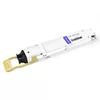
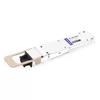
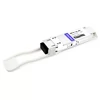
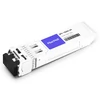
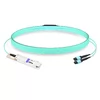
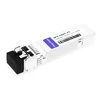
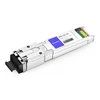
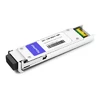
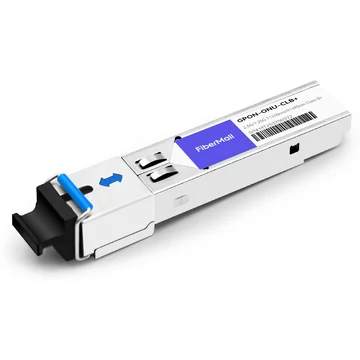
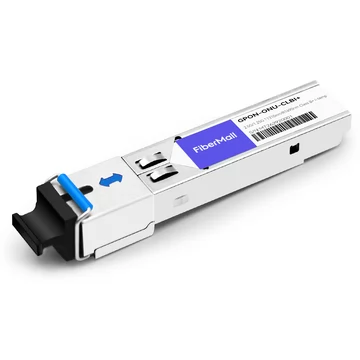
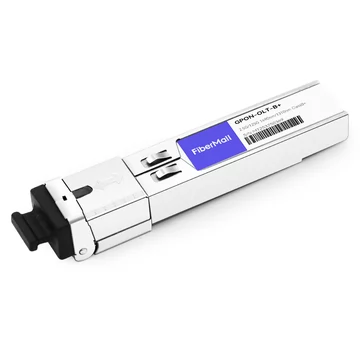
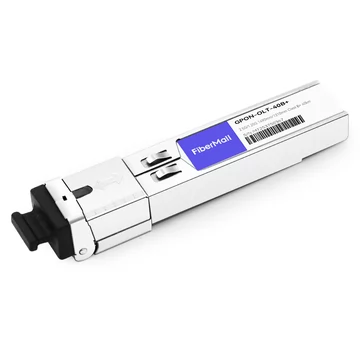
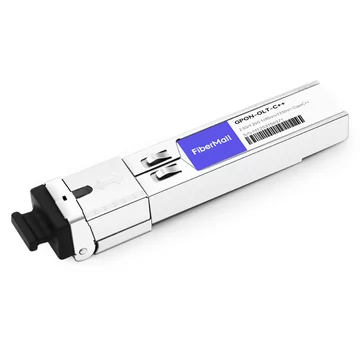
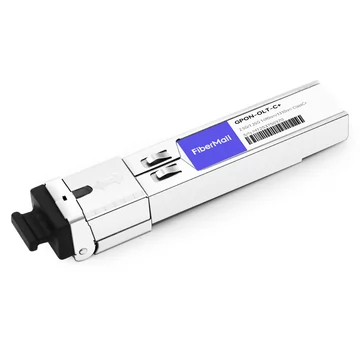
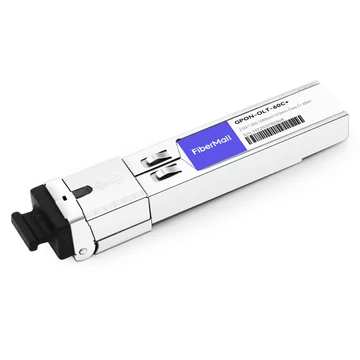
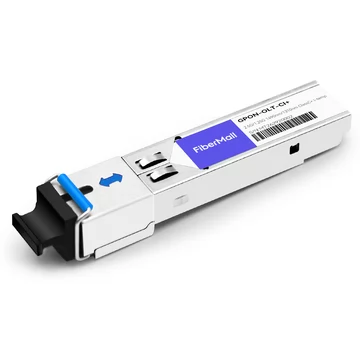
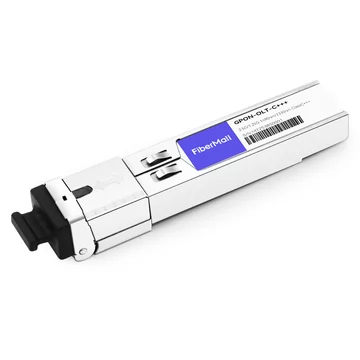
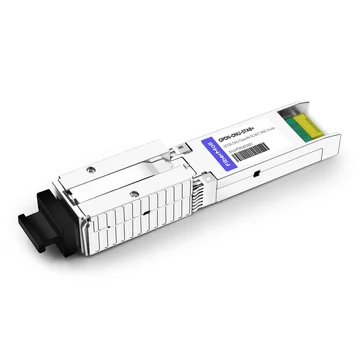
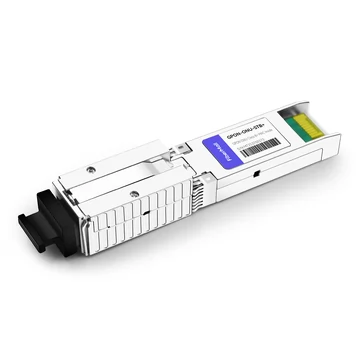
GPON SFP Module
The Small Form Factor Pluggable module, commonly called the GPON SFP, which refers to a Gigabit Passive Optical Network SFP implementation, is very important for present-day optical networks because it provides a faster means of transmitting data cost-efficiently and reliably.
What is a GPON SFP Module?
Universally, a GPON SFP is a term used to identify a small, plug-in type optical transceiver designed for GPON systems. This is the device that connects computers as well as other networking equipment, for example, a switch and a router, with fibre optic cables allowing for high-speed communication. In line with the ITU-T G.984 standard, the transceiver is capable of supporting a downstream rate of 2.5 Gbps and an upstream rate of 1.25 Gbps. The main aim of this device is to ensure optimal broadband services, including Internet, voice, video, etc., for both home-based and office-based users in a cost-efficient manner.
Definition and overview of GPON (Gigabit Passive Optical Network) technology
This is one of the technologies that help transmit information quickly over long distances without losing the quality of the signal, and it uses a TDM-based system. The bandwidth of GPON technology must be optimized to minimize losses of the input bandwidth.
GPON technology enables the transmission of diverse types of services, including voice, video, and high-speed internet, concomitantly through one optical fiber network with the help of advanced techniques like TDM and WDM. It is flexible enough to be deployed wherever, from residential to business settings, because it encourages more solid and future-oriented network installations. In addition, the passive design of the GPON also makes the networks more cost-effective due to the lack of active devices in the distribution path and thus lowers the fault levels and maintenance demands. All aspects considered, the GPON is a crucial infrastructure in today's broadband, which comes with higher bandwidth, lower costs, and less complicated networks.
How GPON SFP Modules Work in Optical Networking
Optical Transceiver Modules GPON SFP (Gigabit Passive Optical Network Small Form-factor Pluggable) allow communication between the end user and the optical network. They interface directly with networking devices – either Optical Line Terminals (OLT) of the central office or customer premise Optical Network Units (ONU). These devices are responsible for converting the optical to electrical signals and vice versa for the transmission of data over optical fiber. GPON SFP supports point-to-multipoint transmission in a centralized optical access network using wavelength division multiplexing. These modules are well known for their space efficiency, robust performance, and ease of deployment because they simply fit and function in dense wavelength division multiplexing networks.
Technical explanation of GPON architecture
GPON architecture employs a point-to-multipoint design where high-speed communication is provided through passive optical means. There is an Optical Line Terminal (OLT), which is mainly located at the central office of the service provider; it is responsible for sending information to various Optical Network Units (ONUs) or Optical Network Terminals (ONTs), which reside at the consumer's location. The system has one optical fiber, which brings the OLT information to a passive splitter that distributes to multiple recipients in the downstream direction. This architecture is quite effective because it uses TDM in the downstream direction, while for the upstream direction, it uses TDMA. Most importantly, it saves the consumption of resources and bandwidth. A passive distribution network enables GPON networks to require little maintenance, while providing performance levels up to 2.5 Gbps downstream and 1.25 Gbps upstream, which makes GPON an excellent technology for high-speed broadband services that are easy to install and expand.
Key Benefits of Using GPON SFP Modules
Connectivity at your fingertips: GPON SFP modules are easily installed into existing networks, avoiding the need for extensive reconfiguration of the hardware.
Fast rates of data flow and exchange: GPON SFP supports data speeds of 2.5 Gbps downstream and 1.25 Gbps upstream, which means they provide powerful information exchange for different users.
Affordable Solutions: GPON SFPs use passive components, so the cost of such construction can be decreased in comparison with the use of active constructions of optical networks.
Adaptability: GPON SFP modules permit network expansions according to available resources because of increased traffic, efficiently fulfilling home or office broadband needs.
Power savings: GPON SFPs possess low power consumption, which assists in realizing effective network operations.
High bandwidth capacity for ISP and enterprise applications
Optical fiber networks possess the ability to transmit large amounts of data at high speed and without interruptions, owing to their high bandwidth capacity. Every Internet Service Provider (ISP), in this case, is comfortably able to increase the number of users, taking into consideration such data-demanding services like video streaming, computer games, or access to the cloud. The same is for companies, where it provides sufficient bandwidth for tracking systems, i.e., videoconference, backup, or analytical data sharing in real time through the data warehouse.
High data transfer environments function more efficiently with GPON SFP modules connected to them. It allows for speeds in both directions up to 2.5 Gbps, one of the most important solutions to the ever-increasing demand for fast access for multiple users. Furthermore, they are compliant with a range of standardized wavelengths such as ITU-T G.984, which makes them applicable to different networks, increasing the versatility they bring to ISPs and businesses during deployment. These features ensure that performance is improved, congestion is minimized, and more facilities for the development of digital spaces are facilitated.
GPON SFP Module vs. Traditional Optical Modules
The primary distinction between GPON SFP (Gigabit Passive Optical Network Small Form-factor Pluggable) modules and conventional optical modules is in their working mechanism and use cases. GPON SFPs have dual functions which include data transmission as well as PON-specific functions. This allows point-to-multipoint communication. This feature makes FTTH (Fiber-to-the-Home) rollouts cost effective and better optimized in regard to bandwidth utilization.
On the other hand, other types of optical modules are commonly used in point-to-point connections that have only data transmission capability without any PON protocol incorporation. These are commonly deployed in direct connections in an enterprise or a data center setting.
The key advantage of GPON SFP modules is that they simplify infrastructure demands for high-speed, multi-point bandwidth connectivity. Conventional optical modules are reliable; however, they do not have these advanced capabilities, and thus they are limited for use in contemporary distributed network applications.
Detailed comparison of GPON SFP modules and general-purpose optical modules
GPON SFPs and generic SFP modules are useful in networks, yet there is a major difference in design and functionality. GPON SFPs are designed for fiber networks that offer a point-to-multipoint architecture. In this part of their function, they have downstream speeds up to 2.5 Gbps, and upstream speeds up to 1.25 Gbps. These support the efficient use of resources like those found in PON, where a single fiber strand serves multiple users and incorporates DBA mechanisms and optical splitters. Those features make GPON SFP modules very convenient for telcos and a broad range of business applications.
On the flip side, basic optical modules which work in point-to-point communications, focus on interoperability and basic data flow. Contrary to GPON SFPs, they lack advanced bandwidth management capabilities and are used in scenarios where two devices have to be connected directly, for example, in Local Area Networks or conventional server connections. It is also important to note that GPON SFP modules support Layer 2/3 capabilities in a network topology setting such that, given specific tasks, the user can achieve the desired network without additional integration at the network layers, whereas for general-purpose modules, these features are kept to basic interconnections.
These differences indicate that although GPON SFP is a better adaptation to network growth and efficiency, the other optical modules are more suited to simply connecting the ends of a particular service faster. Much will depend on the network topology and the workloads involved.
Technical Specifications of GPON SFP Modules
GPON SFP modules are created and designed to fulfill the needs, specifications, and criteria of modern broadband access networks. As a rule, they work at two wavelengths and apply Time Division Multiplexing for downstream and upstream operation. The module also has to comply with the ITU-T G.984 standards in order to work with a GPON network anywhere in the world. It allows for a 2.5 Gbps data rate in the downstream direction and a 1.25 Gbps data rate in the upstream direction over a maximum distance of 20 km. Moreover, GPON SFP modules have features like digital diagnostics functionality for monitoring performance in real time for improved stability, and can be used in dynamic and scalable networks efficiently.
Breakdown of key specifications such as data rates, wavelength, and distances
Data Transfer Rates
The available GPON SFP functionalities support downstream data transfer rates of as high as 2.5 Gbps and upstream of 1.25 Gbps. This enables the delivery of applications that need high bandwidth for effective capabilities.
Wavelength
According to ITU-T G.984, the wavelengths used for networks are 1490 nm in the downstream direction and 1310 nm in the upstream direction. This helps enhance the quality of the signals and minimize interference in the system.
Operating Distances
GPON SFP modules support a maximum distance of 20 km over fiber optic cable and therefore enable extended reach all-fiber metro solutions in rural as well as urban areas.
Frequently Asked Questions (FAQs)
What is the maximum range of a GPON SFP module?
It is quite common for GPON SFPs to reach as far as 20 kilometers because they support fiber optics and are thus applicable to long-distance communication within cities and outside cities.
How can GPON SFP work with high data rates?
The data is managed efficiently; GPON SFP modules control the incoming and outgoing data effectively. Since downstream can reach 2.5 Gbps and upstream 1.25 Gbps, time division multiplexing remains the most preferable method.
Is it possible to use GPON SFP modules in different situations?
Of course. Many GPON SFP modules are manufactured with advanced functional designs, and thus they may be used in business or home access networks as well as central office networks.
Do GPON SFP modules work with existing fibre systems?
GPON SFP modules adhere to ITU-T G.984 standards, thereby assuring users that they are compatible with many kinds of fiber optic network infrastructure for broadband access and triple play services.
How cost-effective is it to use GPON SFPs?
High capacity, long transmission distances, high data rates, and reliable performance are all elements encompassed by the GPON SFP modules, avoiding the need to conduct expensive upgrades of infrastructure while providing easy and cheap scaling of high-speed internet.